
I may exaggerate a bit when I say I don’t throw anything away, but not by much. A couple of days ago, I came across some envelopes containing rejection slips from 1989 for a story I sent out the old-fashioned way – U.S. mail! Of course, this was before the advent of the internet. If I couldn’t get published in Weird Tales, where could I get published? Apparently my Gothic horror pastiche was too eldritch even for them.
Tag: 1980s
-

Mann Center’s Golden Age of Classical Music
There may be those among you who marvel at my ability to remember certain dates, such as the first time I saw André Watts in concert (as per yesterday’s post). The truth is I can’t remember everything, but I can certainly look it up!
On the website for the Mann Center, there is a page devoted to past performers. Sadly, the programs themselves are not posted, but you can click through to jog your memory. Going back to the summer of ’84, you’ll note that the Philadelphia Orchestra performed at the outdoor venue, located in Fairmount Park, at least three times a week. Now you’re lucky if they appear there three times in a summer, and then it’s usually to accompany a film or play the “1812 Overture.”
Back in the ’80s, you were guaranteed a truly satisfying crepuscular classical music experience. Bartók’s Concerto for Orchestra. Berlioz’s “Les nuits d’été.” Falla’s “Nights in the Gardens of Spain.” Hanson’s “Romantic Symphony.” Ravel’s “Daphnis and Chloe.” Prokofiev’s “Alexander Nevsky.”
Lawn tickets were free with a clipped coupon from the Philadelphia Inquirer, which could be redeemed at the old Visitor Center near City Hall.
Picnicking was welcome and indeed encouraged. The downside, as always, were the other people, as there were always a few who thought the orchestra was there as backdrop for their conversation. (Thankfully, this was before cell phones!) Also, you had to get there, which meant getting out the car, if you had one, with all the hassle urban living entails.
My heyday at the Mann was from 1984 to 1994. Sometimes I went with friends, sometimes with girlfriends, sometimes with family, and sometimes with coworkers. Once I went with an ex-girlfriend’s coworker. And at least once, I went alone, when I saw Lara St. John play the Korngold Violin Concerto. On the other half of the program was a substantial suite from “Star Wars.” This would have been before the prequels that were the beginning of the end for the franchise, and the opportunity to hear a substantial suite from the original film was a rarity.
Seriously, click through that decade and see what it was like once. In addition to Watts, guest artists included Vladimir Ashkenazy, Jorge Bolet, Shura Cherkassky, Van Cliburn, Alicia de Larrocha, Rudolf Firkušný, James Galway, Gary Graffman, Birgit Nilsson, Jessye Norman, Itzhak Perlman, Jean-Pierre Rampal, Isaac Stern, Paul Tortelier, Tatiana Troyanos, Benita Valente, William Warfield, Pinchas Zukerman, and Los Romeros, to name a few.
Since I have absolutely no interest in anyone the Mann books now, I would be hard-pressed to imagine anything that could ever draw me there again. But it was very nice while it lasted.
-
Attic Treasures A Summer of Martian Dreams
After years of living in rentals, and at my grandparents’, I was excited to finally be moving into our own house. Not that those other places weren’t homey. There was always a lot of love and security and freedom from strife (after early childhood). But this was a real house, constructed in 1930, and it was ours.
As if that weren’t exciting enough, I was to have the entire attic to myself, as my bedroom, which I could adorn with all my “Star Wars” and Marx Brothers paraphernalia and have my own phone and a turntable and a bookcase and a comfy chair.
Of course, it was rather late in the game. By then I was already turning 17. In a year, I’d be caught in the inexorable pull of last-minute college preparations. But time was different then, and the days were long.
Also, I tend to be a bit like chewing gum: once I get stuck on something, I’m difficult to get rid of. I may have been less than a year from high school graduation, but I would attend college only about 90 minutes away, and until I finally opened my first book shop in 1995 – the same time I was hired at WWFM, as a matter of fact, making for a seven-day work schedule – I was home as much as possible, on whatever weekends, holidays, or summer breaks I could get. So it remained “my room” for a decade or more.
After 1995, the shift was gradual but inexorable, as the space metamorphosed into more what you might expect of an attic. It became a storage space in which my parents piled up old clothing, boxes of photos, luggage, wrapping paper, household accessories, plastic bins, and bric-a-brac, much of which probably should have just been tossed. It got to the point where they were simply piling things on and around the furniture.
Now that my stepfather is in his 80s, it’s something I realize I need to address with greater industriousness. So I’ve been up a few times to retrieve some of my old belongings and to take stock of what should be bagged up and carted off. It’s an uncanny feeling to return to that space and still sense the room that once was, more or less preserved under decades of mummy dust or grown over with coral. For a room that has not really been temperature controlled for decades, it’s amazing how well-preserved are many of my toys, albums, books, magazines, comics, and films. But there are so many strata of coats and cardboard boxes and Christmas decorations. It’s a major excavation to get to anything.
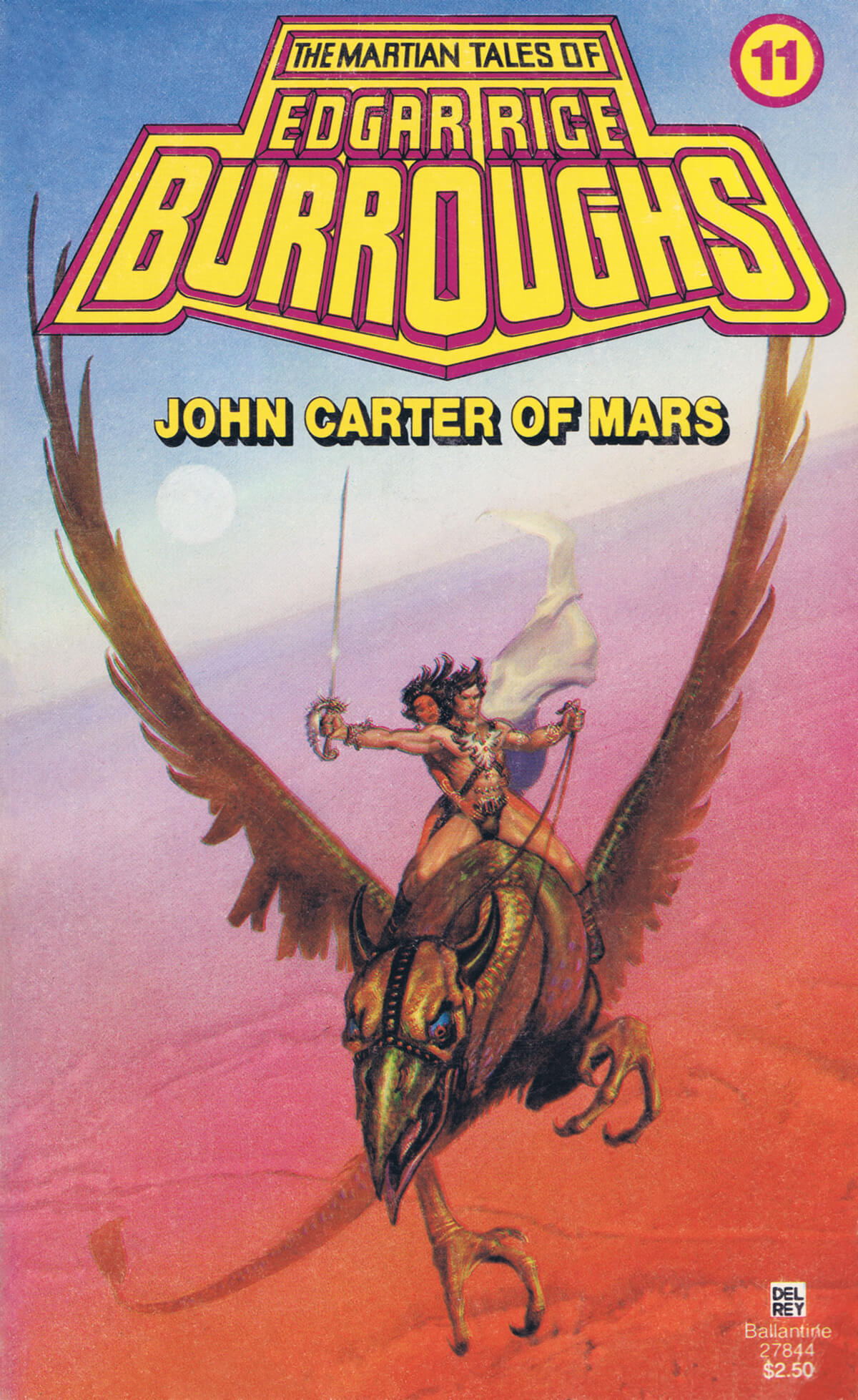
Be that as it may – I realize that it sometimes takes me a while to get to the point – in the summer of ’83, 40 years ago, I was charged with the painting the house, prior to our moving everything in. Unfortunately for my folks, it was around the same time that I purchased Edgar Rice Burroughs’ Martian novels – you know, the ones featuring John Carter and his progeny – in the paperback editions with the Michael Whelan cover art. So I’d paint one wall, and then I’d reward myself with the reading of a chapter. Eventually, my mom started to wonder why it was taking me so long to finish the project.
In a letter to the Corinthians, the Apostle Paul famously wrote, “When I was a child, I spoke as a child, I understood as a child, I thought as a child; but when I became a man, I put away childish things.” Evidently, he was unfamiliar with the escapist adventures of John Carter, Tars Tarkas, and Dejah Thoris.
I am happy to say, I have always retained my appreciation for childish things, whether at 5, 10, 17, or 56. Reflecting back 40 years, on the summer of ’83, is giving me a powerful thirst for Barsoom.
-
Lathe of Heaven 1980 Sci-Fi Gem Review
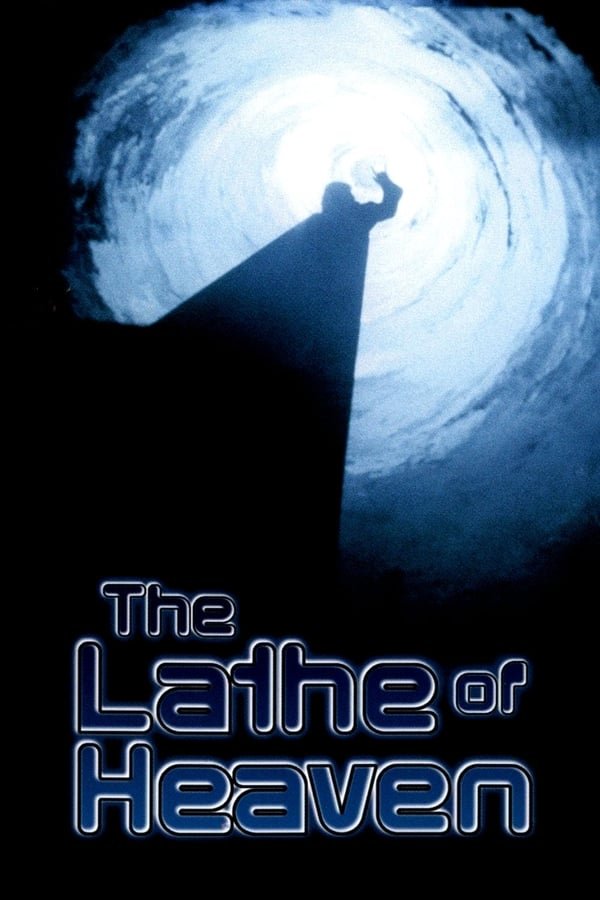
We have our “Viewer’s Choice” selection for the next “Roy’s Tie-Dye Sci-Fi Corner.” Thanks to Jack Dailey for his suggestion of “The Lathe of Heaven” (1980).
Ursula K. Le Guin personally oversaw this no-budget TV adaptation of her mind-bending 1971 novel that somehow succeeds in being one of the most absorbing sci-fi films you will ever see. What’s even more astonishing is that it was remastered from the only available source: a two-inch Quadruplex videotape copy. So this really is an example of some rather flimsy technology conveying some very weighty ideas. Hollywood, take note: it really is all about the story, dammit. The film made a huge impression when it first aired, becoming the second most requested program in PBS history.
“The Lathe of Heaven” supports Shakespeare’s observation that we are such stuff as dreams are made on. Also, we should be careful what we wish for.
Watch it at the link (because the copy on YouTube stinks and I can’t find it streaming legally anywhere else), and for the love of Mike, avoid the James Caan remake!*
https://archive.org/details/the-lathe-of-heaven-1980
Then tune in tomorrow, as we discuss just how weird Portland can get. Bring your hacky sacks to the comments section, for the next Roy’s Tie-Dye Sci-Fi Corner. We’ll risk destruction on “The Lathe of Heaven,” when we livestream on Facebook, this Friday evening at 7:30 EDT!
https://www.facebook.com/roystiedyescificorner
- PLEASE NOTE: I posted this this morning, before I learned of Caan’s death. No disrespect intended. He was a fine actor, who will be remembered for his work during one of the greatest eras in American film. R.I.P.
-

E.T. at 40 A Sentimental Education
A four-handkerchief science fiction fantasy? Steven Spielberg managed it 40 years ago, and audiences went for it in a big way. “E.T. The Extra-Terrestrial” has been touching hearts with a great big glowing finger since the film’s release on June 11, 1982. And thank God for it. In a world that very badly needs to remember what it’s like to embrace its humanity, we could use more movies, more stories, more music like it. Never mind Flaubert. “E.T.” is a crash course in sentimental education.
We’ll talk about it tomorrow night on “Roy’s Tie-Dye Sci-Fi Corner.” I confess, even though I was the one to suggest it, I am also a little reluctant to discuss it. But Roy and I certainly didn’t want the 40th anniversary of this cinematic milestone to pass unremarked. It’s the one movie where, depending on where the discussion goes, I may have to turn off my video. And maybe even the audio. If you have any baggage, “E.T.” will unpack it in a hurry.
Spielberg and screenwriter Melissa Mathison draw on everything from the Bible to “Peter Pan” to craft an emotionally honest bedtime story that taps into eternal truths about childhood, love, and parting. Remarkably uncynical, full of hope, and just downright beautiful on every level, “E.T.” is a blockbuster with heart. It’s also a remarkably vibrant time capsule of what it was it like to grow up in the 1980s.
Kudos to Carlo Rambaldi for his animatronic puppetry. Rewatching the film last night, I marveled at what they used to be able to accomplish before CGI became the default.
And John Williams has never been better. In terms of storytelling, the last 15 minutes of “E.T.” is as good as it gets at the movies. Reportedly Spielberg shut off the projector at the recording session in order to give Williams maximum flexibility in conducting the orchestra, and fine-tuned the sequence later, reediting the images, the better to allow the music to fully breathe.
This is the film that unhorsed “Star Wars” as the highest-grossing of all time and held the top slot for 15 years.
Is it Spielberg’s greatest movie? Yes. Yes, it is. I’ll argue why, on the next Roy’s Tie-Dye Sci-Fi Corner. So bring your Reese’s Pieces to the comments section. We’ll be chasing rainbows and clapping our hands for fairies when we livestream on Facebook, this Friday evening at 7:00 EDT.
https://www.facebook.com/roystiedyescificorner
If you are one of those obstinate folk who has avoided “E.T.” all these years, and you plan to tune in for our conversation, for the love of movies, do watch it before we spoil it!
May “E.T.” live long in our hearts!
Tag Cloud
Aaron Copland (94) Beethoven (95) Composer (114) Film Music (149) Film Score (143) Film Scores (255) Halloween (97) John Williams (197) KWAX (232) Leonard Bernstein (105) Marlboro Music Festival (125) Movie Music (164) Mozart (91) Opera (215) Philadelphia Orchestra (90) Picture Perfect (174) Princeton Symphony Orchestra (110) Radio (90) Ross Amico (244) Roy's Tie-Dye Sci-Fi Corner (290) The Classical Network (101) The Lost Chord (269) Vaughan Williams (107) WPRB (397) WWFM (881)