
9/11 is about the last thing to make anyone nostalgic. But at least in 2001 we still lived in a society in which national tragedy brought us together rather than divided us. That is, until the scapegoating began. Now it’s gotten to the point where I dread not what the next 24 years will bring, but rather the next 24 hours. No dona nobis pacems, please. The way to “peace” and a better world is in every one of us. Alas, so are the impediments. If we love our country and our families and value anything good we ever experienced here, thanks to our great good fortune in having lived in a comparatively free, safe, and sane United States, it’s time to grow up and take responsibility for fixing what’s broken, in ourselves and in the world. I realize about five people read this page, and everyone is here to talk about music, but I beg your indulgence for just a few sentences. We must rise above our baser instincts. Reject fomenters. Embrace compassion. Be humane. Can I myself live up to these ideals? Probably not. I get angry when somebody sits in their car checking their cell phone while I’m waiting for a parking space. But I can try harder, and you can too. Because if we don’t, there’s a greater chance of us imploding in suspicion, fear, hatred, and violence than there ever was of our crumbling from external forces like those that, ironically, brought unity in suffering on 9/11.
Tag: 9/11
-
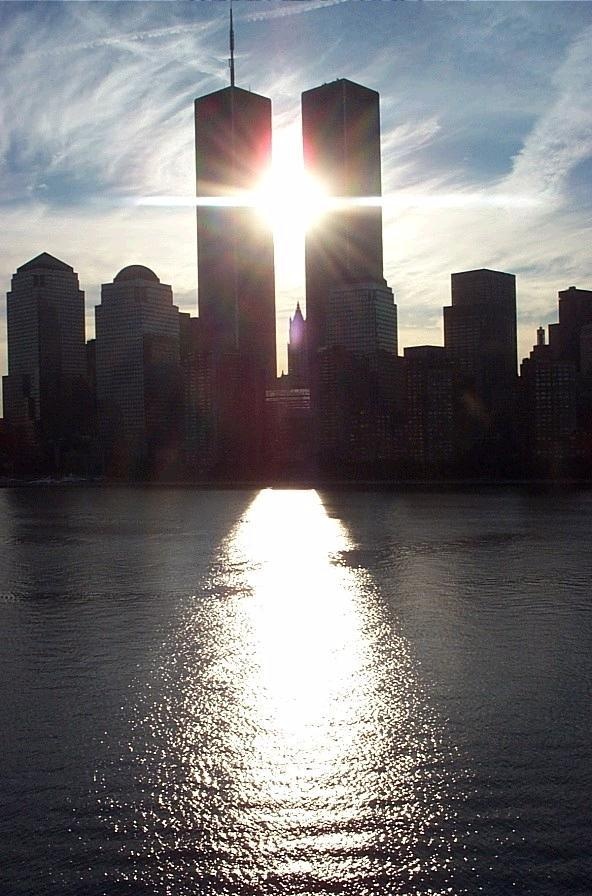
9/11: Remembrance, Reflection, and Hope
In common with just about everyone else in this country who lived through it, for the past 23 years, I have awoken on this morning to the enormity of 9/11. And every year I dig deep and try to rise to the challenge of writing something meaningful. And you know me. Once I start typing, my fingers are like long-distance runners.
This year, I am sorry to say, the needs of the present intrude. With multiple projects I am being relied on to complete or prepare, I am unable to devote as much time to reflection on these matters as I would like. But briefly…
I am thankful that, even though I know people who were there, or nearly there, at Ground Zero, and as someone who had family in the air as the horrors in New York, Pennsylvania, and D.C. unfolded, that I didn’t lose anyone in the attacks or their aftermath. But none of us who lived through 9/11 emerged unscathed.
Today, honor the memory of those who perished and spare a thought for those who continue to suffer loss, chronic ill-health, or PTSD. Be extra mindful of being kind. Even on the morning after the presidential debate. Remember we’re all Americans. And we’re all human beings. Just because someone disagrees with you doesn’t mean he or she is your enemy.
Also, seek beauty in the world. Be reminded of the positive and even uplifting things we are all capable of, to a greater or lesser extent. We can’t all write symphonies, but some of us can. Others can help a stranger change a tire. It’s happened to me, and I have paid it forward.
Most of all, count your blessings and try to live with appreciation. It’s easy to say, and even trite, but every day is a miracle.
We all come with our own vulnerabilities and our own struggles. Most of us fail to live up to our ideals. But we can want to be better and try to facilitate that in burying our spiteful impulses and in behaving constructively, even if it’s to make only one person feel better. A smile or a wave of recognition could make a difference to somebody.
It’s hard to fathom the kind of psychological state or extreme ideology that could drive anyone to willingly kill and terrorize innocent bystanders, no matter what the rationale. But the impulses that create monsters are dormant in all of us. It’s up to each us to harness that power and to turn it to positive ends.
Dona nobis pacem. Pax in terra.
Selections from Robert Moran’s “Trinity Requiem,” composed for Trinity Church, the “Ground Zero church” in lower Manhattan, to mark the tenth anniversary of the attacks:
-
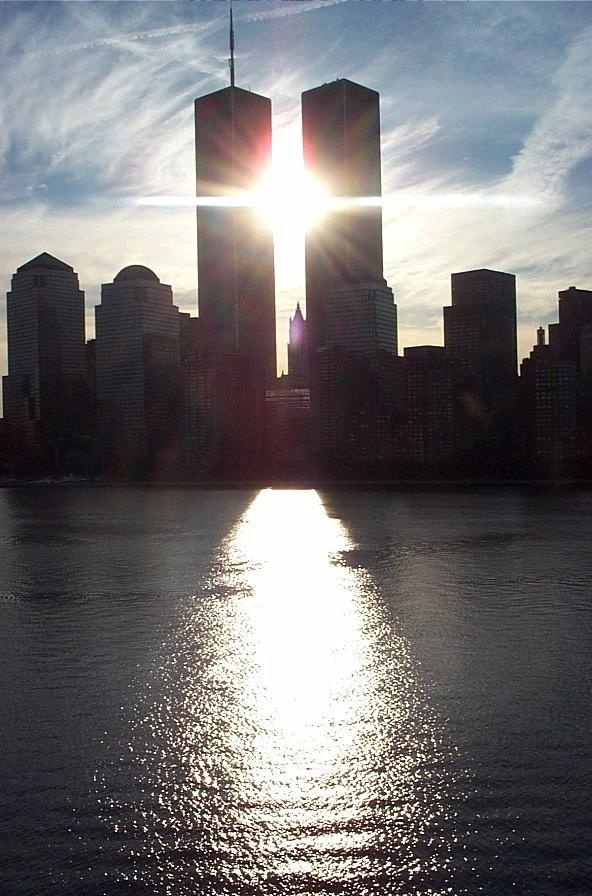
9/11, Art, and a World in Crisis
There was some debate at the time as to whether 2000 or 2001 was the proper start of the new millennium. And in 2000, there was a scramble for generators, as anxiety mounted over whether shortsighted computer programming would cause elevators to plummet and airplanes to drop from the skies for Y2K. Whether or not you felt a touch of annoyance at all the knuckleheads in their New Year’s Eve “2000” novelty glasses who believed they really were welcoming in a new millennium (a year early, in fact), in the end it proved to be as immaterial as a lover’s quarrel. Because the 21st century really began on September 11, 2001.
22 years on, we live in the world 9/11 made, or at any rate embodied. We continue to grapple with uncertainty, and anxiety, and hopelessness, as humankind gives in to its baser instincts and lessons seemingly are never learned. War, terrorism, nuclear weapons, disease, heedless technology, and shady politics had been with us already in the 20th century, of course; but with the destruction of the World Trade Center, and the horror of the attacks, brought to us live, in real time, it really did seem as if everything was running off the rails.
In a society where the arts and education are marginalized and brutishness and nihilism are celebrated and exploited as means to power and economic gain, injustice and aggression are on the rise, and we all pay the price.
This is not to diminish the horror and suffering of those who perished in the attacks or their survivors. Nothing I could write could ever do honor to those who died or convey enough sympathy or solace to their families. But none of us who lived through 9/11 emerged unscathed.
In response to the assassination of John F. Kennedy in 1963, Leonard Bernstein famously declared, “This will be our reply to violence: to make music more intensely, more beautifully, more devotedly than ever before.”
But you know the old philosophical thought experiment: if a tree falls in the woods and no one is around to hear it, does it still make a sound?
If beautiful music is made intensely and devotedly, will it still reach those for whom it might prove transformative in a world where it has been dismissed and even denigrated?
In Bernstein’s day, classical music was still on television. It was on the radio. It was not chopped up and presented as a string of pretty tunes to be promoted as “relaxing.” Beethoven, Mahler, and Shostakovich did not write elevator music. These were soulful outpourings of people with their own struggles. Now, outside the concert hall, lamentably, they are mostly silent.
Would classical music have prevented 9/11? Of course not. But anything that promotes reflection and beauty and solace and empathy can only help. Our artistic monuments are what connect us to one another and reassure us and encourage us in how we relate to our fellow human beings. And you don’t have to be a dead white European male to benefit.
The years pass quickly and it doesn’t take long for people to forget. A generation has already reached adulthood that has no firsthand memory of 9/11. Nor of Leonard Bernstein for that matter.
Horror and human tragedy can always be found in abundance, whether the cause be natural, as in the recent earthquake in Morocco, or the wildfires in Maui, or manmade, as in the misery of the war in Ukraine, or any number of mass shootings in public places. At home, in the United States, there are dangerous undercurrents of social and political unrest.
Classical music is not simply the means to a lofty escape. There is a difference between elitism and elevation. The arts are not all ivory tower, after all; they also have a practical application. With the ever-present threat of injustice, oppression, and violence, they are evidence of our shared humanity at its most transcendent.
Also, I expect they make you feel a hell of a lot better about everything than would an empty diet of soul-crushing noise, vapid flash, and glorified violence.
-
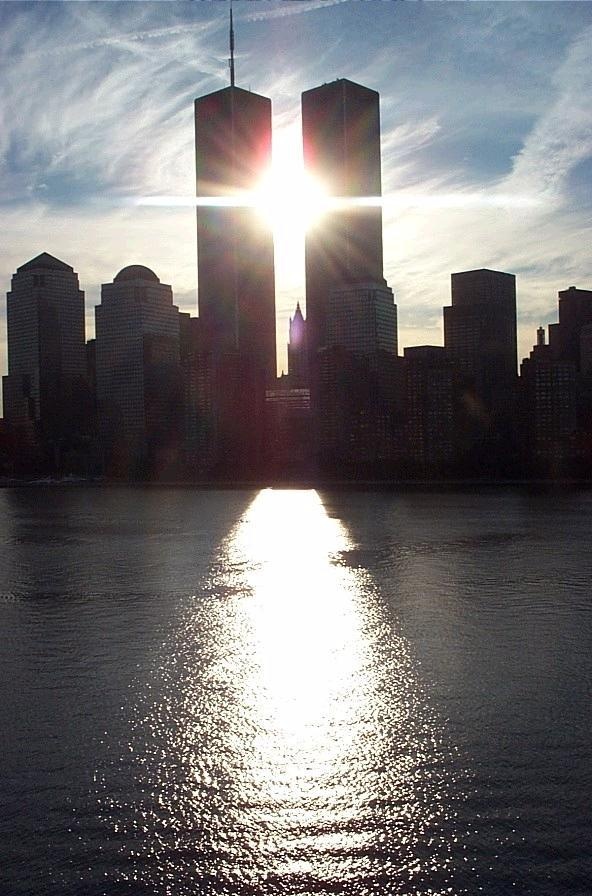
9/11 Reflection Music Solace & Memory
9/11: A morning for reflection. The horror and surreality of that September morning, now 21 years ago, will never be forgotten. When my telephone (a land line!) rang around 9:00, I was already at work on my home computer (a Macintosh!), oblivious to the news. I picked up. A friend was on the line. She said a plane had crashed into the World Trade Center. I imagined the Empire State Building and the B-25 accident, back in the 1940s. I was thinking maybe a piper. Bad enough in itself, certainly, but accidents do happen. Then she said one of the towers “fell over.” That was what sent me to the TV.
I had parents in the air that morning, on the way to China. The first leg of their journey took them west across Pennsylvania. Thankfully, they were not on United States Airlines Flight 93, that crashed near Shanksville, southeast of Pittsburgh, at 10:03.
The phone lines were jammed. Nobody owned a cell phone. It was a long day until I learned that their flight had been grounded in Pittsburgh.
My heart goes out to those who died senselessly, and for their survivors, for whom the day remains most vivid and painful, I’m sure.
It was a dark turning point for America at the start of a new century, and a new millennium. I wonder if we ever fully appreciated how good we had it here in the halcyon days of the late 20th century?
Not surprisingly, there has been a lot of music written in response to the horrific events of that morning, and the pain, heroism, and sacrifice. I’ve heard a lot of it, and for me, none of it as successful as Robert Moran’s “Trinity Requiem,” a masterpiece of solace and consolation.
The work was composed in 2011 for Trinity Wall Street, the so-called “Ground Zero Church” in Lower Manhattan, to mark the tenth anniversary of the attacks.
Here’s an interview I recorded with Bob shortly after the release of the CD (which I tweaked for rebroadcast last year), followed by a complete performance of the piece, a great balm for troubled times. If you’re not in the mood for the chit-chat, jump to the 16-minute mark for some truly lovely, reflective music.
https://www.wwfm.org/webcasts/2021-09-02/the-lost-chord-september-5-the-persistence-of-memory
-
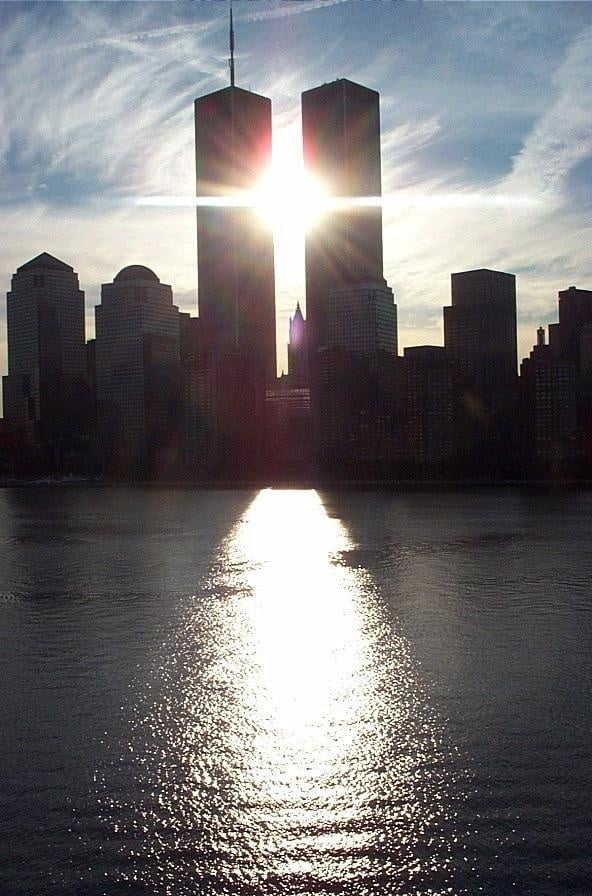
9/11 Trinity Requiem Moran’s Consoling Masterpiece
For the tenth anniversary of the surreal, unforgettable events of September 11, 2001, Philadelphia composer Robert Moran wrote his “Trinity Requiem” for the youth chorus of Trinity Wall Street, the so-called “Ground Zero church” in Lower Manhattan. This Sunday night on “The Lost Chord,” we’ll revisit this beautiful, consoling work and reflect on that September morning of twenty years ago – a morning that still feels like yesterday.
Moran may not be the first artist that would spring to mind for anyone seeking musical solace. The merry prankster ethos runs deep in this pupil of Hans Erich Apostel, Darius Milhaud, and Luciano Berio. Moran gained early notoriety for his compositions on a grand scale, incorporating entire cities (including San Francisco, Graz, Austria, and Bethlehem, Pennsylvania), their automobiles, airplanes, skyscrapers, radio and television stations, marching bands, dancers, theatrical groups, and tens of thousands of performers.
He’s written works for harpsichord and electric frying pan, and any number of performance art pieces, including one, archived on YouTube, that involves musicians walking around a financial district with slide whistles inside giant paper bags.
Flirting with respectability, he collaborated on an opera, “The Juniper Tree,” perhaps the grimmest of Grimm fairy tales, with Philip Glass, and he has composed a number of other works for the stage, including “Desert of Roses” (after Beauty and the Beast), for Houston Grand Opera, and “Alice” (after Lewis Carroll), for the Scottish Ballet. He’s currently at work on a monodrama about God.
Given Moran’s freewheeling reputation, I thought it only appropriate to title this week’s show after one of Salvador Dali’s most famous paintings, “The Persistence of Memory” – both for its surreal associations (a dreamscape of melting watches) and for the deep psychological scars left by the deadliest attacks ever perpetrated on American civilians.
Moran rises to the occasion to provide an ethereal masterpiece, a 30-minute journey to Paradisum, worthy to stand alongside the transcendent Requiem of Gabriel Fauré.
“Trinity Requiem” received its first performance at Trinity Wall Street on September 7, 2011. The second performance took place in St. Paul, Minnesota, on the actual anniversary of the attacks. Locally, it was performed by Mendelssohn Club, at the Basilica of Saints Peter and Paul, on Logan Square in Philadelphia, in 2012.
A compact disc was released on the innova Recordings label, with the Trinity Youth Chorus and members of the Trinity Choir, Trinity Wall Street, under the direction of Robert Ridgell.
Among the handful of miracles that occurred on a day of unthinkable tragedy, a hundred-year-old sycamore tree preserved the church’s St. Paul Chapel, constructed in 1766, from destruction by debris from the World Trade Center, including what would have been a direct hit from a falling I-beam.
On tonight’s broadcast, “Trinity Requiem” will be prefaced by a conversation with the composer. In the time remaining we’ll also hear Moran’s dreamlike “Notturno in Weiss” (“Nocturne in White”), on an aphoristic text by Christian Morgenstern.
Find solace in the purity of music, as we continue to grapple with the legacy of 9/11, this Sunday night at 10:00 EDT, on WWFM – The Classical Network and wwfm.org.
Tag Cloud
Aaron Copland (92) Beethoven (94) Composer (114) Film Music (117) Film Score (143) Film Scores (255) Halloween (94) John Williams (185) KWAX (228) Leonard Bernstein (99) Marlboro Music Festival (125) Movie Music (132) Opera (197) Philadelphia Orchestra (86) Picture Perfect (174) Princeton Symphony Orchestra (106) Radio (86) Ralph Vaughan Williams (85) Ross Amico (244) Roy's Tie-Dye Sci-Fi Corner (290) The Classical Network (101) The Lost Chord (268) Vaughan Williams (101) WPRB (396) WWFM (881)