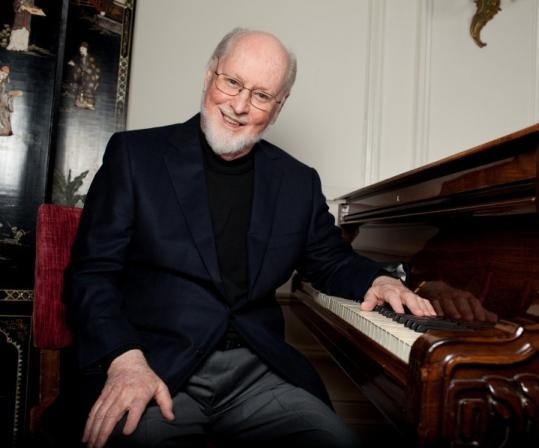
I posted earlier about film composer Alex North (“A Streetcar Named Desire,” “Death of a Salesman,” “Spartacus,” “Cleopatra,” “Who’s Afraid of Virginia Woolf?”) on his birthday. Now here’s a two-part interview about North with John Williams!
Tag: A Streetcar Named Desire
-
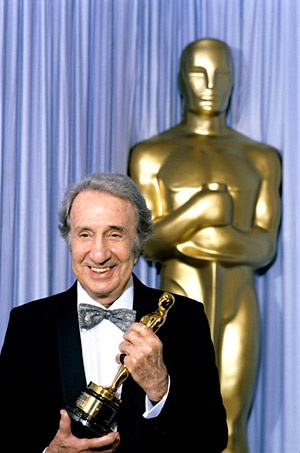
Alex North The Uncrowned King of Film Scores
Alex North was born in Chester, Pennsylvania (just outside of Philadelphia), on this date in 1910. His journey took him from a working-class background, to the Curtis Institute of Music, the Juilliard School, and the Moscow Conservatory. He also studied with Aaron Copland and Ernst Toch.
He became involved with the Federal Theatre Project. He worked in ballet, especially with Martha Graham and Anna Sokolow. He accompanied the latter to Mexico, where he had an opportunity to study with Silvestre Revueltas. Perhaps not coincidentally, his three North American teachers, Copland, Toch, and Revueltas, had all worked in film.
North wrote his first film score as far back as the 1930s, around the time he met up with director Elia Kazan. North was drafted during the war, and put his talent to use writing music for the Office of War Information documentaries.
With the cessation of hostilities, he returned to the theater. He also composed some concert pieces. It was his incidental music for plays like “A Streetcar Named Desire” that earned him an invitation to Hollywood, where he wrote the score for Kazan’s classic film adaptation. It would be the first time jazz would be fully integrated into the drama, forming the basis for the film’s underscore, as opposed to being simply diegetic, or “source music,” played by a band or on a turntable in the background of a given scene. Its success opened the door to a new film score sensibility, paving the way for composers like Elmer Bernstein, Henry Mancini, and North’s beloved Duke Ellington.
In all, North wrote 50 film scores, racking up 15 Academy Award nominations, yet never taking home the prize. In 1986, he received lifetime achievement recognition from the Academy, the first composer to be so honored.
There were times, during the course of his career, when his music took on an independent life, distinct from the films for which it was written. He scored major hits with “Unchained Melody” (originally written for the film “Unchained” and recorded some 500 times) and the love theme from “Spartacus.” The original soundtrack to “A Streetcar Named Desire” also sold extremely well.
His acclaimed contribution to “Spartacus” didn’t keep the film’s director, Stanley Kubrick, from rejecting North’s score for “2001: A Space Odyssey” – without bothering to tell him. North found out only after the lights went down at the film’s premiere. Director John Huston was more appreciative. Later in his career, North became Huston’s composer of choice, for films like “The Misfits,” “Under the Volcano,” “Prizzi’s Honor,” and “The Dead.”
It’s especially poignant, in 2023, to view North’s acceptance speech for his honorary Oscar. (You’ll find a link to the clip below.) At around the 4:50 mark, he says: “I would like to make a humble plea to all of us involved in the movies, and that is to encourage and convey hope, humor, compassion, and adventure, and love… as opposed to despair, synthetic theatrics, and blatant, bloody violence. And sex, sex, sex, by all means, indeed… but with a bit of mystery, a touch of charm and elegance, and lots of imagination.”
Amen to that. It’s a shame that it’s a plea that’s been almost wholly ignored. We would be in a better place today, psychologically, as morale colors everything, were we not buffeted by an aggressively crass and downbeat popular culture. Had filmmakers only heeded his advice.
Happy birthday, Alex North.
The Righteous Brothers sing “Unchained Melody”
In the movie “Ghost”
Love theme from “Spartacus”
https://www.youtube.com/watch?v=ChYyW_IhINo
Cover by Yusef Lateef
“A Streetcar Named Desire”
Rejected score for “2001: A Space Odyssey”
Honorary Academy Award, presented by Quincy Jones, with an intro by Robin Williams
-
Alex North Film Music Pioneer
This afternoon on The Classical Network, we are well and truly North-bound.
Alex North was born in Chester, Pennsylvania (just outside of Philadelphia), on this date in 1910. His journey took him from a working class background to the Curtis Institute of Music, the Juilliard School, and the Moscow Conservatory. He also studied with Aaron Copland and Ernst Toch.
He became involved with the Federal Theatre Project. He worked in ballet, especially with Martha Graham and Anna Sokolow. He accompanied the latter to Mexico, where he had an opportunity to study with Silvestre Revueltas. Perhaps not coincidentally, his three North American teachers, Copland, Toch, and Revueltas, had all worked in film.
North wrote his first film score as far back as the 1930s, around the time he met up with director Elia Kazan. North was drafted during the war, and put his talent to use writing music for the Office of War Information documentaries.
With the cessation of hostilities, he returned to the theater. He also composed some concert pieces. It was his theatre scores for plays like “A Streetcar Named Desire” that earned him an invitation to Hollywood, where he wrote the music for Kazan’s classic film adaptation. It was the first time jazz would be fully integrated into an onscreen drama, as opposed to being played in the background of a given scene. Its success opened the door to a new “film score” sensibility, paving the way for composers like Elmer Bernstein, Henry Mancini, and his beloved Duke Ellington.
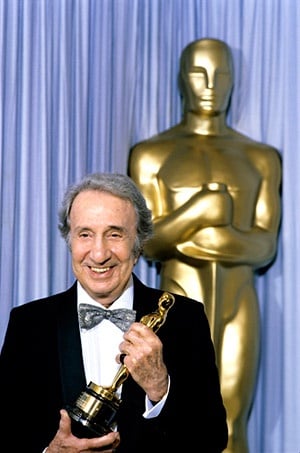
In all, North wrote 50 film scores, racking up 15 Academy Award nominations, yet never taking home the prize. In 1986, he received lifetime achievement recognition from the Academy, the first composer to be so honored.
There were times, during the course of his career, when his music took on an independent life, distinct from the films for which it was written. He scored major hits with “Unchained Melody” (originally written for the film “Unchained” and recorded some 500 times) and the love theme from “Spartacus.” The original soundtrack to “A Streetcar Named Desire” also sold extremely well.
His acclaimed contribution to “Spartacus” didn’t keep the film’s director, Stanley Kubrick, from rejecting North’s score for “2001: A Space Odyssey” – without telling him. North found out only at the film’s premiere. But director John Huston was very happy to have him. Later in his career, North became Huston’s composer of choice, for films like “The Misfits,” “Under the Volcano,” “Prizzi’s Honor,” and “The Dead.”
I hope you’ll me today for North’s rarely-heard Concerto for Piano and Orchestra with Trumpet Obbligato, and yes, selections from “Spartacus,” among my featured works. We’ll also observe the birthdays of André Campra, Michel Pignolet de Montéclair, and Sir Hamilton Harty.
Then it’s off to the north countries for music by Carl Nielsen and Jean Sibelius on “Music from Marlboro” at 6:00.
We’ll face true North, from 4 to 7 p.m. EST, on WWFM – The Classical Network and wwfm.org.
BETTER LATE THAN NEVER: North with his honorary Oscar
-

Alex North Film Music Pioneer
This afternoon on The Classical Network, we are North-bound, as we celebrate the anniversary of the birth of composer Alex North.
North was born in Chester, Pennsylvania (just outside of Philadelphia), on December 4th, 1910. His journey took him from a working class background to the Curtis Institute of Music, the Juilliard School, and the Moscow Conservatory. He also studied with Aaron Copland and Ernst Toch.
He became involved with the Federal Theatre Project. He worked in the ballet, especially with Martha Graham and Anna Sokolow. He accompanied the latter to Mexico, where he had an opportunity to study with Silvestre Revueltas. Perhaps not coincidentally, his three North American teachers, Copland, Toch, and Revueltas, had all worked in film.
North wrote his first film score as far back as the 1930s, around the time he met up with director Elia Kazan. North was drafted during the war, and put his talent to use writing music for the Office of War Information documentaries.
With the cessation of hostilities, he returned to the theater. He also composed some concert pieces. It was his theatre scores for plays like “A Streetcar Named Desire” that earned him an invitation to Hollywood, where he wrote the music for Kazan’s classic film adaptation. It was the first time jazz would be fully integrated into an onscreen drama, as opposed to merely play in the background of a given scene. Its success opened the door to a new “film score” sensibility, paving the way for composers like Elmer Bernstein, Henry Mancini, and his beloved Duke Ellington.
In all, North wrote 50 film scores, racking up 15 Academy Award nominations, yet never taking home the prize. In 1986, he received lifetime achievement recognition from the Academy, the first composer to be so honored.
There were times, during the course of his career, when his music took on an independent life, distinct from the films for which it was written. He scored major hits with “Unchained Melody” (originally written for the film “Unchained” and recorded some 500 times), and the love theme from “Spartacus.” The original soundtrack to “A Streetcar Named Desire” also sold extremely well.
His acclaimed contribution to “Spartacus” didn’t keep the film’s director, Stanley Kubrick, from rejecting North’s score for “2001: A Space Odyssey” – without telling him. (North found out only at the film’s premiere.) But director John Huston was very happy to have him. Later in his career, North became Huston’s composer of choice, for films like “The Misfits,” “Under the Volcano,” “Prizzi’s Honor,” and “The Dead.”
This afternoon, we’ll enjoy North’s rarely-heard Concerto for Piano and Orchestra with Trumpet Obbligato, and yes, selections from “Spartacus,” among our featured works, as we’ll also observe the birthdays of André Campra and Sir Hamilton Harty. We’ll face true North, between 4 and 7 p.m. EST, on WWFM – The Classical Network and wwfm.org.
BETTER LATE THAN NEVER: North with his honorary Oscar
Tag Cloud
Aaron Copland (94) Beethoven (95) Composer (114) Film Music (150) Film Score (143) Film Scores (255) Halloween (102) John Williams (198) KWAX (233) Leonard Bernstein (105) Marlboro Music Festival (125) Movie Music (165) Mozart (91) Opera (215) Philadelphia Orchestra (90) Picture Perfect (174) Princeton Symphony Orchestra (110) Radio (90) Ross Amico (244) Roy's Tie-Dye Sci-Fi Corner (290) The Classical Network (101) The Lost Chord (269) Vaughan Williams (107) WPRB (397) WWFM (881)