Tag: Abraham Lincoln

  • Copland’s Lincoln Portrait Still Inspires Today

    Copland’s Lincoln Portrait Still Inspires Today

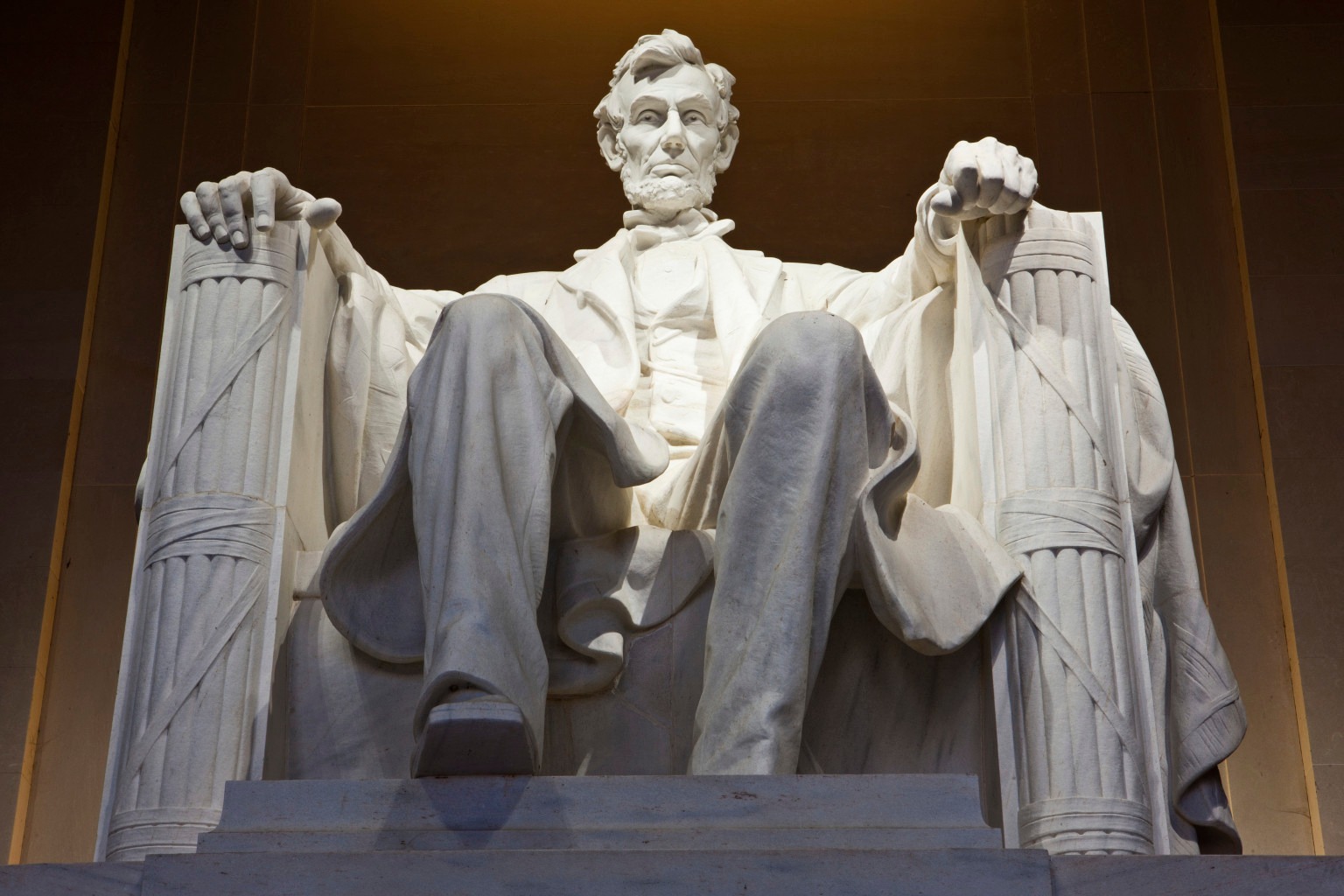
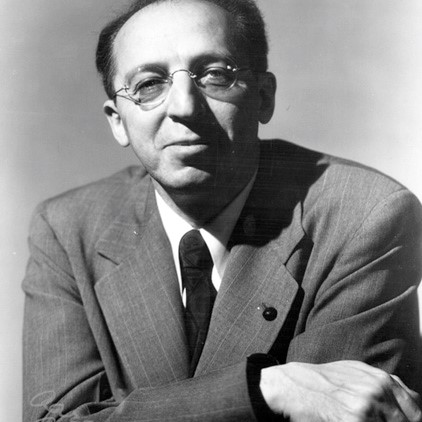
    Suddenly the pride and optimism of “A Lincoln Portrait” has come to seem so quaint. But I will always carry its idealism in my heart.

    Incorporating texts from Lincoln’s speeches, most notably “The Gettysburg Address,” Aaron Copland’s work for speaker and orchestra has been embraced by narrators across the political spectrum, from William Warfield and Carl Sandburg to Margaret Thatcher and Charlton Heston.

    Regardless of one’s personal ideology, the work has the power to stir and inspire. When it was performed under the direction of the composer in Venezuela in 1957, in the presence of reigning dictator Marcos Pérez Jiménez, it was so passionately received by the audience that it may have contributed to Jiménez’ overthrow and exile only a few days later. So clearly, it can be heady, even incendiary stuff.

    Maybe it is, after all, the very thing we need at the present time. The message is one of unity, not division, in serving the greater good and honoring our responsibility to the nation and our fellow citizens in rising to the challenges of “the stormy present.” (“The fiery trial through which we pass will light us down in honor or dishonor to the latest generation.”) The elevating marriage of Lincoln’s words and Copland’s music humbles in its persuasive espousal of the American ideals of fairness and sacrifice. it’s not surprising that the work has appealed to people across the political spectrum. It’s not about partisanship. It’s about embracing the democratic ideals of the United States of America.

    This weekend will bring the opportunity to experience the work live, as Copland’s “A Lincoln Portrait” will be the centerpiece of a program on American and often patriotic themes, to be presented this Friday night at 8:00 by the Main Line Symphony Orchestra, at Valley Forge Middle School in Wayne, PA.

    Jamie Bernstein, Leonard Bernstein’s daughter, will be the narrator. Also on the program will be her father’s “Candide Overture,” Samuel Barber’s Violin Concerto (with Marc Rivetti, assistant concertmaster of the Philadelphia Orchestra, the soloist), William Schuman’s “New England Triptych” (based on melodies of Revolutionary Era composer William Billings), and selections from John Williams’ “Lincoln” and “The Patriot.”

    The conductor will be the orchestra’s music director, Don Liuzzi, whose day job is as principal timpani of the Philadelphia Orchestra.

    The program will be repeated at Reform Congregation Keneseth Israel in Elkins Park, PA, on Sunday at 2 p.m.

    On Aaron Copland’s birthday (today), it’s a timely reminder of the kind of thinking that really made this country great. For more information on these concerts and upcoming performances of the Main Line Symphony Orchestra, follow the link.

    https://www.mlso.org/concerts.htm

    Leonard Bernstein conducts “A Lincoln Portrait,” with William Warfield narrating. Watch for Gerard Schwarz as co-principal trumpet. Schwarz would go on to make his own recording of “A Lincoln Portrait,” as music director of the Seattle Symphony, with James Earl Jones as the speaker.

  • William Seward Alaska Lincoln and a Close Call

    William Seward Alaska Lincoln and a Close Call

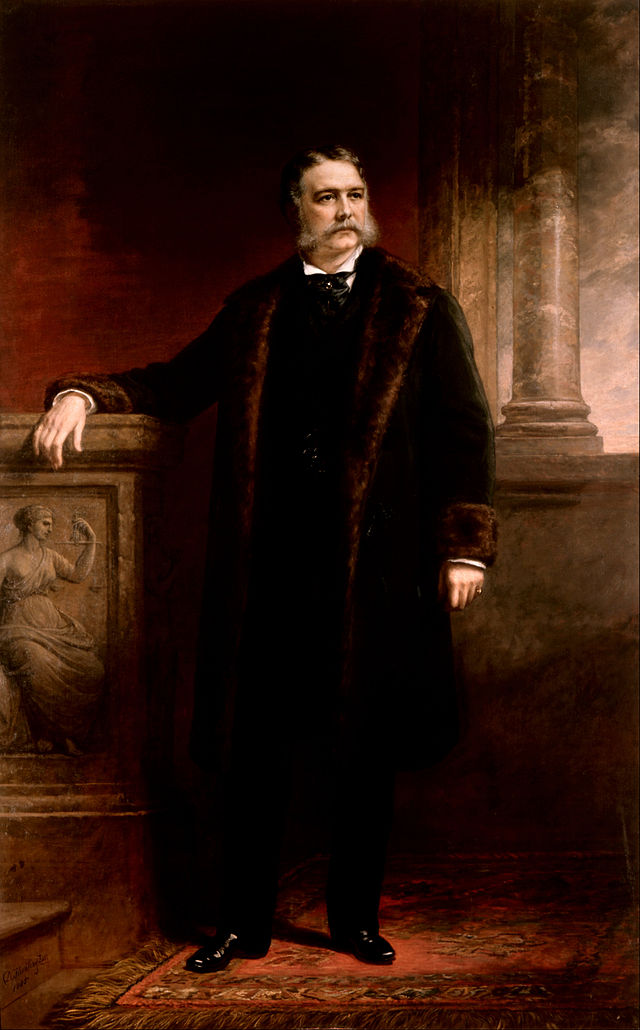
    Today is the birthday of William H. Seward, one-time governor of New York, United States senator, and Secretary of State under Lincoln, part of Lincoln’s “team of rivals,” who endures in the minds of most Americans, if they remember him at all, for his purchase of Alaska, widely lampooned at the time as “Seward’s folly.”

    Seward was more overtly radical than Lincoln, as a senator in the 1840s and ‘50s already outspokenly anti-slavery and pro-Black rights. At a time when it was illegal to harbor escaped slaves in New York, his house was a stop on the Underground Railroad and he was instrumental in setting up Harriet Tubman in a permanent residence down the street.

    Lincoln and Seward grew unexpectedly close as they put their heads together and drew on the brain trust of their uneasy cohort, with its varying political perspectives, in order to navigate a civil war and preserve the Union.

    There are those who hated what they stood for. Seward was already bedridden, the result of a carriage accident, on the night of Lincoln’s assassination. On April 14, 1865, an assailant entered the Seward home to make a bloody attempt on his life. Many serious injuries resulted, including to members of the Seward family. A son, Frederick, had his skull staved with a pistol. (He was in a coma for two months, but ultimately recovered.) Two other sons, Andrew and William, were stabbed. A daughter, Fanny, was also attacked. Eight people in all were injured in the attempt, part of a broader plot to take out the three senior members of the Executive Branch. (A third conspirator was to have attacked Vice President Andrew Johnson, but lost his nerve.) Seward, who was stabbed five times in the face, neck, and chest, survived, protected in part by a brace he wore as he was convalescing from the carriage accident. Those in the house who escaped physical harm suffered from the shock of the assault. Seward’s wife died of a heart attack not long after, and the family lived with the emotional trauma for many years.

    I was at a wedding last summer in Auburn, New York, when I learned that Seward’s house, now a museum, was only a few blocks from where I was staying. Of course, I had to check it out. I had played Seward in a school play when I was in the fourth grade.

    Up the side steps I sauntered and opened the door into the reception area, and before my eyes could adjust, I heard, “Aren’t you Ross Amico?” Naturally, I was surprised. Had my early triumph as an actor preceded me?

    No, it turns out that one of my listeners in the Princeton area happened to be visiting Auburn and was friends with one of the docents. She had recognized my voice as I entered. Elocution proved mightier than my Seward.

  • Presidents Day Music Lincoln Washington & More

    Presidents Day Music Lincoln Washington & More

    It’s Presidents Day. Before you hit the white sales, I’ve got a few musical selections for you.

    Here’s a melody called “Lincoln and Liberty” (originally “Rosin the Beau/Bow”), a tune Lincoln appropriated for his campaign song in 1860. If you note the pattern on the performer’s pants, you might deduce he is an escaped convict.

    https://www.youtube.com/watch?v=Es3J4yxPFiI

    Variations on the tune by Paul Turok:

    This is a concert overture titled “McKonkey’s Ferry (Washington at Trenton)” by Trenton’s own George Antheil. I think you’ll agree, Washington has never sounded so Soviet.

    Which presidents to celebrate, anyway?

    https://www.washingtonpost.com/news/answer-sheet/wp/2014/02/16/why-presidents-day-is-slightly-strange/?fbclid=IwAR0D_c2FS9IBu80-cg6wPJFh7BnOqG1BPriTEkJZurAlXb7o5OHkDP7dD4w

    Chester A. Arthur, our 21st president, thought “Hail to the Chief” too undignified, so he requested a new piece from John Philip Sousa. The result was the “Presidential Polonaise” (1886).

    I wonder if anyone ever thought to write a polka for Polk?

  • Lincoln’s Birthday Remembered on “The Lost Chord”

    Lincoln’s Birthday Remembered on “The Lost Chord”

    It’s Super Bowl/Valentine’s Day/Abraham Lincoln’s Birthday Weekend!

    This Sunday night on “The Lost Chord,” we honor our 16th president, on the anniversary of his birth (in 1809), with an hour of monumental selections.

    We’ll begin with David Diamond’s setting of the Gettysburg Address as “On Sacred Ground,” a work for mixed chorus, children’s chorus, baritone solo and orchestra. The piece was given its first performance two days before the centenary of Lincoln’s actual delivery of the Address, which he presented on November 19, 1863.

    After that, as a bit of a palate-cleanser, we’ll enjoy Paul Turok’s buoyant “Variations on an American Song: Lincoln and Liberty,” also composed in 1963. The song is based on a traditional Irish fiddle tune, “Rosin the Bow,” which was outfitted with new lyrics for use in Lincoln’s 1859 presidential campaign:

    “Then up with our banner so glorious,
    The star-spangled red-white-and-blue,
    We’ll fight till our Cause is victorious,
    For Lincoln and Liberty, too!”

    Finally, we’ll return to Gettysburg and music by American composer Roy Harris, also born on this date, though 89 years later. Harris was born in a log cabin in Lincoln County, Oklahoma. If that doesn’t fill one with a sense of destiny, I don’t know what will!

    In his day, Harris was regarded as one of America’s greatest composers, particularly renowned for his symphonies. His Symphony No. 3 is his most famous work; we’ll be hearing the Symphony No. 6, subtitled “Gettysburg.”

    Each movement bears a superscription taken from the Gettysburg Address.

    I. Awakening (“Fourscore and seven years ago…”);

    II. Conflict (“Now we are engaged in a great civil war…”);

    III. Dedication (“We are met on a great battlefield of that war…”);

    IV. Affirmation (“…that we here highly resolve that these dead shall not have died in vain…).

    I hope you’ll join me for this memorial to Lincoln, on “Lincoln Portraits,” this Sunday night at 10:00 EST, on WWFM – The Classical Network and wwfm.org.

    And remember, if the game runs long, the show will be posted as a webcast at the WWFM website for you to enjoy later. It would make a fine soundtrack for any Presidents Day hootenanny.

  • Lincoln, Price, Harris: Midnight Meditations

    Lincoln, Price, Harris: Midnight Meditations

    Before “Lincoln in the Bardo,”* there was “Abraham Lincoln Walks at Midnight.”

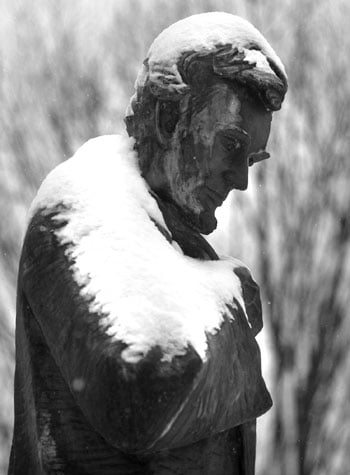
    Vachel Lindsay’s poem, written in 1914, depicts Lincoln stirring from his eternal rest to roam the streets of Springfield, Illinois, still burdened by the nation’s troubles. I’d hate to think what Lincoln’s spirit must be going through today.

    On Lincoln’s birthday, here’s Florence Price’s setting of Lindsay’s meditation. It is one of three Price settings of the poem rediscovered in 2009. From the information available, it would seem that all three would fit on one album. Somebody record these, please!

    By coincidence, today also happens to be the anniversary of the birth of Roy Harris. Born on Lincoln’s birthday in 1898 – in a log cabin in Lincoln County, Oklahoma – Harris had to have been imbued with a sense of destiny. Harris also set Lindsay’s poem, for mezzo-soprano, violin, cello and piano.

    Harris was regarded as one of America’s greatest composers. He was particularly renowned for his symphonies. His Symphony No. 3 is his most famous work. The Symphony No. 6, formulated over a reading of Sandburg, is subtitled “Gettysburg.”

    Each of the four movements bears a superscription from Lincoln’s Gettysburg Address:

    I. Awakening (“Fourscore and seven years ago…”);

    II. Conflict (“Now we are engaged in a great civil war…”);

    III. Dedication (“We are met on a great battlefield of that war…”);

    IV. Affirmation (“…that we here highly resolve that these dead shall not have died in vain…).

    I call that putting a Price on linkin’ Harris and Lincoln.


    “Abraham Lincoln Walks at Midnight”

    (In Springfield, Illinois)

    It is portentous, and a thing of state
    That here at midnight, in our little town
    A mourning figure walks, and will not rest,
    Near the old court-house pacing up and down,

    Or by his homestead, or in shadowed yards
    He lingers where his children used to play,
    Or through the market, on the well-worn stones
    He stalks until the dawn-stars burn away.

    A bronzed, lank man! His suit of ancient black,
    A famous high top-hat and plain worn shawl
    Make him the quaint great figure that men love,
    The prairie-lawyer, master of us all.

    He cannot sleep upon his hillside now.
    He is among us:—as in times before!
    And we who toss and lie awake for long,
    Breathe deep, and start, to see him pass the door.

    His head is bowed. He thinks of men and kings.
    Yea, when the sick world cries, how can he sleep?
    Too many peasants fight, they know not why;
    Too many homesteads in black terror weep.

    The sins of all the war-lords burn his heart.
    He sees the dreadnaughts scouring every main.
    He carries on his shawl-wrapped shoulders now
    The bitterness, the folly and the pain.

    He cannot rest until a spirit-dawn
    Shall come;—the shining hope of Europe free:
    A league of sober folk, the Workers’ Earth,
    Bringing long peace to Cornland, Alp and Sea.

    It breaks his heart that things must murder still,
    That all his hours of travail here for men
    Seem yet in vain. And who will bring white peace
    That he may sleep upon his hill again?


    • Mizzy Mazzoli’s adaptation of George Saunders’ experimental novel, “Lincoln in the Bardo,” is scheduled for a 2025 Metropolitan Opera debut

    PHOTOS: (Clockwise from upper right) Florence Price, Roy Harris, and Abraham Lincoln walking at midnight

Tag Cloud

Aaron Copland (92) Beethoven (95) Composer (114) Film Music (119) Film Score (143) Film Scores (255) Halloween (94) John Williams (185) KWAX (229) Leonard Bernstein (99) Marlboro Music Festival (125) Movie Music (134) Opera (198) Philadelphia Orchestra (86) Picture Perfect (174) Princeton Symphony Orchestra (106) Radio (87) Ralph Vaughan Williams (85) Ross Amico (244) Roy's Tie-Dye Sci-Fi Corner (290) The Classical Network (101) The Lost Chord (268) Vaughan Williams (102) WPRB (396) WWFM (881)

DON’T MISS A BEAT

Receive a weekly digest every Sunday at noon by signing up here


RECENT POSTS