Tag: American Music

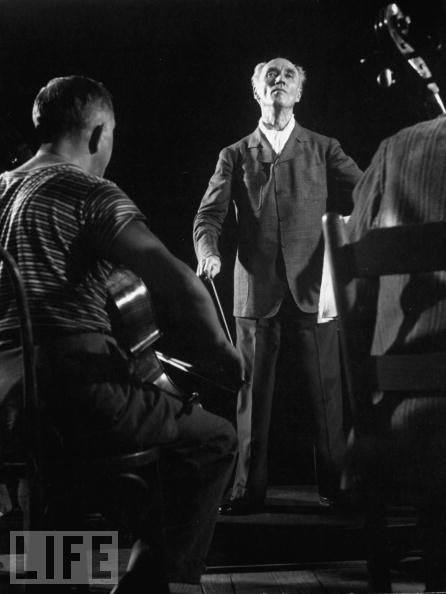
  • Karl Krueger American Music Pioneer

    Karl Krueger American Music Pioneer

    Born in New York City to German immigrant parents, Karl Krueger’s sympathies were never far from the American heartland. He served as artistic director and principal conductor of the newly founded Kansas City Symphony from 1933 to 1943, and his greatest legacy lay in a series of pioneering recordings he set down for the Society for the Preservation of American Musical Heritage.

    His father wanted him to be lawyer, but the pull of music was too strong. Krueger studied in Vienna with Robert Fuchs and became the assistant of conductor Arthur Nikisch. Nikisch referred him to Franz Schalk, conductor of the Vienna State Opera. Krueger was appointed assistant conductor to the Opera and the Vienna Philharmonic. Schalk proclaimed, “I have no doubt that he will play an important role among the leading orchestral conductors of his time.”

    Though he served as principle conductor of the Seattle Symphony, from 1926 to 1932, as music director of the Detroit Symphony Orchestra, from 1943 to 1949, and was invited back to guest conduct the Vienna Philharmonic, Krueger’s name is largely unrecognized today, beyond the sphere of collectors.

    This Sunday night on “The Lost Chord,” we’ll listen to recordings Krueger made for the society he established in 1958. Its purpose was to document and promote works by neglected American composers, at the time little more than footnotes in our music history books. Significantly, the records were first distributed to libraries, rather than being made available for purchase through retailers. A number of the recordings have been reissued over the years by The Library of Congress. More recently, some have appeared on the Bridge Records, Inc. label.

    Leave it to Krueger to unearth the most interesting work by Horatio Parker. Parker, the hidebound teacher and aesthetic nemesis of Charles Ives, wrote two symphonic poems, both of which were recorded by Krueger. Wholly unexpected is Parker’s treatment of “Vathek,” the early gothic novel by William Beckford. The novel blends elements of the supernatural, excess, and immorality in an Oriental setting.

    Arthur Farwell, best remembered for his work inspired by Native American sources, wrote incidental music in 1916 for a play by Lord Dunsany, called “The Gods of the Mountain.” The work is another piece of Orientalism, in this case about a band of beggars who impersonate a city’s stone gods and partake of much sensual indulgence, until the real gods return and change the impostors to stone. In a final twist, the inhabitants of the city take the transformation of the beggars as verification of their status as genuine gods.

    Finally, we’ll hear music by Arthur Foote, who has fared better than some other American composers of his era. His rarely-heard work from 1900, “Four Character Pieces after the Rubaiyat of Omar Khayyam,” is drawn from a piano cycle he composed the previous year. It was given its first performance by the Chicago Symphony, under the direction of Frederick Stock.

    By the end of its run, Krueger’s Society had issued over 100 LPs of American music, with some of the repertoire dating as far back as the 18thcentury. Karl Krueger died in Illinois in 1979 at the age of 85.

    Join me for “Pioneer Spirit” – landmark recordings by Karl Krueger – this Sunday night at 10 EDT, on WWFM – The Classical Network and at wwfm.org.
  • Sandburg’s America Music and Memorial Day

    Sandburg’s America Music and Memorial Day

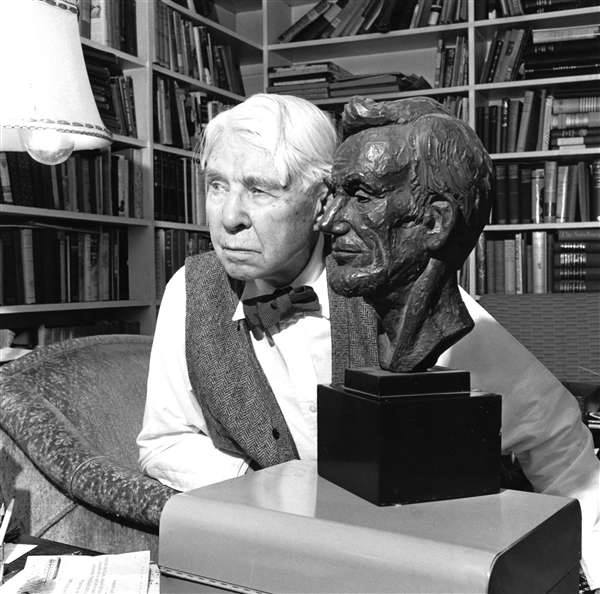
    Carl Sandburg was the recipient of three Pulitzer Prizes: two for his poetry, and a third for his biography of Abraham Lincoln. He was also known for his 1927 anthology “The American Songbag,” espousing our native folk song and anticipating the folksong revivals the 1940s and the 1960s. On top of everything else, he was awarded a Grammy for his recording of Aaron Copland’s “Lincoln Portrait.” When Sandburg died in 1967, at the age of 89, Lyndon Johnson observed that “Carl Sandburg was more than the voice of America, more than the poet of its strength and genius. He WAS America.”

    This Sunday night on “The Lost Chord,” we’ll hear music inspired by this popular – and populist – figure, with two works especially appropriate for Memorial Day and, in between, a piece after a poem evocative of the American heartland.

    Philadelphia composer Romeo Cascarino (1922-2002), who had served in the U.S. Army, composed a plaintive elegy, “Blades of Grass,” in 1945, just after World War II. He expressed a preference on several occasions that Sandburg’s poem “Grass” be read before performances. You’re probably familiar with it:

    Pile the bodies high at Austerlitz and Waterloo.
    Shovel them under and let me work—
    I am the grass; I cover all.

    And pile them high at Gettysburg
    And pile them high at Ypres and Verdun.
    Shovel them under and let me work.
    Two years, ten years, and passengers ask the conductor:
    What place is this?
    Where are we now?

                                          I am the grass. 
                                          Let me work.
    

    Leo Sowerby (1895-1968) was born in Grand Rapids, MI, and spent much of his career in the Midwest. Sometimes referred to as the “Dean of American church music,” he was the recipient of the Pulitzer Prize for Music in 1946 for his cantata, “The Canticle of the Sun.”

    The published score of his symphonic poem after Sandburg, titled “Prairie,” from 1929, bears the following lines:

    “Have you seen a red sunset drip over one of my cornfields, the shore of night stars, the wave lines of dawn up a wheat valley?

    “Have you heard my threshing crews yelling in the chaff of a strawpile and the running wheat of the wagonboards, my cornhuskers, my harvest hands hauling crops, singing dreams of women, worlds, horizons?”

    Last but certainly not least, Roy Harris, who shared Lincoln’s birthday (though born 89 years later), was born in a log cabin in Lincoln County, OK, only adding to his sense of destiny. Indeed he went on to become one of America’s greatest composers.

    Harris’ Symphony No. 6 is subtitled “Gettysburg.” It’s one of a number of works the composer wrote with a “Lincoln” connection. Each movement of the symphony bears a superscription taken from the Gettysburg Address: the first, “Awakening (‘Fourscore and seven years ago…’);” the second, “Conflict (‘Now we are engaged in a great civil war…’);” the third, “Dedication (“We are met on a great battlefield of that war…’);” and the fourth and final movement, “Affirmation (‘…that we here highly resolve that these dead shall not have died in vain…’).”

    Prior to composing the work, Harris read – you guessed it – Sandburg’s biography of Lincoln.

    I hope you’ll join me for “Lincoln Logger,” an hour of music inspired by Carl Sandburg, this Sunday night at 10 EDT, with a repeat Wednesday evening at 6; or that you’ll listen to it later as a webcast at wwfm.org.


    Although not on tonight’s show, here, as an added bonus, is Sandburg narrating Aaron Copland’s “Lincoln Portrait”:

  • Copland Cat Photo Americas Composer Birthday

    Copland Cat Photo Americas Composer Birthday

    I bought me a cat!

    Aaron Copland shares a candid moment with a lounging, four-legged friend.

    Happy birthday to America’s great composer!

  • George Crumb Turns 86 American Original

    George Crumb Turns 86 American Original

    Today is the 86th birthday of George Crumb. Crumb is another one of our great American originals, perhaps the reigning Grand Old Man of American Music. He produces works with an economy and elegance that seem to contradict and yet, somehow, paradoxically, to reinforce an Ivesian tendency to suggest greater vistas beyond their seemingly modest means.

    On a more visceral level, sometimes he can be downright scary. Which is especially amusing, since by all accounts – as well as on the perhaps five or six occasions I have met him – he has been unfailingly approachable, modest and even cheerful.

    It’s fortuitous indeed that his birthday falls so close to Hallowe’en. It’s not for nothing that his work for electric string quartet, “Black Angels,” was used in “The Exorcist.”

    In the last 15 years or so, Crumb has been enjoying a productive Indian summer, mining the hymns and folk songs of his West Virginia boyhood, lending them a unique resonance through his imaginative and colorful use of percussion.

    Happy birthday, George Crumb!


    “Black Angels”:


    From his “American Songbook,” “All the Pretty Horses”:

    And “Poor Wayfaring Stranger”:

    PHOTOS: George Crumb (left) with The Exorcist’s Pazuzu

  • American Music for Independence Day on WPRB

    American Music for Independence Day on WPRB

    I’ve been following Marvin Rosen’s Classical Discoveries playlist with particular interest this morning, since I too plan to play all American music tomorrow, in anticipation of the Independence Day holiday.

    Marvin is a much better planner than I, but at this point I can say with relative certainty that we MAY hear music by George Antheil, Paul Bowles, Romeo Cascarino, John Corigliano, Daniel Dorff, Irving Fine, Lou Harrison, Bernard Herrmann, Jennifer Higdon, Ruth Crawford Seeger, Peter Schickele, Caroline Shaw, Michael Torke, George Walker and many others.

    Jerry Rife, for 30 years conductor of The Blawenburg Band, will join me around 9:00 to tell us just a little bit about the band’s upcoming concerts at Princeton Shopping Center (tomorrow at 7 p.m.), Yardley Community Centre in Yardley, Pa. (July 4 at 4 p.m.), and Hopewell Train Station (July 6 at 7:30 p.m.).

    Tune in, wrap yourself in the flag, and feel the cool grass between your toes, as we celebrate America’s independence this week. Keep it classy with Classic Ross Amico, tomorrow morning from 6 to 11 a.m. ET, on WPRB 103.3 FM or online at wprb.com.

Tag Cloud

Aaron Copland (94) Beethoven (95) Composer (114) Film Music (150) Film Score (143) Film Scores (255) Halloween (102) John Williams (198) KWAX (233) Leonard Bernstein (105) Marlboro Music Festival (125) Movie Music (165) Mozart (91) Opera (215) Philadelphia Orchestra (90) Picture Perfect (174) Princeton Symphony Orchestra (110) Radio (90) Ross Amico (244) Roy's Tie-Dye Sci-Fi Corner (290) The Classical Network (101) The Lost Chord (269) Vaughan Williams (107) WPRB (397) WWFM (881)

DON’T MISS A BEAT

Receive a weekly digest every Sunday at noon by signing up here


RECENT POSTS