Tag: Americana

  • Thanksgiving Music Movie Americana

    Thanksgiving Music Movie Americana

    There’s more to Thanksgiving than just turkey and football. This week on “Picture Perfect,” we count our blessings and aspire to do better, with music from movies reflective of what’s best in human nature and most admirable in the American character.

    Aaron Copland’s work on “The Cummington Story” (1945), a semi-documentary produced by the Office of War Information, underscores the gradual acceptance of European war refugees into a cautious but fundamentally decent New England community. The music is pure Americana, with some of the material later finding its way into Copland’s Clarinet Concerto and “Down a Country Lane.”

    “Field of Dreams” (1989) is one of those rare films that has the ability to reduce manly men – even those without father issues – to a pool of tears. Phil Alden Robinson’s superior adaptation of W.P. Kinsella’s novel, “Shoeless Joe,” is a male wish-fulfillment fantasy, in which a man finds redemption, and a new understanding of his father, in the enchanted cornfields of America’s heartland. And it’s all brought about courtesy of America’s pastime, baseball. The evocative score, much indebted to Copland, is by James Horner.

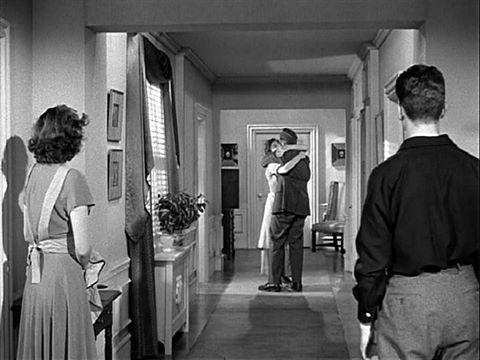
    “The Best Years of Our Lives” (1946) is one of the great American classics. This touching film tells the tale of the three WWII veterans struggling to readjust to civilian life. It isn’t easy, but with the support of family and friends, there’s plenty of hope for the future. Hugo Friedhofer wrote the Academy Award-winning score, earning the film one of its seven Oscars. The orchestrations were by Copland protégé (and composer of “The Big Country”) Jerome Moross.

    Finally, Daniel Day-Lewis elevates Steven Spielberg’s “Lincoln” (2012) to greatness with one of the uncanniest performances ever captured on film. Day-Lewis’ gentle but shrewd Man of Destiny would go to any lengths to hold the country together. John Williams taps into America’s proud musical heritage, clearly influenced by Copland and Ives to create a score of stirring nobility.

    I hope you’ll join me as we give thanks for family, community and country on “Picture Perfect,” music for the movies, this Saturday evening at 6:00 EST, on WWFM – The Classical Network and wwfm.org.
  • Thanksgiving Movie Music Americana & Gratitude

    Thanksgiving Movie Music Americana & Gratitude

    There’s more to Thanksgiving than just turkey and football. This week on “Picture Perfect,” we count our blessings and aspire to do better, with music from movies reflective of what’s best in human nature and most admirable in the American character.

    Aaron Copland’s work on “The Cummington Story” (1945), a semi-documentary produced by the Office of War Information, underscores the gradual acceptance of European war refugees into a cautious but fundamentally decent New England community. The music is pure Americana, with some of the material later finding its way into Copland’s Clarinet Concerto and “Down a Country Lane.”

    “Field of Dreams” (1989) is one of those rare films that has the ability to reduce manly men – even those without father issues – to a pool of tears. Phil Alden Robinson’s superior adaptation of W.P. Kinsella’s novel, “Shoeless Joe,” is a male wish-fulfillment fantasy, in which a man finds redemption, and a new understanding of his father, in the enchanted cornfields of America’s heartland. And it’s all brought about courtesy of America’s pastime, baseball. The evocative score, much indebted to Copland, is by James Horner.

    “The Best Years of Our Lives” (1946) is one of the great American classics. This touching film tells the tale of the three WWII veterans struggling to readjust to civilian life. It isn’t easy, but with the support of family and friends, there’s plenty of hope for the future. Hugo Friedhofer wrote the Academy Award-winning score, earning the film one of its seven Oscars. The orchestrations were by Copland protégé (and composer of “The Big Country”) Jerome Moross.

    Finally, Daniel Day-Lewis elevated Steven Spielberg’s “Lincoln” (2012) to greatness with one of the uncanniest performances ever captured on film. Day-Lewis’ gentle but shrewd Man of Destiny would go to any lengths to hold the country together. John Williams tapped into America’s proud musical heritage, clearly influenced by Copland and Ives to create a score of stirring nobility.

    I hope you’ll join me as we give thanks for family, community and country on “Picture Perfect,” music for the movies, this Saturday evening at 6:00 EST, on WWFM – The Classical Network and at wwfm.org.


    And thank you, YouTube, for making “The Cummington Story” available online!

    Watching it again, it’s interesting to reflect on what an influence, for good or ill, media and government have had in shaping the popular consciousness.

  • Americana with Skip Livingston This 4th of July

    Americana with Skip Livingston This 4th of July

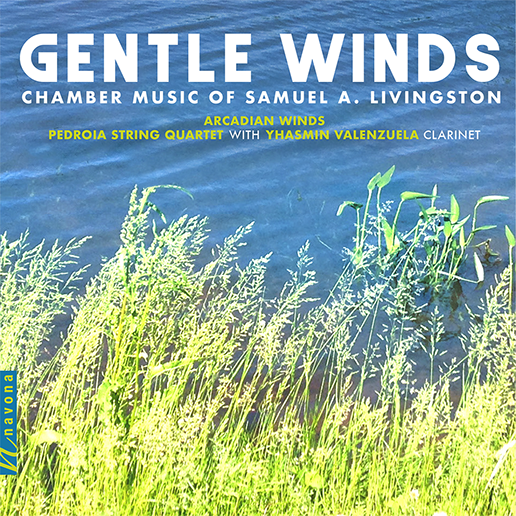
    On this Fourth of July, here’s a little Americana, courtesy of Samuel A. “Skip” Livingston. Livingston, a self-professed admirer of the music of Jerome Moross (composer of “The Big Country”), captures some of that same open-air lyricism on his recent album, “Gentle Winds,” issued on Navona Records, the classical music division of PARMA Recordings.

    As a clarinetist in The Blawenburg Band, Livingston has a busy summer ahead. The band will present its annual Independence Day concert at Yardley Community Centre, in Yardley, PA, this afternoon at 4:00. Its lawnchair series at Hopewell Train Station will commence on Monday at 7:30 p.m. On Tuesday, Livingston will direct the Blawenburg Dixieland Band at Mary Jacobs Memorial Library in Rocky Hill. And that’s just the tip of the snow cone.

    Find out more about Livingston, the Blawenburg Band, and more, in my article in this week’s edition of U.S. 1 Newspaper – PrincetonInfo.

    https://princetoninfo.com/livingston-is-a-quiet-composer-in-a-loud-brassy-band/?fbclid=IwAR1A7MqjHp6_MqydxHmmjvavXQxd1N7CLEVICDCd_p9gH2EIXdUkccrCv-c

  • Circus Music Farewell to Ringling Bros

    Circus Music Farewell to Ringling Bros

    Ladies and gentlemen, boys and girls, children of all ages…

    As Ringling Bros. and Barnum & Bailey Circus prepares to take its final bow, we salute the circus this Thursday morning on WPRB.

    Join me to hear works such as Douglas Moore’s “The Pageant of P.T. Barnum,” Nino Rota’s “La Strada Ballet” and Rodion Shchedrin’s “Old Russian Circus Music.” I’ll also have snappy circus favorites like Julius Fucik’s “Entry of the Gladiators,” Juventino Rosas’ “Over the Waves” (a.k.a. the trapeze music), and Aram Khachaturian’s “Sabre Dance.” Perhaps there will even be a circus-oriented film score or two.

    The traveling circus’ roots reach back deep into the 19th century. Ringling Brothers will stream its final performance, from Uniondale, NY, on its Facebook page, Sunday evening at 7:00 EDT.

    For now, it will be a morning of pure nostalgia, a musical nod to a fading piece of Americana, from 6 to 11 EDT, on WPRB 103.3 FM and wprb.com. We’ll have more circus music than clowns in a clown car, on Classic Ross Amico.

  • Elie Siegmeister’s Western Americana

    Elie Siegmeister’s Western Americana

    On this date in 1945, Arturo Toscanini conducted the premiere of Elie Siegmeister’s “Western Suite” in a concert broadcast with the NBC Symphony Orchestra. Its cowpoke lyricism and buckaroo high spirits struck a bulls-eye with audiences and critics in a cowboy-mad America. Aaron Copland’s “Billy the Kid” had been given its premiere in 1939 (the same year as John Ford’s “Stagecoach”) and “Rodeo” followed in 1942. Pulp magazines and dime-store novels fed the western craze, and cinemas were teeming with broad vistas and portrayals of the quiet dignity of the cowboy.

    While hardly his most innovative or personal work, the “Western Suite” served to put Siegmeister on the map. According to the composer, he had only a few of his compositions published up until that time. The day after the performance, three publishers were vying for his work. “The piece had a lot of earthy, touchy quality about it,” he said, “which is, I think, one of the characteristics of a great deal of American music. There is a kind of lusty feeling, with sometimes a roughness, a harshness, or whatever you want to call it.”

    Already in 1939, he had formed the American Ballad Singers, hoping to replicate the experience he had had when he first witnessed the English Singers, six touring musicians who introduced the madrigal to New York. It was like an epiphany for Siegmeister, and he determined to bring our native folk tradition alive in a similar fashion for the American public. Americana was at its peak during those years, with folk singers like Burl Ives and, soon after, Woody Guthrie and Pete Seeger very much on the rise. The American Ballad Singers tapped into the zeitgeist and toured the country to enthusiastic reviews.

    Though Siegmeister wrote orchestral works like “American Holiday” (1933), “Abraham Lincoln Walks at Midnight” (1937), the “Ozark Suite” (1943) and “Prairie Legend” (1944), and an opera (he composed eight) called “Night of the Moonspell” (1974-6), which transposed Shakespeare’s “A Midsummer Night’s Dream” to Louisiana, homespun Americana hardly encapsulates the whole of his output.

    True, American jazz was frequently an influence. He also wrote a string quartet on Jewish themes. But there were plenty of abstract pieces, as well, including eight symphonies, a number of concertos and plenty of chamber music.

    In addition, he wrote successful books on music, including “Treasury of American Song” (1940-43), “The Music Lover’s Handbook” (1943, revised in 1973), and “Harmony and Melody” (1985). He helped found the American Composers Alliance, with the aim of publishing and promoting music by American composers, in 1937. Later, he served on the board of directors of ASCAP, from 1977 until his death in 1991.

    By coincidence, Siegmeister’s “American Sonata” (1944) will be performed tonight by pianist Cecile Licad, on a recital hosted by the Philadelphia Chamber Music Society. Also on the program will be sonatas by Alexander Reinagle (who wrote a number of pieces for George Washington), Edward MacDowell and Charles Tomlinson Griffes. The concert will take place at the American Philosophical Society, 427 Chestnut Street, at 8 p.m.

    FUN FACT: The theme from Siegmeister’s only film score, “They Came to Cordura” (1959), is the signature music for my show, “Picture Perfect.” You can hear the passage at 43 seconds into the film.

    https://www.youtube.com/watch?v=XwYWx8gtjBo

    Siegmeister’s “Western Suite”:
    https://www.youtube.com/watch?v=2tzyS1klaRo

    As part of the fascinating Toscanini broadcast, which also features music by Mario Castelnuovo-Tedesco, Vittorio Rieti and Paul Creston (the “Western Suite” begins at the 40 minute mark):
    https://www.youtube.com/watch?v=Ufiigg8_DMI

    Interview with Siegmeister by Bruce Duffie:
    http://www.kcstudio.com/sieg2.html

    Interview with Siegmeister by David Dubal!

    PHOTOS: Elie Siegmeister (right) with pulp western from 1945

Tag Cloud

Aaron Copland (92) Beethoven (95) Composer (114) Film Music (123) Film Score (143) Film Scores (255) Halloween (94) John Williams (187) KWAX (229) Leonard Bernstein (101) Marlboro Music Festival (125) Movie Music (138) Opera (202) Philadelphia Orchestra (89) Picture Perfect (174) Princeton Symphony Orchestra (106) Radio (87) Ralph Vaughan Williams (85) Ross Amico (244) Roy's Tie-Dye Sci-Fi Corner (290) The Classical Network (101) The Lost Chord (268) Vaughan Williams (103) WPRB (396) WWFM (881)

DON’T MISS A BEAT

Receive a weekly digest every Sunday at noon by signing up here


RECENT POSTS