Tag: Appalachian Spring

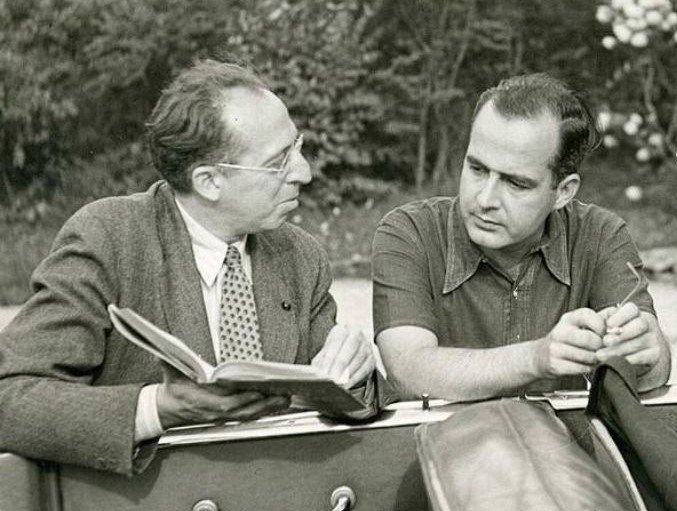
  • Barber, Antes, & Copland from Marlboro

    Barber, Antes, & Copland from Marlboro

    How many times a summer do we hear Samuel Barber’s “Summer Music?”

    Well, I ask you, then – in whose tomb would you have Grant buried? What color should we paint the White House? It’s summer! Honor your appointment with the Barber, already.

    Barber wrote his wind quintet on a commission from the Chamber Music Society of the Detroit Institute for the Arts in 1953. Unusually, in lieu of a commissioning fee, the composer agreed to accept donations from the audience, with the Chamber Music Society guaranteeing the difference up to $2000. The work is set in one continuous movement, with three subsections discernible within the neoclassical whole.

    On this week’s “Music from Marlboro,” we’ll hear “Summer Music” performed at the 1981 Marlboro Music Festival, by flutist Susan Rotholz, oboist Elaine Douvas, clarinetist Joaquin Valdepeñas, bassoonist Stefanie Przybylska, and hornist Robin Graham.

    Then we’ll turn our attention to American Moravian composer John Antes. Antes, born in Frederick, Montgomery County, PA, in 1740, is credited with being one the first composers born on American soil to write chamber music, and as the creator of perhaps the earliest surviving bowed string instrument made in the American colonies. Antes’ violin, made in 1759, is housed in the Museum of the Moravian Historical Society in Nazareth, PA. A viola, made by Antes in 1764 (again believed to be the earliest surviving of American origin), is housed in the Lititz Moravian Congregation Collection in Lancaster County. Antes created at least seven such instruments.

    In 1752, Antes attended school in Bethlehem, PA. In 1760, he was admitted into the Single Brethren’s choir there. From Bethlehem, he traveled to Herrnhut, Germany, the international center of the Moravians, to prepare for a career as a missionary. In the meantime, he also took up watchmaking. He was ordained a minister in 1769, then set out for Egypt. There, he served as a missionary to the Coptic Church in Grand Cairo. After a largely uneventful decade, he was captured and tortured by followers of Osman Bey.

    During his convalescence, he occupied himself with the composition of three string trios. He also sent a copy of six quartets to Benjamin Franklin, whom he had known in America. The quartets are lost (nice job, Ben), but the trios survive. We’ll hear Antes’ Trio in D minor, from the 1976 Marlboro Music Festival, with violinists Isadore Cohen and Kathleen Lenski, and cellist Timothy Eddy performing.

    We’ll round out the hour with Aaron Copland’s beloved and evergreen Pulitzer Prize winning ballet “Appalachian Spring,” from 1944, in its rarely-heard original version for chamber orchestra, performed by 13 Marlboro musicians in 2006.

    “Appalachian Spring” will be heard this Saturday at 8 p.m., during the fourth weekend of this year’s Marlboro Music Festival – held, as always, on the campus of Marlboro College in Marlboro, VT – alongside works by Alban Berg, Benjamin Britten, and Pulitzer Prize winner Caroline Shaw. Beethoven, Britten, and Dvořák will be performed on Sunday at 2:30 p.m. For details, look online at marlboromusic.org.

    It’s American music for two seasons, and all seasons – with a Moravian palate cleanser from the 18th century – on this week’s “Music from Marlboro,” this Wednesday evening at 6:00 EDT, on WWFM – The Classical Network and wwfm.org.

    Marlboro School of Music and Festival: Official Page


    PHOTO: Music by Aaron Copland and Samuel Barber will be heard on this week’s “Music from Marlboro”
  • Copland & Friends Birthday Concert Today

    Copland & Friends Birthday Concert Today

    I hope you’ll join me for music by Aaron Copland, Johann Nepomuk Hummel, Fanny Mendelssohn, and Leopold Mozart, on their birthday anniversaries (including Copland’s “Appalachian Spring,” in its original version for chamber ensemble of 13 instruments, on “Music from Marlboro”), today from 4 to 7 p.m. EST, on WWFM – The Classical Network and wwfm.org.

  • Copland’s Appalachian Spring: A Ballet’s Journey

    Copland’s Appalachian Spring: A Ballet’s Journey

    One might say it’s a little cool for spring. But when Aaron Copland came to write his magnum opus, he wasn’t thinking of spring or even the Appalachia, for that matter. What he had to work with were a series of impressions from Martha Graham. In fact, while composing the music, he thought of the project simply as “Ballet for Martha.”

    This week on “Music from Marlboro,” we’ll celebrate Copland’s birthday with a suite from this most durable of American ballets, since recognized as “Appalachian Spring.”

    It was Graham who came up with the title, well after Copland had finished. A phrase in a poem by Hart Crane had caught her fancy. When Copland asked her if the ballet had anything to do with the poem, Graham said, “No, I just liked the title and I took it.” Yet, as Copland loved to relate, people were always coming up to him and saying, “Mr. Copland… when I hear your music I can just see the Appalachians and I can just feel spring.” (FUN FACT: In Crane’s poem, “spring” isn’t even seasonal; it refers to a source of water.)

    Graham, every bit as concerned as Copland with forging a uniquely American art, had envisioned a ballet set during the Civil War. In her correspondence with the composer, she was quite specific in the moods she wished to evoke.

    By the time she came to choreograph the piece, Graham decided on a scenario built around the courtship and wedding of a young couple in a western Pennsylvania community in the early 19th century. One of the original dancers, Pearl Lange, remembered, “The first day we heard the music, it was like the sun spread over the floor.”

    All the themes are Copland’s own, except of course for “Simple Gifts,” the Shaker hymn that forms the basis for a series of variations at the work’s climax.

    “Appalachian Spring” was given its first performance at the Library of Congress on October 30, 1944. On V-E Day, 1945, the work was awarded the Pulitzer Prize for Music. We’ll hear it performed this evening in its original guise, for a chamber ensemble of thirteen instruments, from the 2006 Marlboro Music Festival.

    We’ll preface that with music by Heitor Villa-Lobos. In parallel with Copland’s experiments to the north, Villa-Lobos made a conscious effort in the late ‘30s to embrace a more populist style. The sixth of his seventeen string quartets was composed in Rio de Janeiro in 1938. The work received its first performance there on November 30, 1943. The quartet incorporates elements of Brazilian folk and popular music. At the same time, the composer is not at all bashful about his debt to the works of Franz Joseph Haydn.

    We’ll hear a performance of Villa-Lobos’ String Quartet No. 6, from the 2007 Marlboro Music Festival, featuring violinists Celeste Golden and Lucy Chapman, violist Kyle Armbrust, and cellist Wendy Law.

    It’s music from the Americas on this week’s “Music from Marlboro,” Wednesday evening at 6:00 EST, on WWFM – The Classical Network and wwfm.org.

    Marlboro School of Music and Festival: Official Page


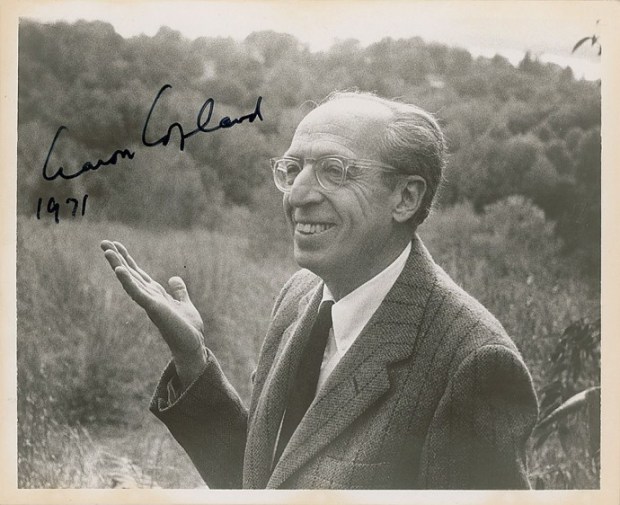
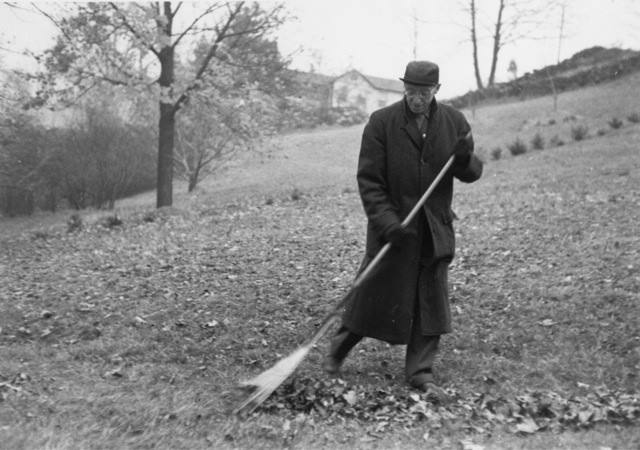
    PHOTO: Copland, feeling a little nostalgic for that Appalachian spring

  • Copland’s Appalachian Spring on The Classical Network

    Copland’s Appalachian Spring on The Classical Network

    It’s an aseasonal treat this afternoon, as WWFM concludes its binge festival of “What Makes It Great.” Rob Kapilow will deconstruct Aaron Copland’s “Appalachian Spring,” followed by an uninterrupted performance of the piece, which was recorded in April at Merkin Concert Hall at Kaufman Music Center in New York City.

    “What Makes It Great” concludes its binge run today, beginning at 12:00 EDT. Enjoy the upcoming season as a member of The Classical Network. For a donation of $75, we will send you the “What Makes It Great” mug. On one side is the name of the show, “What Makes It Great,” and on the reverse is the answer, “You!” In fact, we’d be happy to send you the mug for your commitment to become a sustaining member of The Classical Network in the amount of $5 a month – that’s a savings of $15! Put it toward the beverage of your choice.

    Of course, what you’re really paying for is all the great music that comes your way each and every day on The Classical Network, including that heard on “Picture Perfect,” “The Lost Chord,” and my recently instated afternoon live air shifts. Be sure to mention how much you enjoy these in the comments section when you make your donation at wwfm.org. Your commitment now could shorten our live membership campaign, which will begin on the morrow. The sooner we reach our goal, the sooner we’ll get back to presenting uninterrupted music.

    Stick around: following Rob’s informative analysis of “Appalachian Spring,” and its exemplary performance, we’ll enjoy a late romantic symphony by Ukrainian composer Boris Lyatoshynsky. I’ll be with you until 4:00, on WWFM – The Classical Network and at wwfm.org.

  • Pulitzer Prize Winning Music on the Radio

    Pulitzer Prize Winning Music on the Radio

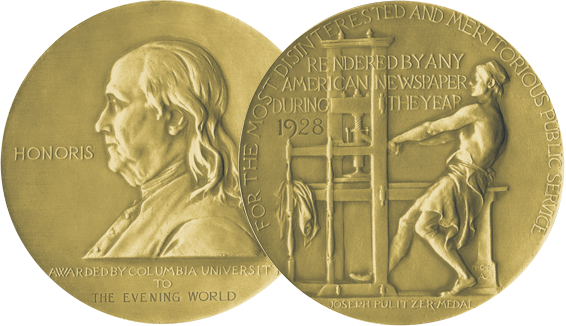
    April is Pulitzer Prize time. This year marks the centennial of the award, which honors excellence in journalism and the arts. Media interest is cresting in advance of the naming of the 2016 honorees, which will take place tomorrow.

    This Sunday night on “The Lost Chord,” we’ll take a look at the Pulitzer Prize for Music. The first Pulitzer Prizes were awarded in 1917, in the fields of journalism, education, letters and drama. The music prize didn’t come along until 1943.

    Of the dozens of pieces honored over the years, surprisingly few have remained in the public consciousness. Only Aaron Copland’s “Appalachian Spring” and perhaps Charles Ives’ Symphony No. 3 “The Camp Meeting” have established themselves firmly in the repertoire – though the operas of Gian Carlo Menotti and Robert Ward are occasionally revived.

    I thought we’d spend yet another hour in what has become an annual salute with some perhaps lesser-known works, though their lack of familiarity is certainly no reflection on the quality of the music or the talent of the composers themselves.

    We’ll hear a piece by Norman Dello Joio, who was awarded a Pulitzer for his “Meditations on Ecclesiastes” in 1957. You know the famous Bible verse, from Book Three of Ecclesiastes, which begins “To everything there is a season.” Its twelve sections consist of an introduction, a statement of a theme, and then ten variations on that theme, calibrated to reflect the verses’ inner meanings. We’ll hear the strings of the Oregon Symphony conducted by James DePriest.

    Then we’ll turn to a deserving work from more recent times. Caroline Shaw, currently a Ph.D. candidate at Princeton University, was 30 years old when she received her award in 2013, making her the youngest Pulitzer winner in her category.

    She was recognized for a virtuosic piece of “a cappella” writing, her “Partita for 8 Voices,” composed between 2009 and 2012. Shaw wrote it for performance by her ensemble, Roomful of Teeth, of which she is a founding member. Roomful of Teeth is well-versed in world styles, and the “Partita” reflects the group’s mastery of a broad array of genres and idioms.

    The Pulitzer committee cited Shaw’s creation as a “highly polished and inventive a cappella work uniquely embracing speech, whispers, sighs, murmurs, wordless melodies and novel vocal effects.” Its four movements are titled after baroque dance forms – Allemande, Sarabande, Courante and Passacaglia. The texts are drawn from instructions for a wall drawing by Sol Lewitt, “Wall Drawing 305,” currently on display at the Massachusetts Museum of Contemporary Art. The performance on this recording, issued on New Amsterdam Records, is incredible.

    I hope you’ll join me for “Pulitzer Prized” – music by recipients of one of music’s most prestigious awards – this Sunday night at 10 ET, with a repeat Wednesday evening at 6; or that you’ll listen to it later as a webcast at wwfm.org.

Tag Cloud

Aaron Copland (92) Beethoven (95) Composer (114) Film Music (123) Film Score (143) Film Scores (255) Halloween (94) John Williams (187) KWAX (229) Leonard Bernstein (101) Marlboro Music Festival (125) Movie Music (138) Opera (202) Philadelphia Orchestra (89) Picture Perfect (174) Princeton Symphony Orchestra (106) Radio (87) Ralph Vaughan Williams (85) Ross Amico (244) Roy's Tie-Dye Sci-Fi Corner (290) The Classical Network (101) The Lost Chord (268) Vaughan Williams (103) WPRB (396) WWFM (881)

DON’T MISS A BEAT

Receive a weekly digest every Sunday at noon by signing up here


RECENT POSTS