
This week on “Sweetness and Light,” it’s a program of lighter music from the northern countries.
We’ll give poor overworked Edvard Grieg a break, with Norway represented by Johan Halvorsen and the now lesser-known pianist-composer Agathe Backer Grøndahl, a pupil of Franz Liszt.
From Sweden, we’ll enjoy two versions of Hugo Alfvén’s evergreen “Swedish Rhapsody No. 1” – first, Mantovani’s popular hit from 1953, then with the composer himself conducting, from the very next year, in the first stereo recording ever made in Sweden.
Speaking of popular hits, we’ll also hear Arthur Fiedler’s bestselling recording of “Jalousie,” by Danish composer Jacob Gade (no relation to Niels Wilhelm Gade), from 1935. Fiedler remade it in stereo, but it’s my show, so I’m keeping it hardcore.
Also from Denmark, we’ll have a folk-music suite by Percy Grainger. Ah! But Grainger was not from the north, you say. He was born in Australia. Quite true. However, as an energetic pianist and composer of insatiable curiosity, he traveled seemingly everywhere, with a particular fondness for the Scandinavian countries. (His wife was Swedish.)
But if authentic Danish composers are more your thing, not to worry, we’ll round out the hour with a galop by Hans Christian Lumbye.
All eyes and ears face north this week on “Sweetness and Light.” I hope you’ll join me for this hour of northern “lights,” this Saturday morning at 11:00 EST/8:00 PST, exclusively on KWAX Classical Oregon!
Stream it wherever you are at the link:
https://kwax.uoregon.edu/
Tag: Arthur Fiedler
-

“The Nutcracker” as Subversive Family Classic
If you ever detected a sinister undertow in Tchaikovsky’s ballet “The Nutcracker,” the source material, by E.T.A. Hoffmann, is much worse.
Hoffmann’s 1816 story focuses on the Nutcracker’s battle with the evil Mouse King, filtered through the vivid imagination of a doomed dreamer with a perpetual mistrust of adults. It’s Herr Drosselmayer all the way, baby.
It often puzzles me how so many adaptations of Hoffmann’s stories gloss over the sinister and the uncanny elements. “The Nutcracker” has its share of up-tempo numbers. They’re mostly the ones we hear in stores while we’re out Christmas shopping. However, there’s little doubt the composer grasped the inexorable undertow of Hoffmann, since his score conveys plenty of anxiety to counterbalance the twee sweets.
Listen to the bass clarinet slither beneath that glittery celesta in the “Dance of the Sugar Plum Fairy.” And what’s all that creeping around, with the disturbing sforzandi? There’s something desperate and perhaps a little manic underpinning the magic.
Maurice Sendak completely gets it. If you have never seen Carroll Ballard’s 1986 film of “The Nutcracker,” with the Sendak designs and dancers of Pacific Northwest Ballet, you should make it a point to do so. Its sugar plums are all steeped in acid. Sir Charles Mackerras conducts the London Symphony Orchestra on the soundtrack.
I’m not even sure I could describe the subtext as Freudian. It’s just out there. And it has the best WTF ending of all “Nutcracker” adaptations.
But if it’s snowflakes and flowers you’re interested in, here’s an extended suite of highlights with the Boston Pops conducted by Arthur Fiedler, on Fiedler’s birthday.
Get crackin’!
-

Nordic Music Delights Sweetness and Light
This week on “Sweetness and Light,” it’s a program of lighter music from the northern countries.
We’ll give poor overworked Edvard Grieg a break, with Norway represented by Johan Halvorsen and the now lesser-known pianist-composer Agathe Backer Grøndahl, a pupil of Franz Liszt.
From Sweden, we’ll enjoy two versions of Hugo Alfvén’s evergreen “Swedish Rhapsody No. 1” – first, Mantovani’s popular hit from 1953, then with the composer himself conducting, from the very next year, in the first stereo recording ever made in Sweden.
Speaking of popular hits, we’ll also hear Arthur Fiedler’s bestselling recording of “Jalousie,” by Danish composer Jacob Gade (no relation to Niels Wilhelm Gade), from 1935. Fiedler remade it in stereo, but it’s my show, so I’m keeping it hardcore.
Also from Denmark, we’ll have a folk-music suite by Percy Grainger. Ah! But Grainger was not from the north, you say. He was born in Australia. Quite true. However, as an energetic pianist and composer of insatiable curiosity, he traveled seemingly everywhere, with a particular fondness for the Scandinavian countries. (His wife was Swedish.)
But if authentic Danish composers are more your thing, not to worry, we’ll round out the hour with a galop by Hans Christian Lumbye.
All eyes and ears face north this week on “Sweetness and Light.” I hope you’ll join me for this hour of northern “lights,” this Saturday morning at 11:00 EST/8:00 PST, exclusively on KWAX, the radio station of the University of Oregon!
Stream it wherever you are at the link:
-
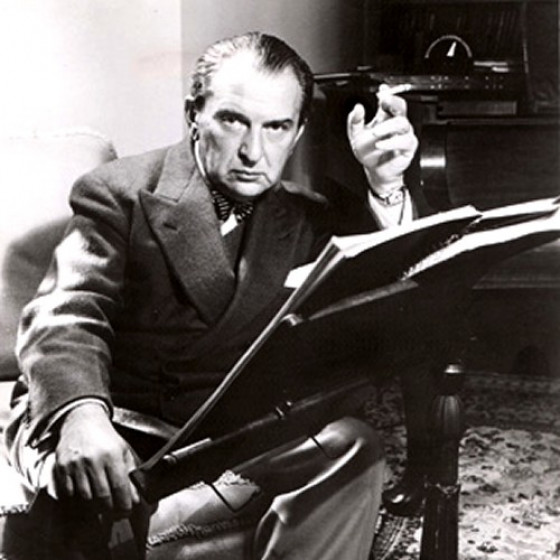
Loved or Feared Conductors: Fiedler vs. Reiner
Is it better to be feared than loved?
I note that ‘tis the season not only to be jolly, but for births of great conductors who reached full flower during the hi-fi era.
Arthur Fielder’s birthday anniversary was on December 17. For 49 years, Fiedler (1894-1979) was music director of the Boston Pops. He was not the Pops’ first music director – the group was founded in 1885 as an offshoot of the Boston Symphony Orchestra (which Fiedler joined as a violinist in 1915) – but he was certainly its best-known and arguably most-beloved.
Fiedler built the Pops into one of the best known and bestselling orchestras in the United States. He made his first recordings with the group in 1935. With the rise of PBS, he became a regular presence in American living rooms on “Evening at Pops” telecasts, beginning in 1970.
Allegedly, the Fiedler-Pops partnership yielded more recordings than any other conductor-orchestra combo in the world, with album, single, tape, and cassette sales exceeding $50 million.
Because of his phenomenal success as a light classics and crossover conductor, Fiedler’s talent in the more respected classical music repertoire was often overlooked. There’s a lot that he never conducted or that was never recorded, but in Liszt, Rimsky-Korsakov, and even Darius Milhaud, he was never less than first-rate. And as an accompanist to soloists like Earl Wild, he oversaw a number of popular (Gershwin) and cult (Paderewski) classics.
I myself once underrated him, but my long experience in radio set me straight. Once you filter out the kitsch, you’ll find the man made some truly marvelous recordings. On the evidence of these, in a certain kind of music, he could stand toe-to-toe with any conductor in the world. I remember just randomly airing his recording of the “Nutcracker” suite one morning and being struck by how satisfying it was on every level.
As for the splashy arrangements of showtunes and movie themes, and the amusing album covers (Fiedler surrounded by leotard or taffeta-wearing babes, or the one on which he dons Travolta’s iconic white disco suit for a program featuring arrangements of Bee Gees hits), the man knew how give the public what it wanted. How much he believed in the kitsch and how much was canny showmanship, I have no idea. I believe he laughed all the way to the bank, but if so, he did it wholly without contempt for his audience.
Fritz Reiner (1888-1963), on the other hand, is the last person I would ever imagine on the dance floor. Reiner, born on December 19, was one of the most dreaded conductors, from a musician’s standpoint, in an era when tyrants of the podium still very much roamed the earth. With a glower that could make Karloff quake (though he resembled more Bela Lugosi), Reiner was forged in Hungary at the twilight of the Austro-Hungarian Empire. Hungary at the time had quite the reputation for churning out great conductors. George Szell, Eugene Ormandy, Antal Doráti, Ferenc Fricsay, Sir Georg Solti, and István Kertész all achieved considerable international success.
Among Reiner’s own teachers was Béla Bartók, with whom he studied piano. Reiner would later repay the favor with what many consider to be the benchmark recording of Bartók’s “Concerto for Orchestra.” He also worked closely with Richard Strauss in Dresden, and his recordings of Strauss’ works are equally revered. All in all, the Chicago Symphony under Fritz Reiner was a surefire choice to give the ol’ hi-fi a good workout in the early days of stereo.
In 1928, Reiner became a naturalized American citizen. He began to teach conducting at the Curtis Institute of Music in Philadelphia, where among his pupils was Leonard Bernstein. His first American post was as principal conductor of the Cincinnati Symphony. He took over the Pittsburgh Symphony for a decade, beginning in 1938. Then he spent several years at the Met. But it was as music director of the Chicago Symphony that he attained legendary status.
For a master interpreter of some of the largest and most challenging works in the repertoire, his baton technique was notable for its precision and economy. Much of what he achieved, unfortunately, was through the brutality he exuded in rehearsals. Reiner emerged from an Old World steeped in aristocratic privilege. At the top of their profession, conductors then were regarded as gods-on-earth. When drive and ego were bolstered by absolute power, working conditions could become downright perilous. Before strong musicians’ unions, conductors exercised the authority to fire anyone on a whim. So when musicians played for Reiner, they played as if their lives depended on it – or at the very least their livelihoods.
Did it make for better musicmaking? You can’t argue with the excellence of Reiner’s Chicago Symphony. Unless, of course, you look to Fiedler and the Boston Pops.
Reiner conducts Beethoven
Big band Bach
Benchmark Bartók
Strauss’ “Salome”
And, to keep it seasonal, “Waltz of the Flowers” from “The Nutcracker”
https://www.youtube.com/watch?v=mgaS9CZ7KsQ
Fiedler’s benchmark Gershwin with Earl Wild
Conducting Liszt’s “Mazeppa”
Rimsky-Korsakov’s “Le coq d’or” (“The Golden Cockerel”)
Paderewski Piano Concerto with Wild and the London Symphony Orchestra
https://www.youtube.com/watch?v=O-ZLIXCSZ70
Perhaps one of Fiedler’s least-known recordings: Paul Hindemith’s “Der Schwanendreher,” with the composer as viola soloist
Handel’s organ concertos with Carl Weinrich
Fielder conducts “Waltz of the Flowers”
-
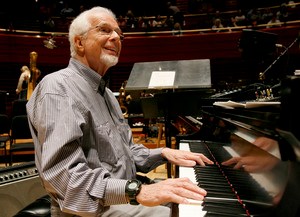
Remembering Peter Nero Philly Pops Legend
This Nero didn’t play as Philly burned.
Peter Nero, who conducted the Philly Pops for 34 years, is dead. At the orchestra’s founding in 1979, it was Nero’s intention to take on Arthur Fiedler and the Boston Pops. For decades, Boston had been ensconced as the very model of a modern major pops orchestra. With a touch of hubris, Nero stated at the time, “I’d like to beat the pants off them.” Granted, by then, Fiedler was tottering into the homestretch of a 50-year career as Boston’s music director. Nevertheless, the pants stayed on. Nero left the Philly Pops in 2013, when the orchestra could no longer afford his salary.
A multifaceted musician, Nero started out as a piano prodigy. He earned the respect of no less than Vladimir Horowitz, and Roy Charles would cite him as one of his favorite pianists, alongside Art Tatum.
It was hearing Tatum that changed the course of Nero’s life. He fell in love with jazz and determined not to be pigeonholed, instead embracing and often combining music from a variety of genres. His enthusiasms would carry him from piano competitions to smoky jazz clubs to posh concert halls to open-air band stands before audiences numbering in the thousands.
He performed “Rhapsody in Blue” with Paul Whiteman, who had introduced the piece with George Gershwin at the piano. Nero was celebrated as a premier interpreter of Gershwin’s music.
His first album for RCA, “Piano Forte” (1961), was a hit, earning him a Grammy for Best New Artist. The next year, he would garner another, for Best Performance by an Orchestra or Instrumentalist with Orchestra – Primarily Not Jazz or for Dancing (what a cumbersomely named category!), for “The Colorful Peter Nero.” He would be nominated ten more times.
In all, he released 67 albums. His instrumental version of Michel Legrand’s “Summer of ‘42” became a million best seller. He appeared on “The Ed Sullivan Show” 11 times, and made numerous appearances on “The Tonight Show” with Johnny Carson. He also worked with Frank Sinatra, Mel Tormé, Andy Williams, Dizzy Gillespie, Diane Schuur, Johnny Mathis, Roger Kellaway, Elton John, and his bête noire, Arthur Fiedler.
In the 1970s, Nero’s focus shifted to conducting and composing. He performed up to a hundred concerts a year, often at the piano, playing with one hand, while conducting the orchestra with the other.
He wrote a cantata after Anne Frank’s “The Diary of a Young Girl.” It’s said to have been the first musical treatment of the material, and the work embraced rock, symphonic, and traditional Jewish music. He conducted the piece in several cities, including with the Greater Trenton Symphony in 1973.
During his decades with the Philly Pops, Nero made his home in Media, PA. The orchestra’s repertoire was a mix of orchestral arrangements of popular jazz, swing, Broadway, and blues, with a smattering of light classical.
His departure from Philly was not an amicable one. Even then, in 2013, the Philly Pops was experiencing choppy waters. The orchestra filed for bankruptcy and asked Nero to take a salary cut. Nero declined.
The orchestra continues to struggle. The 2022-23 season was a particularly dramatic chapter in its turbulent history. But that’s for another post, one I don’t particularly feel like writing!
Intriguingly, following the death of Marvin Hamlisch in 2012, it was revealed that the latter was poised to take over the orchestra’s reins. David Charles Abell was named principal conductor and music director in 2020.
In the 1990s, Nero served concurrently as Pops Music Director of the Florida Philharmonic Orchestra. He also played with his jazz trio. Post-Philly, Nero returned to concertizing with his longtime bassist, Michael Barnett.
At the time of his death, he was 89-years-old. R.I.P.
Nero plays “Rhapsody in Blue” with Fielder and the Boston Pops
“Fiddler of the Roof” on “The Ed Sullivan Show”
“Tea for Two” (for three)
Million-selling “Summer of ’42”
“Rocky” at Independence Hall
“Rhapsody in Blue” in Philly
Tag Cloud
Aaron Copland (93) Beethoven (95) Composer (114) Film Music (144) Film Score (143) Film Scores (255) Halloween (94) John Williams (195) KWAX (229) Leonard Bernstein (104) Marlboro Music Festival (125) Movie Music (159) Mozart (90) Opera (212) Philadelphia Orchestra (89) Picture Perfect (174) Princeton Symphony Orchestra (109) Radio (88) Ross Amico (244) Roy's Tie-Dye Sci-Fi Corner (290) The Classical Network (101) The Lost Chord (269) Vaughan Williams (105) WPRB (397) WWFM (881)