Tag: Arthurian Legend

  • Excalibur A Bloody Brilliant Review

    Excalibur A Bloody Brilliant Review

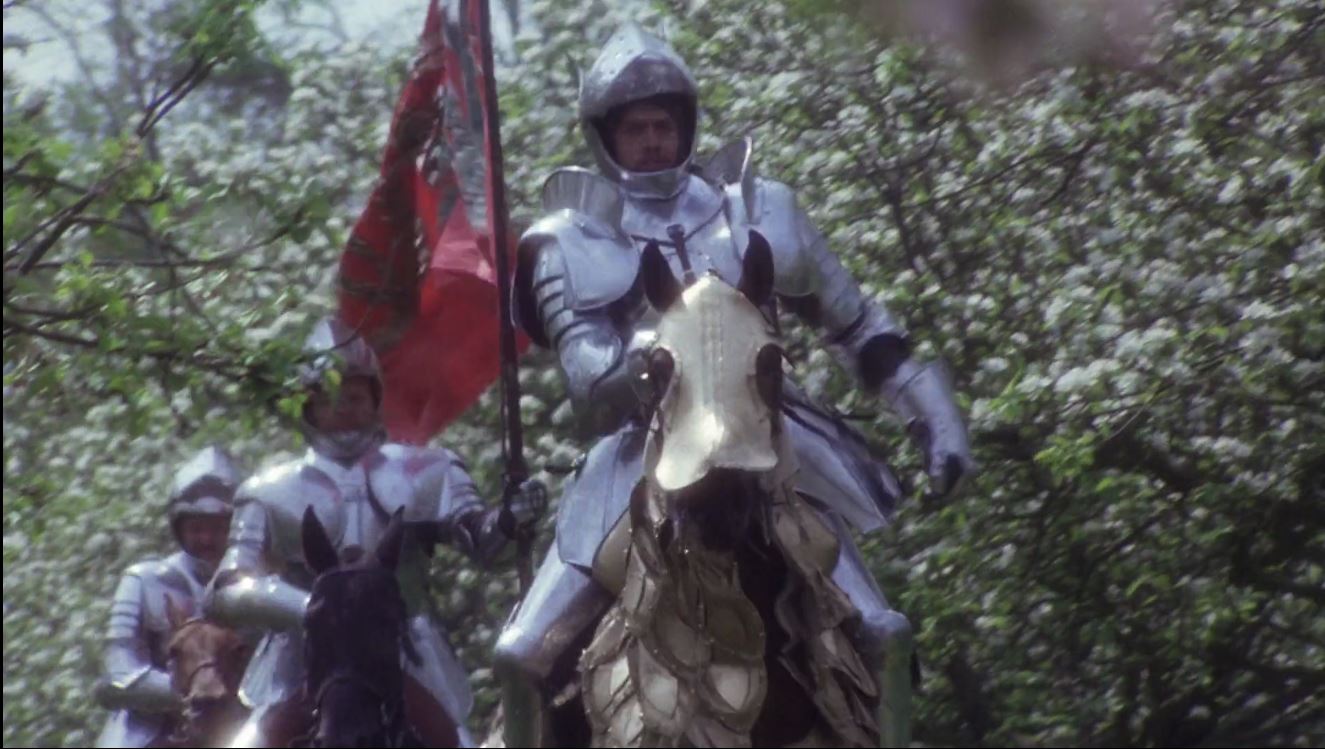
    I remember when “Excalibur” opened in April 1981. I was 14 years-old, a sensitive kid, and its R-rating made me nervous that there might be arm-loppings.

    There were arm-loppings. And violent death. And gore.

    But the tension only enhanced the film’s gravitas, with its weighty armor and weighty themes, and its brooding Wagnerian soundtrack was promptly assimilated into the underscore of my tragic-heroic teens. I would get up in the middle of the night if I saw the movie was going to be shown on HBO and greet the new day with grim determination.

    It is with the weight of the world upon me that I will rouse myself from my torpor for yet another year of Roy’s Tie-Dye Sci-Fi Corner. At long last, Roy (from the French “Roi,” for “King,” not incidentally) has granted me my request to discuss this extraordinarily rich film.

    Director John Boorman took his share of liberties with the discursive source material, conflating elements mostly from Sir Thomas Malory’s medieval epic “Le Morte d’Arthur” (“The Death of Arthur”), but to this day, no film better captures the true spirit of the Arthurian legends. Boorman blends mystery and mysticism as seductively as the dragon’s breath that accompanies the Charm of Making.

    And what a cast! For a time, every time I rewatched “Excalibur,” somebody else got famous: Patrick Stewart, Gabriel Byrne, Liam Neeson, and Ciaran Hinds join Nigel Terry, Helen Mirren, and a scene-stealing Nicol Williamson (who eschews Merlin’s pointy hat for a glimmering skull-cap).

    I always think of “Excalibur” this time of year, with the blossoms falling from the trees, because of the memorable sequence, in which a wasting Arthur is revived (“The king and the land are one!”) and once more he leads his knights into battle.

    A relic from the days when men were men, devouring game with their hands, growling like animals at even the most unthreatening of challenges, and never pausing to remove their armor while in the act of love, “Excalibur” is both hilarious, in a Monty Python sort of way, and very, very grave. This is King Arthur for people who roll their eyes at “Camelot” and “The Sword in the Stone.”

    I hope you’ll join us for our Fifth Season opener – a ponderous discussion of “Excalibur” – on the next “Roy’s Tie-Dye Sci-Fi Corner.” Arm-loppings will abound in the comments section as I swill Guinness from my grail, when we livestream on Facebook, YouTube, etc., this Sunday evening at 7:00 EDT!
    https://www.facebook.com/roystiedyescificorner

  • Arthurian Art The Lost Chord’s Musical Knights

    Arthurian Art The Lost Chord’s Musical Knights

    King Lot, Lancelot, Camelot – that’s a lot of “lots.”

    This Sunday night on “The Lost Chord,” we put the “art” in “Arthur” with musical treatments of the Arthurian legends by two peripatetic American Romantics,

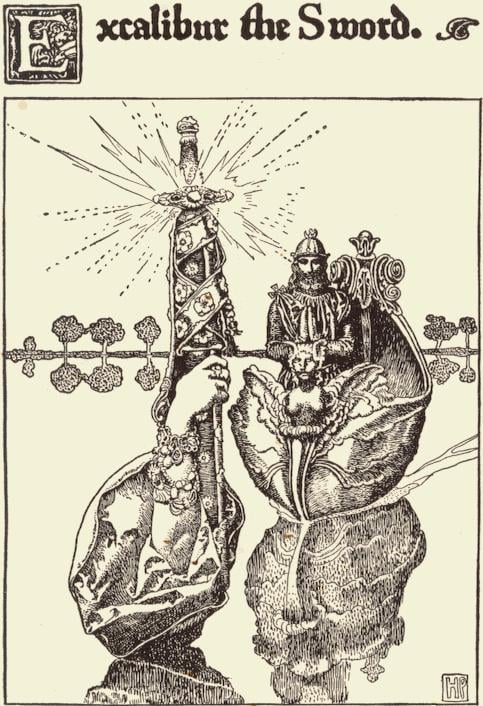
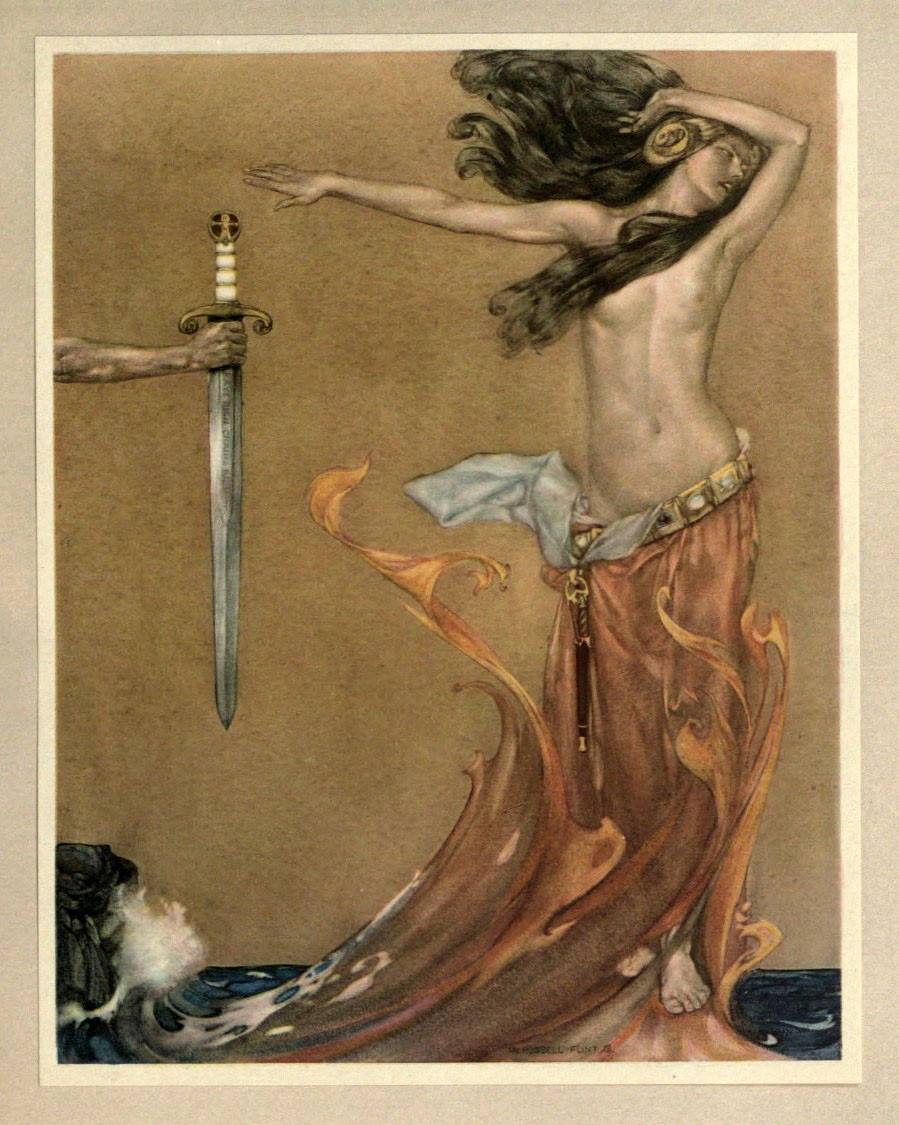
    We’ll hear “Excalibur,” a symphonic poem after Arthur’s enchanted sword, by Louis Coerne (pronounced “Kern”). Coerne was born in Newark, NJ, in 1870. As was the custom at the time, he studied abroad, in France and Germany, then closer to home with John Knowles Paine. In Munich, he pursued organ and composition studies with Josef Rheinberger.

    After that, it was back and forth to Germany, between church and conducting appointments in the United States, and then the assumption of a series of academic posts throughout the American Northeast and Midwest. Despite all the worn shoe leather, in his 52 years he managed to produce 500 works.

    The remainder of the hour will be devoted to the Straussian tone poem “Le Roi Arthur,” a work in three movements, by George Templeton Strong, son of the famous Civil War diarist, born in 1856. Strong Jr. studied at the Leipzig Conservatory, where Joachim Raff was among his teachers. For a time, he played viola in the Gewandhaus Orchestra. He rubbed shoulders with Liszt and Wagner, then was lured back to the United States by the offer of a teaching position (by former European transplant Edward MacDowell) at the New England Conservatory.

    However, in part because the work didn’t agree with him, and in part because of health issues, Strong soon took off for Switzerland, where he settled on the banks of Lake Geneva. There, he dedicated the remainder of his life to painting watercolors and composing. Even after musical fashion had changed, he continued to play an active role in Geneva’s musical life.

    I hope you’ll join me for “Kinetic Yankees in King Arthur’s Court.” Break a lance for Arthur, this Sunday night at 10:00 EDT, on WWFM – The Classical Network and wwfm.org.


    BONUS! Wholly by coincidence, this year’s opera at Bard Summerscape is Ernest Chausson’s rarely-staged “Le Roi Arthus.” I can’t speak for the production, not having seen it, but Bard generally does a fine job with anything they put their musical minds to. You can make it a full Arthurian evening by enjoying the livestream tonight at 6:30 pm. The running time of the opera is 3 ½ hours, so it should end just in time for the start of “The Lost Chord.”

    https://fishercenter.bard.edu/events/king-arthur/

  • American Composers & Arthurian Legend

    American Composers & Arthurian Legend

    In the wake of Hurricane Arthur, while continuing to honor our native musical heritage on this Independence Day weekend, this Sunday night on “The Lost Chord,” the focus will be on treatments of the Arthurian legends by a couple of American Romantics.

    We’ll hear “Excalibur,” a symphonic poem after Arthur’s magic sword, by Louis Coerne (pronounced “Kern”). Coerne was born in Newark, NJ, in 1870. As was the custom at the time, he studied abroad, in France and Germany, then closer to home with John Knowles Paine. In Munich, he pursued organ and composition studies with Josef Rheinberger.

    After that, it was back and forth to Germany, between church and conducting appointments in the United States, and then the assumption of a series of academic posts throughout the American Northeast and Midwest. In his 52 years, despite all the worn shoe leather, he managed to produce 500 works.

    The remainder of the hour will be taken up by the Straussian tone poem “Le Roi Arthur,” a work in three movements, by George Templeton Strong, son of the famous Civil War diarist, born in 1856. Strong, Jr., studied at the Leipzig conservatory, where Joachim Raff was among his teachers. For a time, he played viola in the Gewandhaus Orchestra. He rubbed shoulders with Liszt and Wagner, then was lured back to the United States by the offer of a teaching position at the New England Conservatory (by former European transplant Edward MacDowell).

    However, in part because the work didn’t agree with him, and in part because of health issues, Strong soon took off for Switzerland, where he settled on the banks of Lake Geneva. There, he dedicated the remainder of his life to painting watercolors and composing, even after musical fashion had changed, playing an active role in Geneva’s musical life.

    That’s “Kinetic Yankees in King Arthur’s Court” – treatments of the Arthurian legends by peripatetic American composers. “The Lost Chord” can be heard tonight at 10 ET, with the repeat in its new slot, Friday at 3 a.m. If you’re not a vampire bat, you can listen to it later as a webcast, at http://www.wwfm.org.

Tag Cloud

Aaron Copland (92) Beethoven (95) Composer (114) Film Music (123) Film Score (143) Film Scores (255) Halloween (94) John Williams (187) KWAX (229) Leonard Bernstein (101) Marlboro Music Festival (125) Movie Music (138) Opera (202) Philadelphia Orchestra (89) Picture Perfect (174) Princeton Symphony Orchestra (106) Radio (87) Ralph Vaughan Williams (85) Ross Amico (244) Roy's Tie-Dye Sci-Fi Corner (290) The Classical Network (101) The Lost Chord (268) Vaughan Williams (103) WPRB (396) WWFM (881)

DON’T MISS A BEAT

Receive a weekly digest every Sunday at noon by signing up here


RECENT POSTS