Tag: Back to the Future

  • Back to the Future Discussion and Space 1999 Preview

    Back to the Future Discussion and Space 1999 Preview

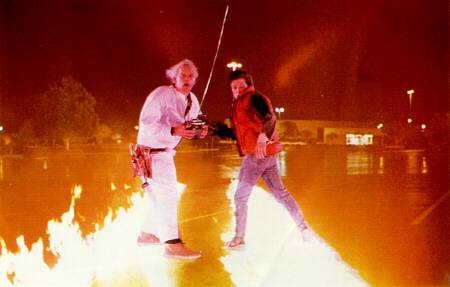
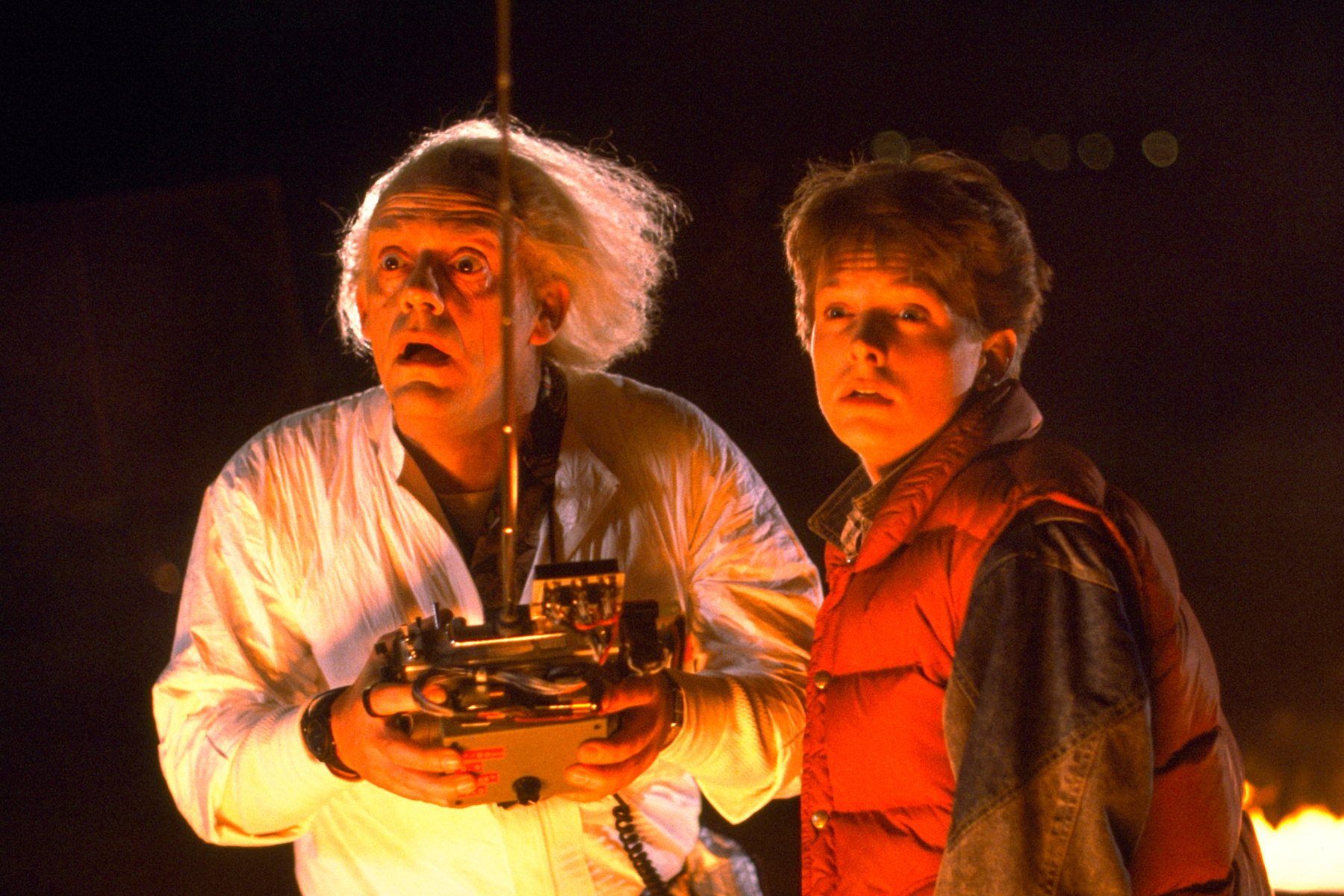
    Time got away from us last night, as we realized we were cresting two hours in our discussion of “Back to the Future” (1985). There’s got to be some irony in that. And there was still plenty left on the table.

    This last of a golden age of summer blockbusters was the time travel movie we didn’t know we needed. Now who would want to do without it?

    You can watch the entire conversation, with viewer comments, at the link. And make a mental note to change your clocks tonight, as we “fall back!”

    Whereas this week’s show went by like a flash of lightning meeting a DeLorean tearing down Main Street at 88 m.p.h., next week may wind up being a bit of a slog – at least for Classic Ross Amico, who is no big fan of “Space: 1999.” Gerry Anderson’s “The Day After Tomorrow” (1975) looks to be cut from the same cloth.

    At least it’s directed by Charles Chrichton, who directed “The Lavender Hill Mob” and “A Fish Called Wanda,” and surely anything with Brian Blessed is worth watching. It’s only 47 minutes long – actually a pilot for a projected TV series – so hopefully I’ll be able to make it through, provided I can find it streaming anywhere.

    My enthusiasm is not assured on the next Roy’s Tie-Dye Sci-Fi Corner. Please bring your insights to the comments section, so Roy has something to play off of, when we livestream on Facebook, Twitter, and YouTube, next Friday evening at 7:30 Eastern STANDARD Time.
    https://www.facebook.com/roystiedyescificorner/

  • Back to the Future on Roy’s Tie-Dye Sci-Fi Corner

    Back to the Future on Roy’s Tie-Dye Sci-Fi Corner

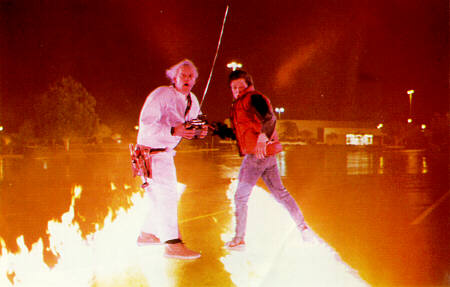
    When we have to turn the clocks back on Roy’s Tie-Dye Sci-Fi Corner, we do so in a big way. Join us this week, when we put pedal to the metal in Doc Brown’s tricked-out DeLorean for a time-traveling discussion of “Back to the Future” (1985).

    Robert Zemeckis and Bob Gale’s tight, Academy Award nominated screenplay is a clever inversion of “It’s a Wonderful Life.” Also, it celebrates a kind of knowing affection and fosters empathy across a generational divide. Incredibly, no studio wanted anything to do with it. It was finally Steven Spielberg who produced, after the success of Zemeckis’ and Gale’s “Romancing the Stone.”

    The film sports career-defining performances by Michael J. Fox, Christopher Lloyd, Lea Thompson, and especially Crispin Glover. All the predictable summer movie set pieces are there, but this is one blockbuster that is genuinely driven by characters and story.

    With just the right balance of innocence and sophistication, “Back to the Future” capped a golden age of Spielberg summer movies that began with “Jaws” in 1975. It’s an era that, without a time-traveling DeLorean, will never come again.

    It’s a reminder to “fall back” this weekend, as we pick up an extra hour. We’ll “make like a tree and get out of here,” on the next “Roy’s Tie-Dye Sci-Fi Corner.” Biff will join you in the comments section with the Turtle Wax (two coats!), when we livestream on Facebook, Twitter, and YouTube, this Friday evening at 7:30 EDT!

    https://www.facebook.com/roystiedyescificorner

  • Lalo Schifrin’s Bullitt & Movie Car Chases

    Lalo Schifrin’s Bullitt & Movie Car Chases

    June 21 marks the 90th birthday of Lalo Schifrin. This week on “Picture Perfect,” we put the pedal to the metal with his iconic score for “Bullitt” (1968).

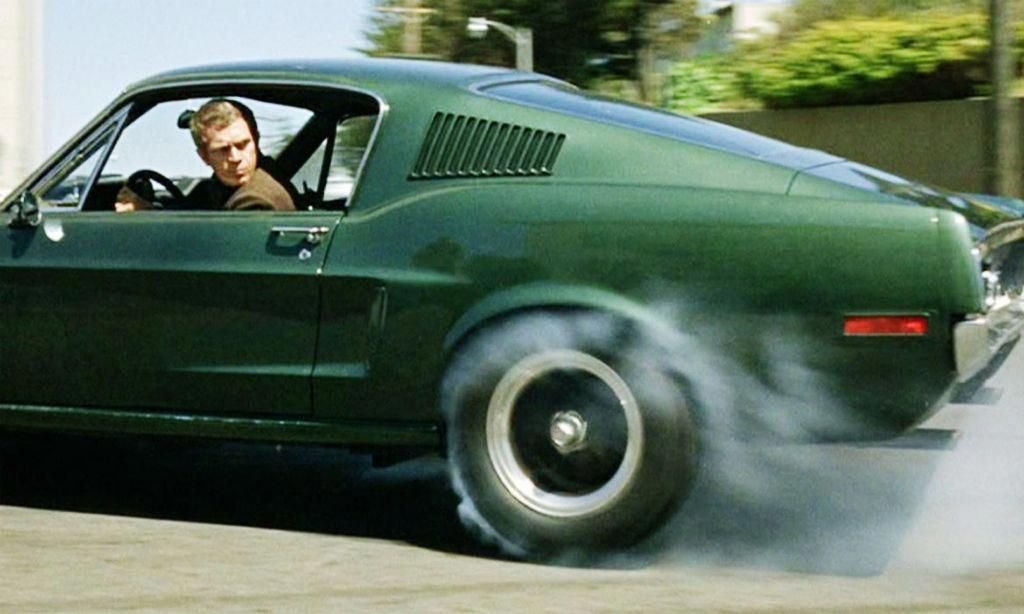
    When we remember Steve McQueen, chances are, if he’s not jumping barbed wire on a motorcycle, he’s behind the wheel of his Ford Mustang GT 390 Fastback, tearing up and down the streets of San Francisco. The high-octane action sequence became the gauge against which all other big screen car chases were measured (in tandem with “The French Connection”). We’ll hear selections from Schifrin’s jazzy, influential, King of Cool cop score.

    We’ll also have music from the second of the “Mad Max” movies, “The Road Warrior” (1981), which cleverly changed the course of the series by turning it into a kind of post-apocalyptic Western. Australian composer Brian May wrote the music, as he did for the original. The director, George Miller, specified that he was looking for a gothic, Bernard Herrmann-type mood to underscore his dystopian vision of the Australian Outback.

    Maurice Jarre took over to write the music for the third installment, “Mad Max Beyond Thunderdome.” It’s purely by coincidence that we’ll hear selections from another Jarre score that’s built for speed, “Grand Prix” (1966). The film’s international cast featured James Garner, Eva Marie Saint, Yves Montand, and Toshiro Mifune, but the plot’s assorted relationship and business conflicts take a back seat to driver’s-eye views of lapping the track.

    Finally, Marty McFly and Doc Brown’s time-travelling DeLoreon needs to hit 88 miles per hour in order to get “Back to the Future” (1985). Director Robert Zemeckis had already worked with composer Alan Silvestri on “Romancing the Stone,” but the producer of “Back to the Future,” Steven Spielberg, didn’t care for the music in that film. Zemeckis’ advice to his colleague: go grand and epic, since Spielberg had a marked preference for the music of John Williams. It was a very good choice.

    We shift into high gear for an hour of chases and races, with Lalo Schifrin and friends, on “Picture Perfect,” music for the movies, this Saturday evening at 6:00 EDT, on WWFM – The Classical Network and wwfm.org!

  • Movie Music for Speed Demons

    Movie Music for Speed Demons

    What’s your hurry?

    This week on “Picture Perfect,” we’ve got the need for speed.

    We’ll hear music from the second of the “Mad Max” movies, “The Road Warrior” (1981), which cleverly changed the course of the series by turning it into a kind of post-apocalyptic Western. Australian composer Brian May wrote the music, as he did for the original. The director, George Miller, specified that he was looking for a gothic, Bernard Herrmann-type mood to underscore his dystopian vision of the Australian Outback.

    Maurice Jarre took over to write the music for the third installment, “Mad Max Beyond Thunderdome.” However, it’s purely by coincidence that we’ll hear selections from another Jarre score built for speed, “Grand Prix” (1966). The film’s international cast featured James Garner, Eva Marie Saint, Yves Montand, and Toshiro Mifune, but the plot’s assorted relationship and business conflicts take a back seat to driver’s-eye views of lapping the track.

    When we remember Steve McQueen, chances are, if he’s not jumping barbed wire on a motorcycle, he’s behind the wheel of his Ford Mustang GT 390 Fastback, tearing up and down the streets of San Francisco in “Bullitt” (1968). The high-octane action sequence became the yardstick against which all big screen car chases were measured (at least until “The French Connection”). Lalo Schifrin provided the jazzy score.

    Finally, Marty McFly and Doc Brown’s time-travelling DeLoreon needs to hit 88 miles per hour in order to get “Back to the Future” (1985). Director Robert Zemeckis had already worked with composer Alan Silvestri on “Romancing the Stone,” but the producer of “Back to the Future,” Steven Spielberg, didn’t care for the music in that film. Zemeckis’ advice to his colleague: go grand and epic, since Spielberg had a marked preference for the music of John Williams. It was a very good choice.

    I hope you’ll join me for an hour of chases and races, on “Picture Perfect,” music for the movies, this Friday evening at 6:00 EDT, on WWFM – The Classical Network and wwfm.org.

    Just be sure you’re not driving when you do!

  • Need for Speed Movie Soundtracks Mad Max & More

    Need for Speed Movie Soundtracks Mad Max & More

    This week on “Picture Perfect,” we’ve got the need for speed.

    With Mad Max back in theaters, we’ll have music from the second installment in the series, “The Road Warrior” (1981). Australian composer Brian May wrote the music, as he did for the original. The director, George Miller, specified that he was looking for a gothic, Bernard Herrmann-type mood to underscore his dystopian vision of a post-apocalyptic Australian Outback.

    Maurice Jarre took over to write the music for the third installment, “Mad Max Beyond Thunderdome,” but it’s purely by coincidence that we’ll hear selections from another Jarre score built for speed, “Grand Prix” (1966). The film’s international cast featured James Garner, Eva Marie Saint, Yves Montand, and Toshiro Mifune, but the plot’s assorted relationship and business conflicts take a back seat to driver’s-eye views of lapping the track.

    When we remember Steve McQueen, chances are one of the first images that springs to mind is that of McQueen behind the wheel of his Ford Mustang GT 390 Fastback, tearing up and down the streets of San Francisco in “Bullitt” (1968). The high-octane action sequence became the yardstick against which all big screen car chases were measured (at least until “The French Connection”). Lalo Schifrin provided the jazzy score.

    Finally, Marty McFly and Doc Brown’s time-travelling DeLoreon needs to hit 88 miles per hour in order to get “Back to the Future” (1985). Director Bob Zemeckis had already worked with composer Alan Silvestri on “Romancing the Stone,” but the producer of “Back to the Future,” Steven Spielberg, didn’t care for the music in that film. Zemeckis’ advice to his colleague: go grand and epic, since Spielberg had a marked preference for the music of John Williams. It was a very good choice.

    I hope you’ll join me for an hour of chases and races, this evening at 6 ET, with a repeat tomorrow morning at 6; or that you’ll listen to it later as a webcast, at http://www.wwfm.org.

    Just be sure you’re not driving when you do!

Tag Cloud

Aaron Copland (92) Beethoven (95) Composer (114) Film Music (123) Film Score (143) Film Scores (255) Halloween (94) John Williams (187) KWAX (229) Leonard Bernstein (101) Marlboro Music Festival (125) Movie Music (138) Opera (202) Philadelphia Orchestra (89) Picture Perfect (174) Princeton Symphony Orchestra (106) Radio (87) Ralph Vaughan Williams (85) Ross Amico (244) Roy's Tie-Dye Sci-Fi Corner (290) The Classical Network (101) The Lost Chord (268) Vaughan Williams (103) WPRB (396) WWFM (881)

DON’T MISS A BEAT

Receive a weekly digest every Sunday at noon by signing up here


RECENT POSTS