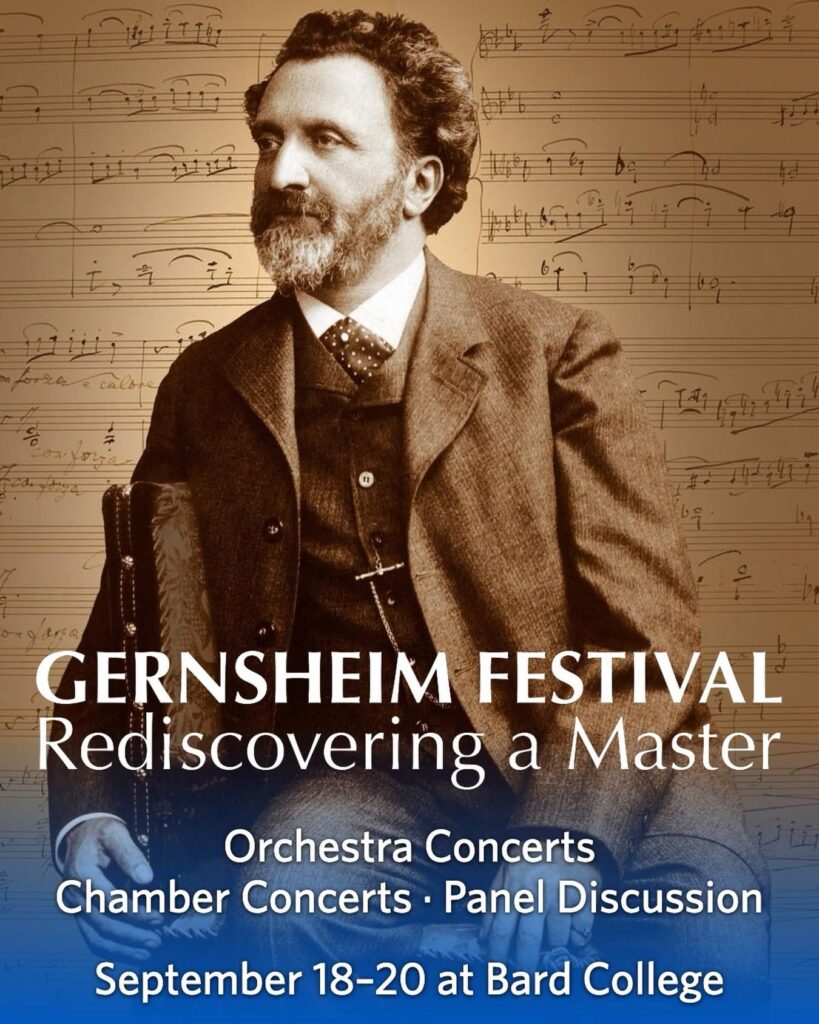
If you ever wished Johannes Brahms had written more orchestral music, then Friedrich Gernsheim just might be the gift you’re looking for.
Gernsheim, who knew Brahms – the two respected one another and championed one another’s music – shared the master’s conservative, classical-Romantic outlook. Both artists favored traditional forms and structural rigor over a more subjective approach and the emotional extremes of the New German School. Yet Gernsheim remains all but unknown to most of Brahms’ admirers.
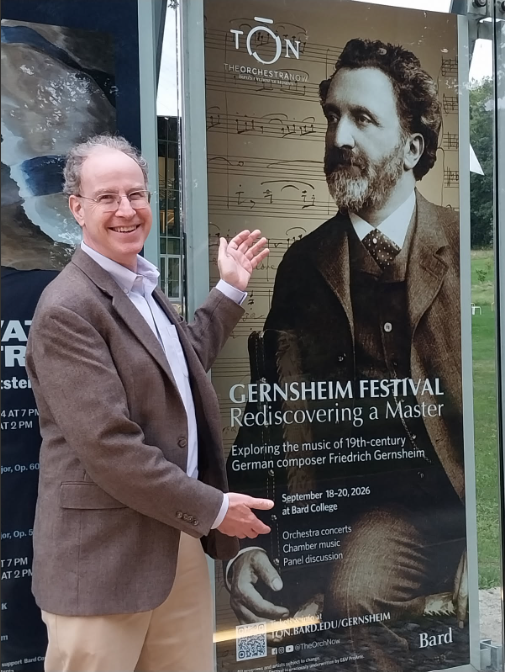
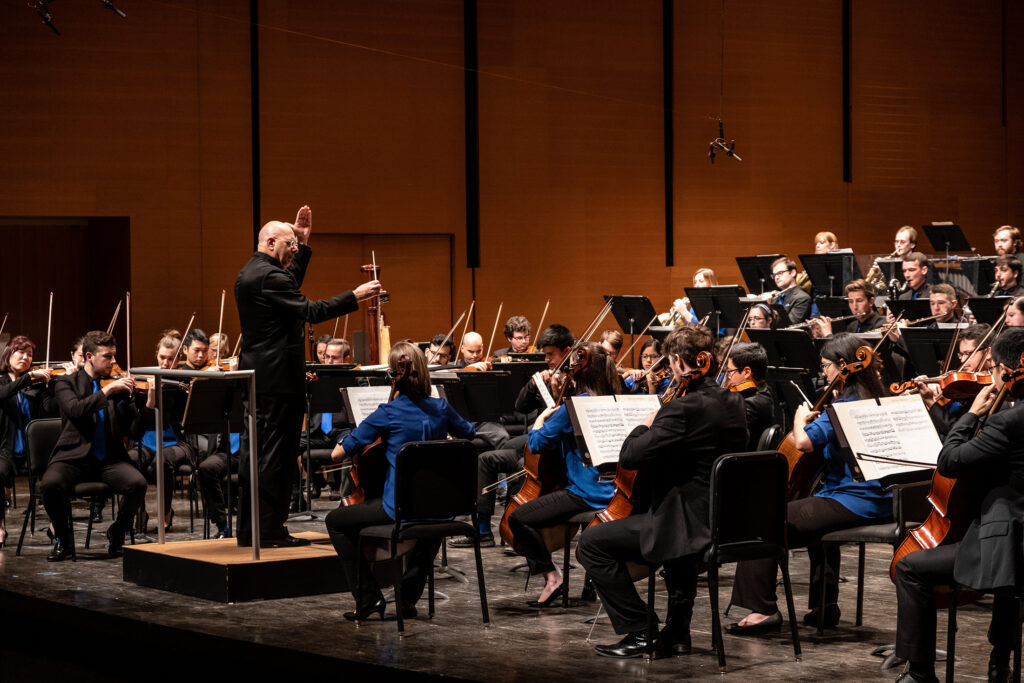
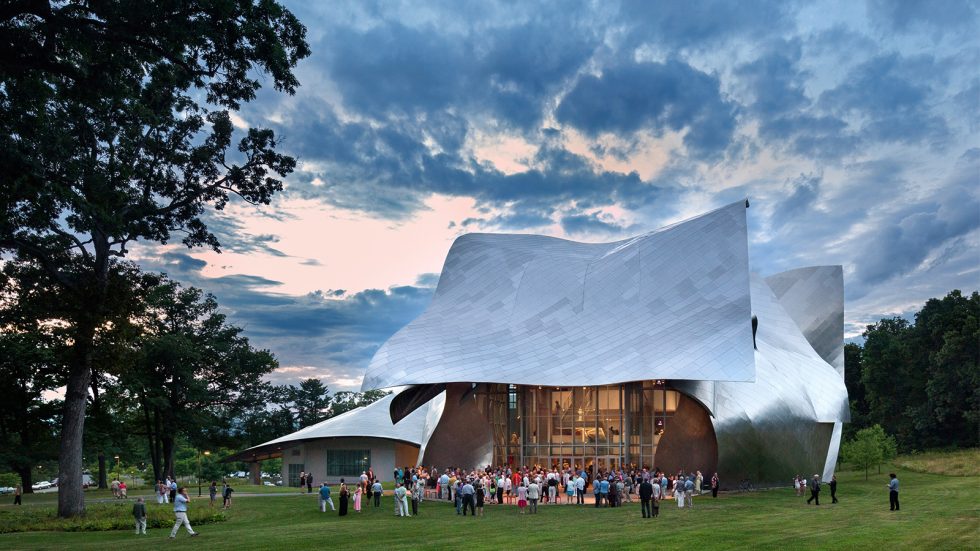
Bard College’s The Orchestra Now (TŌN) – a graduate training orchestra founded and conducted by Leon Botstein – is hoping to change all that by way of a three-year initiative to revive Gernsheim’s major works. Thanks to a grant from E&V ProArte, the first of TŌN’s Gernsheim festivals was held this past weekend. The three-day affair consisted of evening orchestral concerts at the Frank Gehry-designed Fisher Center at Bard, and afternoon chamber music concerts across campus in Olin Hall. There was also a scholarly panel held in Olin on Saturday morning.
While the festival was nowhere on the scale of its summertime flagship event, the Bard Music Festival – itself the crown jewel in the diadem of the college’s annual celebration of the arts, Bard SummerScape – it proudly extended the artistic mission of offering fine performances of worthwhile, though under-programmed, or even basically forgotten, music.
What’s more, you couldn’t beat the price: the panel and chamber concerts were presented free of charge (with the option of making a donation) and the seats for the orchestral concerts were very reasonable.
For me, it made the most sense to head up on Saturday, as the Friday night orchestral program was to be repeated. I could also take in a chamber concert and, if I could get myself moving, I might even catch the panel.
Well, I was too late to attend the 11 a.m. panel (hardly surprising, as I had a lot to do before I left, and I was coming from Princeton). I was genuinely sorry to miss it, since I always find what the scholars have to say informative, and this one included some real Gernsheim advocates. But I got there in plenty of time for the afternoon chamber program, for which there was unreserved seating. The turnout was okay, but it was by no means packed.
The program consisted of chamber music with piano. (Sunday afternoon’s concert would be devoted to chamber music for strings alone.) The Piano Quartet No. 3 in F major, Op. 47 (1883) was given its U.S. debut. The Piano Quintet No. 2 in B minor (1897) was heard for the first time in New York. Both pieces were performed with commitment and a striking level of maturity by TŌN musicians.
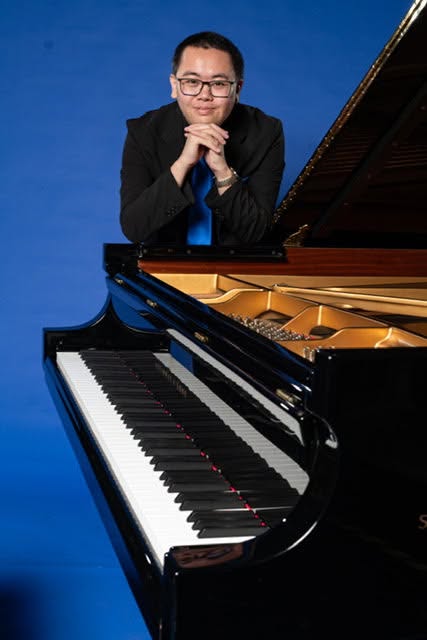
The pianist, Francis Chung-Yang Huang, deserves special mention, as he played throughout. The Quintet was almost like a reduction of a piano concerto. Altogether, the concert was a very pleasant experience. The music was well-crafted, full of long-limbed cantabile melodies, but also punched up with some energetic scherzandi. Violinists Carlos Torres and Jolin Yi-Lin Lin seemed to enjoy it too, as they exchanged smiles frequently during the Quintet.
As I say, the evening concert was a repeat of Friday. So I got to hear the U.S. premiere – or rather the second performance, since it was also done the night before – of Gernsheim’s Symphony No. 3 (1887), which bears the subtitle “Song of Miriam.” Gernsheim was inspired to write it after hearing a performance of Handel’s “Israel in Egypt.” It was a rare example of Gernsheim program music – music reflecting on extramusical matters – but the approach was definitely more Brahms than Liszt.
In fact, if there is any composer Gernsheim resembles, it’s Brahms! I would say he’s like Brahms’ more immoderate younger brother. You know, the black sheep who uses instruments like English horn, bass clarinet, and harp in his symphonies.
Because Gernsheim outlived Brahms (he died in 1916), he also tried his hand at a late Romantic tone poem, “Zu einem Drama” (“For a Drama”) – in this case, the drama unspecified – another piece of program music, which opened the concert. But again, next to Strauss, Mahler, and Schoenberg, it was pretty tame stuff. Imagine Brahms letting his hair down and using a tam-tam. Fun to listen to, but no masterwork.
In fact, for as much as his champions are no doubt hoping otherwise, I can’t imagine Gernsheim ever becoming standard repertoire. His music is well-crafted, dramatically persuasive, and often very beautiful (the second movement of the “Miriam” symphony is gorgeous), but again, he sounds too much like Brahms. That, more than any of the injustices the Nazis perpetrated against his music and reputation, is going to relegate him to, if not obscurity, then at least curiosity.
Of course, Gernsheim was long gone by the time Hitler came to power. There is nothing at all threateningly modernist about his music – like Brahms, Gernsheim is German classical-Romantic to his core – but he was Jewish and despised as such. Agenda deafened the Nazis to the evidence of their own ears.
It would have been instructive to hear Orion Weiss perform Brahms’ Piano Concerto No. 1 on the concert’s second half, but I had to slip out at intermission in order to get home at a reasonable hour. Hungry cats are angry cats, and as it was, I didn’t walk in the front door until 11:00.
My summation of the day? In general, I found the chamber works to be more successful, in terms of not having Brahms ever before my ears. It was hardly unusual for anyone writing chamber music in the latter decades of the 19th century to have been influenced by him. But Gernsheim’s orchestrations of the symphonies are a step too far.
That’s not to say the music is bad – his symphonies easily surpass those of his nearest musical friend, Max Bruch, in terms of maintaining and rewarding interest – but there were moments in “Miriam” when I couldn’t help but smile (the hymn-like theme in the last movement, which could have been a sketch for the last movement of the Brahms’ First) and even laugh (the work’s coda, which was about as Brahms as anyone not Brahms could get).
I’m not trashing Gernsheim’s symphonies. If you’re a classical music lover and fond of the period, I definitely recommend them. They’ve been recorded, which is how I got to know them. But I can’t hear them as lost masterpieces. I would not sneer to encounter them on any orchestra program, and I look forward to whatever TŌN unearths for future festivals. But in Gernsheim’s case, I’m sorry to say, I think posterity got it right.
However, for anyone looking to add an element of surprise to their chamber music concerts, I would highly recommend checking out his piano quartet and quintet.
Thank you, TŌN, and I look forward to hearing more Gernsheim in the future!
————-
The lovely second movement of Gernsheim’s Symphony No. 3, a musical response to the idea of Miriam, Moses’ sister, on the banks of the Nile on a summer night, confiding her sorrows and hopes to the stars.
The complete symphony, with more information in the write-up beneath the video.
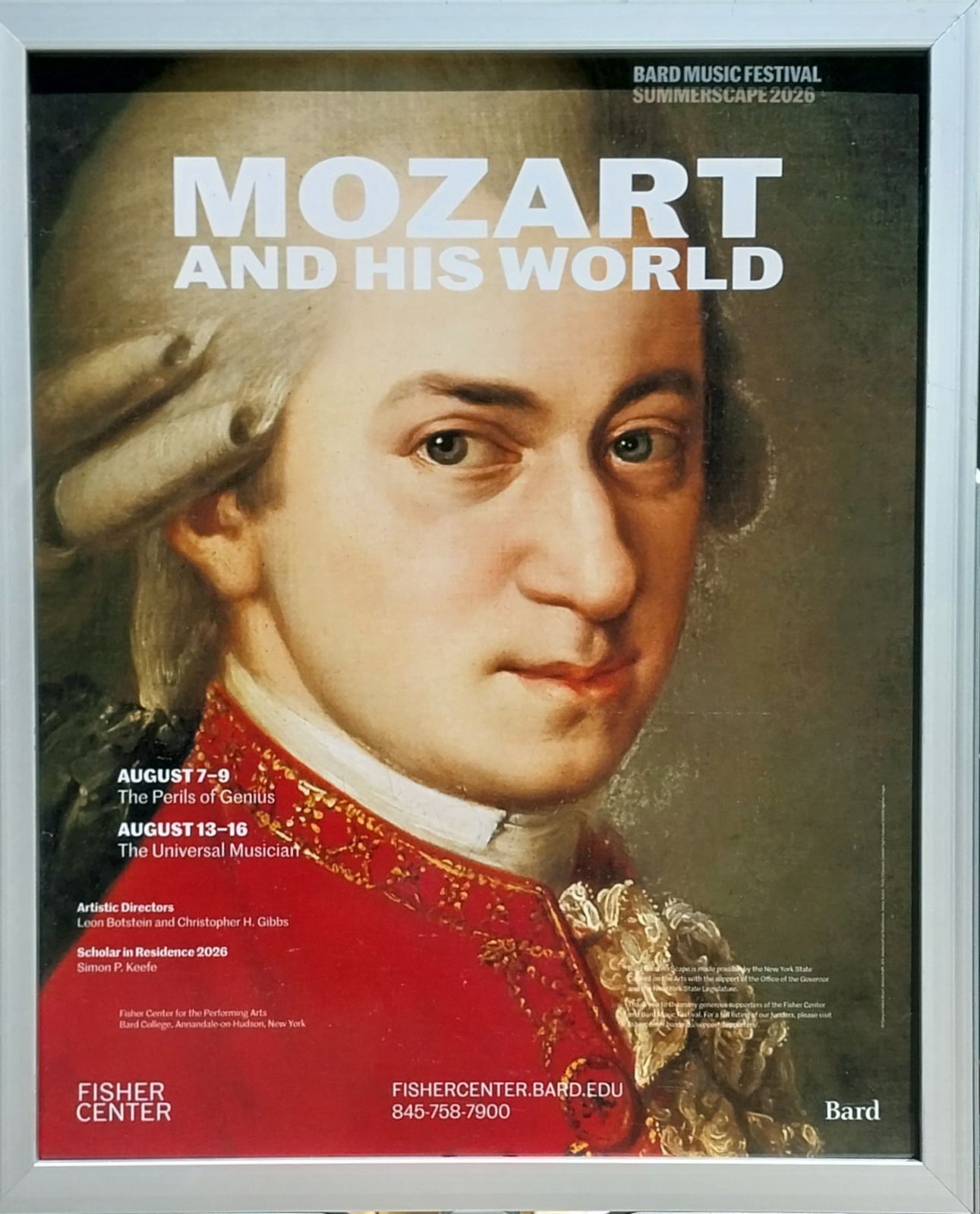
Bard may not have scheduled its upcoming mini-festival of the music of Friedrich Gernsheim as a mea culpa for August’s “Mozart and His World,” but I choose to take it as such. Not that “Mozart and His World” was not a success. Just the opposite! Music director and co-artistic director Leon Botstein announced from the podium that it was the most successful Bard Music Festival ever. But Bard is known for its questing spirit, flipping the monoliths of the standard repertoire to see what lurks beneath. Unquestionably there were plenty of discoveries to be made even with Mozart and his “wolf pack.” But Gernsheim is more in Bard’s wheelhouse.
Who exactly was Gernsheim? I didn’t know myself until I happened to catch one of his symphonies by chance on the radio. And it was an ear-opener! He can sound a bit like Brahms in his colors, but the similarity ends there. His symphonies, anyway (I’ve since acquired recordings of all of them), strike me as sounding more unbuttoned than Brahms’, more polymorphous, which make them less consistent, perhaps, but also more surprising. That said, I hope I’m not falling into the trap of something being more familiar being “better” when I say it doesn’t surprise me that Brahms’ symphonies gained more traction. But isn’t there room in concert programs for both?
Botstein will conduct the young but able performers of The Orchestra Now (TŌN), the graduate training ensemble he founded, in two of Gernsheim’s orchestral works on Friday evening at 7:00 (with the program repeated on Saturday) at the campus’ Fisher Center at Bard: “Zu einem Drama,” a late Romantic tone poem from 1902 (remember, Brahms died in 1897), and the Symphony No. 3, subtitled “Song of Miriam” (or simply “Miriam”), from 1887. The symphony was inspired by a performance Gernsheim had attended of Handel’s “Israel in Egypt,” after which he couldn’t get the Biblical character of Miriam out of his head.
On the second half of the program, Orion Weiss will be the soloist in Brahms’ Piano Concerto No. 2. Yes, Gernsheim and Brahms knew and admired one another.
On Saturday morning at 11:00, across campus at Bard’s Olin Hall, scholars and historians will discuss Gernsheim’s life, music, and legacy.
That will be followed on Saturday afternoon at 1:00 by a concert of the composer’s chamber music, including the Piano Quartet No. 3 and the Piano Quintet No. 2.
To round out the weekend, another chamber concert, Sunday morning at 11:00, will feature the String Quartet No. 2 and the String Quintet No. 2.
The scholarly panel and chamber music concerts are free, though reservations and a donation are encouraged. Seats for the orchestra concerts are reasonably priced.
I should add, the Nazis were not favorably disposed to Gernsheim’s music, because of his Jewish heritage, which may account to some extent for his subsequent neglect. TŌN is to be applauded for its efforts to restore Gernsheim’s reputation in what will be a multi-year project. A lot of this will be new territory for me (I’ve never heard any of the composer’s chamber music), so I am very much looking forward to it. It seems like a good time of year for a weekend or even a day trip to Upstate New York!
The inaugural Gernsheim Festival will be held at Bard College in Annandale-on-Hudson, NY, from Friday, September 18, to Sunday, September 20. For more information, visit:
For some reason, I’ve really been hooked on the Saint-Saëns piano concertos lately. I don’t know why. I’d just been itching to hear them again. I used to have ample opportunities to play them on the air, along with a great many other Romantic concertos by lesser-known composers, but now that I don’t have a regular live air shift, opportunities haven’t been so abundant. It’s even worse for shorter works. Who puts in a CD to listen to a three or even a ten-minute track? It really puts a crimp in my holidays, especially, I can tell you. There’s so much great music I used to share, that I only really ever listened to myself while weaving it into my radio shows.
Anyway, back to Saint-Saëns. I’ve had a double-disc set with me whenever I’ve been in the car for the past few weeks, and it has been a delight to have them in my life again. The Concerto No. 2 is the most performed and recorded, I think, or it was. Sometimes you would see No. 4 (often coupled with 2). And No. 5 gets a boost, no doubt because it’s got a nickname (the “Egyptian,” written while the composer was on a trip to North Africa, in the finale riffing on some exotic scales). But I think the only ones I have encountered in concert are 2 and 5. Why are they not performed more often?
Some enterprising music director would do well to perhaps swap out the overexposed – and, in my opinion, much weaker – Chopin concertos. For that matter, for as fine as they are, the Ravel concertos could probably use a rest. And what’s the deal with Liszt’s Piano Concerto No. 2? For as much as I admire Liszt, do we really need to hear it so often? No. 1 is so much better. Rachmaninoff? Forget about it. I love the concertos, as do audiences everywhere, but give somebody else a chance already.
After all, Saint-Saëns has already proved himself. His “Organ” Symphony is played everywhere and for good reason: it elicits ecstatic responses from listeners. But “Carnival of the Animals?” A fun piece, well-crafted, and full of sly wit, but again, how many times do we have to hear it, at the expense of all the other fun, well-crafted, and slyly witty pieces he composed? There are an awful lot of them that we never, ever hear, especially in concert.
Camille Saint-Saëns (1835-1921) should require no lance-breaking from me. A child prodigy who lived to a venerable age, there is not one phase of his maturity (which started early) that does not reward exploration.
Perhaps the reason the concertos popped into my head was because of the proximity of the Bard Music Festival. I’ve been to at least some of 13 of the last 18 festivals. Of course, I can never get enough of Sibelius, Vaughan Williams, Korngold, Martinů, and even Rimsky Korsakov, all given the Bard treatment in recent years. But thinking back, one of my favorite festivals turned out to be the one devoted to Saint-Saëns in 2012. It was just full of revelations and, all around, a really good time. I can’t believe it was 14 years ago!
Anyway, on one of the concerts, Danny Driver, who is a Bard stalwart with an active concert career and a sizable discography (recording for, among other labels, Hyperion), was the soloist on one of the concerts in the “Egyptian” concerto, with Leon Botstein conducting the American Symphony Orchestra. I found the audio posted online. You can hear just how much the audience enjoyed it from their spontaneous cries afterward. I’ll share the link to the last movement below.
Unfortunately, for as seldom as the concertos are performed, we almost never hear Nos. 1 & 3. And they are wonderful. Do they plumb the depths of existence? Of course not. But they are great fun. One is consistently tickled by the level of craftsmanship, the melding in his music of French and German influences, the way he plays with structure, and the seeming effortlessness of the writing. I know I’m flirting with cliché in saying so, but it’s as if he’s stringing pearls. No. 1 is so uplifting and heroic. Somebody bring it back, please!
But of course, these are the assessments of one who also hopes someday to be able to hear the Josef Rheinberger concerto!
The Bard Music Festival, this year devoted to “Mozart and His World,” will conclude this afternoon at Bard College at 3:00 EDT with a complete semi-staged performance of “The Abduction from the Seraglio.” The program will also be available for livestreaming. You’ll find more information at the link!
This week on “The Lost Chord,” with my head full of Mozart from this year’s Bard Music Festival (“Mozart and His World,” at Bard College in Annandale-on-Hudson, NY, through tomorrow), I recall a show I put together in 2006 of music composed by a few of Mozart’s friends and associates.
The program includes a Trio in F major for three basset horns attributed to Anton Stadler, the clarinetist who inspired Mozart to write his great masterworks, the Clarinet Concerto and the Clarinet Quintet. Mozart regarded Stadler as an intimate friend. However, it’s been suggested Stadler may have betrayed that trust. In fact, there’s a letter from Mozart’s wife, Constanze, which reveals the clarinetist claimed to have lost some Mozart manuscripts when his suitcase stolen. Among them – some trios for basset horn! You connect the dots.
But what really reminded me of the show was music of Franz Xaver Süssmayr, who famously completed Mozart’s Requiem. Süssmayr’s “Sinfonia turchesca” will be featured on a Bard concert tonight at 7:00. (Concerts from the Fisher Center at Bard are available for livestream. I’ll include a link below.) The “Sinfonia turchesca” is tricked out with a battery of drums, cymbals, and triangles, to be played “in the Turkish style,” as was all the rage in those days. The Battle of Vienna of 1683 proved to be the beginning of the end of centuries of Turkish hostilities. Turkish percussion instruments were sent as diplomatic gifts to the various European courts. The Ottoman influence informed such works as Mozart’s “Turkish” Concerto, “The Abduction from the Seraglio” (to be heard complete at Bard tomorrow, with livestream option), Haydn’s “Military” Symphony, and the janissary interlude in the finale of Beethoven’s 9th.
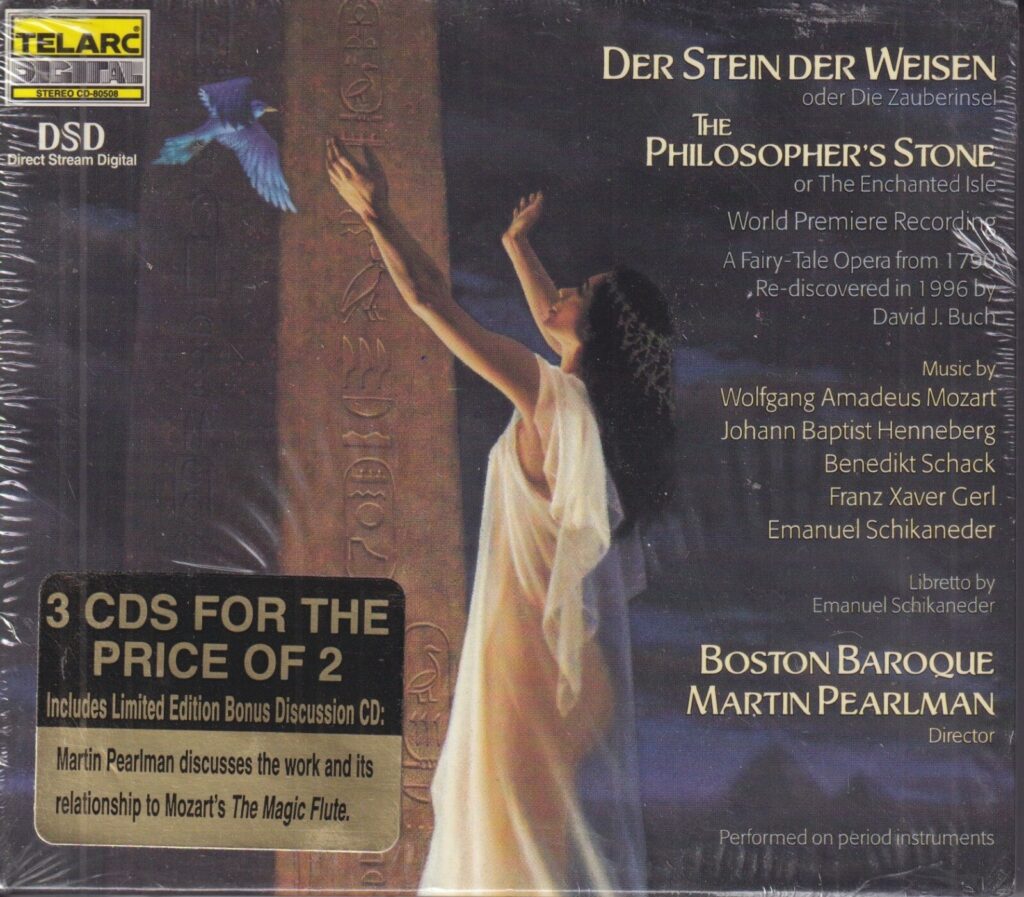
Finally, we’ll hear selections from a rediscovered singspiel by the company that gave us “The Magic Flute,” including the first Tamino (composer Benedikt Schack), the first Sarastro (Franz Xaver Gerl), “Flute” conductor (Johann Baptist Henneberg), “Flute” impresario, librettist, and Papageno (Emanuel Schickaneder), and Mozart himself. The story shares in common with “Flute” a divided family – in this case, two brothers – representing the powers of good and evil; parallel romantic couples of contrasting dispositions – one spiritual, and the other of an earthier bent; temples and purification rituals; an enchanted weapon; and arcane Masonic and alchemical symbolism.
“The Philosopher’s Stone” was recorded in 1999 by Martin Pearlman and Boston Baroque for the Telarc label, and the work’s a blast. (I had the privilege to hear a few of the duets sung live at Bard last weekend.) We’ll have time for selections from Act I.
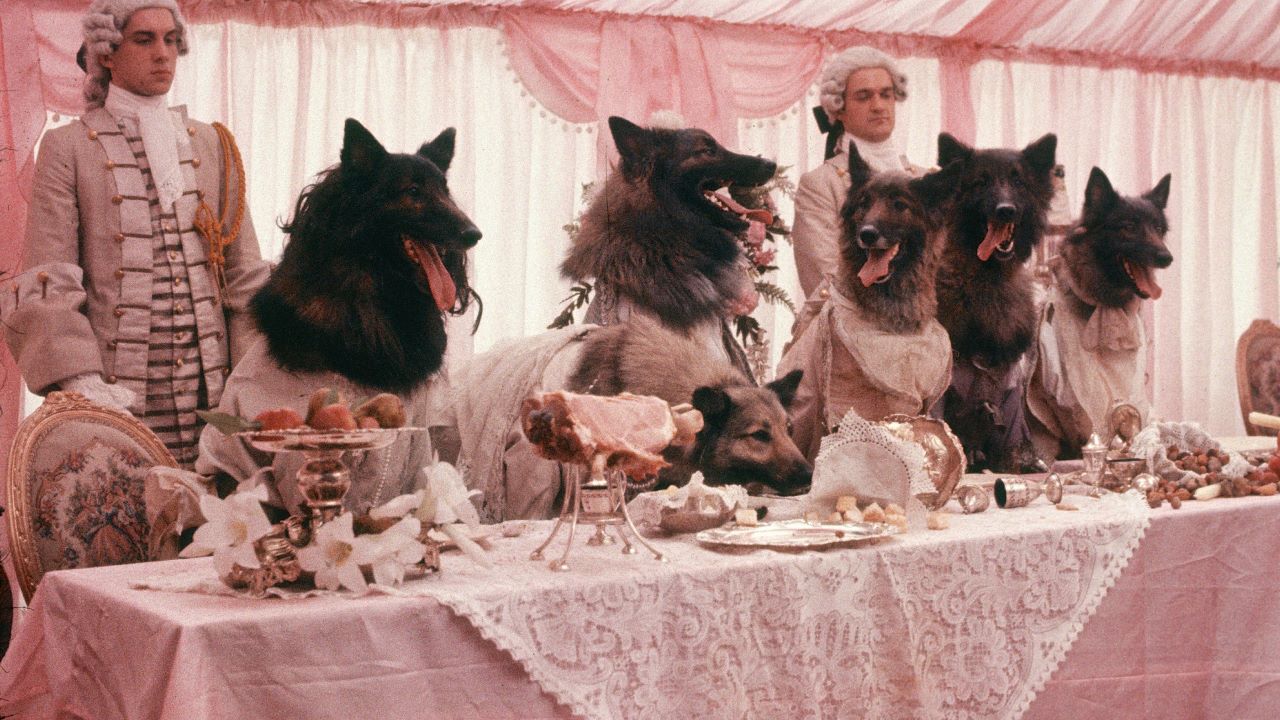
Aaa-OOOO! It’s an hour of music by those who ran wild with Wolfgang Amadeus Mozart. I hope you’ll join me for “Wolf Pack” on “The Lost Chord,” now in syndication on KWAX Classical Oregon!
——- Clip and save the start times for all three of my recorded shows:
PICTURE PERFECT, the movie music show – Friday at 8:00 PM EDT/5:00 PM PDT
SWEETNESS AND LIGHT, the light music program – Saturday at 11:00 AM EDT/8:00 AM PDT
THE LOST CHORD, unusual and neglected rep – Saturday at 7:00 PM EDT/4:00 PM PDT
Time to roll up my sleeves and continue (from yesterday’s post), in the hope of documenting the rest of my impressions of the first weekend of this year’s Bard Music Festival, “Mozart and His World.”
Saturday mornings at the festival are devoted to scholarly panels. The first of these (“Gottlieb or Amadé? Who Was Mozart?”) included presentations by Columbia University’s Elaine Sisman and Princeton emeritus professor Scott Burnham (now teaching at CUNY Graduate Center). Gottlieb and Amadé are variants on Mozart’s middle name – he seldom actually used Amadeus (the Latin form of “beloved of God”), except in a few humorous circumstances – and the question served as a springboard for explorations of his identity and character.
A portion of Sisman’s talk was devoted to the balance of art and accessibility in Mozart’s music. She spoke of Mozart’s disdain for “asses” (ignoramuses) and how the composer frequently attempted to appease his father, Leopold, by including in his letters references to passages in his music that should appeal even to “asses’ ears” – a reference not only to Ovid’s King Midas, with his donkey ears, but also to more accessible music, the idea of which would naturally mollify Leopold for its potential profitability.
Burnham offered some interesting examples of Mozart as he’s appeared in literature, including Eduard Mörike’ 1855 novella “Mozart’s Journey to Prague.” During the Q&A portion, Burnham engaged in a little experiment. You’ll recall, in the film “Amadeus,” when the priest visits an elderly Salieri, hoping to hear his confession, Salieri plays the first half of the opening phrase of Mozart’s “Eine kleine Nachtmusik.” The priest is able to complete it from memory, much to Salieri’s annoyance. So it was that, when Burnham sang the rising figure as a kind of call, inviting response from those in the audience, to a person, everyone was able to round off the theme. In an age when classical music has become so marginalized, it is remarkable that anything remains. But Mozart’s most famous serenade is still bouncing around our collective cultural memory.
Also on the panel was conductor Leon Botstein, seemingly always prepared to speak profusely and with inspiration, armed on Saturday with only a few jottings and a small cup of coffee. Aside from expanding and expounding upon the morning’s topic, he offered a melancholy observation that historical scholarship of the kind practiced by those on the morning’s panel is dying. Festival co-artistic director (with Botstein) Christopher H. Gibbs served as moderator.
Saturday afternoon’s chamber music concert was titled “Fathers and Sons.” Byron Adams delivered his pre-concert talk with an impeccable balance of concision, relevance, insight, and dry wit. An emeritus professor of University of California, Riverside, Adams possesses flair and a certain je ne sais quoi that never disappoints. The program itself was constructed of works by Bach sons (and Mozart influences), Carl Philipp Emanuel and Johann Christian, and Mozart’s father, Leopold; also a piece for harpsichord by Padre Giovanni Battista Martini (one of Mozart’s teachers, alongside Leopold and J.C. Bach).
Highlights were Mozart’s String Quartet in F Major, K. 168 (with violinists Luosha Fang and Jenny Huenigen, violist William Frampton, and cellist Raman Ramakrishnan), his Sonata in C Major for Piano and Violin, K. 296 (with violinist Grace Park, whom I exalted yesterday, and pianist Michael Stephen Brown), and J.C. Bach’s chipper Sextet in C Major (with oboist Alexandra Knoll, violinist Fang, cellist Ramakrishnan, hornists Karl Kramer-Johansen and Brittaney Pertsas, and pianist Anna Polonsky). Keep in mind, here and elsewhere, that while, for reasons of space, I can’t gush over everyone, the musicians are all astonishingly gifted.
On Saturday night, the theme was “Mozart and Prague” (with Sisman providing the pre-concert talk). It would have to include the “Prague” Symphony, right? Well, by the time we got there, as with the Friday night concert I described in my last post, it was almost too much of a good thing – despite it being one of the composer’s great symphonies, appealing to connoisseurs and long-ears alike. I just had to reset my brain during the first movement so that I could muster the stamina to experience it in the moment, as opposed to being wrapped up in the distraction of my fatigue.
For one thing, the concert included not one, but two piano concertos. I mean, I can see why. They were by no means repetitive. The Concerto No. 5 was written when Mozart was 17, his first original composition in the form (as opposed to elaborating on existing models). The work is full of energy and exuberance. In a sense, the soloist, George Xiaoyuan Fu, was well-chosen, even though – or perhaps because – he is a bit of a showboat and a hotdog. But you know I can’t really complain about that. I admit I chuckled when he got to the end of a run, following his fingers up the keyboard with his eyes, so that he basically wound up shamelessly mugging straight into the audience. Always be wary of young pianists in off-white double-breasted suits! That said, I hope he comes back.
By contrast, the Piano Concerto No. 18, had the starrier soloist in Simone Dinnerstein, but generally speaking it was a more Apollonian affair, Dinnerstein playing with beauty, elegance, and serenity, and not one trace of hotdog.
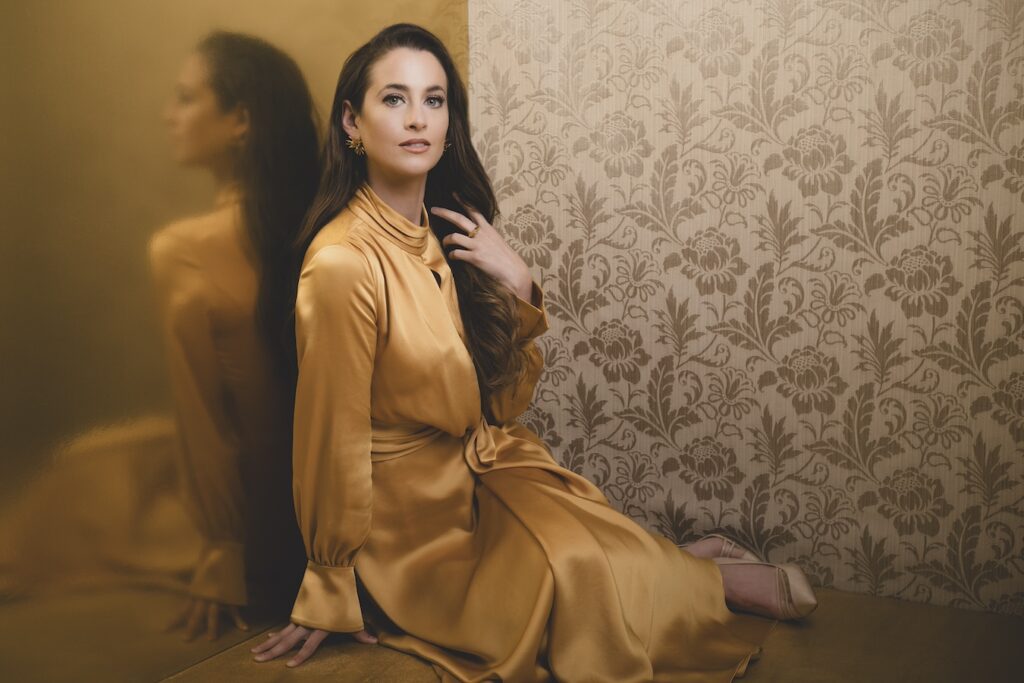
The true star of the show (and perhaps the entire weekend) was soprano Jana McIntyre, whom I first encountered at the Berlioz festival a couple of years ago, and who sang the sorceress Aithra in Richard Strauss’ “The Egyptian Helen” at Bard only last month. What a gift she has! Poise, presence, beauty, youth, and an unflaggingly nimble coloratura voice. On Saturday, her “Exsultate, jubilate” stopped the show.
In the second half, she returned to sing arias by a couple of composers who influenced Mozart, Christoph Willibald Gluck and Josef Mysliveček. In Gluck’s “Unser dummer Pöbel meint” from “Die Pilger von Mekka” (“The Pilgrims to Mecca”), she performed a most unusual duet with French hornist Kramer-Johansen. I know I’ve never heard the opera, but I’ll be damned if I didn’t know the melody. It was a making me crazy trying to figure out how. That night, back in my room, I could hear it in my head for orchestra. Was it arranged by Beecham? It was only when I woke up in the morning that I had the solution: Tchaikovsky used it in the final movement of his Orchestral Suite No. 4 “Mozartiana.” It turns out Mozart wrote a set of variations on the aria. Very cool to include it, Bard!
Yesterday’s post put me in mind of the mutability of fate and its role in producing singers of world renown. There are so many great singers out there, even so many of them at Bard, yet comparatively few will ever make it to the top, whatever that is. I seldom encounter anyone at Bard who is anything less than very fine. “The Egyptian Helen” was, top to bottom, amazingly cast.
McIntyre is luckier than most. She’s had bookings with orchestras and opera houses all over the place, some of them bigger than others. The higher-profile ones include the Philadelphia Orchestra, the Los Angeles Philharmonic, and San Francisco Opera.
I am happy note that she has begun covering title roles (for other singers) at the Met. She deserves more than simply being cast as a Flower Maiden in “Parsifal.” I hope she gets the break that she deserves. But even more so, I hope she’s having a blast along the way, as she appears to be doing.
And what do you know, it turned out to be another three-hour concert. So I was understandably grateful for an 11 a.m. start time for the Sunday morning program. I find my weekends at Bard are marked by increased caffeine intake as restful nights diminish. It also doesn’t help that during the day, meals are often rushed and sometimes even grab-and-go.
Sunday morning’s offering, “Theatrical Life in Vienna: Hanswurst, Leporello, and Papageno,” was wonderfully conceived and felicitously executed, with Lisa de Alwis of the University of Colorado elucidating the bawdy, subversive theatrical world of the common folk that thrived beyond the courts of the aristocracy. Hanswurst, or Jack Sausage, was a figure of coarse humor, a trickster, a bawd, and one who was monitored very closely by the censors (who were often subverted). Kakadu, in a similar vein, I gather, was even worse. The theater of the time was a place for socializing, gambling, and gossip, with musical entertainment full of outlandish, often magical, situations and catchy tunes.
The program included, among other things, selections from “The Philosopher’s Stone,” a collaborative effort by the same team that would create “The Magic Flute.” It’s a very entertaining work. If you enjoy Mozart’s enchanting singspiel, I highly recommend Martin Pearlman’s recording of the “The Philosopher’s Stone” with the Boston Baroque on the Telarc label.
What Sunday morning’s program illustrated most effectively is that Mozart’s latter-day masterpiece did not exist in a vacuum. I even learned of a sequel to “The Magic Flute,” called “The Labyrinth,” by Peter von Winter (several arias and duets were performed). For this concert, some of the selections were taken from manuscript. Humorous generalizations about men and women and the relative fidelity (or otherwise) of both abounded.
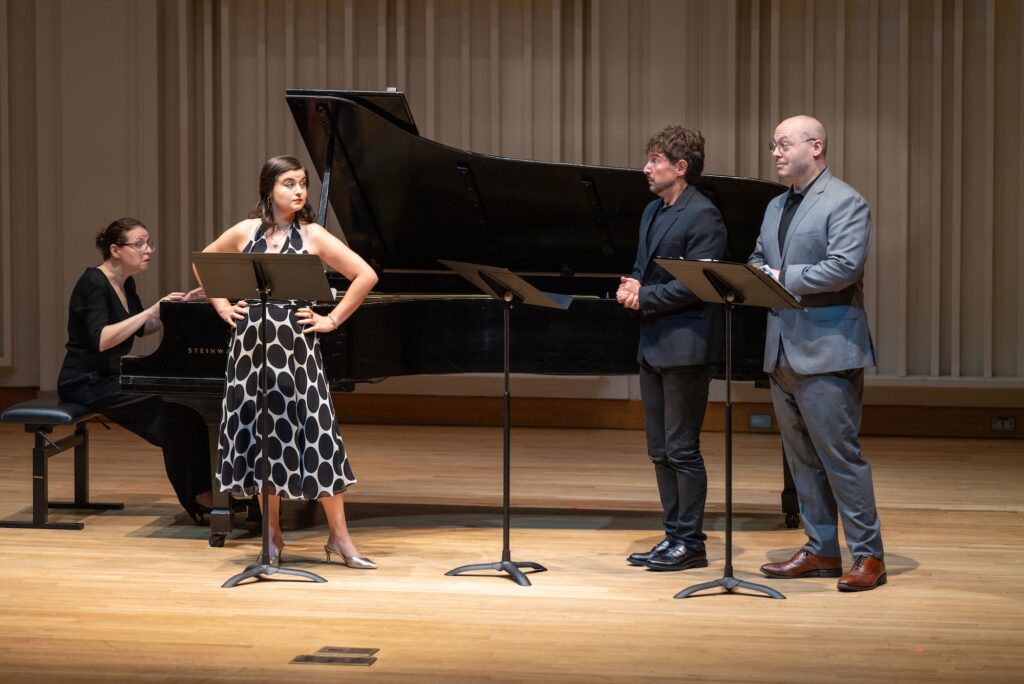
All of it was engagingly sung. Soprano Rachel Doehring Jackson was adorable and great fun in her cat duets, attributed to Mozart, from “The Philosopher’s Stone.” There was a very funny trio from Wenzel Müller’s “Das Sonnenfest der Braminen” (“The Sun Festival of the Brahmins”), with soprano Catherine Creed, tenor Aaron Blake, and bass-baritone Devon Russo, in which the two men characterize their sex as inconstant as the wind, only to change their tune when called on the carpet by the heroine.
In sharing my impressions of this summer’s production of Richard Strauss’ “The Egyptian Helen” at Bard, I mentioned that Creed’s voice didn’t carry as well as the others over Strauss’ orchestra. Here, she experienced no such challenges. She really got to show her stuff in a “Queen of the Night” type aria from the opera “Oberon, King of the Elves,” by Paul Wranitzky. (Creed will sing the role of Blondchen in a semi-staged performance of Mozart’s “The Abduction from the Seraglio,” to conclude the festival this Sunday.)
Wranitzky is a name you will sometimes encounter in music histories. In doing radio shows over some 40 years, I often marked composer birthdays. So I’d glance through the record library and see what I could come up with and put on a Wranitzky trio, which was pleasant enough, though I confess it didn’t do all that much for me. Here, it was a totally different story, with introductions of emotional depth that anticipated the Romantic movement. The selections were performed on piano, by Victoria Schwartzman, as opposed to orchestra, so it put me in the mind of the more introspective movements of the Beethoven sonatas.
Clearly, I could write a whole separate post on this concert. It was one of the most consistently successful and entertaining of the festival. What’s more, it was digestible. Anyone who was there, feel free to correct me, but I believe it ran less than two hours, without an intermission.
I expected equally great things of the weekend’s concluding program, “Rivalries and Conspiracies,” a late-afternoon affair, which recalled a piano duel which took place between Mozart and Muzio Clementi, before Joseph II and Maria Feodorova, Grand Duchess of Russia. The wager was settled privately, with Joseph collecting for his support of Mozart, but publicly the outcome was more diplomatically announced as a draw.
The concert was also to feature a collaborative effort between Mozart and his alleged (overstated) arch-rival Antonio Salieri, for soprano and harpsichord, rediscovered only in 2015, and the juxtaposition of selections from two operas requested by Joseph II that were originally presented back-to-back as yet another contest. (This time, Salieri was declared the winner.)
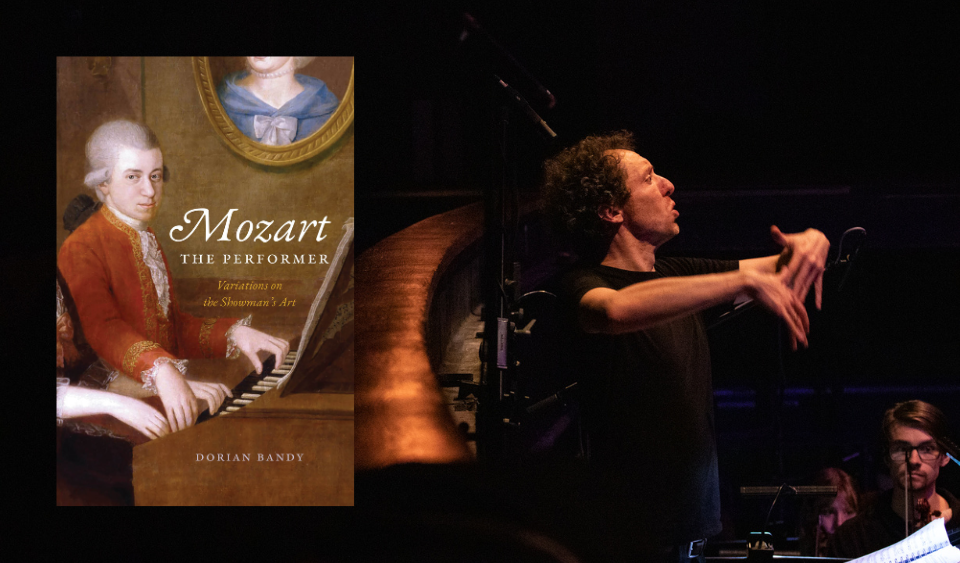
On paper, it all looked great. And in execution, its promise was mostly fulfilled on the concert’s first half. Dorian Bandy, a conductor, Baroque violinist, and historical keyboardist (who also gave the preconcert talk), blew the dust off Mozart’s overture to “The Impresario,” with fleet tempi and punchy articulation. Bandy then took to the harpsichord for Mozart & Salieri’s “Per la ricuperate salute di Ofelia” (“For the recovered health of Ophelia”). He was joined by soprano Katrina Galka, who sang from a seated position, in near profile to the audience, seemingly absorbed in the dreaminess of the pastoral text. In general, the lighting enhanced a sense of intimacy inherent in the smaller numbers on the program.
As I have noted, the Bard festival draws from an enviable stable of performers. Pianists Danny Driver and Piers Lane are regulars, uniformly excellent, quick studies who know how to get to the heart of the music, and perform everything most expressively. Driver’s performance of Clementi’s Piano Sonata in B-flat Major, Op. 24, No 2, left nothing to be desired. In fact, he made the work sound like a minor masterpiece. (Mozart was clearly influenced by it in writing his overture to “The Magic Flute.”)
Lane played Mozart’s “Eight Variations on Grétry’s “Dieu d’amour” – not as ambitious in scope, perhaps, but certainly refined. It’s not the kind of piece that one would have chosen for a musical duel in Franz Liszt’s day, but a good set of variations is always interesting, from both compositional and interpretative perspectives. Still, the first half started with a bang and ended on a more introspective note (Mozart’s variations don’t really build to much; they just kind of end), and the audience broke for intermission on a fairly contented, if somewhat relaxed note.
I can’t quarrel with the idea underpinning the second half: a juxtaposition of selections from Joseph II’s Mozart-Salieri opera contest. I can even see how it might be fun to devise a new scenario that sort of conflates the backstage dramedies of the original creations. Unfortunately, the concept just didn’t come off.
Even with the talented singers assembled for occasion (sopranos Galka and Jennifer Zetlan, tenor Aaron Blake, baritone Theo Hoffman, and bass-baritone Devon Russo), it was a drag. Everything was fine, occasionally glorious, as long as everyone was singing. But the farcical situations and dialogue, which required everyone to speak in heavily accented English (as the characters are supposed to be Italian and German), creaked hard.
Let’s be honest, even in its original form, Mozart’s “The Impresario” is pretty tedious. Too much talk and not enough music. I know next to nothing about Salieri’s contribution, “Prima la musica e poi le parole” (“First the Music and Then the Words”), but I wish the organizers of this presentation had taken the title to heart.
I would have been pleased had they just performed the musical numbers, with perhaps Bandy (who again conducted) supplying any background or connective material he felt necessary. As it was, the Chico Marx “otsa no good” caricatures padded the second half to twice the length. I tried my best just to focus on the music while everyone was singing, but all too soon, we were back to the labored – and often inscrutably accented – farce, so that by the end I was glad when it was over.
A rare Bard misfire, then, but the performers (when they were singing) were all first-rate, and the first half of the concert was totally worth it. Still, I can’t help but lament a missed opportunity, to be able to listen to and meditate on this contest between the most eminent composers in the service of Joseph II without unnecessary distraction. The arias were supertitled; the dialogue was not.
The concert was the most lightly-attended of the weekend, as Sunday afternoon concerts often are. The audience perceptibly dwindled during the second half. Friday night was a sell-out, the Saturday afternoon chamber music concert was packed, and Saturday night, was also near-capacity. Leon Botstein quipped on Friday that he had avoided Mozart for the past 35 years, only to have the Mozart festival become the most financially successful in Bard history.
Perhaps as a kind of penance, next month, Bard will conduct a mini-festival devoted to virtually forgotten Brahms contemporary Friedrich Gernsheim, September 18-20. Now THIS is right up my alley! I’ll have to see about attending at least one of the days.
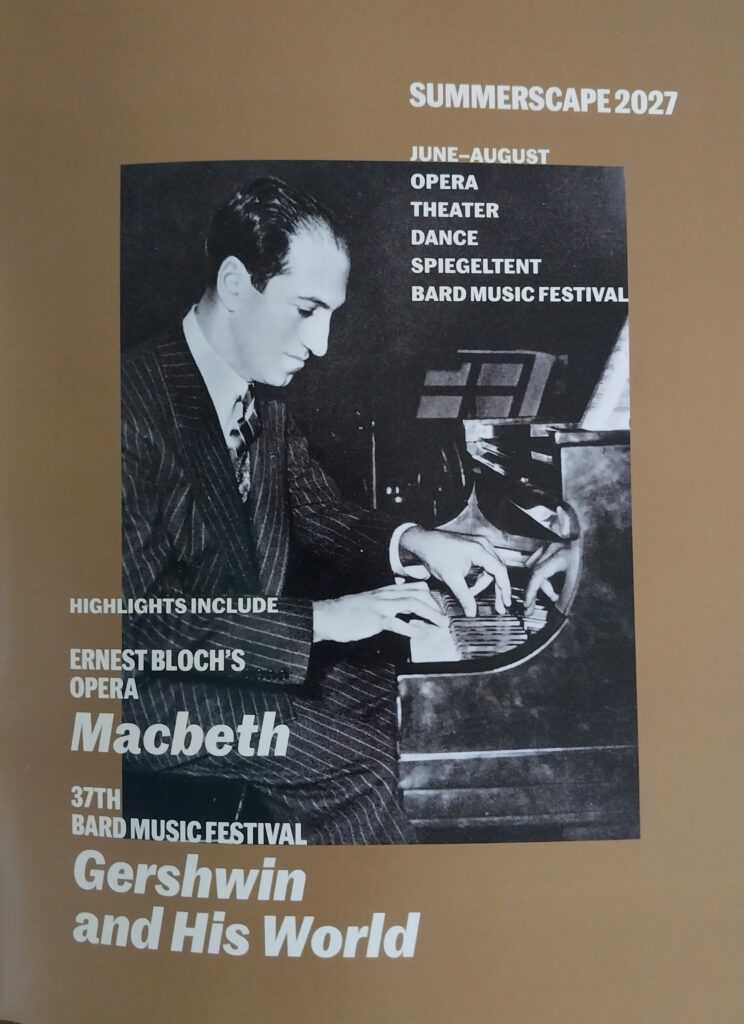
Next summer, the theme of the 37th Bard Music Festival will be “Gershwin and His World.” With a quintessential musical polymath at its center, straddling the artistic and popular realms during such a pivotal time in American musical history, the programming could go in so many different, fascinating directions.
The summer’s opera, which will precede the festival by a couple of weeks, will be Ernest Bloch’s “Macbeth.”
Fans of unusual and neglected repertoire will have their antennae up for a more expansive Bloch festival, “Bloch and His World,” at Bard in 2028.
In the meantime, do check out the schedule for this coming weekend. All kinds of interesting music yet to come. I would love, for instance, to be able to hear live the “Sinfonia turchesca,” presumably with janissary effects, by Franz Xaver Süssmayr, who famously completed Mozart’s Requiem. I only know it from a recording. But alas, it’s not likely I’ll be able to get back for it.
Happily, it will be available, with all the other repertoire performed at the Fisher Center at Bard (including a complete presentation of “The Abduction from the Seraglio”), as a livestream. See below. Livestream coverage will not include the chamber music concerts at Olin Hall.
Sincerest thanks to the musicians, scholars, and programming committee for yet another enlightening series. The Bard Music Festival is always a high point of my year. I may grouse about the length of some of the concerts, but DO NOT CHANGE A THING. Very much looking forward to Gernsheim, Gershwin, and Bloch!
Follow the link for a complete schedule (with livestream info) for the second weekend of “Mozart and His World,” at Bard College in Annandale-on-Hudson, NY, through Sunday.