Tag: Bliss Michelson

  • Hindemith Birthday KWAX Radio & Bliss Michelson

    Hindemith Birthday KWAX Radio & Bliss Michelson

    I already post too much on Saturdays, since I’m committed to promote my radio shows “Sweetness and Light” and “The Lost Chord,” both of which air today on KWAX (and can be streamed here: kwax.uoregon.edu); but today also marks the birthday of one of the most significant composers of the 20th century. Sometimes I’ll do a search to see what I’ve written about a given anniversary over the past years, and I am frequently awed by my younger self. Who is that guy? I guess once the monomania takes hold, there’s no stopping me. At any rate, I find my observations from 2019 to be interesting and entertaining. I hope you do too. Once you read the post, be sure to scroll down to the comments section to read an amusing anecdote shared by my radio mentor, the late and dearly-missed Bliss Michelson.

    https://www.facebook.com/photo/?fbid=1379019078932045&set=a.279006378933326

    If Bliss’ comment sparks your curiosity to hear Hindy’s Double Bass Sonata, here’s a link to the piece:

    Also, I wonder if this is the Chicago Symphony concert he was referring to?

    Happy birthday, Paul Hindemith.

  • Classical Radio Debut My WWFM Story

    Classical Radio Debut My WWFM Story

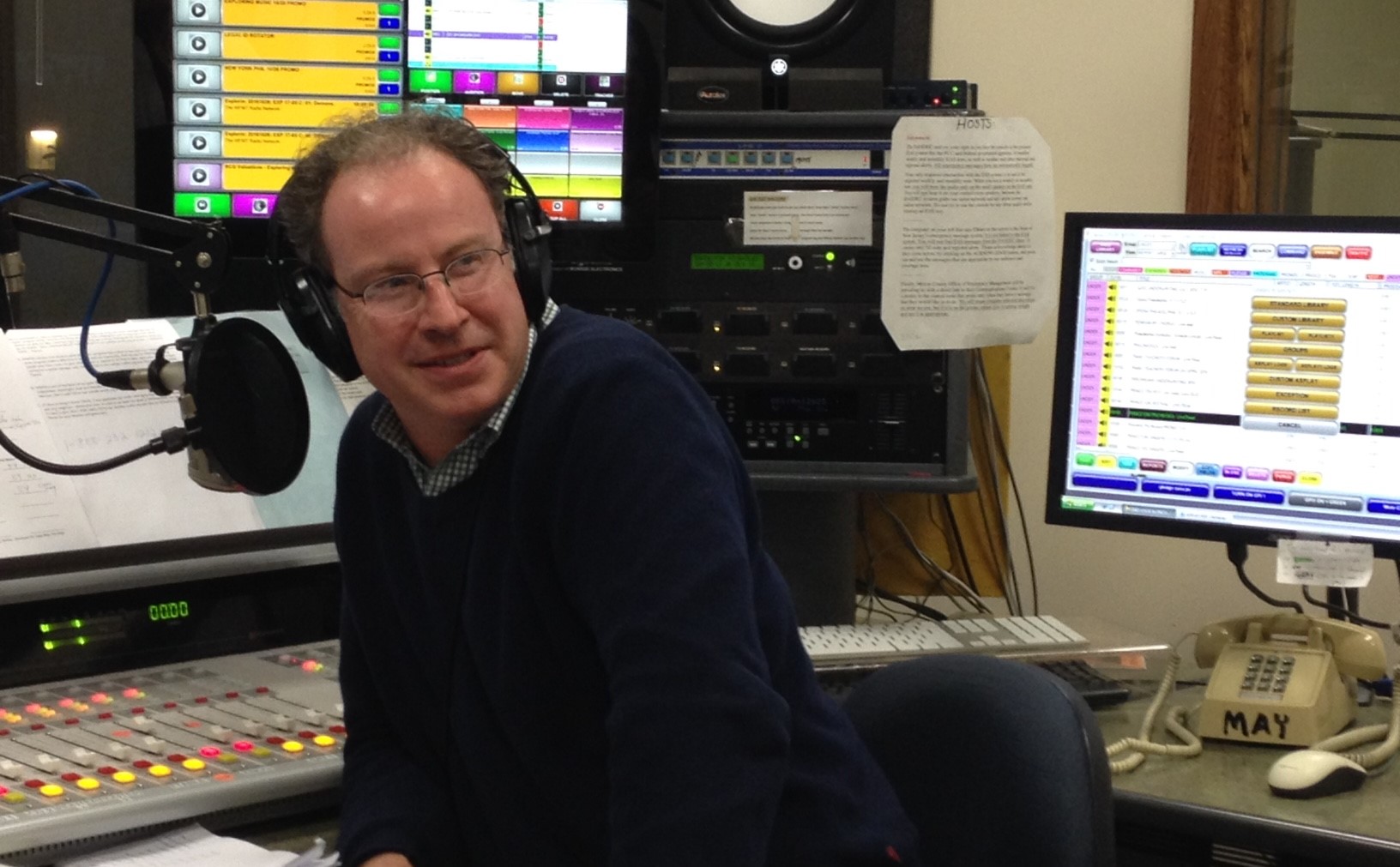
    27 years ago this morning, I made by debut on WWFM – The Classical Network. Beloved radio personality Bliss Michelson, ever the avuncular presence, sat at my elbow as I opened the mic, my heart racing, and I introduced my first hour of selections.

    This was at the end of one of Bliss’ weekday morning shifts. I would be left to fend for myself the following weekend. A lot of responsibility for a fledgling, and I took it very seriously. I rose at 4 a.m. every Saturday and Sunday (3 a.m. before the station went to 24 hours in 1997), drove an hour in the dark through all weather, and accrued a few flat tires and speeding tickets along the way.

    When it snowed, I scaled the icy ladder to the deck on the roof to clean out the satellite dish. I stayed late if there was a malfunction. I came through in innumerable ways that were not part of the job description, to keep everything running smoothly when I was alone at the helm.

    In January 2003, after much petitioning, I got the go ahead to produce my specialty show “The Lost Chord,” devoted to unusual and neglected repertoire. In 2010, I added “Picture Perfect,” my movie music show.

    In 2011, as we expanded into New York, broadcasting on Columbia University’s HD2 channel, I was moved from weekend mornings to weekday afternoons, which I alternated with David Osenberg. By that time, I was also heavily into producing live and recorded broadcast concerts. I had become a crackerjack interviewer, with guests ranging from representatives of our local musical community to phoners with people like Leon Fleisher, Peter Schickele, Dawn Upshaw, JoAnn Falletta, Sharon Isbin, and Christopher Walken (who played a cellist in the film “A Late Quartet”).

    Although, at the time I started, I already had nine years’ experience as a community broadcaster at WMUH Allentown and WXLV Schnecksville, Pennsylvania, I quaked at the enormity of the listenership (I myself had been listening in Philadelphia and the Lehigh Valley for years), and because I didn’t want to mess up the opportunity. Detecting my anxiety, Bliss offered the following words of advice: “Remember, it’s just you and the microphone.”

    Thus commenced my dream job, getting paid to share music I’ve selected with an audience of kindred spirits. Personally, I can’t think of a more perfect marriage of knowledge, ability, enthusiasm, resources (have you seen my record collection?), and performance.

    It’s been said, get a job that you love and you’ll never work a day in your life. Well, that’s what it was for a good many years. Things weren’t always that simple, but in terms of it just being “me and the microphone,” the honeymoon was remarkably long.

    Here’s the music I selected for my first hour on WWFM, at 9 a.m. on September 28, 1995:

    HOWARD HANSON – Merry Mount: Suite

    SIR PETER MAXWELL DAVIES – Farewell to Stromness

    MUZIO CLEMENTI – Symphony No. 1

    ARNOLD SCHOENBERG – Aria from “The Mirror of Arcadia”


    PHOTO: In my glory, during a WWFM membership drive in 2016

  • Finding Bliss at Princeton Record Exchange

    Finding Bliss at Princeton Record Exchange

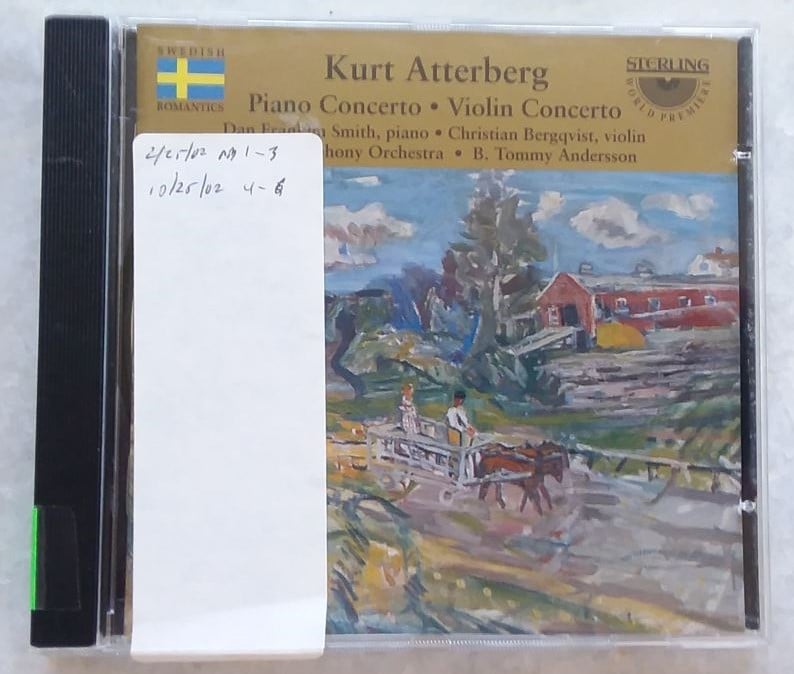
    I was at Princeton Record Exchange the other day, when something surreal happened. I was down on my knees, flipping through the dollar bins on the floor of the classical section, when I espied a CD of music by the Swedish composer Kurt Atterberg. The spine indicated a couple of concertos I knew I didn’t have in my collection. But what I found momentarily disorienting was a label on the front of the jewel case that sported some very familiar scrawl.

    Was this a CD from the WWFM library? At first, I thought so. It was only upon further reflection that the truth became clear. This CD belonged to my former colleague, Bliss Michelson.

    I know I’ve mentioned it before, but Bliss and I had a long association, from the time he taught me the ropes at WWFM in Trenton-Princeton, in 1995, to only a few years ago, when we were both on-call hosts at WRTI in Philadelphia. Bliss died in March from complications of COVID-19.

    At WWFM, we had these labels that we affixed to the jewel cases of the CDs in the station library, on which we indicated the date and time the individual contents were played. At some point, we transitioned to a spread sheet on the computer, but we kept up the stickers all the same.

    For some of us, our programming was heavily supplemented by music from our collections. To help keep track, Bliss carried over the labeling system to his own records. Many was the time that I’d be going through the library only to alight upon an interesting CD I hadn’t noticed there before. Of course, it was one of Bliss’ discs, accidentally shelved. On those occasions, I would leave it on his desk with a post-it note.

    Then and now, his scrawl is unmistakable. So someone must have sold at least some of his collection to Princeton Record Exchange. It would have been fairly recently, since the price tag bears the date of 11-21.

    What I learned from Bliss is incalculable. In particular, he really expanded my knowledge of Nordic repertoire. We were both Sibelius fans, and Bliss was enormously proud of his Swedish heritage. It’s a strange coincidence to have made the discovery of this CD. Bliss continues to introduce me to new music, even from beyond the grave.

    You too might be interested to give it a listen, because it’s a knockout. If you love Rachmaninoff, Atterberg’s Piano Concerto is a one-way ticket to Valhalla. The movements are posted separately, so let the playlist run.

    How is it I never encountered this before? Thank you, Bliss!

  • Remembering Bliss Michelson

    Remembering Bliss Michelson

    I’ve been thinking about Bliss Michelson incessantly since I learned of his death late yesterday afternoon. Bliss, who was production manager at WWFM The Classical Network from 1992 to 2011, died on Sunday of complications from COVID-19. His wife, Peggy, preceded him on February 26.

    First of all, thank you for your condolences. I want to make it very clear that this is not “my” loss, so much as it is a loss to anyone who knew or listened to him. Bliss was so talented at what he did. I already stated, he was probably the best all-around radio host I ever worked with, in terms of being able to do it all – knowledgeable, efficient, personable, conversational, an avuncular presence, impeccable in his pronunciation, and a varied, balanced, and interesting programmer – a real pro. I never saw anyone navigate production work the way he did, while simultaneously doing a live air shift. And he was such a nice man.

    I certainly do not want to give the impression that we were joined at the hip, but we did have a very long association, dating back to 1995, which continued when we worked together at WRTI. If anything, he was like an uncle to me. You can learn a little more about our interactions if you read my post from yesterday.

    Of course, on the most basic level, we shared a passion for music, and because of Bliss’ love of composers from the Northern countries, I have a lot of fond memories of our bonding over Sibelius.

    Perhaps cryptically, I concluded last night by mentioning Sibelius’ Fourth. This is Sibelius’ weirdest, gloomiest symphony, a work written under the shadow of death, as the composer had recently undergone a series of surgeries for throat cancer. It is an austerely beautiful piece, though admittedly it does go to some very strange places.

    Bliss’ morning air shift on The Classical Network ran to 10 a.m. Earlier in the morning, he would mix up the Vivaldi and the Haydn and the Dvořák, with enough lesser-known repertoire to keep it fresh and engaging. But by 9, he would often go for something a little longer, and sometimes a little more challenging. Personally, with Sibelius’ Fourth, I can’t understand what all the fuss is about, but it tends to rub listeners the wrong way. Or at least it manages to wind up the one crank in the audience who is going to call and complain.

    Bliss was generally pretty unflappable, but I remember at least once he was not happy with a phone message from a listener that it fell upon me to convey. I hasten to add, for the most part Bliss was a teddy bear, not a bottle of nitroglycerin, as I tend to be. But I chuckle sometimes to think of his reaction.

    At any rate, a memo was passed around that we shouldn’t be playing Sibelius’ Fourth in the mornings. I prefer to think that this was not disobeyed, but rather conveniently forgotten.

    This one’s for you, Bliss.

    (By coincidence, the video was posted by someone using the screen name Furtwangler, who happened to be one of Bliss’ favorite conductors.)

  • Remembering Bliss Michelson Radio Legend

    I am so sorry to learn of the passing of my friend and colleague, Bliss Michelson. You may recall my mentioning it was Bliss who trained me when I started at WWFM – The Classical Network, preparing me for my long weekend morning run that spanned 19 years, beginning in 1995.

    At the time, I had had nine years’ experience in community radio, but Bliss taught me the new board, how to fill out the logs, how to rewind the reel-to-reel machines without snapping the tape, and how to record our broadcast concerts off of satellite. Most important, he taught me how to turn on the transmitter at 4:50 a.m., in the years before the station went 24 hours.

    Bliss was the most natural radio man I have ever known. In an average hour on a weekday morning, he would share a playlist of five pieces, impeccably curated for maximum variety and interest, work done swiftly at his desk the preceding afternoon. He was also the most-disciplined, accomplishing much of his production work in an adjacent studio, in real time, during his live air shift, laying down voice tracks during a Vivaldi concerto and editing audio in the span of a Joonas Kokkonen symphony.

    He also had the uncanny ability to instant cat-nap. Not infrequently, he would perform evening gigs as a freelance double-bassist. With pack-up and transportation, these could run quite late for a man accustomed to rising in the middle of the night. Even keeping normal hours, by the standards of the rest of humanity, he often didn’t wind up getting very much sleep. After a time, he started asking me if I could fill in for him on mornings following rehearsals. Then he’d saunter in around 6:45 to start on his day.

    On weekends, when I seldom saw other full-time staff, it was not unusual for Bliss to show up early on a Saturday or a Sunday, to check his email and put some finishing touches on a produced show, before heading out for an afternoon of tending the sheep. Literally. He kept sheep. He also loved cats, of which, I gather, he had several.

    Later, we also worked together at WRTI in Philadelphia. We were both on-call classical music hosts, but I also did a regular overnight jazz shift, so occasionally our paths would cross on a Saturday morning. Earlier in his career, Bliss hosted shows on Trinity University’s KRTU and KPAC in San Antonio and, prior to WWFM, WNED in Buffalo.

    Bliss was passionate about Nordic music (he was proud of his Swedish heritage) and also historic recordings of the great conductors. As a double-bassist with the San Antonio Symphony, he played with many of the greats. He shared anecdotes about performing with Aaron Copland, Los Romeros, and a phenomenal roster of guest maestros.

    In front of a microphone, there was nothing he couldn’t do. I’ve been in the studio when he was on the air and he’d just been handed a script, and he’d invariably deliver it with ease and grace, as if he’d already committed it to memory.

    My training amounted to sitting in with him for two air shifts. During the final hour of the second, he turned it over to me. As I sat in the chair, moments away from my WWFM debut, my throat was dry and my hands were shaking. Intuiting my nerves, Bliss offered the following words of advice: “Remember… it’s just you and the microphone.”

    For me, it will always be Bliss and the microphone. Perfect together. Rest easy, my friend. I will think of you whenever I play the Sibelius Fourth.

Tag Cloud

Aaron Copland (92) Beethoven (95) Composer (114) Film Music (124) Film Score (143) Film Scores (255) Halloween (94) John Williams (188) KWAX (229) Leonard Bernstein (101) Marlboro Music Festival (125) Movie Music (139) Opera (202) Philadelphia Orchestra (89) Picture Perfect (174) Princeton Symphony Orchestra (106) Radio (87) Ralph Vaughan Williams (85) Ross Amico (244) Roy's Tie-Dye Sci-Fi Corner (290) The Classical Network (101) The Lost Chord (268) Vaughan Williams (103) WPRB (396) WWFM (881)

DON’T MISS A BEAT

Receive a weekly digest every Sunday at noon by signing up here


RECENT POSTS