Tag: Bohuslav Martinu

  • Czech Neoclassicism on The Lost Chord

    Czech Neoclassicism on The Lost Chord

    Neoclassicism in music was a reaction against what was perceived as the garish effusiveness and gooey excesses of late Romanticism.

    Contemporary composers, in search of a new lucidity, turned their attention to the 18th century, revisiting its musical processes, though reinterpreting them through a distinctly 20th century prism. Stravinsky was the master, but neoclassicism swept the world.

    This Sunday night on “The Lost Chord,” we’ll have three cheery examples of Czech neoclassicism, including works by Ilja Hurnik (his “Sonata da Camera”), Iša Krejči (his “Serenade for Orchestra,” conducted by Karel Ančerl) and Bohuslav Martinu (his Concerto for Two Violins and Orchestra).

    These composers – well, Krejči and Martinu, anyway – manage to balance the clarity of the Enlightenment with an unmistakably Czech national sound

    Hurnik’s work is perhaps the purest, in terms of looking back. The term “Sonata da Camera” recalls music of the baroque and classical eras, as does the clarity of its instrumentation, involving flute, oboe, cello and harpsichord. Each movement begins as if it were ripped from the pages of history and then gradually squeezed like a lemon, leaving a tangy, contemporary aftertaste.

    All of this music is calculated to lift your spirits. I do hope you’ll join me for “Balanced Czechs,” this Sunday night at 10:00 EDT. Czech it out, on WWFM – The Classical Network and wwfm.org.


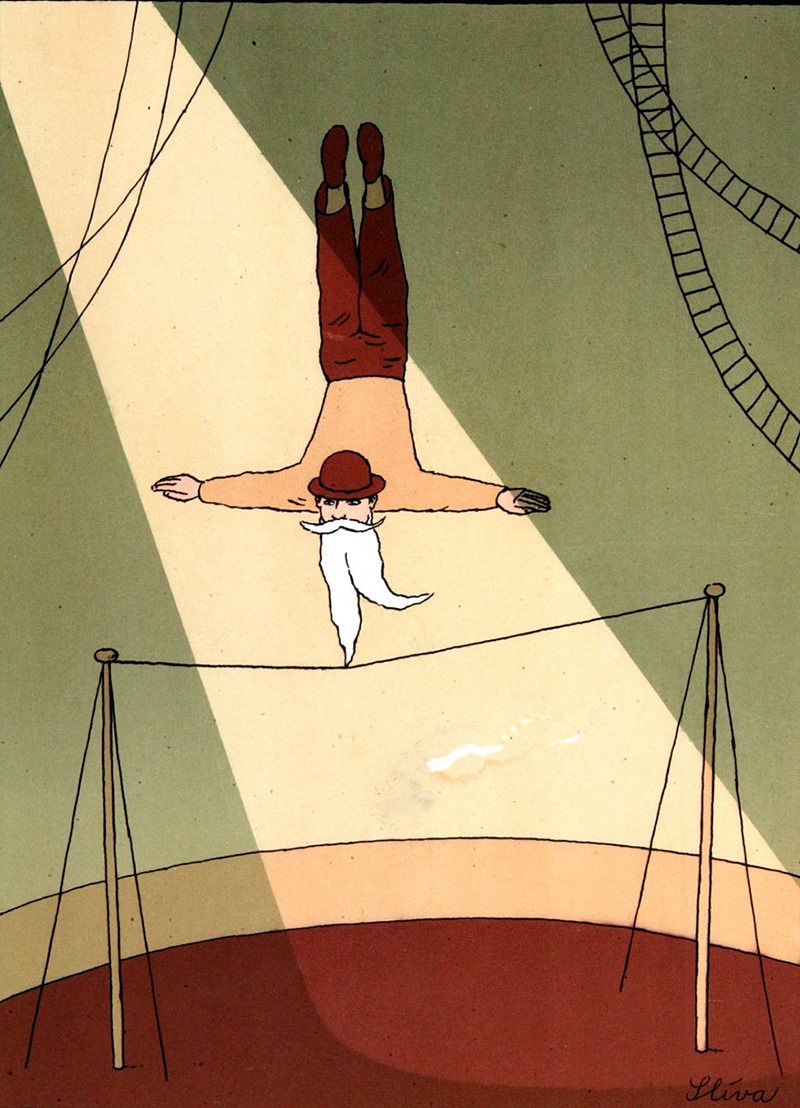
    Tightrope walker by Jiri Sliva

  • Kaprálová Remembered on The Classical Network

    Kaprálová Remembered on The Classical Network

    Vitězslava Kaprálová undoubtedly would be much better known had she not died of tuberculosis at the age of 25. This brilliant musician was poised to become perhaps the best-known woman composer and conductor in all of Europe. Among her teachers were Vitězslav Novák, Václav Talich, Charles Munch, Nadia Boulanger and Bohuslav Martinů.

    We’ll remember Kaprálová this afternoon on The Classical Network, on the anniversary of her birth, with a recording of the piece that brought her her greatest success, the “Military Sinfonietta.” Kaprálová herself conducted the work’s first performance, with Czechoslovakia’s president, Edvard Beneš, in attendance, in 1937. The next year, she conducted it again in London, with the BBC Symphony Orchestra, at the Festival of the International Society for Contemporary Music.

    Her relationship with Martinů deepened into one of romantic love. We’ll hear some of Martinů’s music, as well, alongside birthday tributes to Liszt pupil William Mason, Pulitzer Prize winners Norman Dello Joio and Leon Kirchner, Austrian composer and arranger Gottfried von Einem, and composer and writer of supernatural fiction E.T.A. Hoffmann.

    At 6:00, we’ll get a jump on the Lunar New Year on “Picture Perfect,” with music from movies set along the Silk Road, including “The Adventures of Marco Polo” (Hugo Friedhofer), “Genghis Khan” (Dusan Radic), “Mongol” (Tuomas Kantelinen), and “Crouching Tiger, Hidden Dragon” (Tan Dun).

    Cap your day with Kaprálová and a swathe of cinematic silk, from 4 to 7 p.m. EST, on WWFM – The Classical Network and wwfm.org.

  • Kipling’s Muse Koechlin & Martinu

    Kipling’s Muse Koechlin & Martinu

    Many composers have been inspired by the writings of Rudyard Kipling, but few more so than Charles Koechlin.

    Koechlin is probably better recognized these days as the orchestrator who assisted Fauré and Debussy than for any of his own music. He was fascinated by the movies and wrote works inspired by a number of cinematic celebrities. This yielded, among other things, his “Seven Stars Symphony,” with movements dedicated to Douglas Fairbanks, Charlie Chaplin and others. The figure he most adored is the now largely-forgotten actress Lillian Harvey, who he admired from afar and honored with a number of compositions.

    In addition, Koechlin was an amateur astronomer and an accomplished photographer. He became quite the athlete, in order to keep up his strength after a youthful brush with tuberculosis. As I know I’ve pointed out before, he also had one of the most enviable beards in all of classical music.

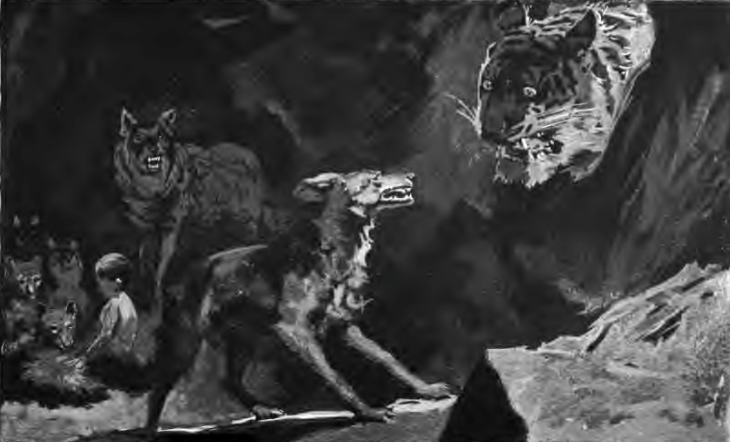
    Like Percy Grainger, Koechlin harbored a lifelong affection for Kipling’s “The Jungle Book,” and returned to the subject often throughout his career – beginning with some song settings in 1899 and running through the symphonic poem “The Bandar-Log,” completed in 1940.

    This Sunday night on “The Lost Chord,” we’ll hear his symphonic poem, “The Law of the Jungle.” Then we’ll turn to the ballet, “The Butterfly that Stamped,” by the Czech composer Bohuslav Martinu.

    Like Koechlin, Martinu was prolific by anyone’s standards. And like Koechlin there is so much Martinu nobody has ever heard. In addition to six symphonies, which at least get some play, he wrote concertos of every stripe, as well as 15 operas, a large body of orchestral, chamber, vocal and instrumental works, and – believe it or not – 14 ballets.

    “The Butterfly that Stamped” was inspired by a tale from Kipling’s “Just So Stories.”

    Get ready to go wild! It’s a Kipling double-bill. Join me for “Kipling Coupling” – this Sunday night at 10:00 EDT, on WWFM – The Classical Network and wwfm.org.
  • Martinu Trio Celebrates 300 Likes & Views

    Martinu Trio Celebrates 300 Likes & Views

    My goodness, I hit 300 likes last night! Honestly, I don’t feel a day over 299. Thank you all for helping me build this little Facebook empire.

    To celebrate, here’s a performance of the prolific Czech composer Bohuslav Martinu’s Trio for Flute, Cello and Piano, H. 300, very well played by young performers. (Coincidentally, it looks as if the YouTube video has received a little over 300 views.)

    Martinu is a sleeping giant among 20th century composers. The only reason I can imagine that his music is not better known is that there is simply so overwhelmingly much of it, and all of it is of a comparatively similar (that is to say, very high) quality.

    The “H,” if you’re curious, refers to a system of cataloguing Martinu’s works that was prepared by the Belgian musicologist Harry Heilbreich, first introduced in 1968.

    Have a slice of cake (it’s only 300 calories), enjoy the Martinu, and thanks again for liking Classic Ross Amico!

  • Czech Composers Love and Masterpieces

    Czech Composers Love and Masterpieces

    Anyone at all acquainted with the life story of Leoš Janáček knows about his relationship with Kamila Stasslova. Stasslova was the married woman, 38 years Janáček’s junior, who was the recipient of his “intimate letters” (hence, the subtitle of his autobiographical String Quartet No. 2). Though the relationship was chaste one, she instilled in the composer an ardor which propelled him into the creation of a series of masterworks that spanned his final decade. This is the music which essentially made Janáček’s reputation.

    This Sunday night on “The Lost Chord,” we’ll have two more examples of Czech extramarital love that resulted in flowering creativity. Vitězslava Kaprálová undoubtedly would be much better known had she not died of tuberculosis at the age of 25. The brilliant Kaprálová seemed poised to become the best-known woman composer and conductor in Europe. Her teachers included Vitězslav Novák, Václav Talich, Charles Munch, Nadia Boulanger and Bohuslav Martinů.

    Her relationship with Martinů deepened into one of romantic love, which fueled some of the older composer’s most powerful works, as he grappled with his emotional turmoil, caught as he was between his wife and an irresistible attraction to his star pupil.

    Kaprálová reciprocated, producing a number of pieces under Martinů’s influence, generally submitting them for his approval. One such work was the “Partita for Piano and String Orchestra,” composed in 1938 and 1939. Martinů is said to have made a substantial contribution to its final version.

    The idea for this particular thesis came from a consideration of Zdeněk Fibich, the unsung Czech master who was roughly nine years younger than Dvořák. Fibich led something of a turbulent emotional life. When his first wife was about to give birth to twins, one of her sisters came to help out with the delivery. The sister and one of the newborns fell ill and died. They were followed within two years by the other child and Fibich’s wife.

    Fibich promptly married another of his wife’s sisters, only to abandon her and the son she bore him, in favor of one of his pupils, Anežka Schulzová. He documented the affair, musically, in his collection of piano pieces, “Moods, Impressions and Reminiscences,” composed between 1892 and 1899. He referenced material therein in a number of works written during the last decade of his life.

    One of these was the Symphony No. 2, which incorporates the musical reminiscence about the day he declared his love to Schulzová. This occurs in the second movement of the symphony, with another full-blown statement in the finale.

    Join me for this hour of unbalanced Czechs – “Bohemian Lifestyle: Illicit Love in Czech Music” – this Sunday night at 10 EDT on WWFM – The Classical Network; or listen to it later as a webcast, at wwfm.org.


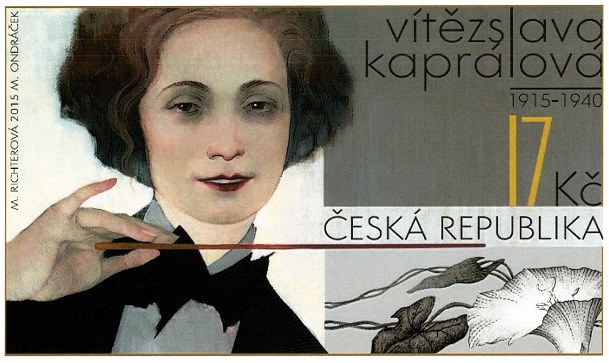
    PHOTOS: The woman who stole Martinů’s heart gets her own postage stamp (top); and Zedněk Fibich, lady killer

Tag Cloud

Aaron Copland (92) Beethoven (95) Composer (114) Film Music (123) Film Score (143) Film Scores (255) Halloween (94) John Williams (187) KWAX (229) Leonard Bernstein (101) Marlboro Music Festival (125) Movie Music (138) Opera (202) Philadelphia Orchestra (89) Picture Perfect (174) Princeton Symphony Orchestra (106) Radio (87) Ralph Vaughan Williams (85) Ross Amico (244) Roy's Tie-Dye Sci-Fi Corner (290) The Classical Network (101) The Lost Chord (268) Vaughan Williams (103) WPRB (396) WWFM (881)

DON’T MISS A BEAT

Receive a weekly digest every Sunday at noon by signing up here


RECENT POSTS