Tag: Bonfires

  • Welcome Yule Celebrate the Winter Solstice

    Welcome Yule Celebrate the Winter Solstice

    On this shortest day, as the warg Sköll, descendent of unruly Fenrir, chases down the sun, let us boldly feast, game, share stories, and quaff mead.

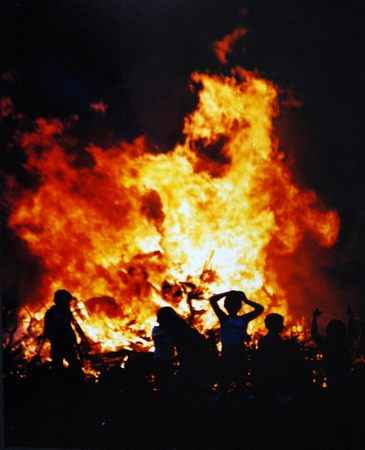
    Most of all, let there be bonfires – lots of bonfires.

    Cut the mistletoe! Deck the halls! Fill the air with festive and reflective music for the solstice!

    However it is you choose to express the primordial desire to welcome light back into the world, I raise my cup to you. Embrace life, family, and community. Embrace love. Look to the New Year with courage, optimism, and appreciation. And drive the cold winter away!

    Welcome, Yule!


    Still one of my favorites, and the very thing for the Winter Solstice. To enjoy the complete album, click “play all” once you follow the link.

  • St. John’s Eve Bonfires, Folklore & Fun

    St. John’s Eve Bonfires, Folklore & Fun

    Just as you’ve recovered from your solstice hangover, here comes St. John’s Eve!

    You can thank the Romans. They’re the ones who designated June 24 the summer solstice – hence, the discrepancy between the longest day (June 21) and Midsummer. The Romans gave us roads, aqueducts, and a legacy of midsummer debauchery. Why split hairs?

    Later, as was so often the case with the placement of religious holidays, the Church figured out it had the highest probability of winning friends and influencing people if it diverted the stream of paganism, rather than outright dam(n) it. To this end, June 24 became the Feast Day of St. John. This worked out very nicely indeed, since St. Luke implies the birth of John the Baptist occurred six months before that of Jesus. Which reminds us: only 185 shopping days until Christmas!

    On the eve of St. John’s nativity (observed), the night of June 23, good Christians celebrate as only reformed pagans can, with an understanding that everyone will be up to fulfill their religious obligations on the morrow. What happens on St. John’s Eve stays on St. John’s Eve.

    For tonight, it will be a time for harvesting St. John’s Wort, with its miraculous healing powers. It will be a time for seeking the fern flower, which can bring good fortune, wealth, and the ability to understand animal speech. It will be a time for the lighting of bonfires against evil spirits, and even dragons, which roam the earth, as the sun again pursues a southerly course. And it will be a time when witches are believed to rendezvous with powerful forces, such as the Slavic demon Chernobog, who emerges from the Bald Mountain at the climax of Disney’s “Fantasia.” (Erroneously, the narrator, Deems Taylor, claims that it’s Walpurgis Night.)

    Leaping over a bonfire is seen as a surety of prosperity and good luck. Not to light a bonfire is seen as offering up one’s own house for destruction by fire. The bigger the fire, the further at bay are kept evil spirits. The further the evil spirits, the better guarantee of a good harvest.

    So get out there and cavort heartily under a strawberry moon!
    Chernobog loves strawberry.

    Leopold Stokowski conducts the Philadelphia Orchestra in this Disney showstopper by Modest Mussorgsky:

    http://www.cornel1801.com/disney/Fantasia-1940/film8.html

    Happy St. John’s Eve!

  • Midsummer Music Bonfires Witches and More

    Midsummer Music Bonfires Witches and More

    Thank the Romans. They’re the ones who marked the summer solstice for June 24 – hence, the discrepancy between the longest day (June 21) and Midsummer. But the Romans liked nothing if not a good party, so why split hairs? Let the good times roll!

    The Church, though fashionably late, was quick to comprehend it would probably be best to divert the stream of paganism rather than attempt to dam(n) everything outright. To this end, June 24 was designated the Feast Day of St. John. This worked out very nicely, since St. Luke implies the birth of John the Baptist took place six months before that of Jesus.

    On the eve of this blessed anniversary, the night of June 23, good Christians celebrate as only reformed pagans can, in the understanding that everyone will be up to fulfill their religious obligations on the morrow.

    This Sunday night on “The Lost Chord,” we’ll have music for St. John’s Eve.

    The eve of St. John is a time for the harvesting of St. John’s Wort, with its miraculous healing powers. It’s a time to seek the fern flower, which can bring good fortune, wealth, and the ability to understand animal speech. It’s a time for the lighting of bonfires against evil spirits, and even dragons, which roam the earth, as the sun again pursues a southerly course. And it’s a time when witches are believed to rendezvous with powerful forces, such as the demon Chernobog, who emerges from the Bald Mountain on St. John’s Eve at the climax of Disney’s “Fantasia.”

    Leaping over a bonfire is seen as a surety of prosperity and good luck. Not to light a bonfire is seen as offering up one’s own house for destruction by fire. The bigger the fire, the further at bay are kept evil spirits. The further the evil spirits, the better the guarantee of a good harvest.

    We’ll have music inspired by some of these Midsummer customs, as we listen to Modest Mussorgsky’s “St. John’s Night,” an earlier, less-familiar incarnation of his popular musical picture “A Night on Bald Mountain,” as heard in his opera, “Sorochinsky Fair.”

    Also featured will be Alfred Schnittke’s impish rondo, “(K)ein Sommernachtstraum.” The root of the title is German for “A Midsummer Night’s Dream,” but the postmodern inclusion of the “K” in parentheses modifies the meaning to “NOT a Midsummer Night’s Dream.” Indeed! Schnittke sets up the listener with a soothing notturno in the style of Mozart or Schubert, but very soon the atmosphere begins to shift.

    Finally, we’ll hear selections from the ballet, “St. John’s Eve,” by the Swedish composer Gunnar de Frumerie. Not surprisingly, after a long, hard winter, the Scandinavian countries are crazy for Midsummer. The allegorical ballet features appearances by John the Baptist, Salome, the Seven Deadly Sins, Angels, and the Devil, all tied up in Swedish Midsummer traditions.

    Leap high, friends, and join me for “Midsummer Night’s Fiends,” this Sunday night at 10:00 EDT, on WWFM – The Classical Network and wwfm.org.

  • Midsummer Bonfires: Music for St. John’s Eve

    Midsummer Bonfires: Music for St. John’s Eve

    Why is it whenever man feels the urge to celebrate, his first impulse is to set things on fire? We see it today in the hot-dogging conflagrations that follow on the heels of championship sports victories. In the ancient world, bonfires were already a mainstay of any festive occasion.

    This Sunday night on “The Lost Chord,” we listen to music for St. John’s Eve. The Feast Day of St. John holds a place on the Christian calendar akin to that of Christmas, in that it coincides with solstice time. Midsummer was originally a pagan festival, which was absorbed by the Church for the observance of John the Baptist’s birth, which St. Luke implies took place six months before that of Jesus.

    Though the actual summer solstice may occur anytime between June 21 and June 25, it was designated that June 24 would be the Feast Day of St. John.

    St. John’s Eve is a time for the harvesting of St. John’s Wort, with its miraculous healing powers. It’s a time to seek the fern flower, which can bring good fortune, wealth, and the ability to understand animal speech. It’s a time for the lighting of bonfires against evil spirits, and even dragons, which roam the earth, as the sun again pursues a southerly course. And it’s a time when witches are believed to rendezvous with powerful forces, such as the demon Chernobog, who emerges from the Bald Mountain on St. John’s Eve at the climax of Disney’s “Fantasia.”

    Leaping over a bonfire was seen as a surety of prosperity and good luck. Not to light a bonfire was seen as offering up one’s own house for destruction by fire. The bigger the fire, the further at bay were kept evil spirits. The further the evil spirits, the better the guarantee of a good harvest.

    We’ll have music inspired by some of these Midsummer customs, as we listen to Modest Mussorgsky’s “St. John’s Night,” an earlier, less-familiar incarnation of his popular musical picture “A Night on Bald Mountain,” as heard in his opera, “Sorochinsky Fair.”

    Also featured will be Alfred Schnittke’s impish rondo, “(K)ein Sommernachtstraum.” The root of the title is German for “A Midsummer Night’s Dream,” but the postmodern inclusion of the “K” in parentheses modifies the meaning to “NOT a Midsummer Night’s Dream.” Indeed! Schnittke sets up the listener with a soothing notturno in the style of Mozart or Schubert, but very soon the atmosphere begins to shift.

    Finally, we’ll hear selections from the ballet, “St. John’s Eve,” by the Swedish composer Gunnar de Frumerie. Not surprisingly, after a long, hard winter, the Scandinavian countries are crazy for Midsummer. The allegorical ballet features appearances by John the Baptist, Salome, the Seven Deadly Sins, Angels, and the Devil, all tied up in Swedish Midsummer traditions.

    I hope you’ll join me for “Midsummer Night’s Fiends,” this Sunday night at 10:00 EDT, on WWFM – The Classical Network and wwfm.org.


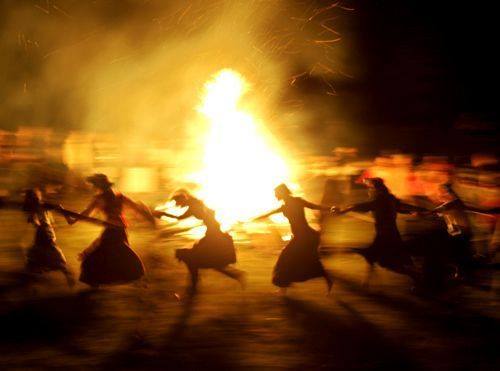
    PHOTO: St. John’s Eve celebration in Northern Ireland

  • Yule Solstice Music Bonfires on WPRB

    Yule Solstice Music Bonfires on WPRB

    On this shortest day, as the warg Sköll, descendent of unruly Fenrir, chases down the sun, we’ll boldly feast, game, share stories, and quaff mead. Most of all, there will bonfires – lots of bonfires. This Thursday morning on WPRB, we’ll anticipate the arrival of winter (at 11:28 EST) by cutting mistletoe, decking the halls, and filling the air waves with festive and reflective music for the solstice.

    Heathen impulses will be tempered by a couple of large-scale, more-or-less Christian choral works. In the 7:00 hour, we’ll hear “The Star of Bethlehem,” by everyone’s favorite composer from Lichtenstein, Josef Rheinberger, in a performance featuring Rita Streich and Dietrich Fischer-Dieskau. Then at 9:00, we’ll enjoy “Bethlehem,” by English composer Rutland Boughton, a work inspired by the 14th century Coventry Mystery Play. How else to incorporate Merlin into the Christmas story?

    There will also be plenty of Swedish folk high jinks, a shape-shifting, vampiric reindeer from Lapland, a serenade or two to the Boar’s Head from Great Britain, and abundant selections from “The Christmas Revels.”

    Get ready to sacrifice five hours to the Yule gods, even as we celebrate the arrival of the Baby Jesus, this Thursday morning from 6 to 11 EST, on WPRB 103.3 FM and wprb.com. I think Yule love it, on Classic Ross Amico.

Tag Cloud

Aaron Copland (92) Beethoven (95) Composer (114) Film Music (123) Film Score (143) Film Scores (255) Halloween (94) John Williams (187) KWAX (229) Leonard Bernstein (101) Marlboro Music Festival (125) Movie Music (138) Opera (202) Philadelphia Orchestra (89) Picture Perfect (174) Princeton Symphony Orchestra (106) Radio (87) Ralph Vaughan Williams (85) Ross Amico (244) Roy's Tie-Dye Sci-Fi Corner (290) The Classical Network (101) The Lost Chord (268) Vaughan Williams (103) WPRB (396) WWFM (881)

DON’T MISS A BEAT

Receive a weekly digest every Sunday at noon by signing up here


RECENT POSTS