Tag: British Composer

  • Doreen Carwithen Unsung Film Composer

    Doreen Carwithen Unsung Film Composer

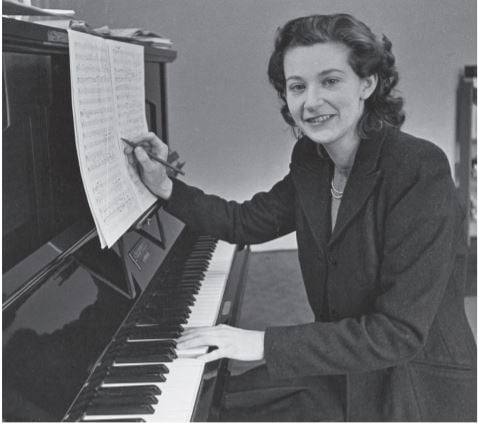
    This week on “Picture Perfect,” we’ll shine a light on the shamefully underutilized talent of Doreen Carwithen.

    In 1941, Carwithen studied harmony and composition with William Alwyn at London’s Royal College of Music. For both, it was love at first sight. Their fateful pairing led to a decades-long romance that culminated in their marriage, finally, in 1975.

    The reason for the delay was, unfortunately, at the time of their meeting, Alwyn happened already to be married. The double-life caused tremendous stress. Alwyn, in particular, descended into alcoholism and suffered a nervous breakdown. Finally, his doctor urged him that, if he was going to live at all, he should get on with it already and live honestly.

    In the concert hall, Alwyn – a contemporary of William Walton and Michael Tippett – enjoyed comparative success as a symphonist. Carwithen, too, got off to a promising start. Her overture “ODTAA (One Damn Thing After Another)” was conducted by Adrian Boult at Covent Garden in 1947. She also wrote two award-winning string quartets. But the cinema promised more lucrative employment. Carwithen was the first selected by J. Arthur Rank to enter the college’s new film music program.

    Combined, during their heyday, in the 1940s and ‘50s, Alwyn and Carwithen wrote the music for over 100 films. Alwyn, in particular, scored such high-profile projects as “The Crimson Pirate,” “A Night to Remember,” and “The Swiss Family Robinson.” Carwithen, although groomed for the very purpose, was not given the same opportunities. In all, she scored only six dramatic features. The rest were documentaries and shorts.

    Neither were her concert works, though well-received, met with the same enthusiasm or eagerness by either programmers or publishers. In 1961, she became Alwyn’s secretary and amanuensis, and following his death in 1985, devoted herself to the preservation of his legacy.

    After her own death, in 2003, discovered among her papers were sketches for an unfinished string quartet (her third), a symphony, and a cello concerto. One can only imagine that, as an artist, her potential remained unfulfilled.

    We’ll do our best to level the playing field this week, dividing the hour between Alwyn and Carwithen, 50/50, on “Picture Perfect,” music for the movies, this Saturday evening at 6:00 EDT, on WWFM – The Classical Network and wwfm.org.


    Remember, you can help support “Picture Perfect” by making a donation at wwfm.org. Enjoy a sense of satisfaction as you cause the mercury to rise in the thermometer on the station’s homepage. Less than 100 contributions in any amount will bring this year’s Bach 500 to a close. Tomorrow is Bach’s birthday, the end of the campaign, so why not do it now? Thank you for your support of The Classical Network!

    https://wwwfm.secureallegiance.com/wwfm/WebModule/Donate.aspx?P=DEFAULT&PAGETYPE=PLG&CHECK=vOU2bz5JCWmgCDbf53nm9ezWDeZ%2beA1M

  • Sir Malcolm Arnold: Genius & Demons

    Sir Malcolm Arnold: Genius & Demons

    “…[T]hou was a skellum,
    A blethering, blustering, drunken blellum;
    That frae November till October,
    Ae market-dae thou was na sober.”

    Rabbie Burns wrote those lines of Tam O’Shanter. But they could just as well have applied to Sir Malcolm Arnold. Both men were, more or less, fond of the bottle and also driven by demons.

    Arnold was born on this date in 1921. He started out as a trumpeter with the London Philharmonic Orchestra. He became its principal in 1943.

    During World War II, Arnold registered as a conscientious objector. However, following the death of his brother, a pilot in the RAF, he decided to enlist. At least for a time. Though he never saw action beyond a military band, he quite literally shot himself in the foot in order to get back to civilian life.

    In 1948, he retired from orchestral playing to devote himself exclusively to composition. He had an attractive melodic gift, which served him well in the writing of light music and film scores. He won an Academy Award in 1957 for his work on “The Bridge on the River Kwai.”

    However, Arnold also had his dark side, as can be detected in passages of his symphonies. He was frequently cantankerous, often inebriated, and also highly promiscuous. He tried to kill himself at least twice. He was treated for depression and alcoholism, overcoming both, but then in the early 1980s he was given only a year to live. In the event, he actually lasted another 22, during which he completed his Symphony No. 9, among other works.

    Arnold died in 2006, one month shy of his 85th birthday. He was a brilliant composer, of great facility. After Malcolm Williamson was named Master of the Queen’s Music in 1975, Sir William Walton remarked that they had given the job to the “wrong Malcolm.” For a man with so many personal demons, he wrote reams of perfectly delightful music.

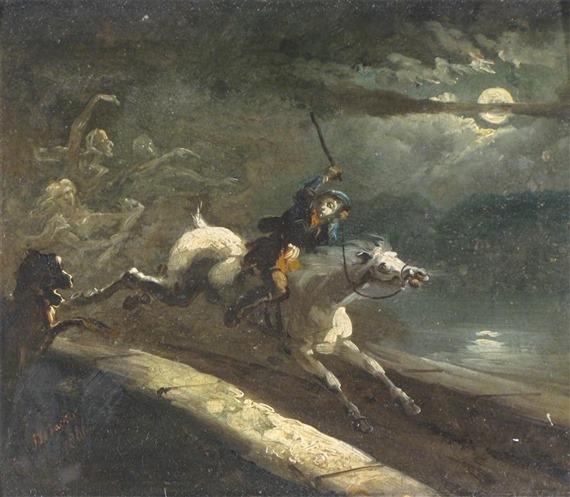
    A good example, and one of my favorite Halloween pieces, is the descriptive overture “Tam O’Shanter” (1955), in which Burns’ antihero tarries at a pub, in defiance of his wife, then staggers out into the night. Under ominous skies, he detects the sound of bagpipes emanating from the ruins of an old church. Pressing his face to chink he espies “Auld Nick,” the Devil himself, “in shape o’ beast,” presiding over a coven of high-stepping witches and warlocks. When a particularly comely witch catches Tam’s eye, he, in his drunkenness, roars, “Weel done, Cutty-sark!” (in reference to her short skirt). This brings the forces of darkness down up him, and there is a hell-for-leather sprint by horseback for a nearby river, since spirits are said not be able to cross running water.

    If you’re interested in the rest, you can read for yourself here:
    http://loki.stockton.edu/~kinsellt/litresources/ayr/tam.html

    Then listen to Arnold’s musical response:

    And for a bonus, enjoy his “Four Scottish Dances” (1957):

    Happy birthday, Sir Malcolm Arnold, you tormented genius.


    “Tam O’Shanter Fleeing the Witches” (1866), by John Joseph Barker

  • Haydn Wood’s Joyful May Day Overture

    Haydn Wood’s Joyful May Day Overture

    “A May Day Overture” by Haydn Wood

  • Armstrong Gibbs Underrated British Composer

    Armstrong Gibbs Underrated British Composer

    I’m not going to strong-arm anyone into liking Armstrong. It’s easy enough to fall in love with the easy charm and seductive melodies of Armstrong Gibbs.

    Cecil Armstrong Gibbs (1889-1960) is mostly known for his songs. He studied composition with Ralph Vaughan Williams at the Royal College of Music. Nevertheless, he is often dismissed for gravitating toward musical forms that could easily be described as “slight.”

    He did contribute his share of British Light Music, to be sure, but he also wrote symphonies. The second of these, the “Odysseus Symphony,” for soloists, chorus, and orchestra, is clearly cut from the same cloth as Vaughan Williams’ “A Sea Symphony.”

    It was Princess Elizabeth – the current Queen Elizabeth II – who requested of Armstrong a piece for her eighteenth birthday. The result was this gorgeous miniature, called “Dusk,” which became one of Gibb’s best-known works.

    Happy birthday, Armstrong Gibbs!

  • Lord Berners: Eccentric Genius and Musical Wit

    Lord Berners: Eccentric Genius and Musical Wit

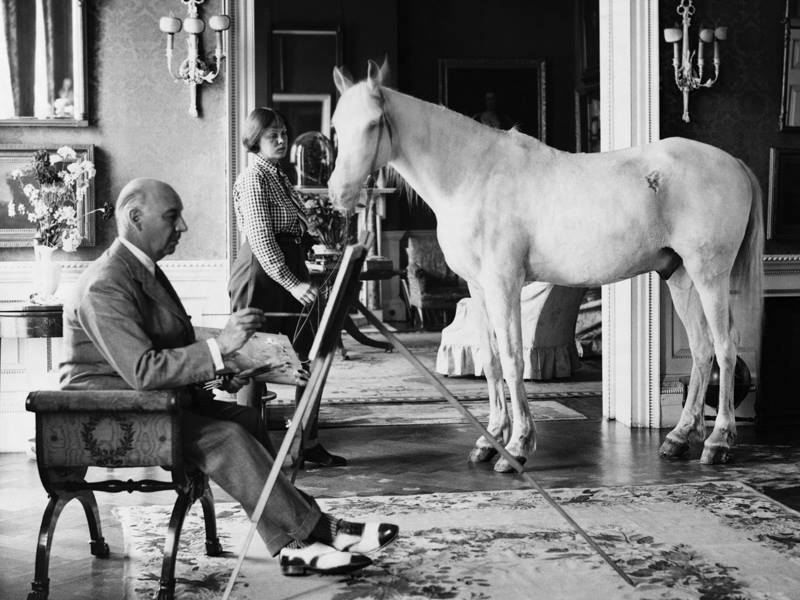
    He kept a clavichord in the back seat of his Rolls Royce. A pet giraffe roamed the grounds of his estate. He invited a horse to his indoor tea parties. He constructed a 100-foot folly tower, “just to annoy the neighbors.”

    Today is the birthday of Gerald Hugh Thyrwitt-Wilson, 14th Baron Berners (1883-1950), whose enduring reputation is as one of England’s great eccentrics. More than likely, he was perfectly sane, as sane as you or I, but that sanity was leavened by a highly cultivated sense of the absurd.

    A multitalented individual, Berners’ fortune allowed him the luxury to indulge his whims and enthusiasms. He wrote wry and entertaining books, he became a painter (he included moustaches in his portraits, whether the sitter had one or not), and he composed some thoroughly delightful music.

    His most famous work is “The Triumph of Neptune,” one of only two ballets commissioned from English composers by the Ballets Russes. The work became a great favorite of Sir Thomas Beecham, who made multiple recordings of it.

    I hope you’ll join me for music by Lord Berners. His will be among the birthday anniversaries we’ll observe today, between 4 and 7 p.m. EDT, on WWFM – The Classical Network and wwfm.org.


    PHOTO: Berners, no doubt contemplating the placement of a moustache

Tag Cloud

Aaron Copland (92) Beethoven (95) Composer (114) Film Music (119) Film Score (143) Film Scores (255) Halloween (94) John Williams (185) KWAX (229) Leonard Bernstein (99) Marlboro Music Festival (125) Movie Music (134) Opera (198) Philadelphia Orchestra (86) Picture Perfect (174) Princeton Symphony Orchestra (106) Radio (87) Ralph Vaughan Williams (85) Ross Amico (244) Roy's Tie-Dye Sci-Fi Corner (290) The Classical Network (101) The Lost Chord (268) Vaughan Williams (102) WPRB (396) WWFM (881)

DON’T MISS A BEAT

Receive a weekly digest every Sunday at noon by signing up here


RECENT POSTS