Tag: Carl Nielsen

  • Titanic’s Echo: Music and Memory 1912 to Today

    Titanic’s Echo: Music and Memory 1912 to Today

    In yet another demonstration of history becoming shorter as I grow older, at 54 I look back to realize I was born only 54 years after the tragedy of the HMS Titanic.

    On this date in 1912, the Titanic sank off the coast of Newfoundland at 2:27 a.m. Over 1,500 souls were lost. But the band played on.

    A number of composers wrote music to commemorate the disaster. Cyril Scott, the prolific English composer – absurdly remembered, if at all, for a piano miniature, “Lotus Land” (1905) – wrote a piece called “Disaster at Sea” (1933), a work directly related to the Titanic sinking, which he revised as “Neptune” (1935). Its large orchestra includes a wind machine and an organ. Atmospheric sea music increases in menace, until the ship is consumed in a kind of arctic wasteland.

    Apparently, for Danish master Carl Nielsen, there was no such thing as “too soon.” The wreckage had scarcely settled on the ocean floor, when he embarked on a paraphrase for wind band on “Nearer, My God, to Thee” (1912). The well-known hymn is alleged to have been the last music played by the Titanic band. Essentially, Nielsen’s work turns out to be a three-minute tone poem. Stay sharp for the violent iceberg collision, or you might just spill your coffee.

    The musicians of the Titanic, of course, are legendary for having gone down with the ship, playing for as long as possible, in an attempt to keep calm among the passengers. The eight-member ensemble was led by Wallace Henry Hartley, who drew on selections from The White Star Line Songbook. The White Star Line repertoire included 341 items, including light overtures, intermezzi, waltzes, marches, arias, sacred music, and potpourris. Here’s a complete catalogue:

    https://www.encyclopedia-titanica.org/white-star-line-repertoire.html?fbclid=IwAR3i7AXjg7sInQDCuif70_Yzm6PnLXxqcYyS0-ikUVpo_4t3rOS4uSitu-8

    According to an eyewitness, “Many brave things were done that night, but none were more brave than those done by men playing minute after minute as the ship settled quietly lower and lower in the sea. The music they played served alike as their own immortal requiem and their right to be recalled on the scrolls of undying fame.“

    I Salonisti portrayed the ship’s band in the 1997 film “Titanic.”

    I am now as far away from my birth as my birth was from the Titanic. Talk about a sinking feeling! Gentlemen, it’s been a privilege playing with you…


    “The Sinking of the Titanic,” iconic illustration for the newspaper “Die Gartenlaube,” by Willy Stöwer (1912)

  • Carl Nielsen The Underrated Northern Composer?

    Carl Nielsen The Underrated Northern Composer?

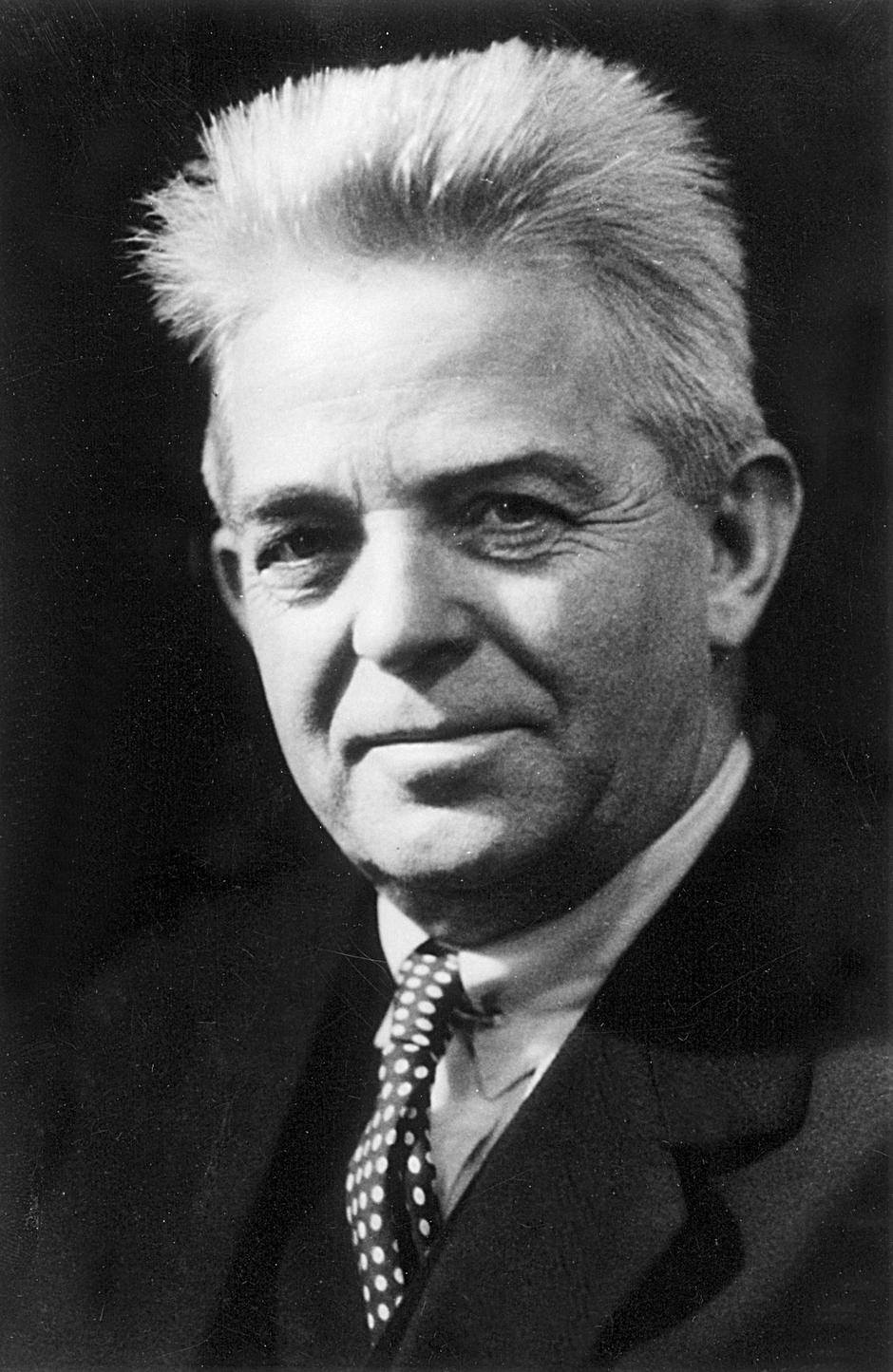
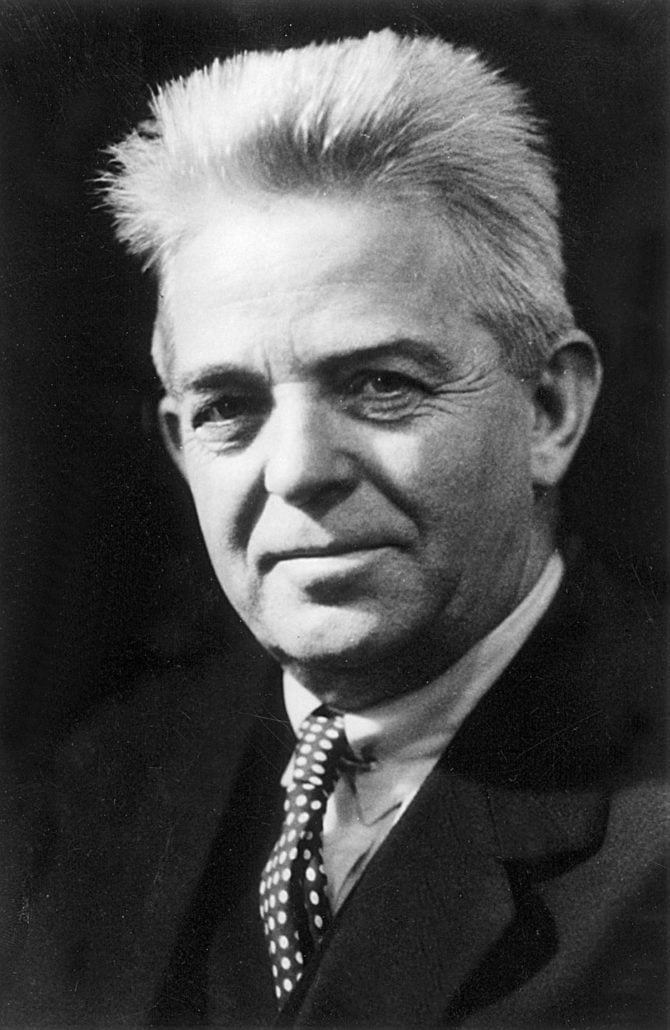
    With the specter of COVID looming over the prospect of a trip to the hair salon, perhaps the time is ripe for a resurgence of the Carl Nielsen haircut?

    Of the great composers of the North, why is Sibelius so widely lauded (in Scandinavia, England, and the United States, anyway), while Nielsen continues to languish as the Ugly Duckling of Danish music?

    Far from being a simple Sibelius knock-off, Nielsen forged his own, immediately-recognizable style – which can’t always be said, with as much conviction, about a lot of other fin de siècle Scandinavian composers. Not that I don’t love their music.

    Leonard Bernstein believed Nielsen’s rightful place was as Sibelius’ equal:

    “I think many people are in for pleasant surprises as they get to know Nielsen,” he said at a centennial celebration of the composer’s birth, “his rough charm, his swing, his drive, his rhythmic surprises, his strange power of harmonic and tonal relationships – and especially his constant unpredictability – all these are irresistible. I feel confident that Nielsen’s time has come.”

    That was in 1965. Yet, fifty-five years on, with many more recordings and performances to choose from, Nielsen continues stubbornly to be an acquired taste.

    What’s not to like? There’s struggle in the music and harmonic ambiguity – key relationships don’t always play out the way you expect they should (they don’t always in life, either, so why should they in music?) – there is conflict and violence, anxiety, but also great beauty and even humor. At its core, and at the end of the journey, there is, for me, an optimism in much of Nielsen’s output, a love for life, a belief that there is indeed, as the subtitle of his Fourth Symphony professes, something “Inextinguishable” in all of us, that I find inspiring.

    A tip of the blond brush cut to Carl Nielsen on his birthday!


    Take a gander at the Duckling on film! This is the only known surviving footage of Denmark’s greatest composer. You’ll find translations of the intertitles when you click on “show more” beneath the video.

  • Simpson Nielsen and More Composers Celebrate!

    Simpson Nielsen and More Composers Celebrate!

    English composer Robert Simpson really loved Beethoven and Carl Nielsen. Hear for yourself, as I share a performance of Simpson’s Symphony No. 4, in celebration of his birthday.

    We’ll also mark the anniversaries of the births of composers Marc Blitzstein, John Gardner, George Alexander Macfarren, and Bedřich Smetana, violinist and composer Eugène Ysaÿe, guitarist and composer Celedonio Romero, and conductor and composer Leif Segerstam.

    The first round is on me (Gardner’s “Midsummer Ale”). Belly up to the bar, from 4 to 7 p.m. EST, on WWFM – The Classical Network and wwfm.org.

  • Danish Light: Kuhlau, Nielsen & Marlboro

    Danish Light: Kuhlau, Nielsen & Marlboro

    As we approach the shortest day, it’s all the more important to keep looking on the bright side.

    Just ask German-Danish composer Friedrich Kuhlau. At the age of seven, Kuhlau lost an eye when he slipped on the ice and fell on a bottle. In 1810, he fled to Copenhagen to avoid conscription into Napoleon’s army. There, he struggled to gain acceptance into Danish musical life. It was a bumpy ride, marked by modest success and spectacular failure.

    Then, only a few years after he scored his greatest hit, in 1828, with incidental music to the play “Elverhøj” (“The Elf’s Hill”), his house caught fire. He was forced to spend most of the night out in the freezing cold, as a result of which he developed a chest ailment that drove him to an untimely death at the age of 46.

    Happily, his ill-fortune is nowhere in evidence in his flute quintets. We’ll hear one of them on this week’s “Music from Marlboro.” The Flute Quintet in D major, Op. 51, No. 1, will be performed by flutist Julia Bogorad, violinist Ralph Evans, violists Ira Weller and Samuel Rhodes, and cellist Marcy Rosen, at the 1979 Marlboro Music Festival.

    Like “The Ugly Duckling” of his compatriot, Hans Christian Andersen, Carl Nielsen emerged from humble beginnings to blossom into Denmark’s national composer. Internationally, Nielsen has flitted in and out of the seemingly inescapable shadow of Finnish master Jean Sibelius. Both men were born in 1865. In fact, Nielsen was six months older. But it is an unfair comparison, not so much apples and oranges; more like kipper and pickled herring.

    The very fact that Nielsen is not referred to reductively as “The Sibelius of Denmark” is attributable to an unusually strong individual voice. His music is modern, yet traditional; Scandinavian, yet Germanic. Most important, it is full of personality, freshness and vitality.

    Nielsen’s Wind Quintet of 1922 reflects the composer’s optimism and good humor. These he retained despite great personal, professional, and global turmoil. Each part of the quintet was tailored to the personality of the individual performer for which it was written (members of the Copenhagen Wind Quintet). There is also something of the outdoors about the piece. Nielsen was always fascinated by nature, and there are ample suggestions of bird song woven into the texture of the work’s pastoral neoclassicism.

    We’ll enjoy a recording made at Marlboro in 1971, with flutist Paula Robison, oboist Joseph Turner, clarinetist Larry Combs, bassoonist William Winstead, and hornist Robin Graham.

    Lighten up with an hour of Danish quintets, on the next “Music from Marlboro,” this Wednesday evening at 6:00 EST, on WWFM – The Classical Network and wwfm.org.

    Marlboro School of Music and Festival: Official Page


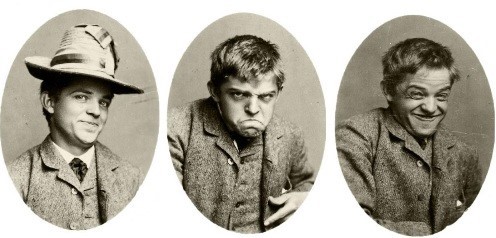
    PHOTOS: Tak for kaffe, with cheese Danish: the young Carl Nielsen

  • Carl Nielsen A Labor Day Composer

    Carl Nielsen A Labor Day Composer

    Carl Nielsen understood the value of hard work. He grew up, one of twelve children, in a musical family of very limited means. By the time he was accepted into the Royal Danish Academy of Music in Copenhagen, he had already been performing and composing for many years. Like “The Ugly Duckling” of his compatriot Hans Christian Andersen, he emerged from humble origins to become a cherished thing of beauty, embraced as his country’s national composer.

    Nielsen described the finale of his Symphony No. 3 as “a hymn to work and the healthy activity of living.” Enjoy it tomorrow morning, as we anticipate the Labor Day weekend with musical salutes to labor and the worker.

    Be there with your lunch pail and dungarees, from 6 to 11 EDT, on WPRB 103.3 FM. We’re always working hard for your enjoyment, on Classic Ross Amico.


    PHOTO: Nielsen breaking a sweat in his workroom, where he completed his Symphony No. 3 in 1911

Tag Cloud

Aaron Copland (92) Beethoven (95) Composer (114) Film Music (123) Film Score (143) Film Scores (255) Halloween (94) John Williams (187) KWAX (229) Leonard Bernstein (101) Marlboro Music Festival (125) Movie Music (138) Opera (202) Philadelphia Orchestra (89) Picture Perfect (174) Princeton Symphony Orchestra (106) Radio (87) Ralph Vaughan Williams (85) Ross Amico (244) Roy's Tie-Dye Sci-Fi Corner (290) The Classical Network (101) The Lost Chord (268) Vaughan Williams (103) WPRB (396) WWFM (881)

DON’T MISS A BEAT

Receive a weekly digest every Sunday at noon by signing up here


RECENT POSTS