The holidays are not for the faint of heart. Pablo Casals, take me away!
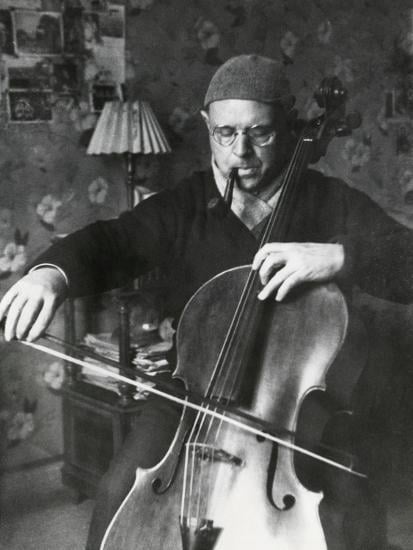
On Casals’ birthday, I wish you some quiet time with his pioneering, rejuvenating traversal of the Bach cello suites, still sounding great after 84 years.
It’s hard to believe that these cornerstones of the cello repertoire were once commonly regarded as little more than etudes. The truth is, before the 20th century they were not widely known, much less understood. It is Casals who is credited with having rehabilitated them, following his discovery of the music in a Catalan bookshop at the age of 13. He cherished the suites for the rest of his life, not only playing them in public but delving into them privately every morning after a walk and a smoke. There must have been something to it: Casals died in 1973, two months shy of his 97th birthday.
He was the first cellist to record all six suites, already 60 by the time he first played Bach before a microphone.
Pablo Casals is remembered primarily as one of the great cellists. But did you know he was also a composer? Casals’ most ambitious piece must be his Christmas oratorio “El Pessebre,” or “The Crib” (once commonly translated as “The Manger”).
The text, by Catalan poet Joan Alavedra, was conceived in response to questions posed by his five-year-old daughter. She asked him, as he was setting up his crèche, what each of the figures at the Nativity – including the animals – said.
The project provided something of an escape for both artists. The work was begun while they were under house arrest in 1943. The folk-like simplicity of the oratorio is disturbed only occasionally by intimations of a troubled world. Casals added a prayer for peace to the concluding “Gloria” and refused to allow the work to be performed in Franco’s Spain. Instead, it was given its premiere in Acapulco, Mexico, in 1960.
As long as you don’t go into it expecting Christmas music of the caliber of that written by Casals’ idol, Johann Sebastian Bach, the oratorio makes for a charming and disarming musical experience. Said Casals, “The figures in a crèche are folk figures. Why, they can’t sing twelve-tone music!”
Casals’ performance of the piece, to my knowledge, has never been released on CD. Even so, this one, with Lawrence Foster conducting, is probably about as good as it’s going to get.
Less of an investment is Casals’ arrangement of a traditional Catalan carol, “The Song of the Birds.” It was he who popularized the carol internationally in a version for solo cello, which he would sometimes include on his recitals as an encore.
On October 24, 1971, when Casals was awarded a Peace Medal from the United Nations, at the age of 94, he played it before the General Assembly. This is what he said on that occasion:
“I haven’t played in public for nearly 40 years. I have to play today. This piece is called ‘The Song of the Birds.’ The birds in the sky, in the space, sing, ‘Peace! Peace! Peace!’ The music is a music that Bach and Beethoven and all the greats would have loved and admired. It is so beautiful and it is also the soul of my country, Catalonia.”
You can actually hear him speak at the link.
If you’ve already had your fill of Christmas, Casals’ traversal of the Bach cello suites still sounds great after 80 years. It’s hard to believe that these cornerstones of the cello repertoire were once commonly regarded as little more than etudes. In fact, before the 20th century, they were hardly known.
It is Casals who is credited with having rehabilitated them, following his discovery of the music in a Catalan bookshop at the age of 13. He cherished the suites for the rest of his life, not only playing them in public, but delving into them privately every morning after a walk and a smoke. There must have been something to it: Casals died in 1973, two months shy of his 97th birthday.
Casals was the first cellist to record all six suites. He was already 60 by the time he first played Bach before a microphone.
You can tune an orchestra, but you can’t tun-a fish.
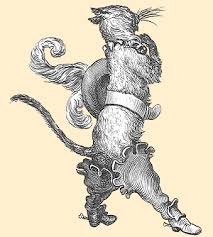
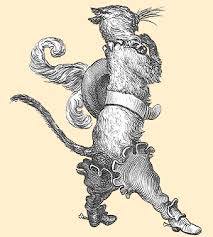
This Sunday night on “The Lost Chord,” we put the “cat” in Catalan music with selections from Xavier Montsalvatge’s one-act opera “Puss in Boots.”
“Puss in Boots,” Montsalvatge’s first opera, was composed in 1947. We all know the story. The tale, in its best-known guise, was published by Charles Perrault in 1695 as one of the “Tales of Mother Goose.”
A poor miller laments his inheritance. Most of the family property – the mill and the mules – goes to his elder brothers, and all that’s left for him is an unprepossessing cat. He wonders of what use to him a cat could possibly be. He contemplates eating it, perhaps using the skin to make a hat. The cat, however, promptly endears himself, and offers to gain his master a fortune, a kingdom, and the hand of a beautiful princess. All he asks in exchange is a pair of boots, to spare his feet, a stylish hat with a plume, a cape, and a sword fashioned out of bone.
Since the cat presents him with a ring from the hand of the princess, the Miller considers it a fair deal, and sets about getting, by hook or by crook, whatever the cat desires.
Throughout the course of the story, with his cunning and superior wits, the cat is able to deliver on everything he promises.
We’ll heard selections from a 2004 recording on the Columna Musica label, with Argentine mezzo-soprano Marisa Martins as Puss (an unusual take on the traditional “trouser role”) and tenor Antonio Comas as the Miller. The Symphony Orchestra of the Gran Teatre del Liceu is conducted by Antoni Ros Marba.
Listen for charming cat-like touches in the strings and the use of piano throughout to emulate the decorative style of 18th century recitative.
That’s “Fur Love and Valor” – highlights from Xavier Montsalvatge’s “Puss in Boots” – this Sunday night at 10:00 EDT, on WWFM – The Classical Network and wwfm.org.
You can tune an orchestra, but you can’t tun-a fish. This Sunday night on “The Lost Chord,” we put the “cat” in Catalan music with selections from Xavier Montsalvatge’s one-act opera “Puss in Boots.”
“Puss in Boots,” Montsalvatge’s first opera, was composed in 1947. We all know the story. The tale, in its best-known guise, was published by Charles Perrault in 1695 as one of the “Tales of Mother Goose.”
A poor miller laments his inheritance. Most of the family property – the mill and the mules – goes to his elder brothers, and all that’s left for him is an unprepossessing cat. He wonders of what use to him a cat could possibly be. He contemplates eating it, perhaps using the skin to make a hat. The cat, however, promptly endears himself, and offers to gain his master a fortune, a kingdom, and the hand of a beautiful princess. All he asks in exchange is a pair of boots, to spare his feet, a stylish hat with a plume, a cape, and a sword fashioned out of bone.
Since the cat presents him with a ring from the hand of the princess, the Miller considers it a fair deal, and sets about getting, by hook or by crook, whatever the cat desires.
Throughout the course of the story, with his cunning and superior wits, the cat is able to deliver on everything he promises.
We’ll heard selections from a 2004 recording, on the Columna Musica label, with Argentine mezzo-soprano Marisa Martins as Puss (an unusual take on the traditional “trouser role”), and tenor Antonio Comas as the Miller. The Symphony Orchestra of the Gran Teatre del Liceu is conducted by Antoni Ros Marba.
Listen for the charming cat-like touches in the string-writing and the use of a piano throughout the opera to evoke the style of decorative 18th century recitative.
That’s “Fur Love and Valor” – highlights from Xavier Montsalvatge’s “Puss in Boots” – this Sunday night at 10:00 EST, on WWFM – The Classical Network and wwfm.org.