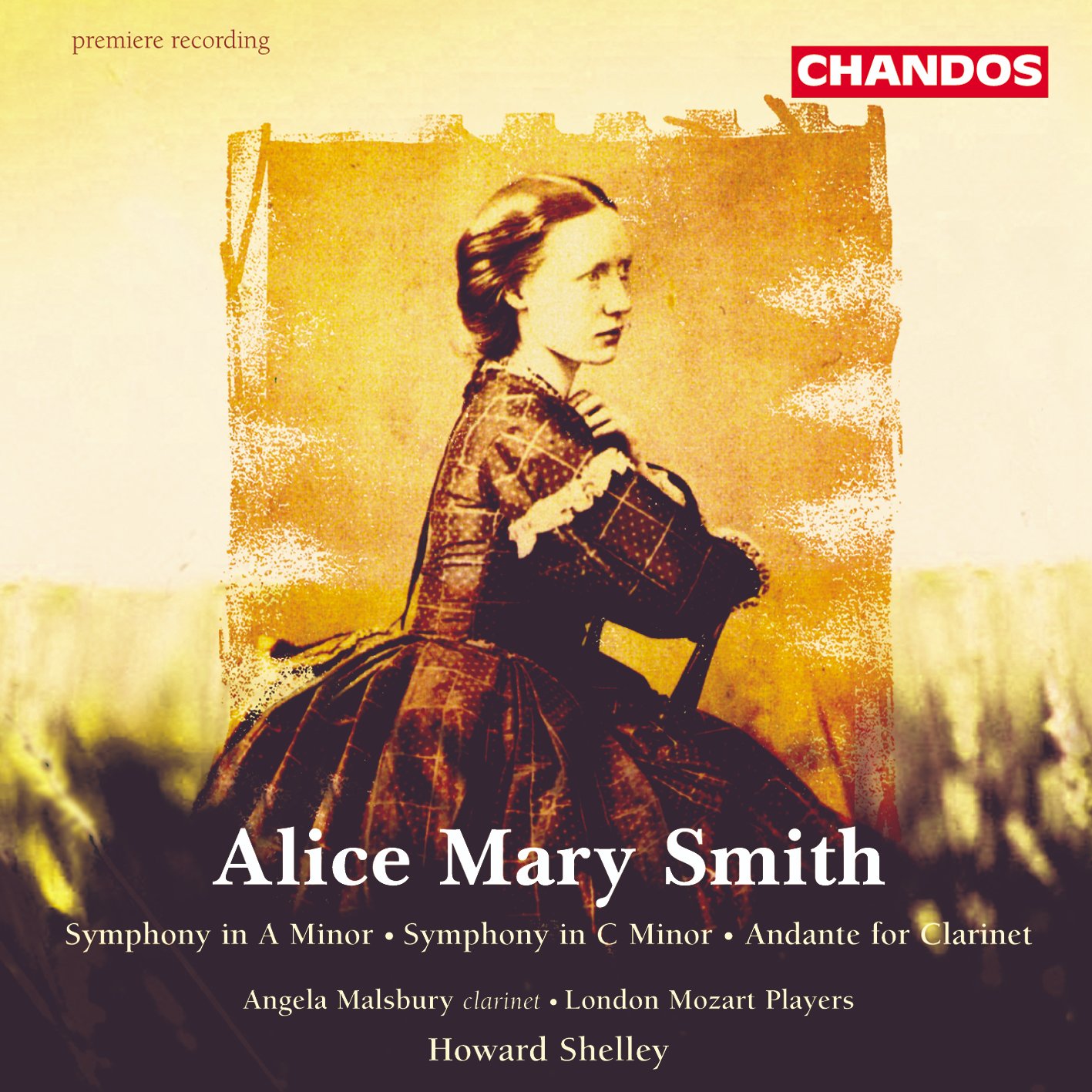
Here’s a glimpse at some of my birthday booty from the other day.
The CD of works by Alice Mary Smith was released on Chandos Records in 2005, but somehow I only learned about it this year. Very happy to have it! Smith, who lived from 1839 to 1884, is believed to be the first English woman to compose a symphony. A student of William Sterndale Bennett and George Alexander Macfarran, she wrote two symphonies, six concert overtures, four piano quartets, three string quartets, a clarinet sonata, a respectable collection of sacred choral works and cantatas, and a couple of works for the stage, including an operetta. There is something about her Andante for Clarinet and Orchestra that caught my ear, when I encountered it on the radio. (It’s actually an orchestral version of the slow movement from her sonata.) The first movement of her Symphony in A minor is also impressive; the last movement is memorable and keeps up a good head of steam. If you like Mendelssohn or Arthur Sullivan, with maybe a little Schubert in the orchestration, that’s the kind of musical language you can pretty much expect.
Andante for Clarinet and Orchestra
Symphony in A minor
The other disc contains the world premiere recording of a work by Ralph Vaughan Williams, incidental music for the masque “Pan’s Anniversary” by Ben Jonson. Vaughan Williams and Pan? Come on! I am SO there!! Apparently, RVW was under time constraints when writing the work, so some of the dance arrangements had to be delegated to his good friend, Gustav Holst. The program also includes some other unexpected gems, including an arrangement of one of RVW’s most popular works, the “Fantasia on a Theme by Thomas Tallis,” for voices and string octet.
The CD is issued on Albion Records, the recording branch of the Ralph Vaughan Williams Society, which has done so much to ferret out and document rare, neglected, and forgotten works by the composer. A nice surprise in RVW’s sesquicentennial year, being celebrated with enthusiasm in the U.K. and seemingly ignored everywhere else.
A preview of the contents of “Pan’s Anniversary” here:
Looking forward to giving this a good listen today!
How great a debt do we record collectors owe to Neeme Järvi?
Järvi must be one of the most prolific recorded conductors of all time. He certainly stands out in his choice of repertoire, thanks in no small part to enterprising and supportive independent labels like Chandos and BIS (the latter for which he recorded the complete works of Jean Sibelius, more or less).
Of course, Järvi also recorded for Deutsche Grammophon, but by then he was able to use his influence to gently nudge this most mainstream of classical music record labels closer to the fringes of the repertoire.
From Järvi, you could always expect first-rate performances of music relegated to the lower drawers. It was from him that I learned all the Prokofiev symphonies, when all anyone else wanted to record was 1 & 5. It was his performances that convinced me that Glazunov was actually a fairly decent composer. He’s the only conductor to persuade me that Joachim Raff’s Fifth Symphony can be a compelling work. He also managed a thrilling and idiomatic recording of Duke Ellington’s “Harlem.”
Frankly, there are too many composers who have benefited from Järvi’s advocacy to list them all here. Among those who are now much better-know internationally, thanks to him, are Arvo Pärt, Wilhelm Stenhammar, Niels Wilhelm Gade, and Eduard Tubin.
Järvi excels in music of the Romantic era and the 20th century, and appears to be able to assimilate scores fairly quickly. And the more opulent, the better. His set of orchestral music from the operas of Rimsky-Korsakov is another highlight. His Strauss tone poems mesmerize. His recording of Prokofiev’s “Alexander Nevsky” is a knockout.
How about his Beethoven? Who cares? Järvi is one of the rare talents in his field who managed to buck the tradition of having to prove his metal against the core Austro-Germanic repertoire. Frankly, I’m much more interested to hear his Halvorsen.
A native of Tallin, Estonia (he emigrated to the United States in 1980 and has been an American citizen since 1985), Järvi trained under the Soviet system. His teachers included Yevgeny Mravinsky and Nikolai Rabinovich.
He went on to helm such orchestras as the Estonian National Symphony Orchestra (1963-79), the Gothenburg Symphony Orchestra (1982-2004), the Royal Scottish National Orchestra (1984-88), the Detroit Symphony Orchestra (1990-2005), the New Jersey Symphony (2005-2009), the Resident Orchestra of the Hague (2005-12), and the Orchestre de la Suisse Romande (2012-15).
As a performer, he’s a real throwback. Aside from his superb recordings, he also frequently excels in concert. On a good night, when he catches fire, his performances are marked by a romantic spontaneity and passion. The results can be thrilling. No other conductor, at least since the days when Dennis Russell Davies was a presence, would have been able to sway the Philadelphia Orchestra to perform Hans Rott’s Symphony in E – on the second half of the program, no less.
Of course, the orchestra loved him for having stepped up to conduct Tchaikovsky on a joint concert with the New York Philharmonic during an orchestra strike in 1996. The program was prepared in one rehearsal. Jarvi donated his services for the concert and received no fee – an unpopular move with management, but one that made him a hero to musicians.
All his children have entered the family business. His sons, Paavo and Kristjan, are also conductors, and his daughter, Maarika, is a flutist. According to the most recent information, he resides with his wife in New York City.
While personally I never met him, he did respond to my request to sign some CDs of Estonian music to be used as “thank you” gifts during a radio membership drive for “The Lost Chord,” and into the bargain he also sent me a recording of Artur Kapp’s oratorio “Job,” with a very nice letter.
Is it possible everything he’s recorded can be considered “great music?” Of course not. But is it interesting and historically significant? You bet! It would be a very boring world indeed, and a less enlightening one, if all we ever heard was Mozart’s “Jupiter” Symphony.
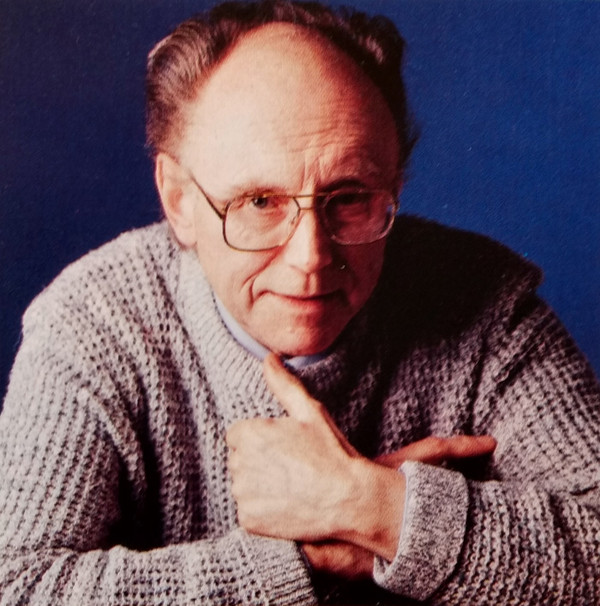
Järvi is 85 today. Happy birthday, Maestro, and many, many more!
So sorry to learn of the death of Eric Parkin, one of Chandos Records’ stable of pianists. As such, Parkin recorded much English music. In particular, I have him to thank for introducing me to Billy Mayerl, sometimes described as the English Gershwin. What fun, joyous music his is!
Parkin also did much to champion the works of Sir Arnold Bax, John Ireland, and E.J. Moeran, alongside those of many others in even greater need of championing.
I can’t believe he was 96 years-old at the time of his death. I guess many of the recordings I’ve been listening to all these years were made 30-35 years ago. His performances have given me countless hours of pleasure.
R.I.P., Eric Parkin, and thank you for making my world a brighter place!
Perhaps appropriate for the Halloween season, Eric Parkin performs Billy Mayerl’s transcription of Guy Desslyn’s “The Pompous Gremlin”:
Personally, I prefer Mayerl’s “Bats in the Belfry,” but I can’t find Parkin’s recording online.
Parkin performed John Ireland’s Piano Concerto on several of his numerous appearances at the BBC Proms. The second movement is especially beautiful. Or at least I find it so. And the last movement is suitably jaunty.
Interestingly, the third movement seems to recall Ravel’s Concerto in G, written at approximately the same time, though Ravel’s concerto didn’t appear until after Ireland’s had already been published. Ireland did meet Ravel once in Paris. Could he have seen the score?
The work was dedicated to Helen Perkin (one letter off from Parkin!), a pianist Ireland happened to be sweet on. Unfortunately, the attraction was not reciprocated. But no one can fault Ireland for not trying. The slow movement of his concerto contains an allusion to Perkin’s own “Phantasy String Quartet,” though she described it as “more a reminiscence than an exact quotation.”
Earlier, Ireland had been in attendance as Perkin played Prokofiev’s Third Piano Concerto. So in that case, yes, he was definitely “borrowing.” You can hear the influence especially at the very end of his piece.
But all of this is getting very far away from Eric Parkin. I hope you will enjoy his recording of Ireland’s concerto.
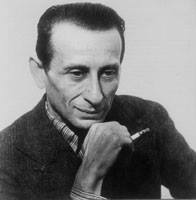
Is it my imagination, or did Chandos Records really Photoshop out Alexandre Tansman’s cigarette? I’m not a smoker myself, but I think that’s taking political correctness a bit far. What’s next, Photoshopping Shostakovich’s liver spots? Let Slavs be Slavs aleady.
You can experience Tansman’s neoclassical mastery in his Partita for Cello and Piano tonight on “The Lost Chord,” along with Henry Górecki’s Symphony No. 4. Listen at 10:00 EDT at wwfm.org. The program will repeat Wednesday evening at 6, and then be archived as a webcast.
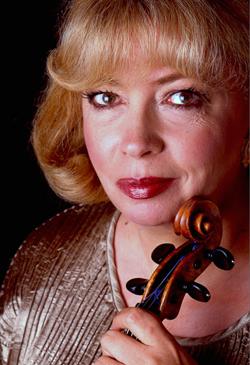
I am so sorry to learn of the death of Lydia Mordkovitch, a fantastic violinist who undertook much interesting repertoire and interpreted it convincingly – and often thrillingly – on her recordings for the Chandos Records label. Mordkovitch, a student of David Oistrakh, died of cancer in London yesterday at the age of 70. She won a Grammy in 1990 for her superlative disc of the Shostakovich concertos.
Just as a “for instance,” here’s Mordkovitch playing William Alwyn: