For Charles Ives’ birthday, here are two Halloween-related pieces. And you can listen to them both in just over three minutes.
First, my favorite recording of “Hallowe’en” (1907), in its original version for string quartet and piano, since it actually includes the bass drum. Ives later orchestrated the work, but it just ain’t the same. The composer wrote, “It’s a take-off of a Halloween party and bonfire – the elfishness of the little boys throwing wood on the fire, etc., etc… it is a joke even Herbert Hoover could get.”
And then this wisp of a song, “Slugging a Vampire” (1902). The music was originally composed to Rudyard Kipling’s poem “Tarrant Moss,” but permission to use Kipling’s text had not been obtained by the time Ives’ “114 Songs” were to go to press. So Ives just included the first few words and left the rest of the voice-part blank.
“114 Songs” went through two editions and was reprinted in 1975, all without Kipling. When the composer later published “Nineteen Songs” in 1935, he decided to reuse the music, but this time he made up his own text. The result is like having consumed tainted Smartees from your trick-or-treat loot before your parents had a chance to check your candy.
This is a guy who really understood Halloween. Happy birthday, Charles Ives!
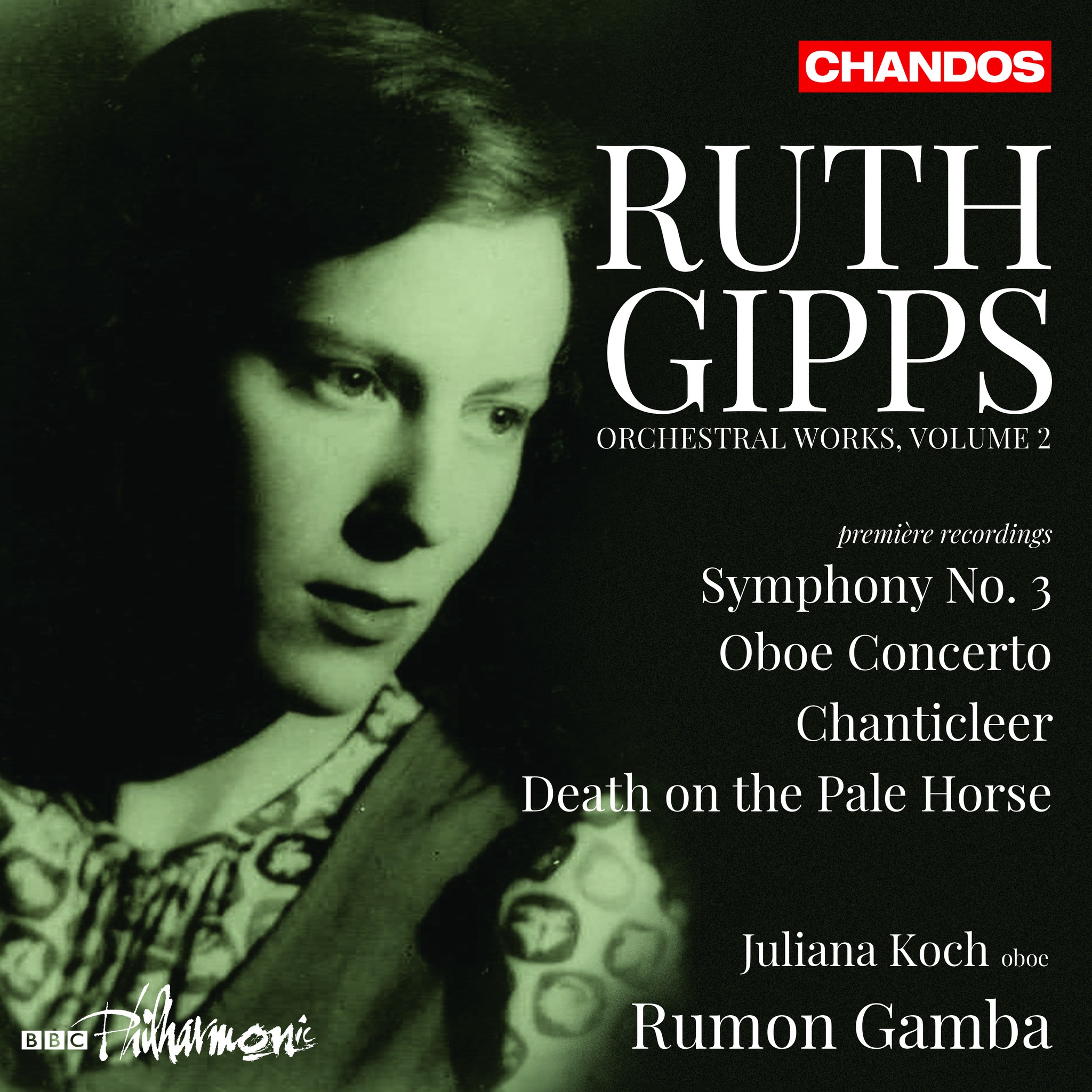
Too late to post anything of substance today, so I’m just sharing some highlights from my Christmas booty: two CDs of unusual and neglected repertoire (orchestral works by English composer Ruth Gipps and piano music by Norwegian composer Agathe Backer Grøndahl) and two books (“Mad Music: Charles Ives, the Nostalgic Rebel” by Stephen Budiansky and “Vaughan Williams” by Eric Saylor) — all new except the Ives bio, which was issued in 2014. Something must have happened to Santa’s naughty list!
Hard for me not to be on the air today. For me, so much of the best Halloween music is on the shorter side, and the most enjoyable playlist intersperses fairly brief tricks (3 to 6 minutes) with medium-length treats (15 to 20 minutes), and if I’m not spinning the platters for broadcast, I just won’t get to hear them. I’m not going to put on a three-minute piece of music for myself. So no Frederic Curzon “Dance of an Ostracised Imp,” no Thomas S. Allen “Dance of the Lunatics,” No Charles Ives “Hallowe’en.” I could go on.
At any rate, I hope you are able to find some musical enjoyment in your day. I’ll be finishing up reading some ghost stories and by mid-afternoon probably be stacking up the Halloween movies. I’ll listen to “A Faust Symphony” or something while doing my wildlife food deliveries, and I’ll be sure to get in a Halloween walk and a slice of pumpkin pie with my afternoon coffee. Mostly, I guess, I’ll be living the ideal Halloween in my head.
On Charles Ives’ birthday, I’m remembering my visit to the composer’s studio, meticulously recreated on the third floor of the American Academy of Arts and Letters in New York City – right down to the pencil shavings on his desk. The room includes such Ives totems as his battered felt hat, his wooden cane, and his dad’s cornet. On a music stand sits a printed score of “The Unanswered Question.”
The sensation is like dropping in on the composer’s home in West Redding, Connecticut. Ives worked in the ground-floor studio there for the last 40 years of his life.
A concert was presented as part of the studio’s dedication on April 13, 2014. Violinist Wendy Sharp and pianist Melvin Chen played the Violin Sonata No. 2, with its three movements “Autumn,” “In the Barn,” and “Revival.” Vintage Ives in high nostalgia mode, with plentiful allusions to hymns, fiddle tunes, and patriotic melodies.
That was followed by the JACK Quartet in the String Quartet No. 2. The composer characterized the musicians as four people who “converse, discuss, argue (in re ‘Politick’), fight, shake hands, shut up – then walk up the mountain side to view the firmament.”
Finally, Gilbert Kalish brought all his authority to bear on the Piano Sonata No. 2, “Concord.” I originally got to know the piece from Kalish’s Nonesuch LP, issued all the way back in 1977. Carol Wincenc played the flute line in the sonata’s Thoreau-inspired fourth movement. Luxury casting indeed!
The program notes were by Vivian Perlis.
There was also a reception, at which attendees were offered a bag of Ives souvenir cookies.
The Academy’s mission is to foster, assist, and sustain excellence in American literature, music, and art. Ives was elected to the Academy in 1946. In 1969, his widow, Harmony, bequeathed to the Academy the royalties to his music. The royalty income has funded over 250 scholarships and fellowships in music composition.
The studio is open during gallery hours for the Academy’s two annual exhibitions in the spring, and by special appointment throughout the year during business hours. Learn more about it and view a slide show with more photos here:
Kalish performs Ives’ “Concord Sonata” (1904-15), four movements posted separately
An orchestration by Henry Brant
Leonard Bernstein’s remarks on the Symphony No. 2 (1897-1902)
My preferred recording of the symphony, so beautiful (though not always entirely accurate, in regard to Ives’ intentions), with Bernstein and the New York Philharmonic in 1960.
Violin Sonata No. 2 (1917?)
“The Yale-Princeton Football Game” (1898)
“Hallowe’en” (1914)
“The Fourth of July” (1912)
Ives sings!
“When you hear strong masculine music like this, get up and USE YOUR EARS LIKE A MAN!” – Charles Ives
The only composer crankier than Carl Ruggles was probably Bernard Herrmann. Everyone recognizes Herrmann as the genius film composer he was, but whenever he was in front of an orchestra, he made it his mission to champion works by neglected composers.
Ruggles, the cantankerous American modernist, was the creator of a handful of meticulously-crafted, uncompromising works. His complete, authorized output can be accommodated on two LPs. We know this, because Michael Tilson Thomas recorded just about everything for the Columbia Masterworks label in 1980.
Ruggles’ method was described by musicologist Charles Seeger as “dissonant counterpoint,” a system wherein all the traditional rules of counterpoint are reversed, so that dissonance, rather than consonance, is the norm. The very practice smacks of contrarianism!
Not surprisingly, Ruggles was beloved by Charles Ives. When someone had the audacity to boo one of Ruggles’ works at a concert given in 1931, Ives berated the critic as a sissy: “Why can’t you stand up before fine, strong music like this, and use your ears like a man?!”
Ruggles also created hundreds of paintings. In contrast to the agonizing process of composition, his paintings were usually tossed off in an afternoon. They were deemed good enough that he was invited to hang shows and even sold many of his canvases.
Ruggles died in 1971, about three months after this Herrmann interview was broadcast. He was 95 years-old.
Herrmann got his start in the medium of radio in 1934, when he was hired as a conducting assistant at CBS. It wasn’t long before he was providing original music and serving as musical director of its resident orchestra. Among his duties there was providing incidental music for Orson Welles’ Mercury Theatre broadcasts. In fact, he was in front of the orchestra for possibly radio’s most notorious hour, Welles’ hysteria-inducing adaptation of “The War of the Worlds.”
As would ever be the case, Herrmann did nothing by halves. Then only in his 20s, he possessed an encyclopedic knowledge of both music and literature, and filled his programs with works by Ives, Henry Cowell, Gian Francesco Malipiero, Alexander Gretchaninov, Nikolai Myaskovsky, Hermann Goetz, Joachim Raff, Niels Wilhelm Gade, Richard Arnell, Lord Berners, Edmund Rubbra, and countless others. Even Schoenberg and Webern could be heard over CBS during those years.
Herrmann had known Ives personally since he was in his teens. He had discovered the composer’s “114 Songs” in the New York Public Library and was instrumental in shopping them around, even introducing them to Aaron Copland.
He was also unfailingly outspoken. Once, when CBS president William S. Paley balked at one of his proposals, Herrmann snapped, “You’re assuming the public is as ignorant about music as you are.” That’s just the kind of guy Herrmann was. Totally tactless, but usually right. After that, he was given near-unlimited freedom over musical programming at CBS.
It had always been Herrmann’s ambition to be recognized as a great conductor. Leopold Stokowski was his hero. While he never realized that ambition, it was not for want of trying.
During the conversation at the link above, Herrmann draws an unexpected connection between Ruggles and “Moby Dick.” Herrmann was an enormous admirer of Melville’s magnum opus, setting it as a cantata in 1936-38, also predating his career in film. It was given its debut at Carnegie Hall in 1940, with Sir John Barbirolli conducting the New York Philharmonic. Herrmann dedicated the work to Ives.
So as to leave you with a bit of Herrmann’s film music, here’s one of the composer’s personal favorites, and another piece that breathes the sea air – his score for the 1947 film “The Ghost and Mrs. Muir.”
Happy birthday, Bernard Herrmann. Would it kill you to smile on your special day?