Tag: Charles Ives

  • Finally Hearing Ives’ Symphony No. 2 Live

    Finally Hearing Ives’ Symphony No. 2 Live

    In the comments under my post of October 20 – Charles Ives’ 150th birthday anniversary – I was made to realize that in my 40 years of concertgoing I have never heard an Ives symphony live. How can this possibly be? It’s not like I wasn’t living in a good place, with the Philadelphia Orchestra and the New York Philharmonic at my disposal. But I missed the Ormandy days in Philly (his associate, William Smith, conducted Ives’ 2nd in 1983, the year before I moved there) and the cost and time investment to get to New York, with a pain-in-the-ass train transfer in Trenton, meant that trips in to “the City” were rare. (Bernstein programmed and recorded Ives’ 2nd at Avery Fisher Hall in 1988.)

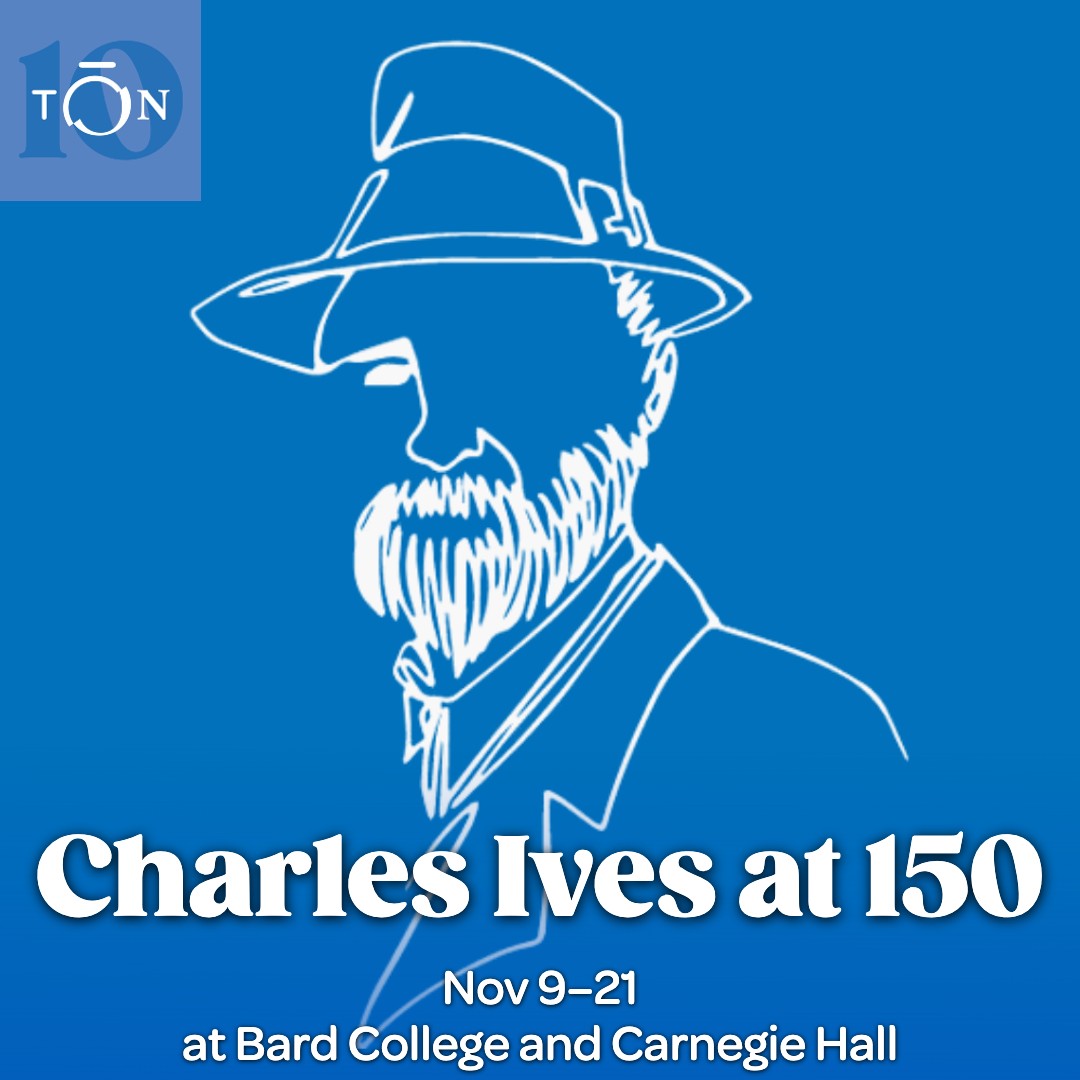
    So imagine my excitement when my friend, H. Paul Moon – the filmmaker with whom I’ve been working on a documentary about the cellist Leonard Rose – contacted me to let me know that Leon Botstein and The Orchestra Now (TŌN) would be bringing Ives’ 2nd as part of an all-Ives concert to be performed at Carnegie Hall tonight. His email began, “Small thing here, nothing special, and there’s always another time, but…”

    My response was through-the-roof excitement.

    It so happens, I did notice that TŌN was scheduled to perform the same program at Bard College last weekend – the college is also the base of the Bard Music Festival I so adore (next summer the focus will be on the Czech composer Bohuslav Martinu and his world) – but getting there on a good day is a three-hour drive, and I would have gone on a Sunday afternoon, which would have meant automatic end-of-weekend traffic on my return. So I was on the fence about it – they do so many good concerts up there (of course, many of them are livestreamed, but it’s not the same as being in the hall, at the Fisher Center at Bard) – but when I learned they would be bringing the show to Carnegie, I didn’t even have to think about it. I didn’t even look at my schedule. If I had anything else planned, I would change it. I’m in!

    And what a program! “The Fourth of July.” “Central Park in the Dark.” The Orchestral Set No. 2. And THE SYMPHONY NO. 2!!! Pardon me for shouting, but this is quite simply not only one of my favorite American symphonies; it’s one of my favorite symphonies by anyone, anywhere, for all time.

    Everyone knows Ives the iconoclast, the experimentalist, the cranky Yankee who smashed harmonies and rhythms together like a recalcitrant toddler with its toys in a playpen. But the Symphony No. 2 is different. It distills all of Ives’ musical experiences into one beguiling work that’s like a snapshot of a faded America, with its hymn tunes, parlor songs, and patriotic marches, recollected through a nostalgic, but no less vital for it, glow.

    It also serves as a portrait of the artist as a young man, assimilating works by Bach, Beethoven, Brahms, Wagner, Dvořák, Bruckner, and others. So if you were ever curious to hear Beethoven’s 5th Symphony and Wagner’s “Tristan und Isolde” rub shoulders with “America the Beautiful,” “Camptown Races,” “Turkey in the Stray” and “Columbia, the Gem of the Ocean,” then this is the symphony for you. Truly, the more you know about music, the more you’ll be able to get out of it.

    All that aside, the music is simply gorgeous, transporting, and exciting – of its time, and perhaps even now (though a lot of the allusions will likely be lost on many), quintessentially American. For me, this is a perfect Thanksgiving concert.

    Before each piece, baritone William Sharp will sing some of the songs Ives references. There will be a pre-concert talk at 6:00, with the performance beginning at 7:00.

    Of course, any time I’ve got a ticket to Carnegie Hall, it rains. I’d say there’s a good 90 percent chance of that happening, always. Well over a month, probably six or seven weeks, without rain in New Jersey, and now there’s rain in the forecast for today and tomorrow. Next time there’s a drought, just buy me a ticket to Carnegie Hall.

    I’ll try to add a picture of the poster tonight.

    For more information about the concert, look here:

    https://www.carnegiehall.org/Calendar/2024/11/21/The-Orchestra-Now-0700PM

    Leonard Bernstein introduces Ives’ Symphony No. 2

  • Charles Ives Avant-Garde Nostalgia

    Charles Ives Avant-Garde Nostalgia

    Charles Ives was the most nostalgic of avant-gardists. For the most part laboring at his music in isolation – in the evenings and on weekends, while earning his bread as an insurance executive – he managed to prognosticate, or at any rate, arrive independently, at some of the major developments of the 20th century. Some may perceive his grinding harmonies and clashing meters as a kind of temple of Moloch, on the altar of which beauty is sacrificed for effect. As Ives himself once remarked, “Are my ears on wrong?” But consider, the straw for his bricks was harvested from the music of the world around him, especially that recollected from his boyhood in Connecticut.

    Ives could construct breathtaking musical edifices from the most diverse materials. Forget Moloch. Perhaps a better parallel would be the Tower of Babel. Only in Ives’ case, once the language becomes confused it actually seems to enliven his creative impulse. Consonance and dissonance are of no consequence to the composer. He listens past the cacophony to draw his energy from powerful associations. And he continued right on building, always grasping for the stars.

    I find it fascinating that Gustav Mahler took an interest in Ives’ Symphony No. 3. Mahler discovered a copy of the score on his final visit to Manhattan as music director of the New York Philharmonic in 1911, and presumably it was still in his possession at the time of his death later that year. In the 1950s, an aged percussionist recollected playing the bell-part in a read-through of the work under Mahler’s baton in Munich. Did it happen? Mahler’s score has never come to light. Ives claimed Mahler took it with the intention of giving the work its premiere. Unfortunately, Mahler died (at 50) before he was able to do anything about it. It’s mind-bending to contemplate the one-time music director of the Vienna State Opera (and by extension the Vienna Philharmonic) performing Ives in 1911. When worlds collide!

    But really, were the artists so very different? Mahler famously stated (to Sibelius), “The symphony must be like the world: it must embrace everything!” Mahler demonstrated this by filling his symphonies with fondly recollected folk material, rustic and courtly dances, children’s songs, hymns, and klezmer riffs. Ives leaned into hymns, patriotic marches, parlor songs, and quotations from the core classical repertoire he loved. Their music may have come out completely different, but both composers yearned to express, through these everyday human associations, universal truths that often reached beyond our terrestrial concerns.

    Ives heard Mahler conduct in New York, but as he became more deeply involved in composition, he largely stopped going to concerts of other composers’ music. He found that it interfered with his recall of ideas in development, when he was still carrying them around inside his head. He said he could listen to Beethoven or Brahms, any of the music he grew up with, and it wouldn’t be an issue. But taking in new music could muddy his thoughts. Whether or not he ever heard any of Mahler’s symphonies, I do not know.

    In the event, like most of Ives’ output, his Symphony No. 3 was not performed until years after it was written. Composed in 1908-10, it was finally given its premiere (in New York, under Lou Harrison) in 1946. The next year, it was awarded the Pulitzer Prize for Music. Ives passed along half the prize money to Harrison and commented gruffly, “Prizes are for boys, and I’m all grown up.”

    Ives may come across as something of a tinkerer, and he often portrayed himself as such, but like the greatest modernists, he had mastered the basics of his craft. His studies with Horatio Parker at Yale gave him a sound foundation in the rules of composition. Just as Picasso or Schoenberg demonstrated that they had mastered traditional forms before blazing their own trails, Ives was capable of writing within convention. But he was always irrepressibly Ives. He was always chafing and often pushing, and you just know Professor Parker had his hands full.

    Ives, the cranky Yankee, often got his back up against the musically complacent, whom he derided in his writings as “Rollo” – a named borrow from a popular children’s book character in the decades preceding the American Civil War.

    He also played baseball for Yale. Whether on the field or in his study, throughout his career, he kept right on swinging for the fences.

    Remembering Charles Ives, with admiration, on the 150th anniversary of his birth!


    The Symphony No. 3, subtitled “The Camp Meeting,” is actually one of Ives’ most immediately accessible scores. The three movements: “Old Folks Gatherin’,” “Children’s Day,” and “Communion.”

    For Ives at his cumulatively cacophonous best, try “The Fourth of July.” No composer understood as well the holiday from a boy’s perspective!

  • Charles Ives’ Concord Sonata Celebrates 150 Years

    Charles Ives’ Concord Sonata Celebrates 150 Years

    On the eve of the sesquicentennial of the birth of Charles Ives, I hope you’ll join me for a newly-recorded “The Lost Chord” and a fresh perspective on Ives’ “Concord Sonata.”

    An American original and an artist ahead of his time, Ives (born in Danbury, Connecticut, on October 20, 1874) labored largely in isolation, on evenings, weekends, and holidays, while he held his lucrative day job as an insurance executive. Many of his works were not performed publicly – or at all, for that matter – until decades after they were written. So he enjoyed the luxury of not having to compromise and the independence to devote himself wholeheartedly to serving his quirky muse.

    Ives’ Piano Sonata No. 2, subtitled “Concord, Mass., 1840–60,” for the most part was composed between 1909 and 1915; although, as was often the case with Ives, he began sketching some of the material years earlier and continued to tinker with it for some time after. The sonata was published in 1920 and revised in 1947.

    Each of the four movements was named for figures associated with the American Transcendentalist movement: musical impressions of Ralph Waldo Emerson, Nathaniel Hawthorne, the Alcotts, and Henry David Thoreau, all based in Concord in the mid-19th century.

    The work is Ives at his experimental best. It is harmonically advanced; the score was composed without bar lines; cluster chords are played by an open hand or a fist or even a piece of wood; and the music is full of characteristically Ivesian quotations, references to hymn tunes, patriotic songs and marches, and the famous motto from Beethoven’s 5th Symphony, among others.

    In the 1960s, the Canadian-born American composer Henry Brant undertook an orchestration of the “Concord Sonata.” In common with Ives’ remarkably progressive bandmaster father, who sent two marching bands simultaneously around town to play clashing pieces of music so that he could enjoy the “cheerful discord” and ever-shifting spatial effects, Brant was frequently occupied with spatial concerns in his own original works. “Ice Field,” for organ and spatially-arranged orchestral groups, was inspired by his experience as a 12-year-old, crossing the North Atlantic by ship in 1926, as it navigated through a field of icebergs. The piece was awarded the Pulitzer Prize for Music in 2002.

    Ives was recognized with his own Pulitzer in 1946, for his belatedly-performed Symphony No. 3, composed in 1904. Giving away half the prize money to Lou Harrison, who conducted the premiere, the notoriously cantankerous Ives commented, “Prizes are for boys, and I’m all grown up.”

    Film music aficionados may recognize Brant from his close association with composer Alex North. His bright, acerbic orchestrations lend zest to North’s music for “Spartacus,” “Cleopatra,” “Dragonslayer,” and so many others. In addition, he conducted the orchestra at the recording sessions for North’s rejected score for “2001: A Space Odyssey.”

    Less well known is that he also worked as an orchestrator on film scores of Aaron Copland, Virgil Thomson (including “Louisiana Story,” for which Thomson was awarded the Pulitzer Prize), George Antheil, Marc Blitzstein, Douglas Moore, and Gordon Parks.

    Brant said he wasn’t attempting to emulate Ives’ own orchestral style when searching for the right colors for “A Concord Symphony.” Rather, he approached the project in the manner Ravel or Schoenberg might in their own orchestrations of other composers’ works.

    The effort of some 30 years (since he worked at it very sporadically), Brant’s treatment was completed in 1994. If you have always had difficulty cracking the hard nut that is Ives’ epic sonata, Brant’s orchestration illuminates many details that may get swallowed up in a performance of the original piano version. It especially pays dividends in the “Hawthorne” section (the second movement), lending lift to the patriotic tunes (“Columbia, the Gem of the Ocean” and “Battle Cry of Freedom”) and the ragtime inflections.

    We’ll hear the Concertgebouw Orchestra conducted by Dennis Russell Davies, in this 2007 release on the innova Recordings label.

    I hope you’ll join me in opening up our ears for a salute to Charles Ives’ for his 150th birthday. That’s “Concord and Discord,” on “The Lost Chord,” now in syndication on KWAX, the radio station of the University of Oregon!


    Clip and save the start times for all three of my recorded shows:

    PICTURE PERFECT, the movie music show – Friday at 8:00 PM EDT/5:00 PM PDT

    SWEETNESS AND LIGHT, the light music program – ALL NEW! – Saturday at 11:00 AM EDT/8:00 AM PDT

    THE LOST CHORD, unusual and neglected rep – Saturday at 7:00 PM EDT/4:00 PM PDT

    Stream them, wherever you are, at the link!

    https://kwax.uoregon.edu/

  • Ives Bellamann Kings Row A Lost Chord

    Ives Bellamann Kings Row A Lost Chord

    In putting together a special edition of “The Lost Chord” for the 150th anniversary of the birth of Charles Ives, I learn that the first performances of Ives’ “Concord Sonata,” following the work’s publication in 1920, were organized by Henry Bellamann.

    Bellamann, later chairman of the examination board at Juilliard (1924-26) and dean of the Curtis Institute of Music in Philadelphia (1931-32), wrote the bestselling novel “Kings Row.” The book was published in 1940 and adapted into a film by Warner Bros. in 1942.

    I’ve always loved “Kings Row,” the movie, even though it is rather bizarre and over-the-top. Okay, I admit it: I love it BECAUSE of those things. It’s actually a very grim story, anticipating the work of David Lynch, in some respects, as it gradually reveals the dark underbelly of life in a small Midwestern town. A sign on the outskirts advertises it as “a good town… a good clean town… a good town to live in… and a decent place to raise your children.” Of course it’s none of those things. But for as dark as the movie gets, it somehow never loses its sense of optimism. Bellamann’s book, on the other hand, is unrelentingly melancholy and bleak-as-hell. I have to say, it’s a massive downer. Even so, readers adored it. So much so, that Bellamann was spurred to write a sequel (which I have not read), “Parris Mitchell of Kings Row.”

    As you can imagine, the notoriety of “Kings Row” caused quite a stir in Bellamann’s hometown of Fulton, Missouri, and not necessarily because of its success. Rather, a few too many people and institutions recognized themselves in the extremely unflattering narrative. Allegedly the book was banned from the town library, and Bellamann was the target of at least one indignant editorial in the local newspaper.

    “Kings Row” is one of the most subversive films of Hollywood’s golden age. How it managed to get around the Hays Code is anybody’s guess, but I’m putting my money on the music by Erich Wolfgang Korngold, which breathes uplift and hope into what could have been two hours and seven minutes of sustained misery.

    Also, the ending was changed, such an obvious overcompensation, with the climax an almost ludicrous eruption of joy. It’s a neat trick, as somehow, in the film, not only is the wicked in human nature balanced by the good, but the whole is infused with an undercurrent of nostalgia for a passing world. It’s kind of like how people choose to remember “It’s a Wonderful Life,” even though you have to go through hell before you get to heaven.

    Amusingly, from the title, Korngold thought he was being assigned yet another historical adventure (he was Warners’ composer of choice for the Errol Flynn swashbucklers), which is why the theme is so wildly exuberant. By 1942, Korngold could do pomp and braggadocio in his sleep. When he learned of his misunderstanding, he just kept at it. And what a happy accident! The film is so much better – and so much more bearable – than it otherwise would have been. After all, how much madness, suicide, amputation, and incest can one take, especially in the 1940s? It really is quite the sleight of hand.

    FUN FACT: When John Williams came to write the main title for “Star Wars,” “Kings Row” was one of his principal inspirations.

    It was decades earlier that Bellamann reached out to Ives, in preparation for his lectures on the “Concord Sonata.” Bellamann toured the work across the American South, from New Orleans to Spartanburg, South Carolina, providing spoken introductions to each of the four movements, the music itself performed by pianist Lenore Purcell.

    Bellamann would go on to write important articles about Ives, based on his extensive correspondence with the composer. He was the first to report on the influence of Ives’ musically progressive father, George, who was as much ahead of his time as Charles would be, and the composer’s perceptions of his hidebound teacher, Horatio Parker. Bellamann also provided program notes for some early Ives’ performances.

    A graduate of Westminster College in Fulton (no relation to the Princeton institution), Bellamann also studied piano at the University of Denver. He then taught music at several girls’ schools in the South, while in the summers, he traveled to Europe to continue his studies with Charles-Marie Widor and Isador Philipp. Bellamann would hold several prominent administrative and teaching positions in the U.S. In addition to his work at Juilliard and Curtis, he was also a professor of music at Vassar College.

    Since I won’t be talking about him on my Ives show, I figured I’d mention him here. The “Concord Sonata” will be heard in a most unusual form on “Concord and Discord,” an all-new episode of “The Lost Chord,” this Saturday, the eve of Ives’ sesquicentenary, at 4:00 EDT/7:00 PDT, exclusively on KWAX, the radio station of the University of Oregon.

    Stream it wherever you are at the link:

    https://kwax.uoregon.edu/


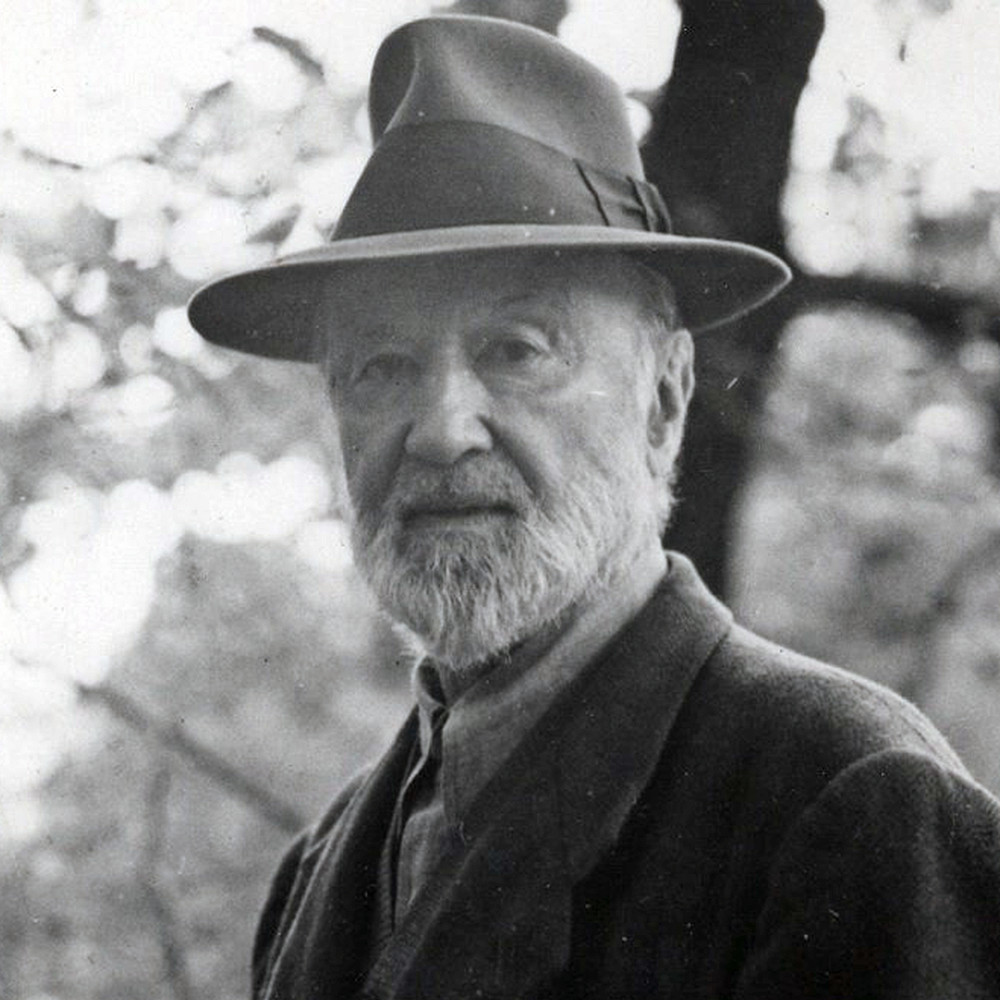
    CLOCKWISE FROM LEFT: Ives; Bellamann; and 680 pages of pure misery

  • Charles Ives Halloween Music Birthday Tribute

    Charles Ives Halloween Music Birthday Tribute

    For Charles Ives’ birthday, here are two Halloween-related pieces. And you can listen to them both in just over three minutes.

    First, my favorite recording of “Hallowe’en” (1907), in its original version for string quartet and piano, since it actually includes the bass drum. Ives later orchestrated the work, but it just ain’t the same. The composer wrote, “It’s a take-off of a Halloween party and bonfire – the elfishness of the little boys throwing wood on the fire, etc., etc… it is a joke even Herbert Hoover could get.”

    And then this wisp of a song, “Slugging a Vampire” (1902). The music was originally composed to Rudyard Kipling’s poem “Tarrant Moss,” but permission to use Kipling’s text had not been obtained by the time Ives’ “114 Songs” were to go to press. So Ives just included the first few words and left the rest of the voice-part blank.

    “114 Songs” went through two editions and was reprinted in 1975, all without Kipling. When the composer later published “Nineteen Songs” in 1935, he decided to reuse the music, but this time he made up his own text. The result is like having consumed tainted Smartees from your trick-or-treat loot before your parents had a chance to check your candy.

    This is a guy who really understood Halloween. Happy birthday, Charles Ives!

Tag Cloud

Aaron Copland (93) Beethoven (95) Composer (114) Film Music (126) Film Score (143) Film Scores (255) Halloween (94) John Williams (189) KWAX (229) Leonard Bernstein (101) Marlboro Music Festival (125) Movie Music (141) Mozart (87) Opera (203) Philadelphia Orchestra (89) Picture Perfect (174) Princeton Symphony Orchestra (107) Radio (87) Ross Amico (244) Roy's Tie-Dye Sci-Fi Corner (290) The Classical Network (101) The Lost Chord (268) Vaughan Williams (103) WPRB (396) WWFM (881)

DON’T MISS A BEAT

Receive a weekly digest every Sunday at noon by signing up here


RECENT POSTS