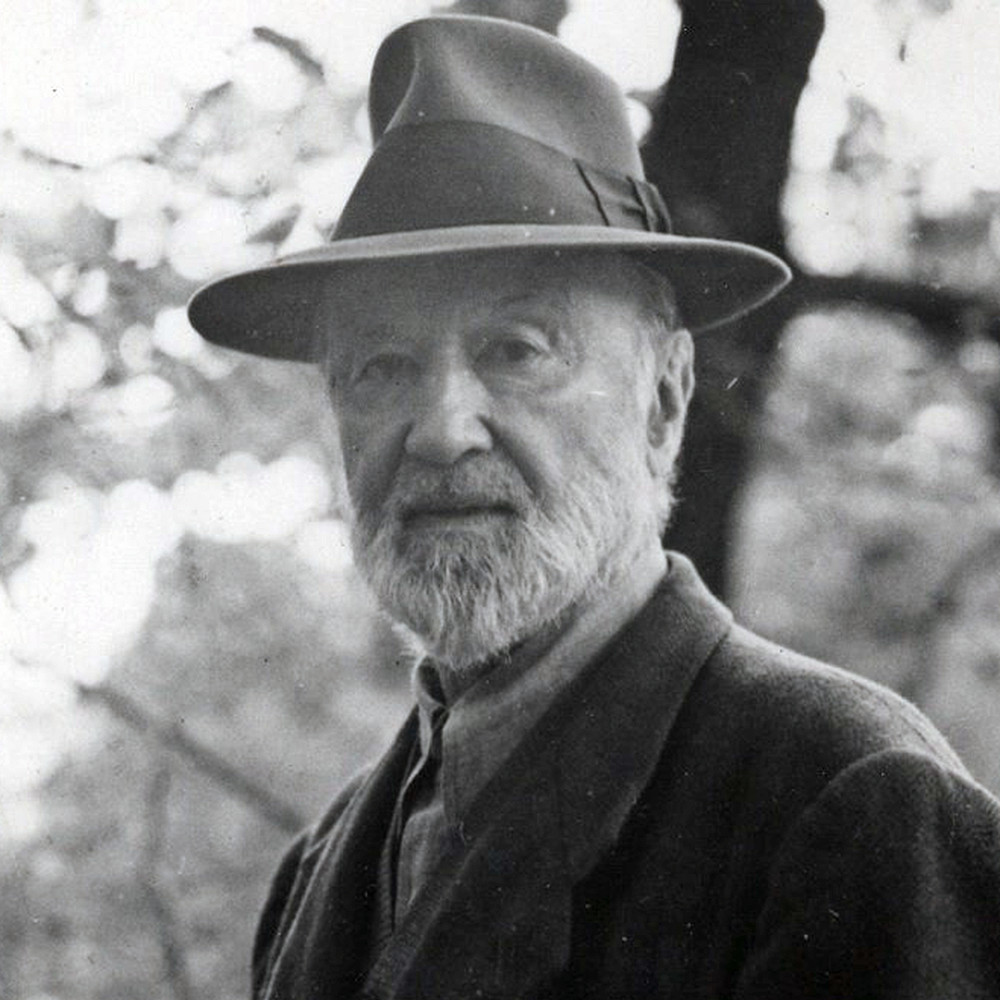
On the eve of the sesquicentennial of the birth of Charles Ives, I hope you’ll join me for a newly-recorded “The Lost Chord” and a fresh perspective on Ives’ “Concord Sonata.”
An American original and an artist ahead of his time, Ives (born in Danbury, Connecticut, on October 20, 1874) labored largely in isolation, on evenings, weekends, and holidays, while he held his lucrative day job as an insurance executive. Many of his works were not performed publicly – or at all, for that matter – until decades after they were written. So he enjoyed the luxury of not having to compromise and the independence to devote himself wholeheartedly to serving his quirky muse.
Ives’ Piano Sonata No. 2, subtitled “Concord, Mass., 1840–60,” for the most part was composed between 1909 and 1915; although, as was often the case with Ives, he began sketching some of the material years earlier and continued to tinker with it for some time after. The sonata was published in 1920 and revised in 1947.
Each of the four movements was named for figures associated with the American Transcendentalist movement: musical impressions of Ralph Waldo Emerson, Nathaniel Hawthorne, the Alcotts, and Henry David Thoreau, all based in Concord in the mid-19th century.
The work is Ives at his experimental best. It is harmonically advanced; the score was composed without bar lines; cluster chords are played by an open hand or a fist or even a piece of wood; and the music is full of characteristically Ivesian quotations, references to hymn tunes, patriotic songs and marches, and the famous motto from Beethoven’s 5th Symphony, among others.
In the 1960s, the Canadian-born American composer Henry Brant undertook an orchestration of the “Concord Sonata.” In common with Ives’ remarkably progressive bandmaster father, who sent two marching bands simultaneously around town to play clashing pieces of music so that he could enjoy the “cheerful discord” and ever-shifting spatial effects, Brant was frequently occupied with spatial concerns in his own original works. “Ice Field,” for organ and spatially-arranged orchestral groups, was inspired by his experience as a 12-year-old, crossing the North Atlantic by ship in 1926, as it navigated through a field of icebergs. The piece was awarded the Pulitzer Prize for Music in 2002.
Ives was recognized with his own Pulitzer in 1946, for his belatedly-performed Symphony No. 3, composed in 1904. Giving away half the prize money to Lou Harrison, who conducted the premiere, the notoriously cantankerous Ives commented, “Prizes are for boys, and I’m all grown up.”
Film music aficionados may recognize Brant from his close association with composer Alex North. His bright, acerbic orchestrations lend zest to North’s music for “Spartacus,” “Cleopatra,” “Dragonslayer,” and so many others. In addition, he conducted the orchestra at the recording sessions for North’s rejected score for “2001: A Space Odyssey.”
Less well known is that he also worked as an orchestrator on film scores of Aaron Copland, Virgil Thomson (including “Louisiana Story,” for which Thomson was awarded the Pulitzer Prize), George Antheil, Marc Blitzstein, Douglas Moore, and Gordon Parks.
Brant said he wasn’t attempting to emulate Ives’ own orchestral style when searching for the right colors for “A Concord Symphony.” Rather, he approached the project in the manner Ravel or Schoenberg might in their own orchestrations of other composers’ works.
The effort of some 30 years (since he worked at it very sporadically), Brant’s treatment was completed in 1994. If you have always had difficulty cracking the hard nut that is Ives’ epic sonata, Brant’s orchestration illuminates many details that may get swallowed up in a performance of the original piano version. It especially pays dividends in the “Hawthorne” section (the second movement), lending lift to the patriotic tunes (“Columbia, the Gem of the Ocean” and “Battle Cry of Freedom”) and the ragtime inflections.
We’ll hear the Concertgebouw Orchestra conducted by Dennis Russell Davies, in this 2007 release on the innova Recordings label.
I hope you’ll join me in opening up our ears for a salute to Charles Ives’ for his 150th birthday. That’s “Concord and Discord,” on “The Lost Chord,” now in syndication on KWAX, the radio station of the University of Oregon!
Clip and save the start times for all three of my recorded shows:
PICTURE PERFECT, the movie music show – Friday at 8:00 PM EDT/5:00 PM PDT
SWEETNESS AND LIGHT, the light music program – ALL NEW! – Saturday at 11:00 AM EDT/8:00 AM PDT
THE LOST CHORD, unusual and neglected rep – Saturday at 7:00 PM EDT/4:00 PM PDT
Stream them, wherever you are, at the link!
Leave a Reply