Tag: Orchestration

  • Charles Ives’ Concord Sonata Celebrates 150 Years

    Charles Ives’ Concord Sonata Celebrates 150 Years

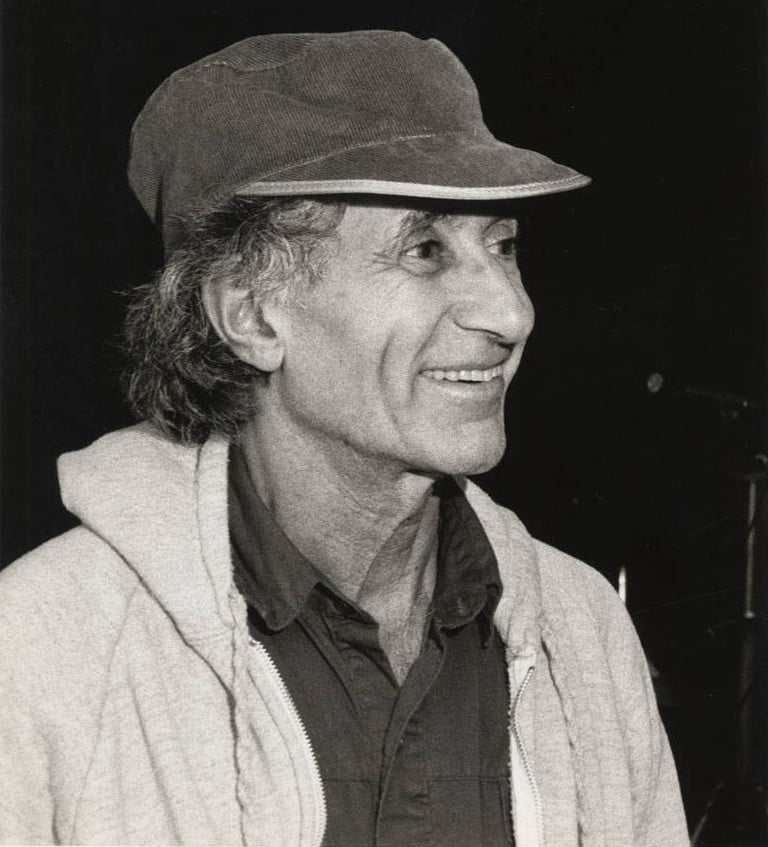
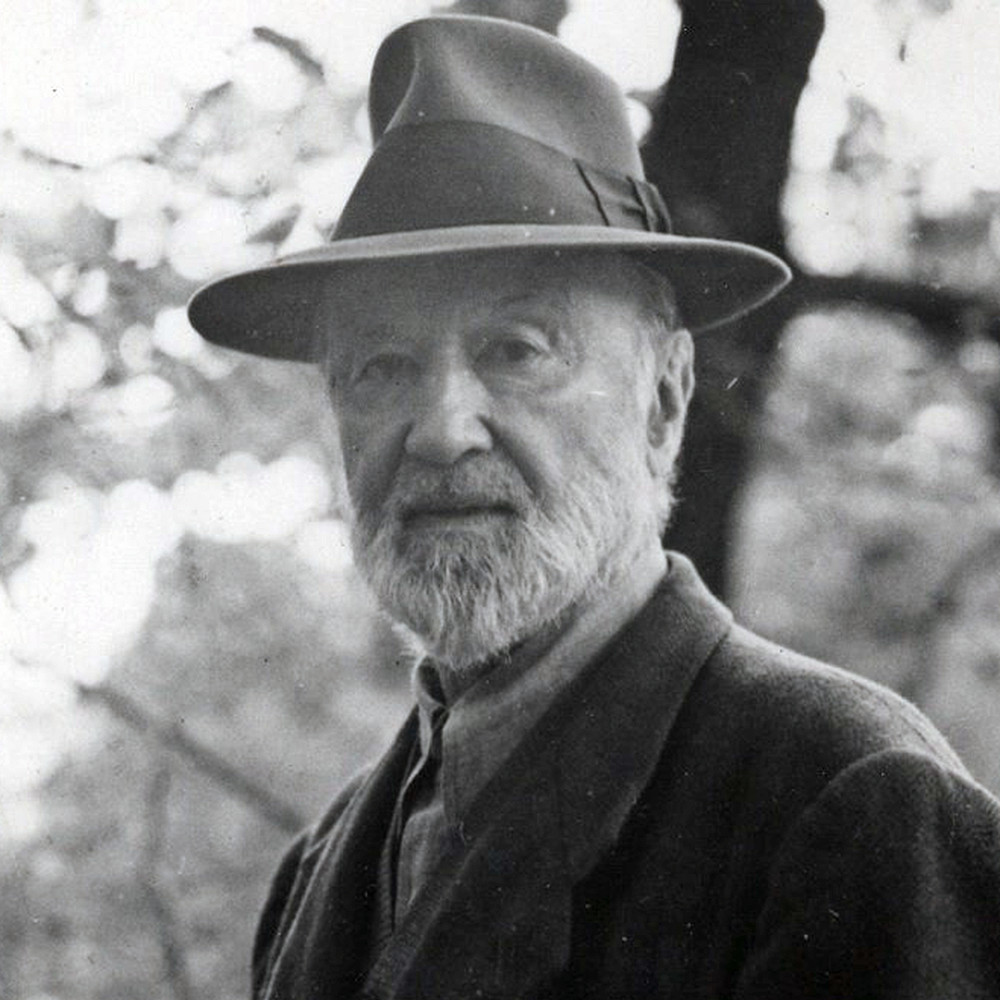
    On the eve of the sesquicentennial of the birth of Charles Ives, I hope you’ll join me for a newly-recorded “The Lost Chord” and a fresh perspective on Ives’ “Concord Sonata.”

    An American original and an artist ahead of his time, Ives (born in Danbury, Connecticut, on October 20, 1874) labored largely in isolation, on evenings, weekends, and holidays, while he held his lucrative day job as an insurance executive. Many of his works were not performed publicly – or at all, for that matter – until decades after they were written. So he enjoyed the luxury of not having to compromise and the independence to devote himself wholeheartedly to serving his quirky muse.

    Ives’ Piano Sonata No. 2, subtitled “Concord, Mass., 1840–60,” for the most part was composed between 1909 and 1915; although, as was often the case with Ives, he began sketching some of the material years earlier and continued to tinker with it for some time after. The sonata was published in 1920 and revised in 1947.

    Each of the four movements was named for figures associated with the American Transcendentalist movement: musical impressions of Ralph Waldo Emerson, Nathaniel Hawthorne, the Alcotts, and Henry David Thoreau, all based in Concord in the mid-19th century.

    The work is Ives at his experimental best. It is harmonically advanced; the score was composed without bar lines; cluster chords are played by an open hand or a fist or even a piece of wood; and the music is full of characteristically Ivesian quotations, references to hymn tunes, patriotic songs and marches, and the famous motto from Beethoven’s 5th Symphony, among others.

    In the 1960s, the Canadian-born American composer Henry Brant undertook an orchestration of the “Concord Sonata.” In common with Ives’ remarkably progressive bandmaster father, who sent two marching bands simultaneously around town to play clashing pieces of music so that he could enjoy the “cheerful discord” and ever-shifting spatial effects, Brant was frequently occupied with spatial concerns in his own original works. “Ice Field,” for organ and spatially-arranged orchestral groups, was inspired by his experience as a 12-year-old, crossing the North Atlantic by ship in 1926, as it navigated through a field of icebergs. The piece was awarded the Pulitzer Prize for Music in 2002.

    Ives was recognized with his own Pulitzer in 1946, for his belatedly-performed Symphony No. 3, composed in 1904. Giving away half the prize money to Lou Harrison, who conducted the premiere, the notoriously cantankerous Ives commented, “Prizes are for boys, and I’m all grown up.”

    Film music aficionados may recognize Brant from his close association with composer Alex North. His bright, acerbic orchestrations lend zest to North’s music for “Spartacus,” “Cleopatra,” “Dragonslayer,” and so many others. In addition, he conducted the orchestra at the recording sessions for North’s rejected score for “2001: A Space Odyssey.”

    Less well known is that he also worked as an orchestrator on film scores of Aaron Copland, Virgil Thomson (including “Louisiana Story,” for which Thomson was awarded the Pulitzer Prize), George Antheil, Marc Blitzstein, Douglas Moore, and Gordon Parks.

    Brant said he wasn’t attempting to emulate Ives’ own orchestral style when searching for the right colors for “A Concord Symphony.” Rather, he approached the project in the manner Ravel or Schoenberg might in their own orchestrations of other composers’ works.

    The effort of some 30 years (since he worked at it very sporadically), Brant’s treatment was completed in 1994. If you have always had difficulty cracking the hard nut that is Ives’ epic sonata, Brant’s orchestration illuminates many details that may get swallowed up in a performance of the original piano version. It especially pays dividends in the “Hawthorne” section (the second movement), lending lift to the patriotic tunes (“Columbia, the Gem of the Ocean” and “Battle Cry of Freedom”) and the ragtime inflections.

    We’ll hear the Concertgebouw Orchestra conducted by Dennis Russell Davies, in this 2007 release on the innova Recordings label.

    I hope you’ll join me in opening up our ears for a salute to Charles Ives’ for his 150th birthday. That’s “Concord and Discord,” on “The Lost Chord,” now in syndication on KWAX, the radio station of the University of Oregon!


    Clip and save the start times for all three of my recorded shows:

    PICTURE PERFECT, the movie music show – Friday at 8:00 PM EDT/5:00 PM PDT

    SWEETNESS AND LIGHT, the light music program – ALL NEW! – Saturday at 11:00 AM EDT/8:00 AM PDT

    THE LOST CHORD, unusual and neglected rep – Saturday at 7:00 PM EDT/4:00 PM PDT

    Stream them, wherever you are, at the link!

    https://kwax.uoregon.edu/

  • French Orchestrators Behind the Music

    French Orchestrators Behind the Music

    Vive les orchestrateurs de musique classique français!

    This week on “The Lost Chord,” for Bastille Day, enjoy original works by figures who employed their skills as orchestrators in the service of more celebrated French composers.

    Henri Rabaud (1873-1949) was, variously, conductor at the Paris Opéra Comique, director of the Paris Opera, and director of the Paris Conservatory. For a season, he even led the Boston Symphony Orchestra. Though he wrote several operas and two symphonies, as well as choral, chamber and instrumental music, Rabaud’s own original output is very seldom heard. However, his orchestration of Gabriel Fauré’s charming “Dolly Suite,” originally for piano four-hands, endures. We’ll hear Rabaud’s symphonic poem “La Procession nocturne,” inspired by Nicolas Lenau’s “Faust.”

    André Caplet (1878-1925) directed the Boston Opera from 1910 to 1914. He was gassed while serving in the First World War, which resulted in the pleurisy that plagued him for the remainder of his short life. Caplet died at the age of 44. His harp quintet, “Conte fantastique,” after Edgar Allan Poe’s “The Masque of the Red Death” is occasionally heard. But his tenuous grip on fame is really through his association with another composer, Claude Debussy, for whom he orchestrated “Children’s Corner,” “Clair de lune,” “Le Martyrdom de saint Sébastien,” and “La boîte à joujoux.” Today, we’ll have the opportunity to enjoy Caplet’s lovely Septet for Voices and String Quartet.

    Henri Büsser (1872-1973) acted as secretary to Charles Gounod. He also became a protégé and friend of Jules Massenet. At Debussy’s request, Büsser conducted the fourth performance of “Pélleas and Mélisande” and numerous performances thereafter. He died in Paris less than three weeks shy of his 102nd birthday! Büsser’s own output includes much music for the stage, including 14 operas, a ballet, and incidental music. Yet his name is kept alive principally as the orchestrator of Debussy’s “Petite Suite” and “Printemps.” He’ll be represented today’s program by “Andalucia,” an original work for flute, on Spanish themes.

    Charles Koechlin (1867-1950) had many enthusiasms: medieval music, Bach, travel, stereoscopic photography, communism, pantheism, sports. He was especially interested in early film stars (he wrote works in tribute to Ginger Rogers, Douglas Fairbanks, Charles Chaplin, and Lillian Harvey) and the “Jungle Books” of Rudyard Kipling. Despite enjoying an astonishingly prolific career as a composer himself, Koechlin is associated in most people’s minds with his orchestration of Fauré’s “Pélleas and Mélisande.” He also worked as an orchestrator on Debussy’s “Khamma.”

    Koechlin’s series of orchestral works, inspired by Kipling, span most of his creative life. These were composed in a broad array of styles, encompassing impressionism, neo-classicism, polytonality, and even quasi-serialism. We’ll hear the last of his Kipling cycle, “Les Bandar-Log,” ostensibly about a barrel of chattering monkeys, but the term has also come to be used to describe anyone who irresponsibly prattles.

    I hope you’ll join me in liberating these overlooked composers from the Bastille of neglect on “French Connections,” on “The Lost Chord,” now in syndication on KWAX, the radio station of the University of Oregon!


    Clip and save the start times for all three of my recorded shows:

    PICTURE PERFECT, the movie music show – Friday at 8:00 PM EDT/5:00 PM PDT

    SWEETNESS AND LIGHT, the light music program – ALL NEW! – Saturday at 11:00 AM EDT/8:00 AM PDT

    THE LOST CHORD, unusual and neglected rep – Saturday at 7:00 PM EDT/4:00 PM PDT

    Stream them, wherever you are, at the link!
    https://kwax.uoregon.edu/

  • French Orchestral Masters Rediscovered

    French Orchestral Masters Rediscovered

    Vive les orchestrateurs de musique classique français!

    This Sunday night on “The Lost Chord,” we’ll hear original works by musicians who employed their skills as orchestrators in the service of more celebrated French composers.

    Henri Rabaud (1873-1949) was, variously, conductor at the Paris Opéra Comique, director of the Paris Opera, and director of the Paris Conservatory. For a season, he ever led the Boston Symphony Orchestra. Though he wrote several operas and two symphonies, as well as choral, chamber and instrumental music, Rabaud’s own original output is very seldom heard. However, his orchestration of Gabriel Fauré’s charming “Dolly Suite,” originally for piano four-hands, endures. We’ll hear Rabaud’s symphonic poem “La Procession nocturne,” inspired by Nicolas Lenau’s “Faust.”

    André Caplet (1878-1925) directed the Boston Opera from 1910 to 1914. He was gassed while serving in the First World War, which resulted in the pleurisy that plagued him for the remainder of his short life. Caplet died at the age of 44. His harp quintet, “Conte fantastique,” after Edgar Allan Poe’s “The Masque of the Red Death,” is occasionally heard. But his tenuous grip on fame is really through his association with another composer, Claude Debussy, for whom he orchestrated “Children’s Corner,” “Clair de lune,” “Le Martyrdom de saint Sébastien” and “La boîte à joujoux.” Tonight we’ll have the opportunity to enjoy Caplet’s lovely Septet for Voices and String Quartet.

    Henri Büsser (1872-1973) acted as secretary to Charles Gounod. He also became a protégé and friend of Jules Massenet. At Debussy’s request, Büsser conducted the fourth performance of “Pélleas and Mélisande” and numerous performances thereafter. He died in Paris less than three weeks shy of his 102nd birthday! Büsser’s own output includes much music for the stage, including 14 operas, a ballet, and incidental music. Yet his name is kept alive principally as the orchestrator of Debussy’s “Petite Suite” and “Printemps.” He’ll be represented tonight by “Andalucia,” an original work for flute, on Spanish themes.

    Charles Koechlin (1867-1950) had many enthusiasms: medieval music, Bach, travel, stereoscopic photography, communism, pantheism, sports. He was especially interested in early film stars (he wrote works in tribute to Ginger Rogers, Douglas Fairbanks, Charles Chaplin, and Lillian Harvey) and the “Jungle Books” of Rudyard Kipling. Despite having enjoyed an astonishingly prolific career as a composer himself, Koechlin is associated in most people’s minds with his orchestration of Fauré’s “Pélleas and Mélisande.” He also worked as an orchestrator on Debussy’s “Khamma.”

    Koechlin’s series of orchestral works inspired by Kipling span most of his creative life. These were composed in a broad array of styles, encompassing impressionism, neo-classicism, polytonality, and even quasi-serialism. We’ll hear the last of his Kipling cycle, “Les Bandar-Log,” ostensibly about a barrel of chattering monkeys, but the term has also come to be used to describe anyone who irresponsibly prattles.

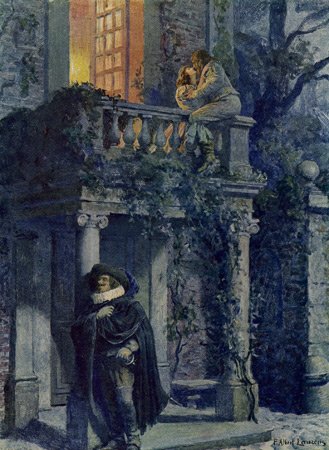
    I hope you’ll join me as these musical Cyranos emerge from the shadow of Roxane’s balcony, on “French Connections,” this Sunday night at 10:00 EDT, on WWFM – The Classical Network and wwfm.org.

  • Ives Concord Sonata Orchestrated by Brant

    Ives Concord Sonata Orchestrated by Brant

    I’ve been spending the afternoon with Charles Ives’ “Concord Sonata,” which I mentioned earlier today, in writing about Nathaniel Hawthorne. Then I discovered this, which I’d totally forgotten I owned. It’s “A Concord Symphony” – Ives’ sonata, brilliantly orchestrated by Canadian-born American composer Henry Brant.

    Brant, the recipient of the Pulitzer Prize in 2002 for “Ice Field,” is probably best-known for his experiments with spatial music. Film music nuts will know him for his close association with composer Alex North. Brant’s bright, acerbic orchestrations lend zest to the soundtracks of “Spartacus,” “Cleopatra,” “Dragonslayer,” and so many others. In addition, he conducted the orchestra at the recording sessions for North’s rejected score to “2001: A Space Odyssey.”

    Less well known is that he also worked as an orchestrator on film scores of Aaron Copland, Virgil Thomson (including “Louisiana Story,” for which Thomson was awarded the Pulitzer Prize), George Antheil, Marc Blitzstein, Douglas Moore, and Gordon Parks.

    Brant says he wasn’t attempting to emulate Ives’ own orchestral style when searching for the right colors for “A Concord Symphony.” Rather, he approached the project in the manner Ravel or Schoenberg might have in their orchestrations of other composers’ works.

    The effort of some 30 years (since he worked at it very sporadically), Brant’s treatment was completed in 1994. I think he did a terrific job. If you have difficulty getting into Ives’ sonata, give this a listen. It particularly pays dividends in the “Hawthorne” section (the second movement), lending some lift to the patriotic tunes (“Columbia, the Gem of the Ocean” and “Battle Cry of Freedom”) and the ragtime inflections.

    My recording is on the Innova Records label (back of album pictured), with Dennis Russell Davies and the Royal Concertgebouw Orchestra. The link is to a concert performance from 2010, with Michael Tilson Thomas and the San Francisco Symphony.

  • Liszt & Friends A Collaborative Genius

    Liszt & Friends A Collaborative Genius

    Sometimes even Romantic geniuses can use a hand.

    This Sunday night on “The Lost Chord,” we’ll hear several works on which Franz Liszt was aided and abetted by his peers.

    While it’s true that, early on, Liszt possessed a degree of insecurity over his abilities as an orchestrator, enlisting the aid of pupils like Joachim Raff and Franz Doppler during his years as Kapellmeister Extraordinaire in Weimar– after all, the bulk of his experience had been as a keyboard composer – he soon mastered the art himself and set about revising every bar, stamping his early orchestral works very much with his own distinctive voice.

    The story behind Liszt’s “Concerto in the Hungarian Style,” however, is quite a different matter.

    German pianist Sophie Menter studied with Liszt in Weimar, beginning in 1869. Her gift was such that Liszt dubbed her “the greatest pianist of her day.” He admired her “singing hand” and called her his “only legitimate daughter as a pianist.” George Bernard Shaw compared her favorably to Paderewski. She was by Liszt’s side in Bayreuth when he died in 1886.

    Menter taught at the St. Petersburg Conservatory between 1883 and 1887. There, she became friendly with Tchaikovsky and convinced him to orchestrate a piano concerto she claimed to have written to showcase her talents as a performer. Tchaikovsky did so and also dedicated the orchestral score of his own “Concert Fantasy” to her.

    What he didn’t realize, and what is now widely believed – thanks to fellow Liszt pupil and Menter confidante Vera Timanoff – is that the piece was actually written, at least in part, by Liszt himself. Had Tchaikovsky known, he may very well have torn up the manuscript. He had come to loathe Liszt, and was particularly disgusted by Liszt’s transcription of the Polonaise from “Eugene Onegin.” But the truth – if truth it be – didn’t emerge, for nearly a hundred years, and Tchaikovsky conducted the first performance of the work in Odessa in 1893.

    Roll over Beethoven, tell Tchaikovsky the news!

    Alongside this colorful concerto by Menter’s mentor, we’ll also hear “The Black Gondola,” orchestrated by John Adams, about a century after Liszt’s death; “Hexameron,” a titanic set of piano variations with contributions from six virtuoso superstars of the 1830s, including Liszt, Carl Czerny, Sigismond Thalberg, and Frederic Chopin; and a selection from the ballet “Apparitions,” engineered in 1936 by Constant Lambert and Gordon Jacob.

    Liszt gets by with a little help from his friends, on “An Assist for Liszt,” this Sunday night at 10:00 EDT, on WWFM – The Classical Network and wwfm.org.

Tag Cloud

Aaron Copland (92) Beethoven (95) Composer (114) Film Music (119) Film Score (143) Film Scores (255) Halloween (94) John Williams (185) KWAX (229) Leonard Bernstein (99) Marlboro Music Festival (125) Movie Music (134) Opera (198) Philadelphia Orchestra (86) Picture Perfect (174) Princeton Symphony Orchestra (106) Radio (87) Ralph Vaughan Williams (85) Ross Amico (244) Roy's Tie-Dye Sci-Fi Corner (290) The Classical Network (101) The Lost Chord (268) Vaughan Williams (102) WPRB (396) WWFM (881)

DON’T MISS A BEAT

Receive a weekly digest every Sunday at noon by signing up here


RECENT POSTS