Tag: Orchestration

  • Vaughan Williams: Rumpled Genius of English Music

    Vaughan Williams: Rumpled Genius of English Music

    Lord knows, he was no fashion plate – but he sure could write music!

    Ralph Vaughan Williams looked to England’s agrarian roots as a roundabout way of securing the future of its cultural identity.

    As did so many composers who were caught in the wildfire of nationalism that swept across Europe from the mid-19th century forward, Vaughan Williams put the torch to the prevailing academicism that stretched its tendrils all the way from Germany to choke the musically “provincial” outlands. He emerged from an environment that had produced far too many knock-offs of Mendelssohn and Brahms. Vaughan Williams would revolutionize his compatriots’ perception of art music by embracing the sounds of the English countryside.

    That said, much like Béla Bartók, he was no simplistic, twee purveyor of folk song. On the contrary, he recognized that the rhythms and inflections of his native land were already embedded his DNA. The songs he documented while roaming the fields and fens with his colleague, Gustav Holst, merely brought to the surface what was already innate. What he expressed in his original music was thoroughly internalized and deeply personal.

    Some of Vaughan Williams’ best loved works are imbued with nostalgia for a faded world, but the composer pushed forward, as well, through two world wars and into the Great Beyond. He was not a conventionally religious man, but mysticism seems to color a fair amount of his music. Other pieces stare desolation unflinchingly in the face. Lessons with Maurice Ravel made him a thoughtful orchestrator, so that throughout his life he deployed his instrumental forces with considerable creativity and expertise. Given the proper attention, there is much to engage on all levels of his music.

    He may not have been on intimate terms with a comb or perhaps even capable of tying his own tie, but beneath that tousled mop and behind those bushy eyebrows, his workshop was always kept in good working order.

    Happy birthday, RVW. In all your rumpled glory, we salute you!


    Incidental music to “The Wasps”

    “Fantasia on a Theme by Thomas Tallis”

    Mass in G minor

    Symphony No. 4, conducted by the composer

    Phantasy Quintet

    Selections from the opera “The Poisoned Kiss,” virtually unknown, but full of good tunes

    Adrian Boult conducts a selection from “Job: A Masque for Dancing”

    Symphony No. 8, conducted by Charles Munch

    “Serenade to Music”


    GALLERY: Ralph Vaughan Williams, fashion icon
  • Gerard Schurmann Composer of Dr Syn Dies at 96

    Gerard Schurmann Composer of Dr Syn Dies at 96

    The composer Gerard Schurmann has died.

    Though he was born in the Dutch East Indies, to Dutch parents, Schurmann was raised in England. Following service in the RAF during WWII, he combined a career as a concert pianist with work as acting Cultural Attaché at the Netherlands Embassy in London. It was Eduard van Beinem, music director of the Concertgebouw Orchestra, who helped him attain a position as conductor at the Dutch Radio. Later, Schurmann returned to England to devote himself to composition.

    In 1980, he was invited by the State Department to tour orchestras and universities in the United States. He moved here the following year, when he settled in Hollywood Hills. His concert music was championed by Lorin Maazel and Edo de Waart, among others. He also composed his share of music for film, including that for a personal favorite from my childhood, Walt Disney’s “Dr. Syn, Alias the Scarecrow” (a.k.a. “The Scarecrow of Romney Marsh”), starring Patrick McGoohan.

    Schurmann provided orchestrations for the Academy Award winning scores to “Lawrence of Arabia” and “Exodus.” He was 96 years-old.


    “Leotaurus” (Variations for Piano):

    “Dr. Syn”:

    “Romancing the Strings,” including a pre-concert chat with the composer:

  • Liszt and Friends Collaborative Classics

    Liszt and Friends Collaborative Classics

    Sometimes even Romantic geniuses can use an extra hand.

    This Sunday night on “The Lost Chord,” on the eve of the anniversary of the birth of Franz Liszt (born October 22, 1811), we’ll have several works in which Liszt was aided and abetted by his peers.

    While it’s true that, early on, Liszt possessed a degree of insecurity over his ability to orchestrate – after all, he had been largely a “keyboard” composer, enlisting the aid of pupils like Joachim Raff and Franz Doppler during his years as a conductor in Weimar – Liszt quickly mastered the art himself and set about revising every bar of his earlier orchestral compositions, stamping them very much with his own distinctive voice.

    The story behind Liszt’s “Concerto in the Hungarian Style,” however, is quite a different matter.

    German pianist Sophie Menter studied with Liszt in Weimar, from 1869. Her gift was such that Liszt dubbed her “the greatest pianist of her day.” He admired her “singing hand” and called her his “only legitimate daughter as a pianist.” George Bernard Shaw compared her favorably to Paderewski. She was by Liszt’s side in Bayreuth when he died in 1886.

    Menter taught at the St. Petersburg Conservatory between 1883 and 1887. There, she became friendly with Tchaikovsky and convinced him to orchestrate a piano concerto she said she had written to showcase her talents as a performer. Tchaikovsky did so and also dedicated the orchestral score of his own “Concert Fantasy” to her.

    What he didn’t realize – and what is now widely believed (according to Menter, who confided it to a friend and fellow Liszt pupil, Vera Timanoff) – is that the piece was actually written, at least in part, by Liszt himself. Had Tchaikovsky known, he may very well have torn up the manuscript. He had come to loathe Liszt, and was particularly disgusted by Liszt’s transcription of the Polonaise from “Eugene Onegin.” But the truth – if truth it be – didn’t emerge, for nearly a hundred years, and Tchaikovsky conducted the first performance of the work in Odessa in 1893.

    Roll over Beethoven, tell Tchaikovsky the news…

    Alongside this colorful concerto by Menter’s mentor, we’ll also hear “The Black Gondola” (orchestrated by John Adams about a century after Liszt’s death); “Hexameron,” a titanic set of piano variations with contributions from six virtuoso superstars of the 1830s, including Liszt, Carl Czerny, Sigismond Thalberg, and Frederic Chopin; and a selection from the ballet “Apparitions,” engineered in 1936 by Constant Lambert and Gordon Jacob.

    Liszt gets by with a little help from his friends, on “An Assist for Liszt,” this Sunday night at 10:00 EDT, on WWFM – The Classical Network and wwfm.org.

  • Gordon Jacob Rediscovered on The Lost Chord

    Gordon Jacob Rediscovered on The Lost Chord

    This Sunday night on “The Lost Chord,” we honor the accomplishments of Gordon Jacob.

    Jacob is perhaps best remembered these days as an orchestrator. He did a popular arrangement for full orchestra of Vaughan Williams’ “English Folk Song Suite,” originally composed for symphonic band; he orchestrated Sir Edward Elgar’s Organ Sonata; and his arrangement of the ballet “Les Sylphides” has been eclipsed only by that of Roy Douglas.

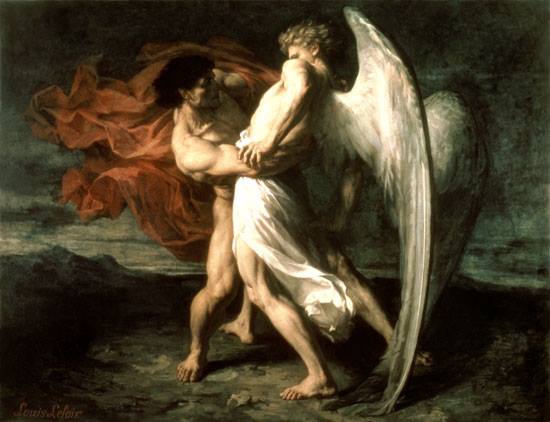
    But he was also a prolific composer himself. In all, he wrote some 400 works. In fact, when weighing the size of his output against his reputation, it’s tempting to underestimate – as the Angel did his Biblical namesake – Jacob’s tenacity.

    We’ll listen to an example of his work as an arranger, the “William Byrd Suite,” in a classic recording on the Mercury label, and his rarely-heard Symphony No. 1, dedicated to the memory of his brother, who died in the First World War, in its world premiere recording on the Lyrita label.

    I hope you’ll join me as we grapple with the range of Jacob’s accomplishments, in “Wrestling Jacob,” this Sunday night at 10:00 EST, on WWFM – The Classical Network and wwfm.org.

    In the meantime, follow the link for a witty survey ranking the various depictions of Jacob wrestling the angel in Western Art:

    http://the-toast.net/2014/09/16/famous-paintings-jacob-wrestling-angel-ranked-much-actions-resemble-slow-dancing/

  • Charles Koechlin Sesquicentennial on WPRB

    Charles Koechlin Sesquicentennial on WPRB

    The recordings of his music shall be as numerous as the strands of his beard. This Thursday morning on WPRB, we’ll celebrate the sesquicentennial of Charles Koechlin.

    Koechlin, the forgotten French composer who assisted Gabriel Fauré (his teacher) and Claude Debussy, was born on November 27, 1867. We’ll mark the anniversary in high style, with a five hour playlist of representative works – which won’t be easy, since Koechlin composed in such a wide variety of styles. His musical language encompassed impressionism, neo-classicism, polytonality, even quasi-serialism – occasionally within the same piece!

    His life was like his music, with many diverse interests jostling for primacy – medieval music, Bach, travel, stereoscopic photography, sports, politics, pantheism, the movies. He was especially interested in early film stars. He wrote works in tribute to Ginger Rogers, Douglas Fairbanks, Charles Chaplin and especially Lillian Harvey (who he basically stalked). Another source of endless fascination was Rudyard Kipling’s “The Jungle Book,” which inspired a series of orchestral works that span most of Koechlin’s creative life.

    For as much as he composed – he was very prolific – sadly, Koechlin has been relegated to a footnote in music histories, remembered, if at all, for his orchestrations for others, especially for Fauré’s “Pélleas and Mélisande” and Debussy’s “Khamma.” He also orchestrated Cole Porter’s ballet “Within the Quota.” (Porter was a Koechlin student.) In addition, he wrote a classic treatise on orchestration.

    We’ll hear Koechlin’s “Seven Stars Symphony,” each movement inspired by luminaries of the silver screen, complete with ondes martenot, as well as his orchestration of Schubert’s “Wanderer Fantasy,” among other oddities.

    Join me for music by the composer everyone forgot to remember, this Thursday morning from 6 to 11 EST, on WPRB 103.3 FM and wprb.com. We go kooky for Koechlin, on Classic Ross Amico.

Tag Cloud

Aaron Copland (92) Beethoven (95) Composer (114) Film Music (119) Film Score (143) Film Scores (255) Halloween (94) John Williams (185) KWAX (229) Leonard Bernstein (99) Marlboro Music Festival (125) Movie Music (134) Opera (198) Philadelphia Orchestra (86) Picture Perfect (174) Princeton Symphony Orchestra (106) Radio (87) Ralph Vaughan Williams (85) Ross Amico (244) Roy's Tie-Dye Sci-Fi Corner (290) The Classical Network (101) The Lost Chord (268) Vaughan Williams (102) WPRB (396) WWFM (881)

DON’T MISS A BEAT

Receive a weekly digest every Sunday at noon by signing up here


RECENT POSTS