Tag: Christmas Music

  • Classical Christmas Fading Away

    Classical Christmas Fading Away

    I realize I’ve not been churning out with my usual vigor this time of year my characteristically voluminous posts on arcane Christmas lore. By now, I’ve usually written with ample cranberry relish about the Yule Goat, the Yule Lads, the Yule Cat, Saturnalia, (the historic) Saint Nicholas, even Krampus. But I’ve been busy, and anyway I’m just not feeling it this year.

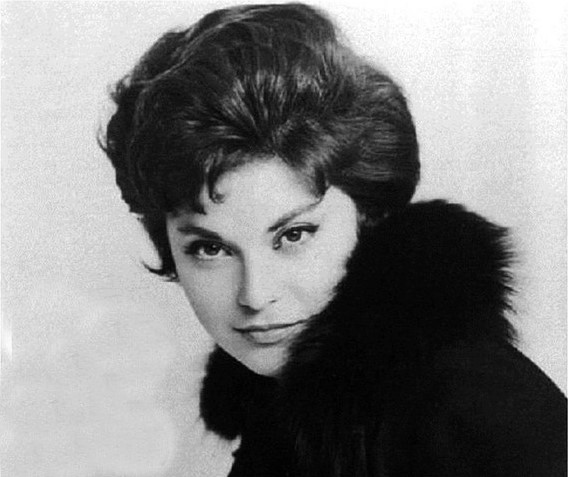
    That said, there’s always time for a good rant. On the birthday of soprano Rita Streich, I elaborate on this reflection from last year, on the dwindling culture of classical music Christmas, as sadly – if not unexpectedly – it still very much applies. And it’s not going to get any better. I will continue to carry old Christmas in my ears and sporadically in my CD player, but the wise should seek it only on the internet, for it is now no more than a dream remembered. You will search for it on American classical radio in vain.

    For much of the time I worked at a certain radio station (for nearly three decades, in fact), it was the rule, for some reason, not to program any Christmas music until after December 16 – Beethoven’s birthday. That has changed, since they laid off all of their sub-managerial local hosts and started piping in most of their content from an independent, presumably more economical service in the Midwest. But for many years, Beethoven was the demarcation for Classical Music Advent to commence. Sure, you don’t want to hammer listeners with a month of brass arrangements of the usual ho ho ho; but for those of us with a little more imagination, who would really like to relax into the repertoire, nine days isn’t a heck of a lot of time.

    Most of the grand and contemplative Christmas works (Franz Liszt’s “Christus,” Berlioz’s “L’enfance du Christ,” Vaughan Williams’ “Hodie,” Saint-Saëns’ “Christmas Oratorio,” Casals’ “El Pessebre,” Charpentier’s “Messe de Minuit,” Respighi’s “Laud to the Nativity,” Schütz’s “Christmas Story”) – basically, those that aren’t “Messiah” – are slipping away, as playlists pander to an increasingly A.D.D. society.

    Over the years it’s been suggested to me that people “don’t like singing.” Or that they might find the religious content exclusionary or off-putting. (Somehow it’s never a consideration when we play Bach.) The squeaky wheel gets the grease, and the wider listenership has been trained to expect little more than consumer-friendly arrangements of the less-demanding carols. This sets a frustrating precedent, but at a time when even Beethoven symphonies are broadcast less and less frequently in their entirety (except perhaps for the shorter ones), what are you going to do?

    Brass renditions of “Rudolph” and “Frosty” are sweetmeats that can give you a lift between meals, but on their own they offer very little sustenance. They are great palate-cleansers, for sure, and they are perfect for a parade or a public tree-lighting or as background for a holiday party, but you don’t necessarily want to down box after box of them.

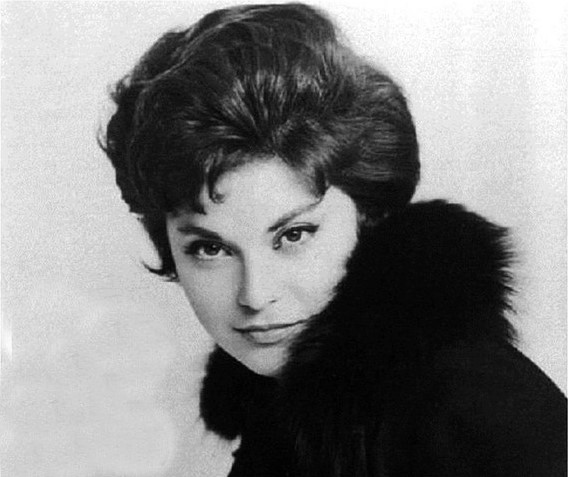
    I muse on this every year, but especially so around the birthday of Rita Streich (1920-1987), whose crystalline voice I have always admired. If you’re going to do traditional carols, Streich is a paragon of how they really should be done. She sang them most enchantingly. Whenever I programmed one of her carol medleys on December 18, for the duration of the performance, it really felt like Christmas.

    Streich is also the soprano soloist in a recording that has become dearer and dearer to me over the years of Josef Rheinberger’s “The Star of Bethlehem.” Rheinberger (1839-1901), everyone’s favorite composer from Liechtenstein, is likely remembered, if at all, primarily for his organ works. But he was also a distinguished teacher and left an uplifting piano concerto that really should be much better known. How I would love to hear it in concert!

    I used to encounter “The Star of Bethlehem” on the radio every year. Of course, as one of the last of my kind, I myself picked up the standard and bore it proudly, working it into my programs when I still had a regular air shift. Streich’s recording originally appeared on vinyl, on the EMI label. It was reissued on compact disc on Carus. Good luck finding the CD for a reasonable price now that it’s out-of-print and in the talons of the secondhand market. (You’ll have better luck if you own a turntable and aren’t too finicky about condition.) Dietrich Fischer-Dieskau is the baritone and Robert Heger conducts.

    A thousand years of Christmas music, and how much of it is ever played? It all seems to have disappeared so quickly.

    I realize not everyone is Christian, radio stations are not churches, and we are living in an increasingly secularized society, but I assure you my concerns are more musical than they are religious. I join Hector Berlioz, Ralph Vaughan Williams, and others of their like in appreciating the transcendent beauty of so much music for the season, even in cases where the composers themselves may not have been the most devout believers. (Many most certainly were.)

    Somewhere, I’ve got my old program guides for WFLN, Philadelphia’s classical music station for nearly 50 years. While still in its golden era, WFLN filled the airwaves with Christmas music for the entire span of Advent. True “classical” Christmas music. Granted, for a kid (I wasn’t even in my teens at the time I discovered them), it was pretty hardcore, and I was thankful for the occasional lighter interludes like Leopold Mozart’s “A Musical Sleigh-Ride” and Victor Hely-Hutchinson’s “Carol Symphony.” But this music came to characterize the Christmas season for me, other than those times, for the sake of my mother, we would decorate the tree to the Chestnut Brass. I’ll see if I can find one of the December program guides from back in the day and post what I can.

    Watch this space, and happy birthday, Rita Streich!

  • Felix Hell Bright Organ Music

    Felix Hell Bright Organ Music

    ‘Tis the season…

    Hear it performed on the largest pipe organ in the world, played by the aptly named Felix Hell.

    FUN FACTS! AMAZE YOUR FRIENDS! In German, the word for “Hell” is actually “Hölle” – “Hell” means “Bright.”

  • A Light Christmas with Sweetness and Light

    A Light Christmas with Sweetness and Light

    I’m dreaming of a “light” Christmas.

    It is with great excitement that I announce the impending launch of a brand-new show, to be broadcast weekly from my current home-away-from-home, KWAX, the radio station of the University of Oregon.

    As you may know, I’ve always had a soft spot for the confectionary genre known as British Light Music. This is a kind of music that was once widely enjoyed in theaters, at seaside resorts, on popular radio programs, and even as background to enhance the shopping experience. It was certainly a fertile field for anyone looking to pluck a memorable signature tune. (For a prominent example in the U.S., one need look no further than Captain Kangaroo, who poached Edward White’s “Puffin’ Billy.”) British Light Music will be well-represented, alongside light music from other sources, on “Sweetness and Light.”

    Depending on the week, we’ll also hear selections from ballet, highlights from operetta, dollops of film music, waltzes, marches, parlor music, and piano miniatures of a kind once familiar from Grandma’s piano bench. I suppose now GREAT-Grandma’s piano bench. In short, undemanding fare, calculated to charm and to cheer and to help you forget your worldly woes.

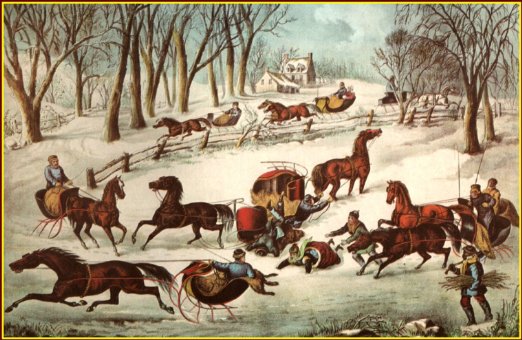
    With Christmas only days away, this week’s playlist will include several works evocative of wintry scenes (including the original version of “Jingle Bells,” published in 1857, and rendered as a hilarious parlor song), incidental music from a now-forgotten Christmas pageant (spearheaded by Reginald Owen, who went on to play Ebenezer Scrooge in a 1938 film version of “A Christmas Carol”), ingratiating selections by two composers associated with the movies (Erich Wolfgang Korngold and Henry Mancini), and some steaming bowls of keyboard wassail (courtesy of Billy Mayerl and Percy Grainger).

    This is the first show produced entirely in my home studio. Now that I’ve got it down, we can also expect fresh installments of “Picture Perfect” and “The Lost Chord” in the coming year.

    “Sweetness and Light,” my third syndicated show, will take its inaugural bow this Saturday, December 23, at 8 a.m. PST. (That’s 11 a.m. here on the East Coast.) Sweeten your morning and lighten your spirit by listening at the link.

    https://kwax.uoregon.edu/

    Stay positive, embrace beauty, and have a happy holiday!


    Captain Kangaroo’s got some ’splainin’ to do

  • Liszt’s Christus: A Christmas Oratorio You Need to Hear

    Liszt’s Christus: A Christmas Oratorio You Need to Hear

    I try to make it a point to listen to Franz Liszt’s oratorio, “Christus,” every year, whether I need it or not.

    It helps that I love Liszt, of course. Not all of his music – anyone as prolific as he was had to turn out a clunker now and then – but he was such a noble, well-intentioned guy. I’ve been a hardcore admirer ever since I read Alan Walker’s biography, now probably 23 years ago. The years, they do fly by! And having heard so many performances of his Piano Sonata certainly hasn’t hurt.

    Liszt was one of the most original musical thinkers of the 19th century. In fact, I’d go as far as to say that, after Beethoven, he was possibly the most influential musician of the 1800s. There was likely no composer who didn’t at some point make a decision to follow or to react against him.

    He was, admittedly, hit-and-miss. Liszt wrote a lot of astonishingly wonderful music, but also a fair amount that might charitably be described as slightly embarrassing. Arguably, he was more successful as a philosopher and an innovator than he was as a consistent executor of his ideas. Richard Wagner (who became Liszt’s son-in-law), to name only one, would have been a very different composer without Liszt. And we all know how influential Wagner was.

    Liszt’s flamboyance was legendary, but his reputation in that regard stemmed mostly from the overwhelming sensations he conjured in recital, and his audiences’ hysterical responses to them. He could also be introverted, thoughtful, and pious. He was so pious, in fact, that at a point he wound up taking minor orders and living in a cell in Rome, where he was known as the Abbé Liszt. His sacred works were not mere posturing.

    The magnificent “Christus” is an oratorio in three parts – spanning some three hours in length – that is really part oratorio, part loose collection of symphonic poems. Part I, the Christmas portion, contains two purely orchestral movements, which together comprise about half an hour. The concluding “March of the Three Holy Kings” is a corker. It’s also interesting in that one of the movement’s main themes is nearly identical to Wagner’s motif for Wotan. Which came first? Both “Christus” and “Das Rheingold” were written at just about the same time.

    I know it’s an extraordinarily busy time of year, but do yourself a favor: send your regrets to the office holiday party, seclude yourself in a quiet place with no distractions (a sofa, with the Christmas lights on, would do nicely), and marvel at this ambitious, romantic music.

    I own three recordings of the piece, and this one, conducted by Antal Dorati, is far and away the most satisfying.

    If you find you just can’t get enough, there’s also Liszt’s “Christmas Tree Suite.” Liszt dedicated the work to his granddaughter, Daniela von Bülow. Some of the early movements are reflections on familiar carols (including “Adeste Fideles,” in yet another evocation of the Three Holy Kings), but as the suite progresses, Liszt just kind of dreamily wanders off into the future the way only Liszt can. The suite was first performed on Christmas Day, 1881. All the movement titles are listed below the video at the link.

    What else is there to say, but Merry Liszt-mas!


    Liszt takes the cloth (left); Jesus gets frankincense and myrrh

  • Lost Christmas Classics & Rita Streich

    Lost Christmas Classics & Rita Streich

    For much of the time I worked at a certain radio station (for nearly three decades, in fact), it was the rule, for some reason, not to program any Christmas music until after December 16 – Beethoven’s birthday. Beethoven was the demarcation for classical music Advent to commence. Sure, you don’t want to hammer listeners with a month of brass arrangements of the usual ho ho ho; but for those of us with a little more imagination, who would really like to relax into the repertoire, nine days isn’t a heck of a lot of time.

    Most of the grand and contemplative Christmas works (Franz Liszt’s “Christus,” Berlioz’s “L’enfance du Christ,” Vaughan Williams’ “Hodie,” Saint-Saëns’ “Christmas Oratorio,” Casals’ “El Pessebre,” Charpentier’s “Messe de Minuit,” Respighi’s “Laud to the Nativity,” Schütz’s “Christmas Story”) – basically, those that aren’t “Messiah” – are slipping away, as playlists pander to an increasingly A.D.D. society.

    Over the years it’s been suggested to me that people “don’t like singing.” Or that they might find the religious content exclusionary or off-putting. (Somehow it’s never a consideration when we play Bach.) The squeaky wheel gets the grease, and the wider listenership has been trained to expect little more than consumer-friendly arrangements of the less-demanding carols. This sets a frustrating precedent, but at a time when even Beethoven symphonies are broadcast less and less frequently in their entirety (except perhaps for the shorter ones), what are you going to do?

    Brass renditions of “Rudolph” and “Frosty” are sweetmeats that can give you a lift between meals, but on their own they offer very little sustenance. They are great palate-cleansers, for sure, and they are perfect for a parade or a public tree-lighting or as background for a holiday party, but you don’t necessarily want to down box after box of them.

    I muse on this every year, but especially so around the birthday of soprano Rita Streich (1920-1987), whose crystalline voice I have always admired. If you’re going to do traditional carols, Streich is a paragon of how they really should be done. She sang them most enchantingly. Whenever I programmed one of her carol medleys on December 18, for the duration of the performance, it really felt like Christmas.

    Streich is also the soprano soloist in a recording that has become dearer and dearer to me over the years of Josef Rheinberger’s “The Star of Bethlehem.” Rheinberger (1839-1901), everyone’s favorite composer from Liechtenstein, is likely remembered, if at all, primarily for his organ works. But he was also a distinguished teacher and left an uplifting piano concerto that really should be much better known. How I would love to hear it in concert!

    https://www.youtube.com/watch?v=MDrgSQIIaFA

    I used to encounter “The Star of Bethlehem” on the radio every year. Of course, as one of the last of my kind, I myself picked up the standard and bore it proudly, working it into my programs when I still had a regular air shift. Streich’s recording originally appeared on vinyl, on the EMI label. It was reissued on compact disc on Carus. Good luck finding the CD for a reasonable price now that it’s out-of-print and in the talons of the secondhand market. (You’ll have better luck if you own a turntable and aren’t too finicky about condition.) Dietrich Fischer-Dieskau is the baritone and Robert Heger conducts.

    A thousand years of Christmas music, and how much of it is ever played? It all seems to have disappeared so quickly.

    As far as the radio is concerned, you’re likely to find more satisfyingly rounded programming at the link below, especially when Peter van de Graaff or Rocky Lamanna are on the air. Keep in mind, KWAX is a West Coast station, so all times are PST.

    https://kwax.uoregon.edu/

    Merry Christmas, and happy birthday, Rita Streich!

Tag Cloud

Aaron Copland (92) Beethoven (95) Composer (114) Film Music (119) Film Score (143) Film Scores (255) Halloween (94) John Williams (185) KWAX (229) Leonard Bernstein (99) Marlboro Music Festival (125) Movie Music (134) Opera (198) Philadelphia Orchestra (86) Picture Perfect (174) Princeton Symphony Orchestra (106) Radio (87) Ralph Vaughan Williams (85) Ross Amico (244) Roy's Tie-Dye Sci-Fi Corner (290) The Classical Network (101) The Lost Chord (268) Vaughan Williams (102) WPRB (396) WWFM (881)

DON’T MISS A BEAT

Receive a weekly digest every Sunday at noon by signing up here


RECENT POSTS