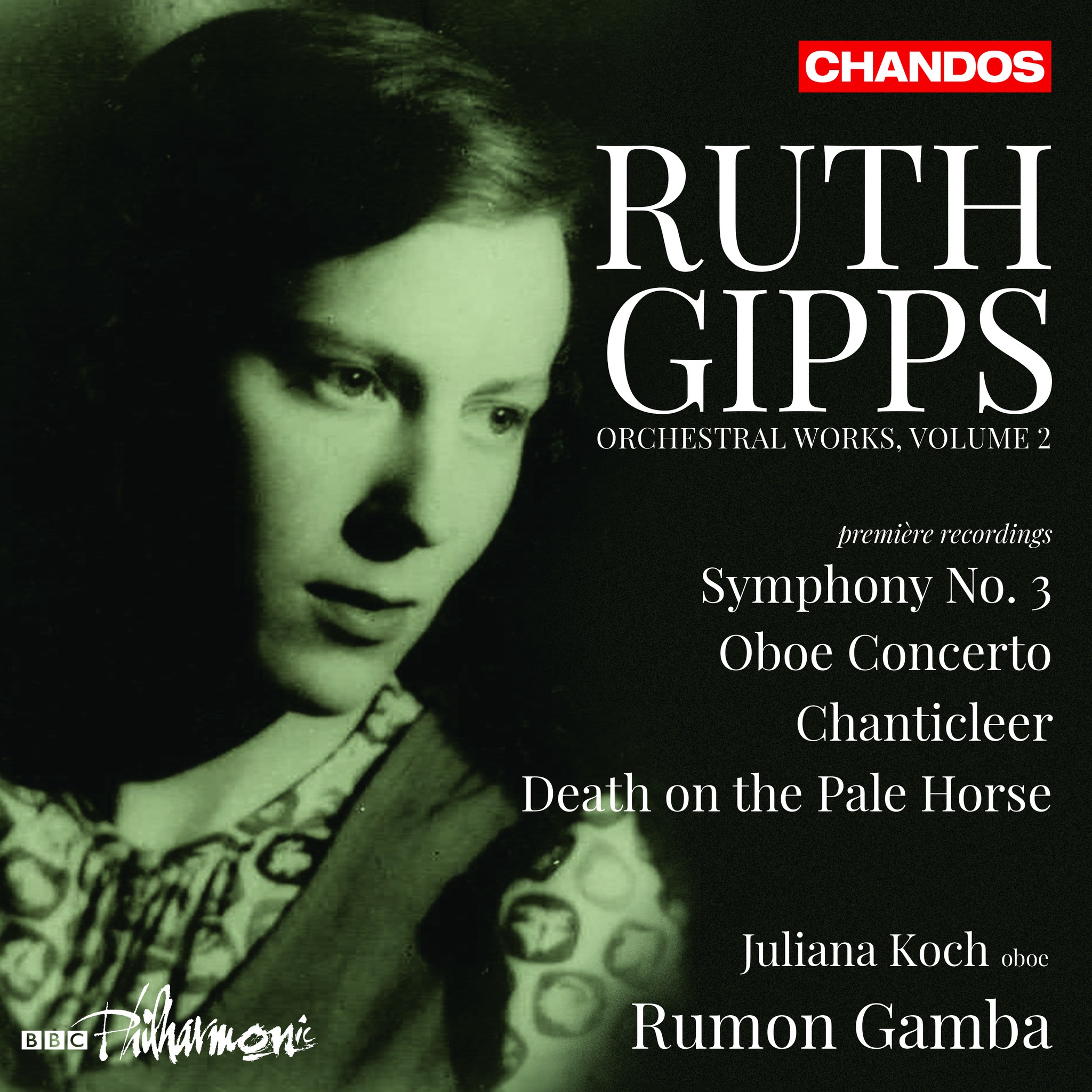
Too late to post anything of substance today, so I’m just sharing some highlights from my Christmas booty: two CDs of unusual and neglected repertoire (orchestral works by English composer Ruth Gipps and piano music by Norwegian composer Agathe Backer Grøndahl) and two books (“Mad Music: Charles Ives, the Nostalgic Rebel” by Stephen Budiansky and “Vaughan Williams” by Eric Saylor) — all new except the Ives bio, which was issued in 2014. Something must have happened to Santa’s naughty list!
Tag: Christmas Music
-
Christmas Music Parry Vaughan Williams WWFM
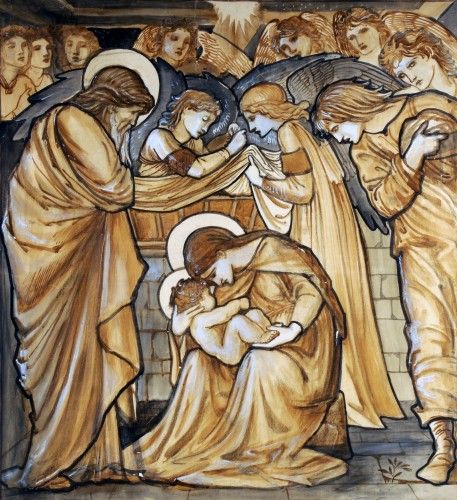
Later tonight, with all the cooking, conviviality, and hopefully clean-up winding down, settle in for an hour of reflection, with two works by English composers inspired by the Nativity.
Alongside Sir Charles Villiers Stanford and Sir Edward Elgar, Sir Hubert Parry was one of the key figures of the so-called “English Musical Renaissance.” He influenced a whole generation of much better-known composers, including Ralph Vaughan Williams and Gustav Holst. We’ll hear his “Ode on the Nativity,” given its first performance on the same concert, at the Hereford Three Choirs Festival in 1912, as Vaughan Williams’ “Fantasia on Christmas Carols.”
Vaughan Williams, the great-nephew of Charles Darwin, and an atheist in his youth, later softened into a kind of “cheerful agnosticism.” He dearly loved the King James Bible, and he especially enjoyed Christmas. Of course, he wrote much music on the subject. In fact, his very last composition was “The First Nowell.” He worked diligently at the piece, inspired by medieval pageants, during his final month, but died suddenly before its completion.
However, even at 85 years-old, RVW retained a remarkable level of concentration. He managed to pound out the whole thing in short score in only a few weeks. Furthermore, he had fully orchestrated the first two-thirds. The finishing touches were applied by his assistant, Roy Douglas – he of “Les Sylphides” fame.
If you like the “Fantasia on Christmas Carols,” I think you’ll really enjoy this. It’s pastoral music for a pastoral scene. I hope you’ll join me for “A Play in a Manger,” THIS SUNDAY NIGHT, ONE HOUR LATER THAN USUAL, AT 11:00 EST, on WWFM – The Classical Network and wwfm.org.
Until then, best wishes for a happy and meaningful Christmas!
-
Godfrey Winham’s Jingle Bells a Christmas Music Gem
If you need to get away from the candles and clove of Windham Hill, there’s always Godfrey Winham.
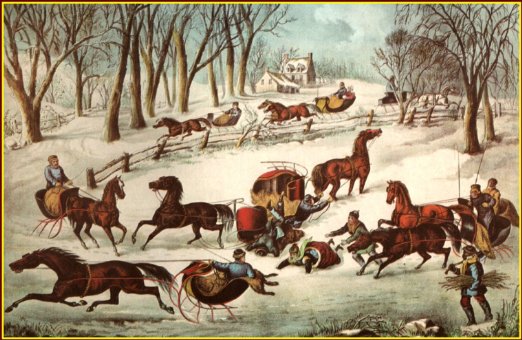
When Winham takes on a Christmas classic, it’s like a great, big, satisfying ice ball in the face of George Winston. He’s as bracing as a ride in a one-horse open sleigh.
Winham is probably best-known for his role right here in Princeton as an electronic music pioneer. As might be expected, this didn’t lead to a lot of toe-tappers. One day, after listening to some of Windham’s music, his son asked him if he could write something a bit simpler. This was the impetus for a 26-minute set of keyboard meditations on a familiar Christmas tune, titled “Variations on a Theme by James Pierpont” – otherwise known as “The Jingle Bells Variations.”
This is music a grown-up Schroeder would be proud to own. You can listen to it here, starting about 26 minutes into the program
https://www.wwfm.org/webcasts/2018-12-25/a-between-the-keys-christmas-special
If you are at all interested in Princeton and the history of computer music, and you haven’t checked out this podcast yet, you owe it to yourself to do so:
Winham features most prominently – and poignantly – in Episode 3:
I wrote about the podcast and its producer, Aaron Nathans, back in September for an article in U.S. 1.
This is my favorite version of “Jingle Bells” – presented by the Robert DeCormier Singers as it was originally published in 1857.
BONUS! Leopold Mozart’s “A Musical Sleigh Ride,” complete with neighing horses, excitable hounds, and whip cracks. As a radio host, I made it a point to share this fun recording with the Eduard Melkus Ensemble every year on my last shift before Christmas. At home, it drove the dogs crazy.
With extreme winter weather expected to disrupt travel and last-minute Christmas shopping across much of the country, there’s plenty of music about winter recreation to fuel your imagination as you cozy-in around the hearth.
-
Monkees Riu Riu Chiu Remembering Michael Nesmith
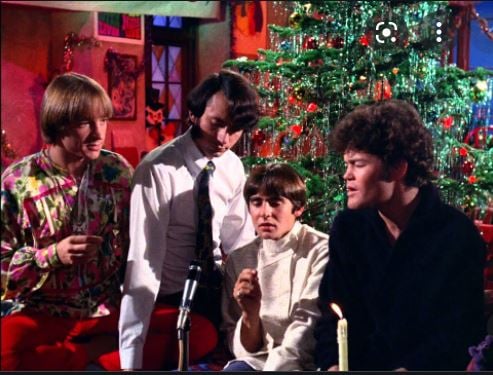
With the passing of Michael Nesmith on December 10th, I can’t believe I only just remembered this this morning. Maybe it’s because of a sudden “Latin” orientation, brought on by last night’s discussion of the Mexican underground classic “Santa Claus Versus the Devil” and this morning’s post about Venezuelan Christmas Eve. At any rate, here The Monkees perform the Spanish carol “Riu Riu Chiu.”
-

Christmas Roses Distler and Waldteufel
This Sunday night on “The Lost Chord,” we present a Christmas bouquet of sorts.
Hugo Distler’s “Die Weihnachtsgeschichte” (“The Christmas Story”), from 1933, is an otherworldly, a cappella masterpiece, punctuated by seven variations on the carol “Es ist ein Ros entsprungen” (“Lo, how a Rose e’er blooming”). Over the course of some 40 minutes, the work reinvents the Baroque Christmas cantata, after the manner of Heinrich Schütz, and does so quite beautifully, conjuring the calm and quiet of a bygone era. The composer described the piece as “an oratorio with chamber music character.”
Unfortunately, Distler’s life proved anything but calm. A man of conscience, he yet remained in Nazi Germany. He joined the Party with reluctance, when he realized his employment at the Lübeck Conservatory hinged on his doing so. Nevertheless, it did not smooth his path. The war separated him from his family, robbed him of many of his friends, and battered his psyche with nerve-wracking aerial assaults. Job pressures and fear of being conscripted into the German army further contributed to his anxiety.
Furthermore, his devotion to sacred music put him at odds with the authorities, who were intent on twisting the Lutheran Church to its own ends. The Nazis wound up branding Distler’s works “entartete,” or “degenerate.” Unable to reconcile the irreconcilable – serving both God and the Nazis – one day he pushed his bed into the kitchen and turned on the gas, committing suicide in 1942. He was 34 years-old.
Emil Waldteufel, by contrast, enjoyed much success and happiness. Although he was nearly 40 by the time he achieved international fame, his waltzes had long been a mainstay of Paris society during the Second Empire. It was the Prince of Wales – the future King Edward VII – who introduced him to London, where his music came to dominate Queen Victoria’s state balls at Buckingham Palace. One of his best-known works, “Les Patineurs” (“The Skaters’ Waltz”) was introduced there in 1882.
For our purposes, we’ll round out the hour with one of Waldteufel’s most successful waltzes from the other end of the decade, “Roses de Noël.”
The holidays are in bloom this week. I hope you’ll join me for “Christmas Roses,” this Sunday night at 10:00 EST, on WWFM – The Classical Network and wwfm.org.
Tag Cloud
Aaron Copland (94) Beethoven (95) Composer (114) Film Music (150) Film Score (143) Film Scores (255) Halloween (102) John Williams (198) KWAX (233) Leonard Bernstein (105) Marlboro Music Festival (125) Movie Music (165) Mozart (91) Opera (215) Philadelphia Orchestra (90) Picture Perfect (174) Princeton Symphony Orchestra (110) Radio (90) Ross Amico (244) Roy's Tie-Dye Sci-Fi Corner (290) The Classical Network (101) The Lost Chord (269) Vaughan Williams (107) WPRB (397) WWFM (881)