Tag: Clarinet Concerto

  • Corigliano’s “Altered States” Dream

    Corigliano’s “Altered States” Dream

    “Altered States,” you may recall, stars William Hurt as a psychopathologist whose experiments with sensory deprivation tanks and hallucinatory drugs result in strobe-lit episodes of biological devolution. Mr. Hyde has nothing on these regressions that have him turning into an ape man on the prowl for goat meat at the city zoo, or at their most extreme, transforming into a kind of whirlpooling proto-consciousness.

    Nudity and religious symbolism? Well, it is a Ken Russell film, and one of his best, actually, because it’s actually rooted in character and plot. (The screenplay is by Paddy Chayefsky.)

    Russell later recalled, “After a tiring day at the Burbank Studios working on ‘Altered States’ I was out for an evening of relaxation with a much loved and familiar masterpiece the memory of which was blown into oblivion by the music of a name totally unfamiliar to me – John Corigliano. Reading from my program that he was a contemporary composer I braced myself for thirty minutes of plinks and plunks that pass for music these days. I was in for a shock, a surprise, a revelation.

    “Not since Bartok’s ‘Miraculous Mandarin’ have I been so excited in the concert hall. Here were sounds of magic and grandeur I had long since despaired of hearing from a modern musician. . . . if only he would compose the music for ‘Altered States’ instead of some commercial hack we directors are usually saddled with, I thought wistfully. But that’s just a dream.

    “I should have known better – Hollywood is the place where dreams come true.”

    The music he encountered on that Los Angeles Philharmonic concert? Corigliano’s Clarinet Concerto.

    Corigliano composed his concerto for legendary New York Philharmonic principal clarinetist Stanley Drucker. The first movement, “Cadenzas,” is virtuosic right out of the box. When Drucker first looked at the score, he remarked, “How am I gonna play this?” The second movement, the soul of the piece, serves as an elegy to the memory of Corigliano’s father, longtime concertmaster of the Philharmonic, who died in 1975. The third movement evocates the antiphonal style of Renaissance composer Giovanni Gabrieli.

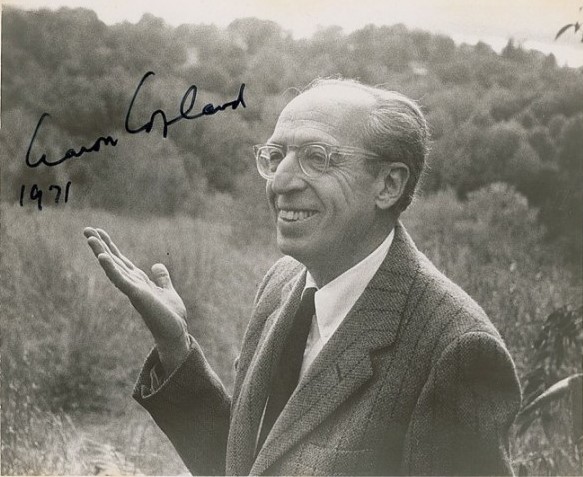
    The work was given its first performance by Drucker and the New York Philharmonic, conducted by Leonard Bernstein, on December 6, 1977. It became the first concerto for the instrument by an American composer since Aaron Copland’s Clarinet Concerto to enter the repertoire.

    Russell was so impressed with the piece when he heard it in Los Angeles that he offered Corigliano his first assignment scoring a feature film. (Earlier, he had written music for a documentary, “A Williamsburg Sampler.”) His music for “Altered States” would earn him an Academy Award nomination.

    In the film, Corigliano’s score brilliantly complements Russell’s psychedelic flights of fancy. It’s not hard to understand why the composer caught the Academy’s attention. Ultimately, the Oscar that year went to “Fame,” of all things, but Corigliano revisited his score for a concert suite which he titled “Three Hallucinations.”

    Later, he would win an Academy Award for his work on “The Red Violin.” He would also be honored with a Pulitzer Prize, for his Symphony No. 2, five Grammys, and a Grawemeyer Award for Contemporary Composition. His first opera, “The Ghosts of Versailles,” would be commissioned by the Metropolitan Opera for its 100th anniversary.

    Even so, Hollywood can be a fickle town. He may have won an Oscar, but that didn’t shield him from the indignity of having his score for the Mel Gibson film “Edge of Darkness” chucked out. The studio decided it wanted to take a more bankable approach, and because of his obligations in the concert world, Corigliano was not available for rewrites. So the assignment was given to Howard Shore. Rejection stings, yet Corigliano has stated he remains open to the prospect of scoring another film, if the right project should present itself.

    But the movies need John Corigliano more than he needs them.

    The composer is 85 today. Happy birthday!


    World premiere broadcast of the Clarinet Concerto

    Selections from “Altered States”

    “Three Hallucinations”
  • Copland’s Clarinet Concerto Secret?

    Copland’s Clarinet Concerto Secret?

    Is it possible that for the first public performance of his Clarinet Concerto, Aaron Copland received a little help from a friend?

    While he was still in his teens, in 1940 or ’41, Philadelphia composer Romeo Cascarino was handed a letter from the “Dean of American Composers.” Romeo’s father had sent Copland some of his compositions, and Copland responded with an impressively favorable evaluation. Included in the correspondence was an invitation for Romeo to visit Copland at Tanglewood, home of the Berkshire Music Center, an emerging musicians’ academy located in the Berkshire Hills of Western Massachusetts.

    Understandably, the young man was full of anticipation. Tanglewood, also the summer home of the Boston Symphony Orchestra, was a magnet for some of the finest composers, conductors, and musicians of the time.

    Following his arrival, Romeo received a further surprise when, upon a second examination of the scores, Copland told him he couldn’t suggest any improvements and that they should remain just as they were. He was especially taken with how naturally Romeo was able to move from key to key. Romeo responded that he never thought compositionally in terms of keys, but simply tried to write the music he was hearing and wished to express.

    Copland remembered the young man when, in 1948, an interesting problem arose. He had written his Clarinet Concerto on a commission from Benny Goodman. In the agreement, Goodman was to have two years exclusivity in playing the work. However, Goodman had apparently gotten cold feet. He may have been “The King of Swing,” but tackling a concerto by America’s most revered composer was another kettle of fish entirely.

    Copland became uneasy with Goodman’s hesitancy, and as the premiere of the concerto kept getting pushed back, a second performance was arranged with the Philadelphia Orchestra and clarinetist Ralph McLane. Perhaps this was the spur that Goodman required. The concerto was performed at last, just before Goodman’s exclusivity ran out. The premiere performance was given as a broadcast, over the radio, with the NBC Symphony Orchestra and Copland conducting.

    HOWEVER, there are those who prefer to credit the second performance as the true premiere, as it was the first time it was ever heard before a live audience, at Carnegie Hall no less.

    Here’s where it really gets interesting. For whatever reason, McLane didn’t want to play the cadenza as Copland had written it for Goodman. So he requested another.

    This placed Copland, at the peak of his fame, in a bit of a quandary, since it was short notice and he was extraordinarily busy. Under the circumstance, he arrived at a practical solution. With McLane’s knowledge, he would delegate the task of writing a new cadenza, with the proviso that the substitute would be destroyed after the Philadelphia Orchestra performance.

    For this delicate operation, which had to be undertaken in comparative secrecy, Copland turned not to any of his gifted proteges – including Leonard Bernstein, Lukas Foss, Irving Fine, etc. – but to the young Philadelphian he recollected from Tanglewood. Such was the regard in which Copland held the younger composer.

    The performance, with the cadenza as “ghosted” by Cascarino, enjoyed great success. Cascarino was to remain uncredited and, characteristically, sought none. For subsequent performances, the concerto would be played with Copland’s original cadenza, as written for Goodman.

    Goodman and Copland recorded the work twice. Copland regarded the stereo version, with the Columbia Symphony Orchestra, as far and away his personal favorite among the recordings he conducted.

    This anecdote is a piece of Cascarino family lore, but I see no reason to disbelieve it. I heard it from the composer’s widow, and she heard it directly from the composer’s lips. Romeo’s reticence on the matter would be entirely characteristic. Consistent with the young man who would have been too shy to reach out to Copland in the first place, in his maturity Romeo remained modest to a fault. Throughout his life, even as he would brook no compromise when it came to the composition and performance of his own music, so he would not engage in self-promotion.

    It was only through the intervention of his friend, arts writer Tom Di Nardo, that his opera “William Penn” finally received a series of performances at the Academy of Music in Philadelphia in 1982. Later, Tom pulled some strings to have the orchestral works recorded and released on Naxos.

    None of the participants in the musical sleight-of-hand surrounding the Copland concerto are still living, but it’s possible that the proof is still out there, either by way of a scrap of score or surviving testimony. Would that there were, at least for curiosity’s sake, a recording of the McLane performance. Perhaps in the archives of Carnegie or Philadelphia?


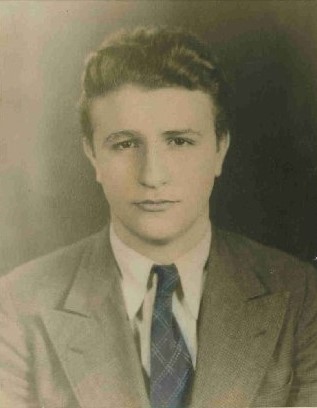
    “Meditation,” inspired by Edgar Allan Poe’s “Annabel Lee,” composed in 1935, when Cascarino was 13 years-old, as he is in the photo, left.

    Click on the other photos for more details.

  • Aaron Copland Birthday Celebration

    Aaron Copland Birthday Celebration

    How fortunate that one of our greatest composers lived through an era when so much could be documented on film. With Thanksgiving right around the corner, I’ve assembled a Copland cornucopia, for his birthday.

    Copland conducts “El Salón México,” for his 60th

    Bernstein introduces Copland’s Clarinet Concerto

    Copland conducts it in L.A., with Benny Goodman the soloist
    https://www.youtube.com/watch?v=iYwPJrRnGSE

    Copland plays his Piano Concerto, with Bernstein conducting

    Copland conducts “Appalachian Spring” in D.C. on his 80th

    Copland at home, playing the coda to “Appalachian Spring”

    “Aaron Copland: A Self Portrait”

    Seiji Ozawa conducts Copland’s arrangement of “Happy Birthday” for Bernstein’s 70th

    Happy birthday, Aaron Copland!

Tag Cloud

Aaron Copland (92) Beethoven (95) Composer (114) Film Music (123) Film Score (143) Film Scores (255) Halloween (94) John Williams (187) KWAX (229) Leonard Bernstein (101) Marlboro Music Festival (125) Movie Music (138) Opera (202) Philadelphia Orchestra (89) Picture Perfect (174) Princeton Symphony Orchestra (106) Radio (87) Ralph Vaughan Williams (85) Ross Amico (244) Roy's Tie-Dye Sci-Fi Corner (290) The Classical Network (101) The Lost Chord (268) Vaughan Williams (103) WPRB (396) WWFM (881)

DON’T MISS A BEAT

Receive a weekly digest every Sunday at noon by signing up here


RECENT POSTS