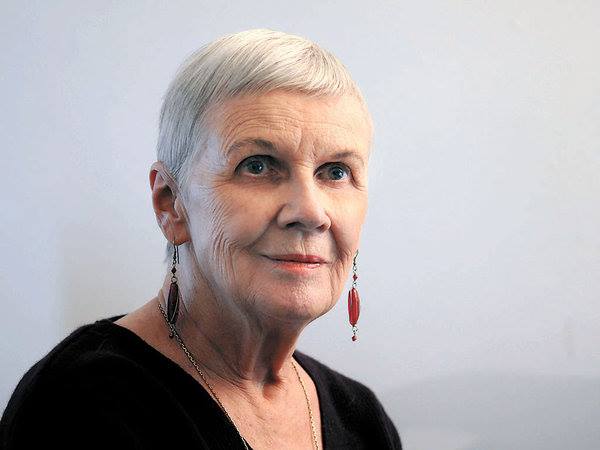
I hate to say it, but if she had been a man and writing 30, 40 or 50 years earlier, she would have been much better known. I attended the 2010 premiere of her opera, “The Scarlet Letter,” and there was much cattiness and eyeball-rolling, especially among composers of a more modernist bent, but the work would have been in the strike zone, if it had been composed in 1950 and her name had been Carlisle Floyd, Robert Ward or Gian Carlo Menotti.
Here are a couple of excerpts I found posted on YouTube:
Pierre Boulez, the angry young man who once suggested that in order to liberate music, the first thing we need to do is blow up all the opera houses, turns 90.
Though his dogmatic approach had the effect of impeding the careers of many composers who didn’t adhere to his particularly rigid philosophy, his importance is undeniable. And some assessments seem to indicate that Boulez was not so dogmatic, in some respects, after all.
Here’s probably Boulez’s most famous work, “Le Marteau sans maître” (“The Hammer without a Master”), after surrealist poetry of René Char: https://www.youtube.com/watch?v=MS82nF85_gA
Perhaps more easily disgestible in this live performance (with translations posted):
Boulez, metamorphosed from contentious revolutionary to Grand Old Man of the Podium, conducting Mahler – characteristically devoid of histrionics: https://www.youtube.com/watch?v=aqFwWah5ioE
Happy birthday, Pierre Boulez.
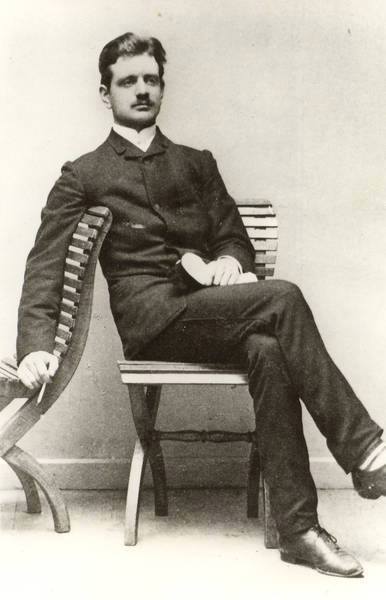
PHOTO: Even despots can have their lighter moments
What is it that Sibelius is holding in his left hand? (It looks like a cigarette, or maybe a pencil, in his right.) A hair brush? A shower massage? Have fun with it.
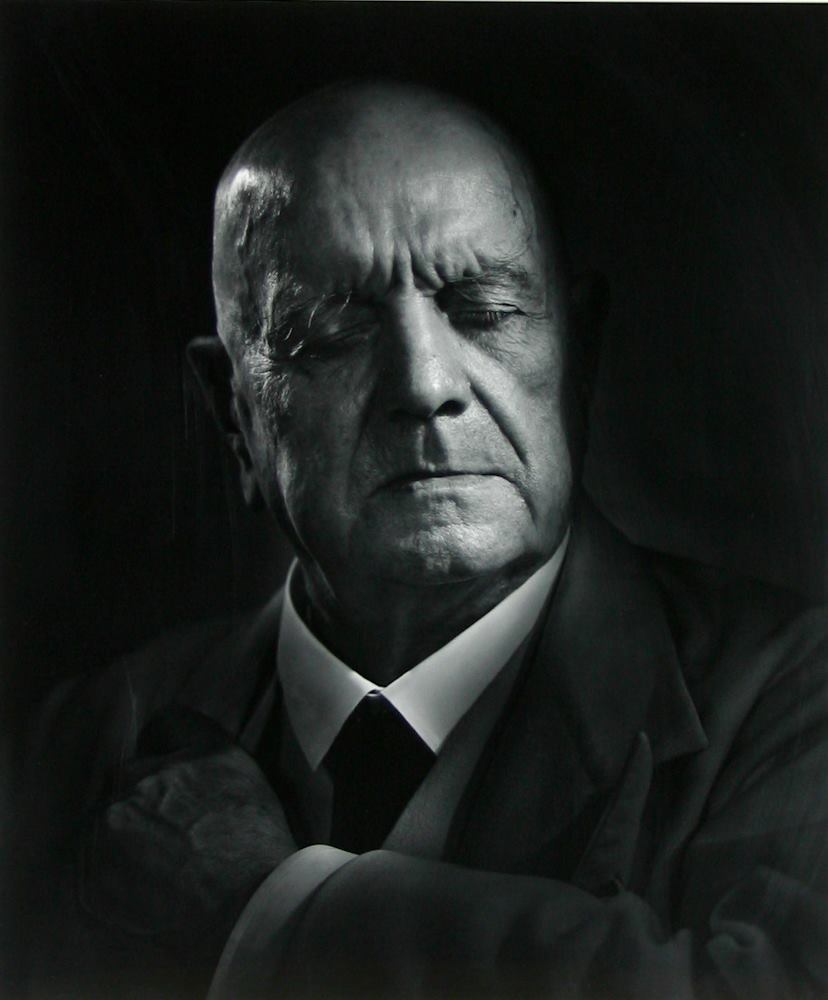
What’s the world coming to when I don’t even have time to write a proper birthday tribute to one of my favorite composers? That granitic head, like his symphonies, hewn from rock, full of austere pine trees and shrouded with snow. Bless you, Jean Sibelius. Thank you for your stoic, noble masterpieces. I worship at the altar of your Fifth Symphony.
Funny, I was just thinking of Sir Malcolm Arnold yesterday, when his “Four Scottish Dances” came to me in the shower (a dangerous place to reel). Arnold was born on this date in 1921.
He began his career as a trumpeter with the London Philharmonic Orchestra, becoming principal in 1943.
At the outbreak of World War II, Arnold registered as a conscientious objector. However, after the death of his brother, a pilot in the RAF, he was moved to enlist. He never saw action beyond a military band, and eventually he quite literally shot himself in the foot in order to get back to civilian life.
In 1948, he left behind orchestral playing to become a full-time composer. He had an attractive melodic gift, which served him well in the writing of light music and film scores. (He won an Academy Award in 1957 for his work on “The Bridge on the River Kwai.”)
However, he also had his dark side, as passages of his symphonies can attest. He was frequently cantankerous, inebriated and highly promiscuous. He tried to kill himself twice. He was treated for depression and alcoholism, overcoming both, but in the early 1980s he was given a year to live. He actually wound up living another 22 years, during which he completed his Symphony No. 9, among other works.
He died in 2006, one month shy of his 85th birthday. He was a brilliant composer of great facility. (When Malcolm Williamson was named Master of the Queen’s Music, Sir William Walton remarked that the “wrong Malcolm” had been given the job.) For a man with so many personal demons, he wrote reams of perfectly delightful music.
Happy birthday, Sir Malcolm Arnold.
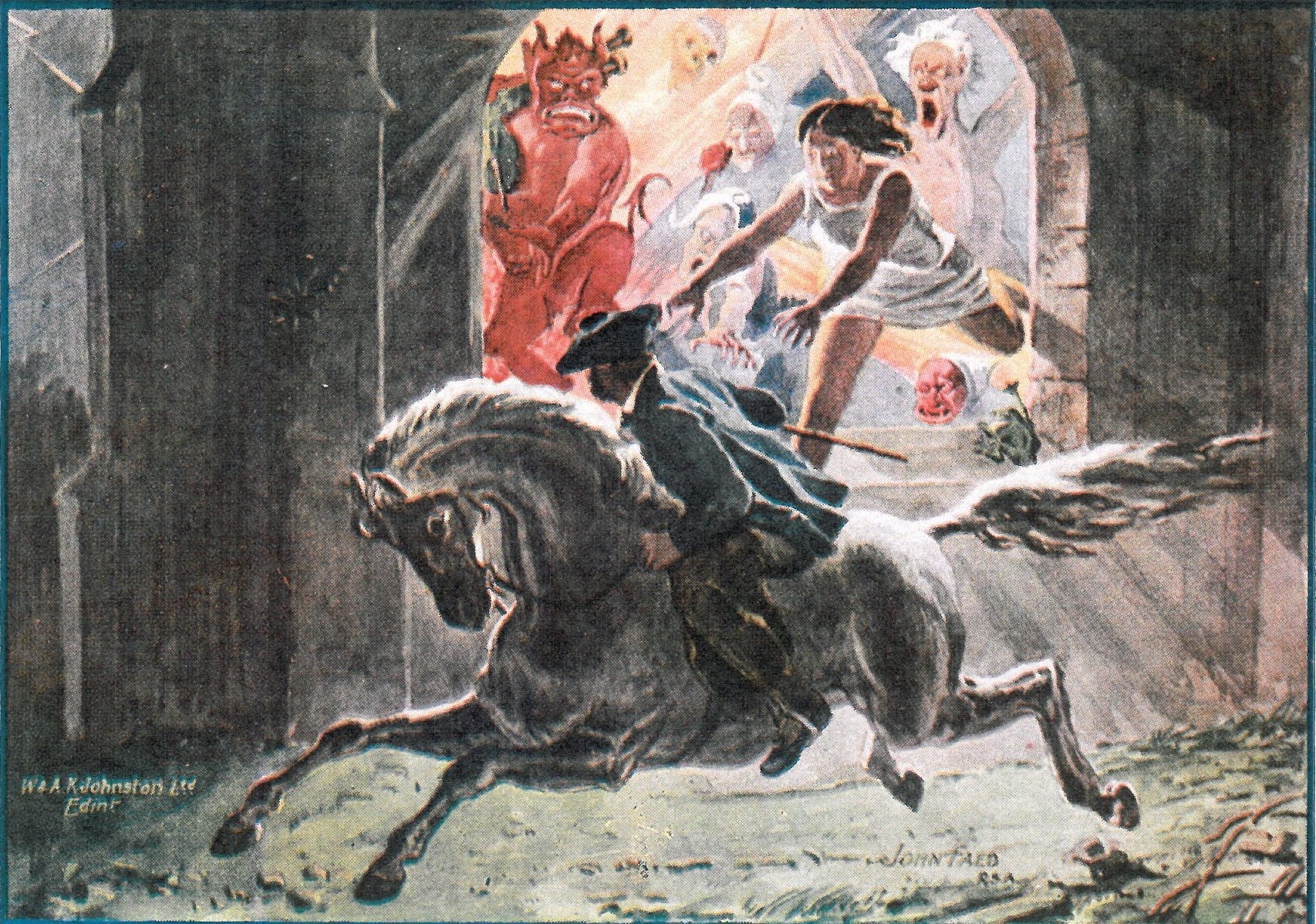
Just in time for Hallowe’en, here’s his “Tam O’Shanter Overture,” after Robert Burns: