Tag: Danish Music

  • Carl Nielsen’s Delightful Wind Quintet

    Carl Nielsen’s Delightful Wind Quintet

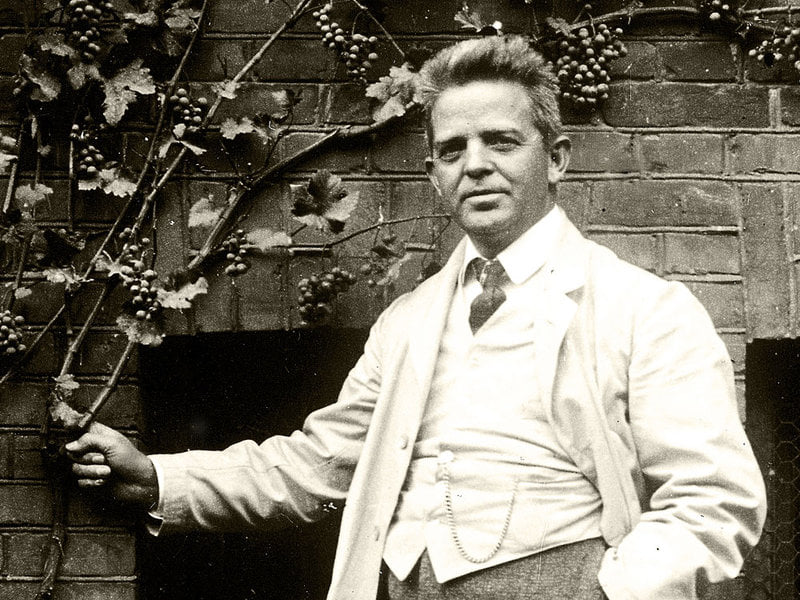
    Like “The Ugly Duckling” of his compatriot, Hans Christian Andersen, Carl Nielsen emerged from humble beginnings to blossom into Denmark’s national composer. Internationally, Nielsen has flitted in and out of the seemingly inescapable shadow of Finnish master Jean Sibelius. Both men were born in 1865. In fact, Nielsen was six months older. But it is an unfair comparison, not so much apples and oranges; more like kipper and pickled herring.

    The very fact that Nielsen is not referred to reductively as “The Sibelius of Denmark” is attributable to an unusually strong individual voice. His music is modern, yet traditional; Scandinavian, yet Germanic. Most important, it is full of personality, freshness and vitality.

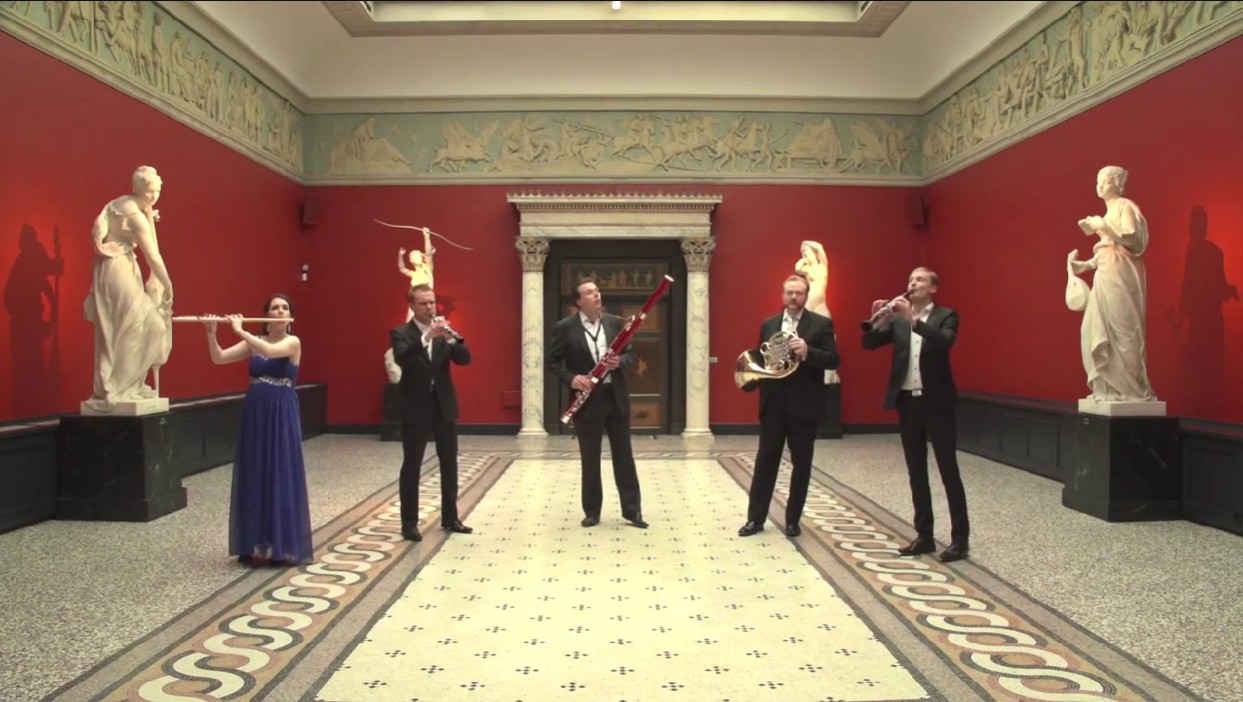
    Nielsen’s Wind Quintet of 1922 reflects the composer’s optimism and good humor. These he retained despite great personal, professional, and global turmoil. Each part of the quintet was tailored to the personality of the individual performer for which it was written (all members of the Copenhagen Wind Quintet). There is also something of the outdoors about the piece. Nielsen was always fascinated by nature, and there are ample suggestions of bird song woven into the texture of the work’s pastoral neoclassicism.

    Even so, I find something appealing about musicians standing and playing the piece indoors, especially if it happens to be inside a tastefully-appointed, classically-proportioned art gallery. Here it is, performed by the ensemble CARION (nothing to do with dead animals, presumably) at the Carlsberg Museum in Copenhagen.

    I would have preferred that the filmmaker’s cuts had been handled a little more sensitively. Maybe I’m a little sensitive myself (I have been known to verge on the irritable), but if the edits aren’t “musical,” they give me tiny, disruptive jolts. The tendency now is to shake things in front of everybody’s eyeballs like they’re little babies that need to be distracted.

    I venture to guess everyone’s here to listen to the music, right? Just play it, CARION, because you do so beautifully!

    But video is their thing, and they’ve won prizes for it, so what do I know? It was mainly the jumps in the first few minutes that were making me cranky. I don’t care so much about the panning, but after a while it does start to get a little silly. Panning is a technique, not a prop. It should be used as such and not diluted.

    Anyway, here’s their website, if you’d like more of the same.

    Home EN

    Oh yeah, and happy birthday, Carl Nielsen!

  • Carl Nielsen’s “The Fog is Lifting” Atmospheric Bliss

    Carl Nielsen’s “The Fog is Lifting” Atmospheric Bliss

    I can’t imagine a better way to start the day. From Carl Nielsen’s incidental music to “The Mother,” “The Fog is Lifting” is two minutes of atmospheric bliss.

    Nielsen, of course, is widely regarded as Denmark’s foremost composer. You wouldn’t know it from this serene miniature, but “The Mother” is an allegorical play written for a patriotic occasion: the reunification of Southern Jutland with Denmark. In the play, which is couched as a fairy tale, a mother’s son is kidnapped. Their climactic reunion is celebrated with a rousing march and choral anthem.

    The fiery spirit with which the work concludes is nowhere in evidence in its best-known cues – “The Fog is Lifting,” “Faith and Hope are Playing,” and “The Children are Playing” – which can be heard at the first link below. For years, these were all I knew of the complete score. I kind of wish all of the numbers were of the same character. I’m always up for a dreamy wallow.

    The complete incidental music was recorded for the first time in 2020, and I was surprised – and I confess a little disappointed – to find the rest of the work does not sustain the mellow and mysterious character of the seven-minute suite. Hardly surprising, I suppose, when you learn that Nielsen was also at work at the time on his turbulent Symphony No. 5. That’s the one with the implacable snare drum.

    Sometimes a piece of music is so ineffably beautiful, it has the power to suspend time, and you wish it would go on forever. That’s the case with “The Fog is Lifting.” Enjoy it as the first of three movements from “The Mother” here:

    Then shatter the mood with 30 minutes of highlights from the complete score

    The Symphony No. 5, with its menacing snare

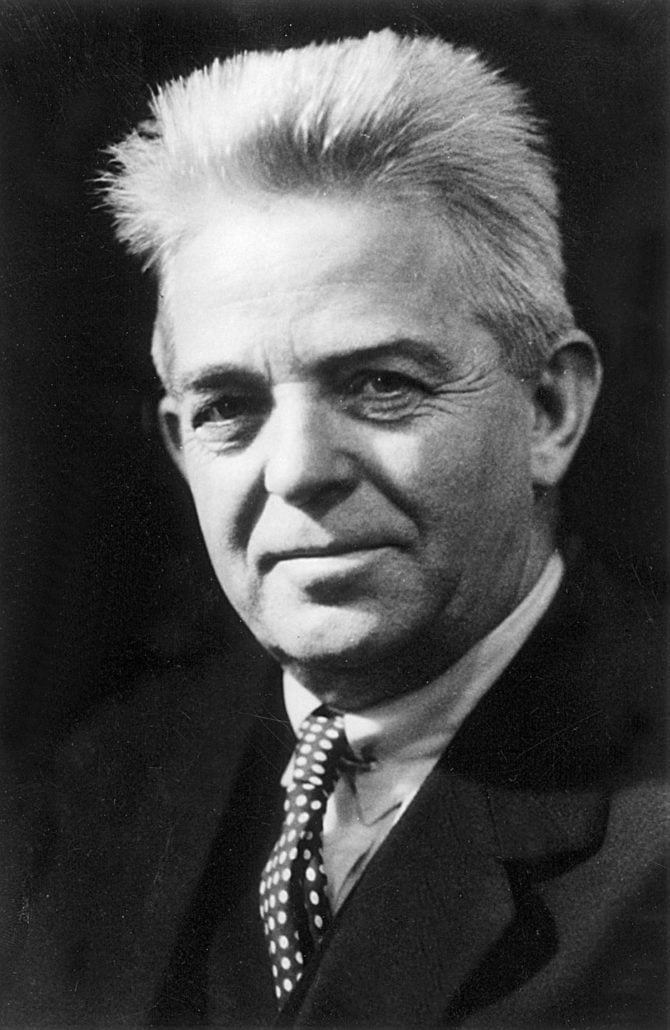
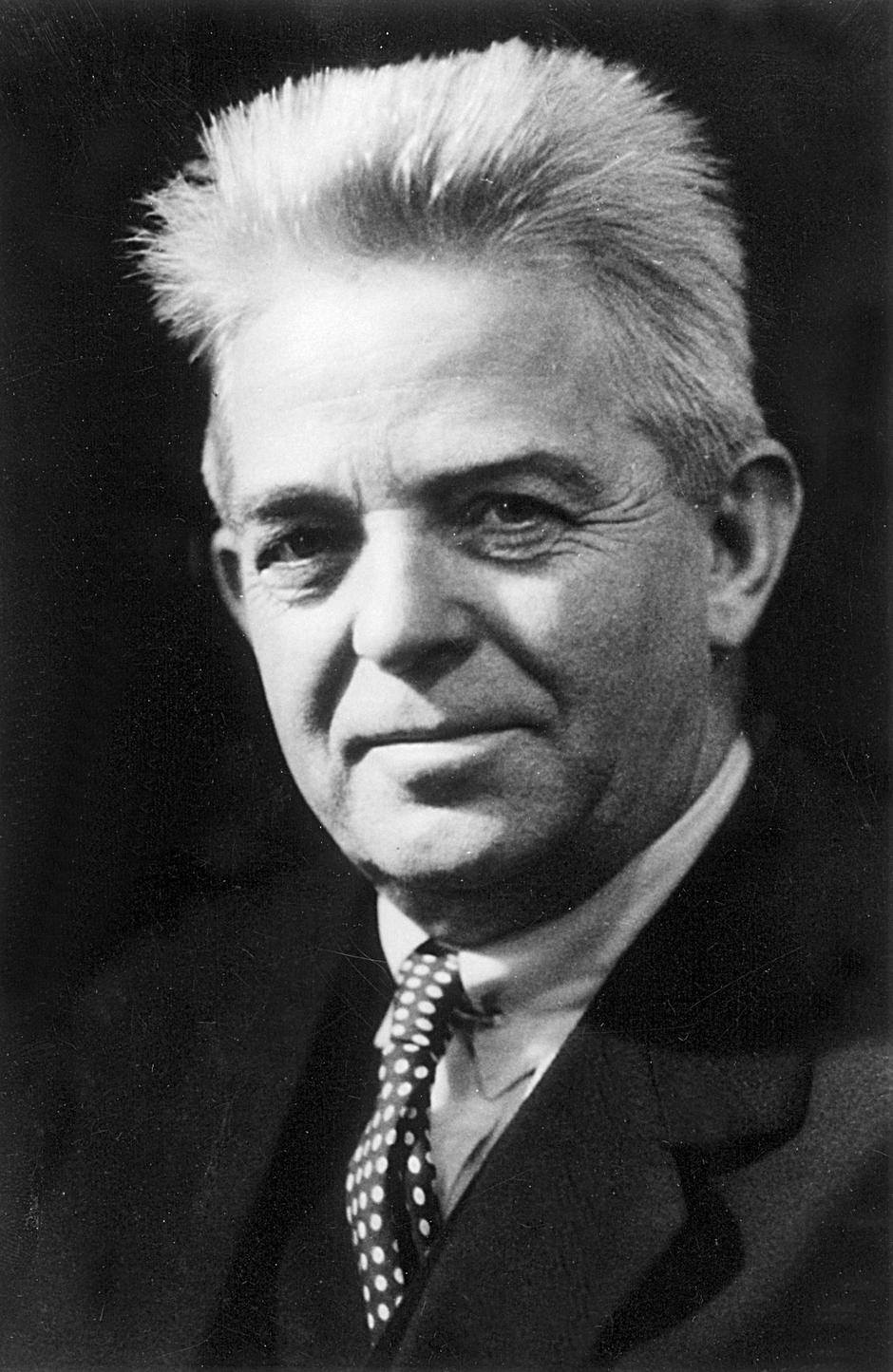
    A tip of the blond brush cut to Carl Nielsen on his birthday!

  • Carl Nielsen’s Symphony No. 5: A Century of Optimism

    Carl Nielsen’s Symphony No. 5: A Century of Optimism

    I can’t claim to know how to solve the world’s problems, but more Carl Nielsen would be a good start.

    Nielsen was, of course, Denmark’s most celebrated composer. He experienced a lot of change in his lifetime (1865-1931), in a world of accelerating anxiety. There is plenty of struggle in his symphonies, to be sure. But to my ears, for the most part, they reflect a spirit of optimism and nobility, and they retain the power to inspire.

    Nielsen’s Symphony No. 5 was first performed in Copenhagen on this day 100 years ago. The work is built on an unusual structure, organized into two movements, as opposed to the customary four. We don’t know what inspired the composer to write his Fifth Symphony, but it’s a good guess that it is a reaction to the War to End All Wars.

    Already by four minutes in, an implacable snare drum appears, and the movement becomes a struggle of contrasts between martial and transcendent impulses. At the climax of the first movement, the composer instructs the drummer to improvise “as if at all cost he wants to stop the progress of the orchestra.” In this sense, the symphony acts almost as a second “Inextinguishable” (the subtitle of Nielsen’s Symphony No. 4, with its dueling timpani), with open wounds, but yearning for the attainment of nobler things.

    Nielsen claimed he was not conscious of the influence of recent world events in the writing of his symphony, but he conceded that “not one of us is the same as we were before the war.”

    A performance in Sweden in 1924 caused a commotion, when the audience rebelled against the cacophonous “modernism” of the first movement. There was a mass exodus from the concert hall, as about a quarter of those in attendance left. Those who remained attempted to hiss the orchestra to silence. It’s too bad they were insensible to the overarching grandeur and hard-won optimism of the piece.

    The symphony received its premiere the same week as the first performance of a very different work influenced by the war, Ralph Vaughan Williams’ “A Pastoral Symphony.” I’ll write more about that on Wednesday.

    In the meantime, here’s a classic performance of Nielsen’s Symphony No. 5, with Leonard Bernstein and the New York Philharmonic:

    Funny how the passage of the years modifies one’s perspective. At the time this recording was made, the symphony was only 40 years-old!

  • Carl Nielsen Awaits Rediscovery

    Carl Nielsen Awaits Rediscovery

    Great Dane or Ugly Duckling? In the case of Carl Nielsen, the two are not necessarily mutually exclusive.

    While Nielsen retains his status as Denmark’s most celebrated composer, internationally, he has had difficulty emerging from the shadow of that other great bard of the North, Jean Sibelius.

    This is a shame, since, far from being a Sibelius knock-off, Nielsen forged his own, immediately-recognizable style – which can’t always be said, with as much conviction, about a lot of other fin de siècle Scandinavian composers. Not that I don’t love their music.

    Leonard Bernstein believed Nielsen’s rightful place was as Sibelius’ equal.

    “I think many people are in for pleasant surprises as they get to know Nielsen,” he said at a centennial celebration of the composer’s birth, “his rough charm, his swing, his drive, his rhythmic surprises, his strange power of harmonic and tonal relationships – and especially his constant unpredictability – all these are irresistible. I feel confident that Nielsen’s time has come.”

    Here’s Bernstein, conducting the Danes on their own turf, in what may be my favorite Nielsen symphony, the Symphony No. 3:

    That was in 1965. Sadly, fifty-six years on, with many more recordings and performances to choose from, Nielsen’s music remains, stubbornly, an acquired taste. But it is a rewarding one. There really is nothing else quite like it. The puckish wit, the ambiguity, the quirky juxtaposition of seemingly disparate melodies, harmonies, and key signatures, all very often shot through with a sense of hope and optimism that rises above the chaos.

    Next to Sibelius, Nielsen doesn’t really have that many imitators. The English composer Robert Simpson was evidently a great admirer of both. This is Simpson’s centenary year. (He was born on March 2, 1921.) His own symphonies often resemble Nielsen’s, but without the big moments.

    Simpson’s Symphony No. 2:

    Simpson introduces Nielsen:

    “Espansiva: A Portrait of Carl Nielsen” (featuring Simpson):

    Rare glimpses of Nielsen on film:

    Happy birthday, Carl Nielsen, and thanks for the advocacy, Robert Simpson.

  • Carl Nielsen The Underrated Northern Composer?

    Carl Nielsen The Underrated Northern Composer?

    With the specter of COVID looming over the prospect of a trip to the hair salon, perhaps the time is ripe for a resurgence of the Carl Nielsen haircut?

    Of the great composers of the North, why is Sibelius so widely lauded (in Scandinavia, England, and the United States, anyway), while Nielsen continues to languish as the Ugly Duckling of Danish music?

    Far from being a simple Sibelius knock-off, Nielsen forged his own, immediately-recognizable style – which can’t always be said, with as much conviction, about a lot of other fin de siècle Scandinavian composers. Not that I don’t love their music.

    Leonard Bernstein believed Nielsen’s rightful place was as Sibelius’ equal:

    “I think many people are in for pleasant surprises as they get to know Nielsen,” he said at a centennial celebration of the composer’s birth, “his rough charm, his swing, his drive, his rhythmic surprises, his strange power of harmonic and tonal relationships – and especially his constant unpredictability – all these are irresistible. I feel confident that Nielsen’s time has come.”

    That was in 1965. Yet, fifty-five years on, with many more recordings and performances to choose from, Nielsen continues stubbornly to be an acquired taste.

    What’s not to like? There’s struggle in the music and harmonic ambiguity – key relationships don’t always play out the way you expect they should (they don’t always in life, either, so why should they in music?) – there is conflict and violence, anxiety, but also great beauty and even humor. At its core, and at the end of the journey, there is, for me, an optimism in much of Nielsen’s output, a love for life, a belief that there is indeed, as the subtitle of his Fourth Symphony professes, something “Inextinguishable” in all of us, that I find inspiring.

    A tip of the blond brush cut to Carl Nielsen on his birthday!


    Take a gander at the Duckling on film! This is the only known surviving footage of Denmark’s greatest composer. You’ll find translations of the intertitles when you click on “show more” beneath the video.

Tag Cloud

Aaron Copland (92) Beethoven (95) Composer (114) Film Music (123) Film Score (143) Film Scores (255) Halloween (94) John Williams (187) KWAX (229) Leonard Bernstein (101) Marlboro Music Festival (125) Movie Music (138) Opera (202) Philadelphia Orchestra (89) Picture Perfect (174) Princeton Symphony Orchestra (106) Radio (87) Ralph Vaughan Williams (85) Ross Amico (244) Roy's Tie-Dye Sci-Fi Corner (290) The Classical Network (101) The Lost Chord (268) Vaughan Williams (103) WPRB (396) WWFM (881)

DON’T MISS A BEAT

Receive a weekly digest every Sunday at noon by signing up here


RECENT POSTS