Tag: David Raksin

  • Chaplin’s Musical Genius Revealed

    Chaplin’s Musical Genius Revealed

    I missed Charlie Chaplin’s birthday by ten days, but I only just stumbled across this footage of Chaplin conducting (at the link below).

    While Chaplin was musically illiterate (by which I mean, he couldn’t read sheet music), he taught himself to play piano, violin and cello as a child, which served him well in his early days in the music hall. Later, he composed, or rather worked very closely with trained musicians, to produce the original scores for all of his features and some of his shorter films.

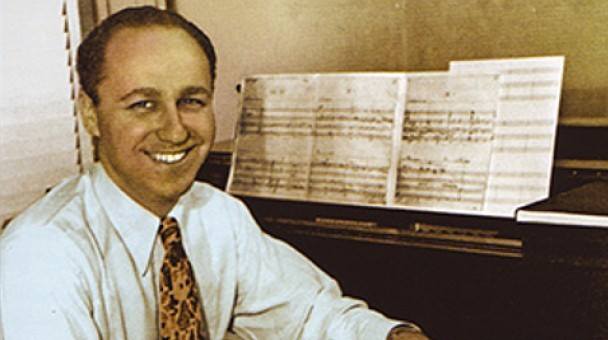
    David Raksin, best remembered for his score to “Laura” (1944), assisted Chaplin on the silent classic “Modern Times” (1936). Raksin later revealed that it was he who had essentially scored the film, with Chaplin whistling all the tunes and asking him to make them fit the action.

    However, he stressed the process was more complicated than it might at first seem. Chaplin was very much involved with every aspect of his films, and oversaw the development of the music as closely as he did any of the other elements. As a result, such a collaboration could take months, and there wasn’t a note in his scores that he didn’t approve.

    Emotions could run high. Raksin recalled he was actually fired once, after only a week and a half, though quickly rehired. When music director Alfred Newman stormed out of one of the recording sessions, Raksin again defied Chaplin, refusing to take up the baton, which only led to further acrimony. The rift was eventually mended and decades later Raksin recollected his work on “Modern Times” as some of the happiest days of his life.

    Chaplin’s scores yielded three popular hits: “Smile” from “Modern Times,” a hit for Nat King Cole in 1954; “Terry’s Theme” from “Limelight,” popularized by Jimmy Young as “Eternally” in 1952; and “This Is My Song” from “A Countess in Hong Kong,” recorded by Petula Clark in 1967.

    Through a fluke – the belated release of “Limelight” in the United States, on a single screen in Los Angeles, twenty years after it was filmed, coinciding with the disqualification of music from “The Godfather,” after it was learned that Nino Rota had recycled a theme from one of his earlier scores (for the Italian film “Fortunella” in 1958) – Chaplin walked away with his only competitive Oscar, as a composer (!), one month before his 84th birthday.

    Previously, he received two honorary Academy Awards, in 1929 and 1972.

  • American Music Greats Born on This Day

    American Music Greats Born on This Day

    A great day for American music.

    Seminal jazz artist and pop cultural icon Louis Armstrong was born on this date in 1901. Armstrong’s birth certificate didn’t come to light until years after his death, so he always celebrated his birthday on July 4. Can’t get much more American than that.

    William Schuman, president of the Julliard School (1945-61) and Lincoln Center (1961-69), and first recipient of the Pulitzer Prize for Music for his cantata “A Free Song” in 1943, was born on this date in 1910. In his day, he was regarded as one of our great American symphonists. His Symphony No. 3 (1941) was especially well-regarded.

    Film composer David Raksin, who got his start working with Chaplin on “Modern Times,” but best-remembered for his music for the noir classic “Laura,” was born in Philadelphia on this date in 1912. Due to his longevity – Raksin lived to see 92 – he became an invaluable fount of information about old Hollywood.

    Pretty great country, that could produce that array of talent. Happy birthday, gentlemen. Thanks for all the music.


    Armstrong live in 1933

    With Velma Middleton, “All That Meat and No Potatoes”

    William Schuman on “What’s My Line?”

    Schuman, Symphony No. 3

    Raksin talks about working with Chaplin on “Modern Times”

    Raksin plays “Laura”

  • David Raksin Laura’s Composer Remembered

    David Raksin Laura’s Composer Remembered

    There are a number of interesting birthday anniversaries today, including those of Jean-Baptiste Lully, William Schuman and Louis Armstrong (who believed he was born on July 4).

    However, I’m going to focus on David Raksin, the Philadelphia-born film composer, who attained immortality with his music for “Laura” (1944), which, with the addition of lyrics by Johnny Mercer, went on to become a popular standard. In fact, it’s said that in Raksin’s lifetime “Laura” was recorded more than any other song, save Hoagy Carmichael’s “Stardust.”

    Raksin worked on over 100 films and 300 television shows. One of the earliest was Charlie Chaplin’s “Modern Times” (1936). While Chaplin was an amateur violinist who “composed” all of his own scores, it was people like Raksin who really did the heavy lifting, filling out the harmony and the orchestration and so forth. Their work together led to some friction, with the demanding Chaplin firing Raksin at least once, but the two wound up fast friends, full of mutual respect.

    Despite decades of fine work, Raksin never attained the status of composers like Max Steiner or Erich Wolfgang Korngold. However, film historians and classic movie fans owe Raksin much, since he lived long enough (he was 92 when he died in 2004) and possessed a sharp enough memory that he was able to recount many, many interesting anecdotes about colleagues who had since passed on into legend.

    Some thumbnails are posted on the website of the American Composers Orchestra, so that it’s possible to enjoy a few of Raksin’s recollections of Steiner, Korngold, Bernard Herrmann and the rest. You can find them by clicking here:

    http://www.americancomposers.org/raksin_intro.htm

    Happy birthday, David Raksin!


    Raksin conducts “Laura”:

  • Alfred Newman Tyrone Power Film Scores on Radio

    Alfred Newman Tyrone Power Film Scores on Radio

    Enjoy music from Tyrone Power swashbucklers scored by Alfred Newman this week, on “Picture Perfect.” The show begins at 6 ET, with a repeat tomorrow morning at 6. You can also catch it later as a webcast at wwfm.org.

    Here’s a fun reminiscence of Newman (“the best conductor who ever picked up a baton in Hollywood”) by composer David Raksin:

    http://www.americancomposers.org/raksin_newman.htm

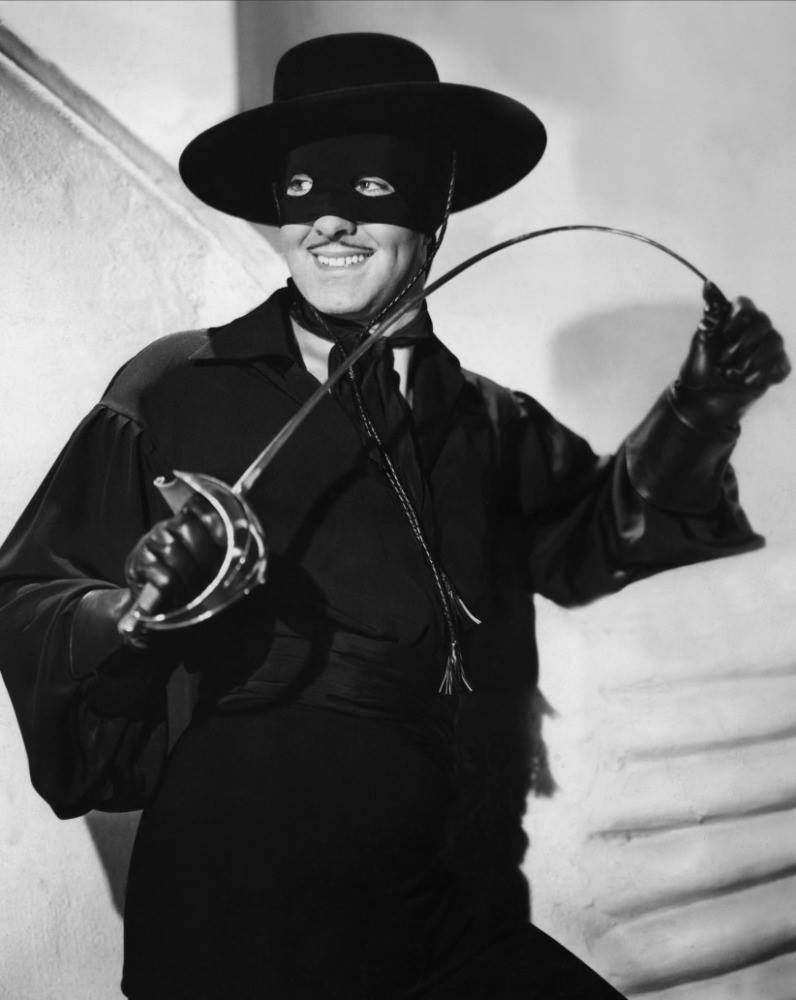
    Newman certainly conducts the stuffing out of “Captain from Castile.” Tune in also for “The Black Swan,” “Prince of Foxes,” and “The Mark of Zorro.”

    PHOTO: Catch some z’s with Ty and Al this week on “Picture Perfect”

  • August 4: A Birthday Bonanza of American Music

    August 4: A Birthday Bonanza of American Music

    I learned something very interesting this morning. Today is the birthday of Louis Armstrong, with whom I always assumed I shared a birthday of July 4. It turns out Armstrong had no idea when he was born, and it wasn’t until the 1980s that a researcher discovered his baptismal records, confirming that he was born on August 4, 1901. Armstrong, of course, rose from impoverished origins in New Orleans to become not only one of the most important figures in American jazz, but also one of the most recognizable and beloved musicians of the 20th century.

    Two other notable American musicians were born on this date. William Schuman, the winner of the inaugural Pulitzer Prize for Music in 1943 (for his Cantata No. 2 “A Free Song”), was born in 1910. He was president of the Juilliard School from 1945, resigning the position in 1961 to become president of Lincoln Center. He received a special Pulitzer in 1985 for his “contribution to American music as composer and educational leader.” His most famous works are his “New England Triptych,” after Revolutionary Era anthems of William Billings, and his Symphony No. 3, one of the great American contributions to the form, though I encourage you to check out his baseball opera, “The Mighty Casey,” for a lighter side of this often austere composer.

    Finally, film composer David Raksin was born on this date in Philadelphia in 1912. Best-known for the standard “Laura” (from the motion picture of the same name), Raksin got his start working for Charlie Chaplin on “Modern Times,” whipping the self-styled auteur’s musical ideas into their final form. Their relationship could be contentious (Chaplin fired him at least once), but they remained lifelong friends. Because of his longevity – Raksin lived to be 92 – he assumed the unofficial position of senior statesman for film composers of Hollywood’s Golden Age. He was brimming with anecdotes about his colleagues, both in the music department and beyond.

    Happy birthday, gentlemen, and thanks for the music!

    Armstrong sings and plays “All That Meat and No Potatoes”:

    William Schuman on “What’s My Line?”

    Raksin plays “Laura”:
    https://www.youtube.com/watch?v=jTVVqUT_pDw

    Raksin talks about working with Chaplin on “Modern Times”:

    PHOTO: Louis Armstrong and Grace Kelly on the set of “High Society”

Tag Cloud

Aaron Copland (93) Beethoven (95) Composer (114) Film Music (141) Film Score (143) Film Scores (255) Halloween (94) John Williams (195) KWAX (229) Leonard Bernstein (104) Marlboro Music Festival (125) Movie Music (156) Mozart (89) Opera (212) Philadelphia Orchestra (89) Picture Perfect (174) Princeton Symphony Orchestra (108) Radio (88) Ross Amico (244) Roy's Tie-Dye Sci-Fi Corner (290) The Classical Network (101) The Lost Chord (269) Vaughan Williams (103) WPRB (397) WWFM (881)

DON’T MISS A BEAT

Receive a weekly digest every Sunday at noon by signing up here


RECENT POSTS