Tag: Debussy

  • Debussy Clair de Lune Remembering Margaret

    Debussy Clair de Lune Remembering Margaret

    On Claude Debussy’s birthday anniversary, I remember one of my radio listeners, now no longer with us, and her fondness for “Clair de lune.”

    The station I was with at the time had offered, as a fundraising incentive during one of its pledge drives, opportunities for contributors to select a host with whom to co-present two hours of their favorite music. That’s how I met Margaret. Margaret was a retired high school English teacher of 24 years. She was in her early 80s then. It’s been my experience that I get along very well with 80-year-olds. One of her selected pieces was “Clair de lune,” which she said reminded her of her mother, since her mother used to play it on the piano.

    We had a lot in common, including the fact that she lived in my hometown of Easton, PA, and the shared experience of the radio show began a four-year friendship, during which she wrote to me frequently. I responded a little less frequently, but not shamefully so, as can sometimes be the case. She would send me photos of her garden, and the animals that visited, and relate her experiences and impressions of the seasons and her favorite places. She was a delightful person. It was a good, old-fashioned, snail-mail correspondence, nothing electronic. I wasn’t even on Facebook yet.

    The last time I saw her was on a visit to her home in 2012, after she was diagnosed with a terminal illness. She tried to encourage me to take whatever I wanted, but I had a hard time with it. I was not in an acquisitive mood. Also, I felt as if I took something it would be an admission that it really was the end. Finally, after having been urged repeatedly, I selected a rolled-up copy of a poster of a panoramic view of Easton in autumn, of which she had several. She enjoyed quite a view from the window of her living room herself.

    Margaret died nine days later, in December 2012. I still have her letters and a mug she gave me, with a reproduction of Franz Marc’s “The Dream.” We were both fans of the Blue Rider school and had visited an exhibition, separately, at the Philadelphia Museum of Art. Ironically, my mother is buried probably within a mile of her home.

    This is no reflection on Margaret (and I think she would find that aside amusing), but here’s an abridged version of Debussy’s enduring piano piece, played for an 80-year-old elephant.

    This was the version we played on the show.

    Deleted segment from Disney’s “Fantasia,” with an orchestral version conducted by Leopold Stokowski

    Happy birthday, Claude Debussy, and thinking of you, Margaret, wherever you are.

  • Mary Garden Opera’s Scandalous Diva at 150

    Mary Garden Opera’s Scandalous Diva at 150

    Mary Garden, “the Sarah Bernhardt of opera,” was born 150 years ago today.

    The Scottish-American lyric soprano (later mezzo-soprano) lived in France for many years, where she became the leading soprano at the Opéra-Comique. There, she worked with many successful composers and participated in several world premieres, including that of Claude Debussy’s “Pelléas et Mélisande” in 1902. She also collaborated with Jules Massenet, who wrote his Cherubino opera, “Chérubin,” specifically for her.

    In 1901, she entered into an affair with André Messager, who had conducted her in Gustave Charpentier’s “Louise,” the work in which she made her unscheduled debut, stepping in for an ailing Marthe Rioton. When the Opéra-Comique director Albert Carré asked her to marry him, she graciously declined, coyly admitting there was someone else in her life.

    She created a sensation when she performed the French version of Richard Strauss’ “Salome,” a role she eventually brought with her to America. Though she executed the Dance of the Seven Veils in a bodystocking, audiences were scandalized when she languorously kissed the severed head of John the Baptist.

    It was Oscar Hammerstein who lured her back to the United States, where she joined the Manhattan Opera House in 1907. She scored further successes in Boston, Philadelphia, and Chicago. She sang the world premiere of Victor Herbert’s “Natoma” in Philadelphia in 1911. In 1912, she joined Enrico Caruso at the Metropolitan Opera to raise funds for survivors of the Titanic.

    In 1921, she became director of the Chicago Grand Opera Company. There, she directed the world premiere of Prokofiev’s “The Love for Three Oranges.” The company went bankrupt in 1922, but as always, Garden landed on her feet. She became director of the Chicago Civic Opera, with which she sang until 1931.

    Long a household name, she also appeared in two silent films for Samuel Goldwyn: “Thaïs” (1917), one of her signature operatic roles, and “The Splendid Sinner” (1918). After retiring from opera in 1934, she became a talent scout for MGM. Later, when Orson Welles described to composer Bernard Herrmann the kind of opera he envisioned for the painful Susan Alexander montage in “Citizen Kane,” he characterized it as a Mary Garden vehicle.

    Garden’s firsthand experiences with Debussy and his music provided ample material for her later lectures and recitals. In 1951, she retired to Scotland, where she lived her last 30 years, and published an autobiography, “Mary Garden’s Story.”

    By all accounts, she was a force to be reckoned with, the archetypal diva, who engaged in epic feuds and forbidden love affairs. Invariably, she got what she wanted and emerged the stronger for it. She lived a flamboyant lifestyle and was a relentless self-promoter.

    In a 1954 interview, she declared, “I was never a singer. You go to hear Caruso. You go to hear Melba. But you come to SEE me.”

    She died in Aberdeen in 1967, at the age of 92.


    Garden singing Mélisande with Debussy at the piano in 1904, and a selection from a Garden interview about the composer:

    INTERVIEWER: “Is it true that Debussy was in love with you?”

    GARDEN: “Oh, no. Never. He may have been in love with my work, but I never was in love with anybody with whom I created. No, no. Not in the musical world. They’re all crazy.”

    Radio interviews from 1937 to 1961 – beginning with Bing Crosby! Interesting content aside, the advance in technology over 24 years is striking.

    Garden as “Thaïs”

    “Depuis le jour” from Charpentier’s “Louise”

    Allegedly, the only one of Garden’s recordings she could bear to listen to

    Bernard Herrmann’s Garden-influenced pastiche opera for “Citizen Kane”

    Clip 1 https://www.youtube.com/watch?v=fFAq27TK9l8

    Clip 2 https://www.youtube.com/watch?v=AmSoDkXJ2aw

    I posted a good deal more about the segment in August of 2020

  • Debussy’s Birthday & My “Flaxen Hair” Moment

    Debussy’s Birthday & My “Flaxen Hair” Moment

    Following a leisurely walk through Rittenhouse Square in Philadelphia about 30 years ago, I sat down at a keyboard in my studio apartment, hoping to recapture the hazy, haunting music that had flitted around the periphery of my consciousness. I smiled with relief and satisfaction, when I knew I had finally gotten it down. I was proud of myself to have created something so beautiful! It was only later that I realized it was “The Girl with the Flaxen Hair.”

    Claude Debussy, always stealing my thunder. Happy birthday, mon vieux!


    Here it is, performed by flaxen-haired twins in a field full of wild flowers.

  • Wagner Debussy Holst Early Symphonies on KWAX

    Wagner Debussy Holst Early Symphonies on KWAX

    Mighty oaks from little acorns grow, and even giants started small.

    Young composers who went on to great things tackle that most daunting of musical forms, the symphony, this week on “The Lost Chord,” now in syndication on KWAX, the radio station of the University of Oregon.

    What’s that? Wagner wrote symphonies? That’s right. He took a crack at writing two of them, in Beethovenian style, before finding his niche as a revolutionary opera composer. We’ll hear his Symphony in E.

    We’ll also enjoy an early symphony by Gustav Holst, composer of “The Planets,” and one by an 18-year-old Claude Debussy.

    Judging from their mature works, these three would be among the least likely to attempt sonata form.

    Impetuous youth! I hope you’ll join me for “Bold Heads on Young Shoulders.” Composers at the start of their careers find the courage to strive for symphonic mastery, on KWAX!

    See below for streaming information.


    Keep in mind, KWAX is on the West Coast, so there’s a three-hour difference for the Trenton-Princeton area. Here are the respective air-times of my recorded shows (with East Coast conversions in parentheses):

    PICTURE PERFECT, the movie music show – Friday on KWAX at 5:00 PACIFIC TIME (8:00 PM EDT)

    THE LOST CHORD, unusual and neglected rep – Saturday on KWAX at 4:00 PACIFIC TIME (7:00 PM EDT)

    Stream them here!

    https://kwax.uoregon.edu/


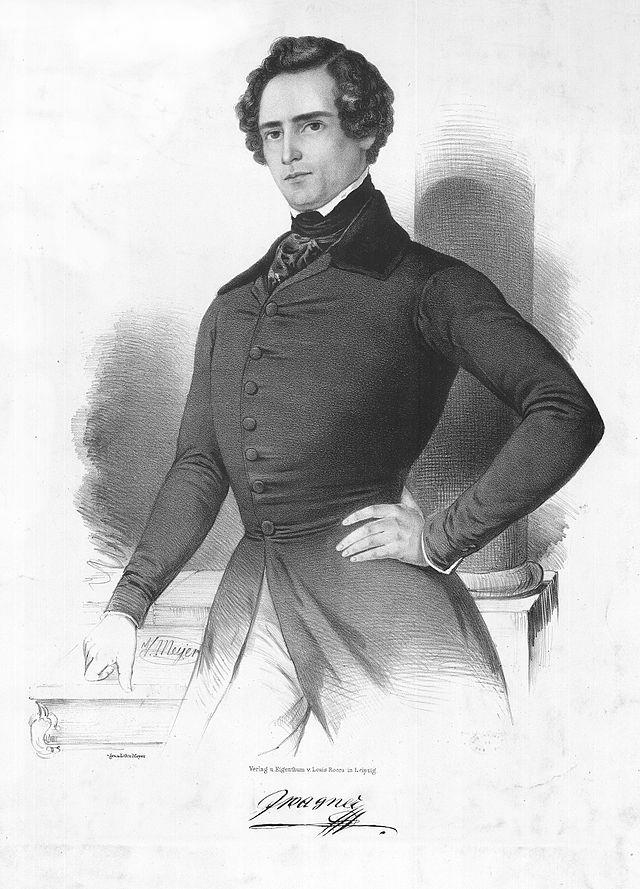
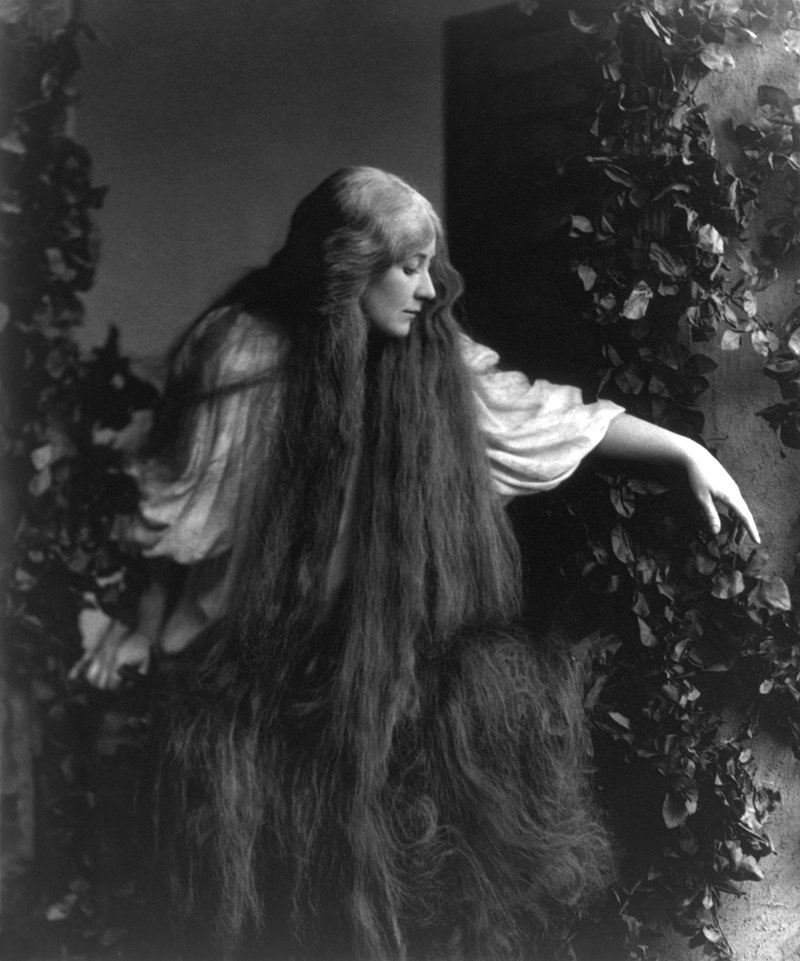
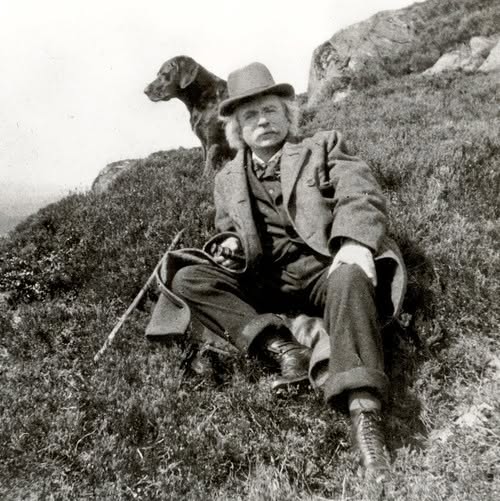
    LEFT TO RIGHT: Young Debussy, Wagner, and Holst, feeling their oats

  • French Halloween Music for a Spooky Night

    French Halloween Music for a Spooky Night

    On the whole the French don’t really celebrate Halloween (too American), but if you find one who does, don’t say “trick or treat.” Rather, demand “Des bonbons ou un sort!” – candy or a spell.

    While France might not be down with the whole Halloween thing, many of the country’s great artists, writers, and composers could totally conjure a Halloween vibe. Think Odilon Redon’s “The Smiling Spider,” Charles Baudelaire’s “Les Fleurs du mal,” or Camille Saint-Saëns’ “Danse macabre.”

    This Sunday night on “The Lost Chord,” we’ll have three pieces of French music totally suitable for the season.

    Maurice Ravel’s “Gaspard de la Nuit” (“Gaspard of the Night”) – musical responses to the weird and sinister poetry of Aloysius Bertrand – is a suite of creepy impressions of (1) a flirtatious water spirit, (2) a hanged man at sunset against the backdrop of a tolling bell, and (3) a vampiric dwarf named Scarbo. Gina Bachauer will be the pianist, and Sir John Gielgud will preface each of the movements with recitations of the Bertrand poems.

    Claude Debussy was enthralled by the writings of Edgar Allan Poe, which he knew through Baudelaire’s translations. At the time of his death, he left incomplete sketches for two operas after Poe stories – “The Fall of the House of Usher” and “The Devil in the Belfry.” We’ll hear fragments of the former, conducted by Georges Prêtre.

    Finally, we’ll listen to the third of the “Etudes in Minor Keys,” subtitled “Scherzo Diabolico,” by Charles-Valentin Alkan. Alkan, a sometimes neighbor of Chopin and Georges Sand, shared a home with his illegitimate son, two apes, and a hundred cockatoos. Franz Liszt is alleged to have commented, “Alkan had the finest technique I had ever known, but preferred the life of a recluse.”

    Best known is the story surrounding the circumstances of his death: while reaching for a copy of the Talmud, situated on a high shelf of a heavy bookcase, the case let go and crushed Alkan beneath it. It’s been suggested that the composer actually collapsed while in the kitchen – but when the legend becomes fact, print the legend. Tonight’s performance will be by the late Michael Ponti.

    I hope you’ll join me for “Jacques o’ Lanterns” – lurid music by French composers for Halloween – this Sunday night at 10:00 EDT, on WWFM – The Classical Network and wwfm.org.


    If you enjoy either of my weekly shows (or both!), or any of the other music you hear on The Classical Network, please consider making a contribution today. We’re celebrating our 40th anniversary on the air and online, right now. If you’re in a position to do so, why not leave us a Halloween treat at wwfm.org. Thank you in advance for your generosity and for your continued support of WWFM The Classical Network!

    https://wwwfm.secureallegiance.com/wwfm/WebModule/Donate.aspx?P=DEFAULT&PAGETYPE=PLG&CHECK=vOU2bz5JCWmgCDbf53nm9ezWDeZ%2beA1M

Tag Cloud

Aaron Copland (92) Beethoven (95) Composer (114) Film Music (120) Film Score (143) Film Scores (255) Halloween (94) John Williams (185) KWAX (229) Leonard Bernstein (100) Marlboro Music Festival (125) Movie Music (135) Opera (198) Philadelphia Orchestra (88) Picture Perfect (174) Princeton Symphony Orchestra (106) Radio (87) Ralph Vaughan Williams (85) Ross Amico (244) Roy's Tie-Dye Sci-Fi Corner (290) The Classical Network (101) The Lost Chord (268) Vaughan Williams (103) WPRB (396) WWFM (881)

DON’T MISS A BEAT

Receive a weekly digest every Sunday at noon by signing up here


RECENT POSTS