Tag: Debussy

  • Debussy, Ravel & Mallarmé at Marlboro

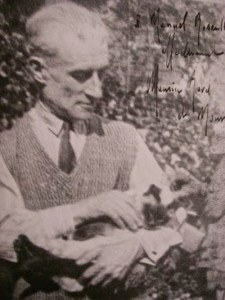
    Debussy, Ravel & Mallarmé at Marlboro

    It’s a Mallarmé marmalade, served up on French toast, on the next “Music from Marlboro.”

    While, for the most part, Claude Debussy and Maurice Ravel maintained a certain degree of respect for one another, both men were very possessive of Stéphane Mallarmé.

    Debussy had changed the course of music history with his dreamy translation into sound of Mallarmé’s poem, “L’après-midi d’un faune.” Musicians at the fin de siècle all sat up and took notice – aligning themselves into factions pro and con – but reportedly Mallarmé himself was not all that thrilled, believing the music inherent in his verse to be sufficient. Once he actually attended a performance of the work, however, you might say he changed his tune.

    It’s understandable, then, that Debussy would feel a certain sense of ownership when it came to setting Mallarmé to music.

    Debussy’s “Prélude à l’après-midi d’un faune” appeared in 1894. Mallarmé died in 1898. The first complete edition of Mallarmé’s poems did not appear until 1913. 1913, you’ll recall, was a revolutionary year in the arts, with controversies stirred by the Armory Show in New York City, Schoenberg’s Skandalkonzert in Vienna, and the premiere of “The Rite of Spring” in Paris.

    It was against this backdrop that the Debussy-Ravel rivalry would intensify. Ravel, proclaiming that Mallarmé was the greatest of all French poets, determined to secure the rights to set two of his poems, beating Debussy, who had applied for the same, to the punch. Though publicly Ravel remained good-humored about the coincidence, Stravinsky observed that the two composers did not speak to one another for a year.

    In the event, both set Mallarmé’s “Soupir” (“Sigh”) and “Placet futile” (“Futile Petition”). Opinion was divided as to their success. Stravinsky thought Ravel’s settings his favorites among all the composer’s works. (Of course, Ravel had dedicated the first of the songs to him.) Stravinsky even referenced “Placet futile” when he came to write “A Soldier’s Tale.” On the debit side, Charles Koechlin complained that if you didn’t already know Mallarmé’s poems, you couldn’t possibly understand the texts.

    The two songs had originally been planned as a balanced set, but then Ravel decided to add a third, “Surgi de la croupe et du bond” (“Rising from the Crupper and Leap”), which he described as the strangest and most hermetic. That, he dedicated to Erik Satie.

    Though Ravel had not heard Schoenberg’s “Pierrot Lunaire,” composed the previous year, there must have been something in the air. Ravel was eager to explore the coloristic possibilities of a chamber ensemble in supporting Mallarmé’s symbolist texts. For the final song, he would stretch his harmonic syntax beyond the bounds of tonality.

    Graciously, Debussy ended their estrangement by complimenting Ravel for possessing “the most refined [musical ear] there ever has been.”

    We’ll hear Ravel’s “Trois poèmes de Mallarmé,” performed by mezzo-soprano Mary Westbrook-Geha and an ensemble of eleven instrumentalists at the 1989 Marlboro Music Festival. Then we’ll give Debussy his due, with a performance of his revolutionary String Quartet in G minor, performed by violinists Joseph Lin and Judy Kang, violist Richard O’Neill, and cellist David Soyer, on tour at the Isabella Stewart Gardner Museum in Boston in 2002.

    I hope you’ll pardon my French, on this week’s “Music from Marlboro,” Wednesday evening at 6:00 EDT, on WWFM – The Classical Network and wwfm.org.

    Marlboro School of Music and Festival: Official Page


    PHOTOS: Gentlemen, choose your weapons!
  • Debussy’s La Mer Das Merde Szell Fails?

    Debussy’s La Mer Das Merde Szell Fails?

    One wag commented on a performance of Debussy’s impressionistic magnum opus conducted by George Szell, “He tried Debussy’s ‘La Mer’ once. It came out as ‘Das Merde.’”

    Great conductor. Great composer. But not all marriages are meant to be (as Debussy well knew).

    Happy birthday, Claude Debussy!

    Debussy in the W.C.?

  • Remembering Robert Stallman Greece 1969

    Remembering Robert Stallman Greece 1969

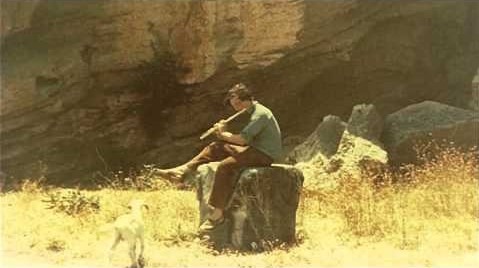
    Great photo of my friend, Robert Stallman, footloose and fancy free in Greece in 1969, playing Debussy’s “Syrinx.” Note the kid goat. Bob died last Sunday at the age of 73.

  • Saint-Saëns’ Fury Franck Holmès Music from Marlboro

    Saint-Saëns’ Fury Franck Holmès Music from Marlboro

    It’s music to get Camille Saint-Saëns’ blood boiling, on the next “Music from Marlboro.”

    Saint-Saëns was the dedicatee of the Piano Quintet in F minor by his friend, César Franck. But as he sight-read through the piano part at the work’s premiere in 1879, he became more and more agitated, angry even. At the conclusion of the piece, he rejected Franck’s attempt to shake his hand, and stormed off without acknowledging the applause.

    He wasn’t the only one. Franck’s wife also made no secret of hating it.

    Here was music of sublimated desire, and everyone knew the cause. Saint-Saëns knew, because he felt the same way about Franck’s pupil, Augusta Holmès. Franck tutored Holmès in organ and composition. No doubt he admired her musical talent, but equally there was no doubt his interest went beyond that of master-disciple. Don’t let those mutton chops fool you. A man is only flesh and blood.

    There must have been something about Holmès, the French composer of Irish descent, because she had the same effect on just about every man she crossed paths with. Saint-Saëns had proposed marriage to her multiple times, always without success. He would refer to her as a “beautiful pythoness.” Methinks his vines had tender sour grapes.

    We’ll hear a performance of Franck’s incendiary piece, featuring pianist Mitsuko Uchida, violinists Soovin Kim and David McCarroll, violist Milena Pajaro-van de Stadt, and cellist Matthew Zalkind, from the 2012 Marlboro Music Festival.

    The hour will open with a work by Claude Debussy. Debussy composed “En blanc et noir” in 1915, making it one of his later creations, contemporaneous with the Cello Sonata, the Sonata for Flute, Viola and Harp, and the Etudes for solo piano.

    It is to be remembered that Saint-Saëns, who basically lived forever, was 80 years-old by this time. He loathed the work. “We must at all costs bar the door of the Institute against a man capable of such atrocities,” he fumed. “They should be put next to the cubist pictures.”

    The first movement, an energetic waltz, is dedicated to Serge Koussevitzky; the second, a somber slow movement, to Debussy’s friend, Jacques Charlot, who was killed during the First World War; and the third, a playful scherzando, to Igor Stravinsky.

    We’ll hear it played at Marlboro in 2017 by pianists Xiaohui Yang and Cynthia Raim.

    The forbidden fruit tastes the sweetest, thanks to Saint-Saëns’ anger management issues, on the next “Music from Marlboro,” this Wednesday evening at 6:00 EDT, on WWFM – The Classical Network and wwfm.org.

    BONUS: Tune in early to hear one of Holmès’ symphonic poems in the 5:00 hour!

    Marlboro School of Music and Festival: Official Page


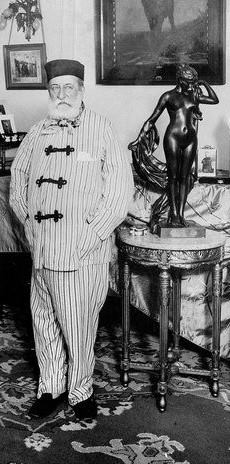
    PHOTOS (clockwise from left): Saint-Saëns, all dressed up with nowhere to go; Franck at the organ; Holmès with her je ne sais crois; Debussy, transfixed by a cigarette

  • Debussy & Classical Music Fundraiser on WWFM

    Debussy & Classical Music Fundraiser on WWFM

    Claude Debussy’s “Rondes de printemps” has kicked off the second day of our three-day fundraiser on The Classical Network.

    It doesn’t matter what time of year it is. Great music has the power to transport, uplift, and, above all, enrich the quality of our lives. Thanks to dedicated and generous listeners just like you, musique de Debussy et ses amis is always in season.

    Unfortunately, there is no Maginot Line to keep classical music free. Please make a donation now at 1-888-232-1212 or online at wwfm.org. A steady diet of vin rouge et musique classique has been proven to lead to longer life and plenty of l’amour. Even if it hasn’t, at least you’ll have had a good time, and with plenty of bon goût.

    Hear the difference! And merci beaucoup for supporting WWFM – The Classical Network and wwfm.org.


    “Mais alors, le phonographe electronique est si limité à côté de WWFM!”

Tag Cloud

Aaron Copland (93) Beethoven (95) Composer (114) Film Music (127) Film Score (143) Film Scores (255) Halloween (94) John Williams (190) KWAX (229) Leonard Bernstein (102) Marlboro Music Festival (125) Movie Music (142) Mozart (87) Opera (205) Philadelphia Orchestra (89) Picture Perfect (174) Princeton Symphony Orchestra (107) Radio (88) Ross Amico (244) Roy's Tie-Dye Sci-Fi Corner (290) The Classical Network (101) The Lost Chord (268) Vaughan Williams (103) WPRB (396) WWFM (881)

DON’T MISS A BEAT

Receive a weekly digest every Sunday at noon by signing up here


RECENT POSTS