A day after I marked Barbra Streisand’s 75th birthday with her rendition of Debussy’s “Beau Soir,” here’s Ella Fitzgerald, on the centennial of her birth, with her transfiguration of Debussy’s “Reverie.”
Happy birthday, Ella.
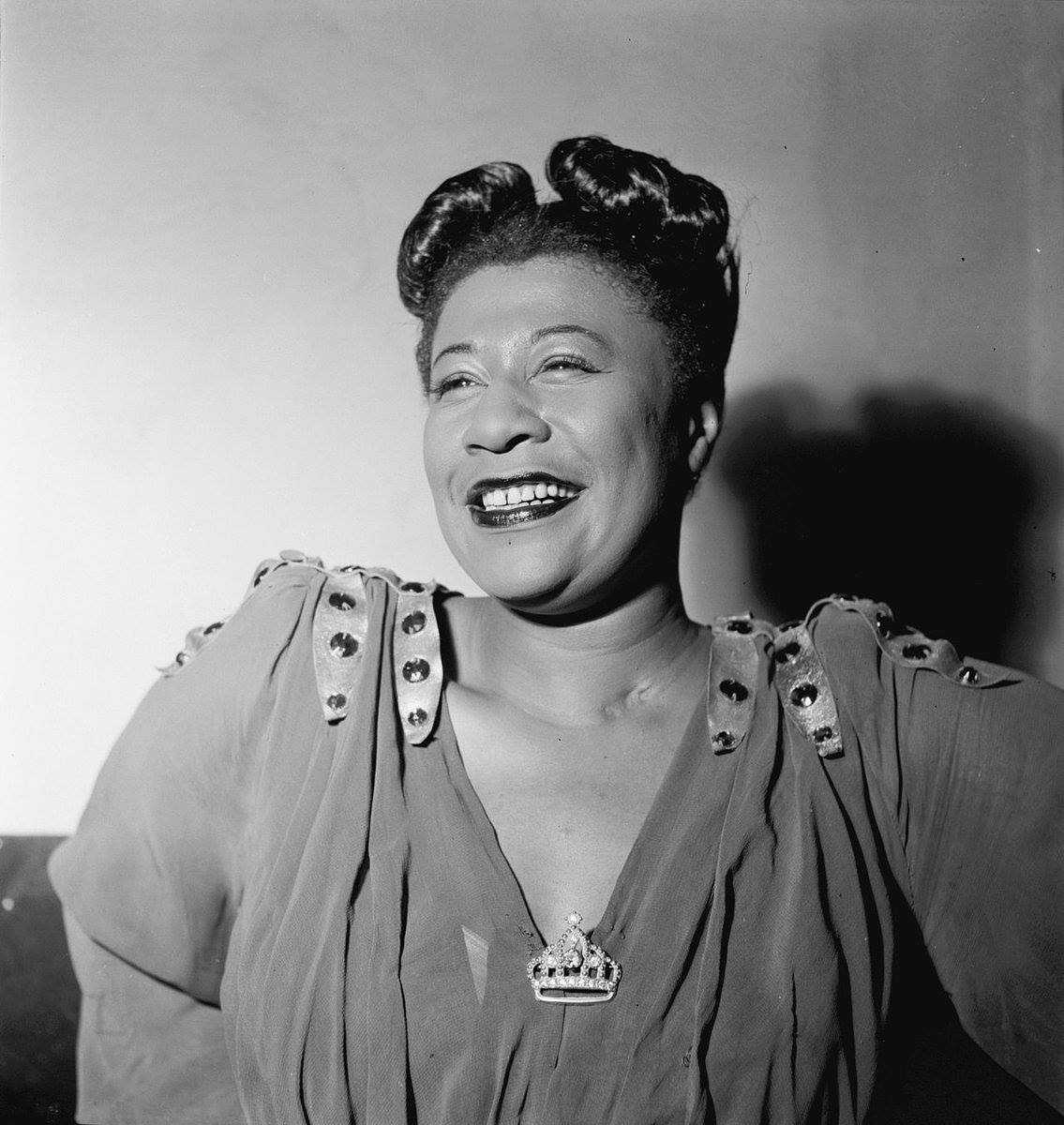
A day after I marked Barbra Streisand’s 75th birthday with her rendition of Debussy’s “Beau Soir,” here’s Ella Fitzgerald, on the centennial of her birth, with her transfiguration of Debussy’s “Reverie.”
Happy birthday, Ella.
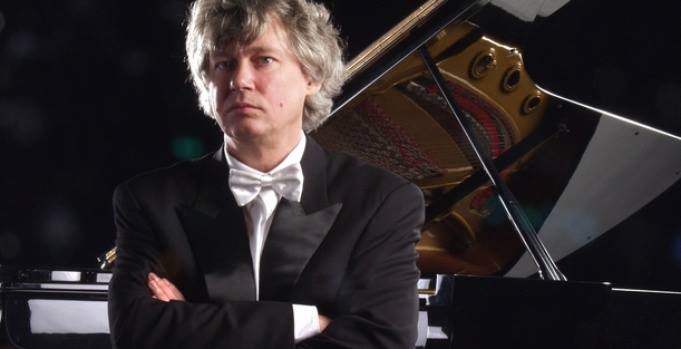
A great pianist has died. Hungarian pianist and conductor Zoltán Kocsis died yesterday afternoon. He was 64 years-old. This is especially disturbing to me, since on all my recordings he looks like a kid. And then it occurred to me, he was only 38 when he received the Gramophone Award for his fine album of Debussy piano works. Is 1990 really so far away? Time is passing.
Kocsis cofounded the Budapest Festival Orchestra with Iván Fischer in 1983 (again, so long ago). He became chief conductor and artistic director of the Hungarian National Philharmonic in 1997. His recordings of Debussy and Bartók are particularly fine. He was also a great champion of the works of György Kurtág (who, at 90 years-old, is still very much with us).
I’ll be honoring Kocsis this afternoon with some of his recordings, between 4 and 7:00 EST, on WWFM – The Classical Network and at wwfm.org.
Kocsis obituary in the Washington Post. Brace yourself for the photo.

It’s widely perceived that the French really understand how to enjoy life. Why else would Claude Debussy be sitting on a beach fully clothed and holding a parasol? Come to think of it, I guess everyone went to the beach dressed like that in those days (as I still prefer to do).
Join me for une petite vacance, as I celebrate the birthday of Claude Debussy, from 4 to 7 p.m. EDT, on WWFM – The Classical Network and at wwfm.org.
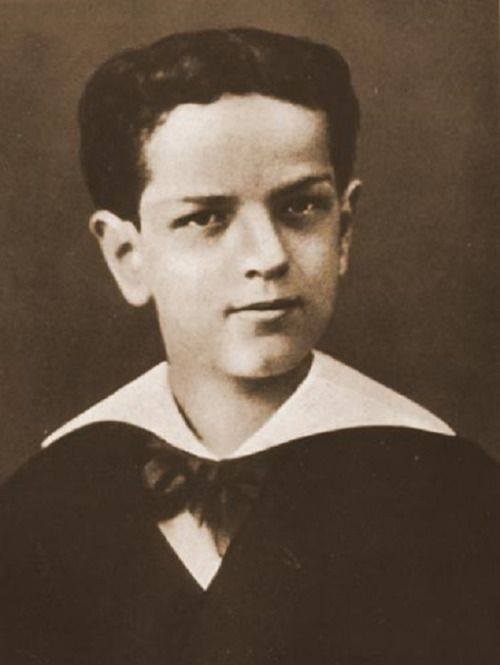
Fresh in from the TMI Desk:
This afternoon marked the ritual shaving of my sick beard. No photos posted upon request.
Except for these: Beardless Debussy (left) and beardless Brahms
“Clair de lune” – Debussy, right?
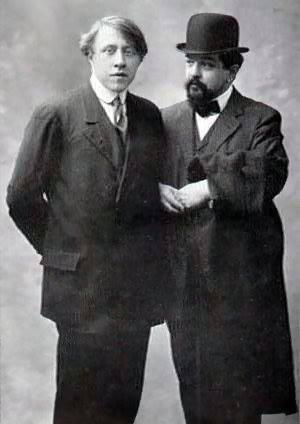
The work began as a piano piece, one of the movements from Debussy’s “Suite bergamasque.” However, the lovely orchestral version was produced by André Caplet.
One of the reasons superior sorts tend to look down their noses at film music is that the composers frequently work with orchestrators (though the better composers are very meticulous about notating their requirements). However, the practice is not exclusive to Hollywood.
The Dutch masters were not always responsible for all the elements in the paintings attributed to them. For a famous example, see Rubens’ “Prometheus Bound” (which you can view in person, if you are reading this locally, at the Philadelphia Museum of Art). Similarly, successful authors sometimes set up studios, kind of like architects, with anonymous collaborators doing a lot of the heavy lifting. The practice dates back to at least Alexandre Dumas, who churned out novels at a dizzying rate.
In classical music, many of the orchestral works of Grieg and Liszt received ample assistance from others (though Liszt gained confidence – and autonomy – as time went on). Charles Koechlin worked behind the scenes with Debussy and Gabriel Fauré.
Caplet, a winner of the esteemed Prix de Rome, provided orchestrations for Debussy’s “Children’s Corner,” “Clair de lune,” “The Martyrdom of Saint Sebastian” and “La Boiîte à joujoux.”
He directed the Boston Opera from 1910 to 1914. While serving in the First World War, he was caught in a gas attack, which resulted in the pleurisy that plagued him for the remainder of his short life. Caplet died in 1925, at the age of 44.
Why is it so important to us, I wonder, that a work of art emerge seemingly from a single source – the “auteur,” as it were? While most of Caplet’s own music languishes in obscurity, his work for Debussy lives on.
Happy birthday, André Caplet!
Caplet’s orchestration of “Clair de lune”:
His own “Septuor” for string quartet and three female voices:
Rubens’ “Prometheus Unbound”:
http://www.philamuseum.org/collections/permanent/104468.html
PHOTO: Caplet (left) with Debussy
Aaron Copland (93) Beethoven (95) Composer (114) Film Music (144) Film Score (143) Film Scores (255) Halloween (94) John Williams (195) KWAX (229) Leonard Bernstein (104) Marlboro Music Festival (125) Movie Music (159) Mozart (90) Opera (212) Philadelphia Orchestra (89) Picture Perfect (174) Princeton Symphony Orchestra (109) Radio (88) Ross Amico (244) Roy's Tie-Dye Sci-Fi Corner (290) The Classical Network (101) The Lost Chord (269) Vaughan Williams (105) WPRB (397) WWFM (881)