Tag: Die tote Stadt

  • Korngold Unleashed The Inner Pirate Composer

    Korngold Unleashed The Inner Pirate Composer

    Happy birthday, Erich Wolfgang Korngold (1897-1957). You unleashed my inner pirate and helped shepherd me into the wonderful world of orchestral music. Little did I realize at the time I was dueling my friends with my mother’s curtain rods that you wrote marvelous operas, too.

    Korngold conducts “The Adventures of Robin Hood”:

    The Sea Hawk:

    Renée Fleming sings from “Das Wunder der Heliane”
    https://www.youtube.com/watch?v=H2x5NgtGSx4

    His greatest operatic hit, Marietta’s Lied from “Die tote Stadt,” sung by Elisabeth Schwarzkopf:
    https://www.youtube.com/watch?v=ZoGQd1dsAlw

  • Korngold Rediscovered Vienna to Hollywood

    Korngold Rediscovered Vienna to Hollywood

    For the first edition of “The Lost Chord” for 2016, we revisit the music of Erich Wolfgang Korngold. Korngold, of course, was one of the great film composers. A two-time Academy Award winner, he provided music for such classics as “Captain Blood,” “The Prince and the Pauper,” “The Adventures of Robin Hood,” “The Sea Hawk” and “Kings Row.”

    But before he settled in Hollywood, Korngold was the toast of Vienna, one of the most lauded of contemporary composers, and the city’s brightest hope for maintaining its fin de siècle supremacy in music.

    Korngold was a child prodigy who had amazed audiences with such works as the ballet-pantomime “Der Schneemann” (or “The Snowman”), composed at the tender age of 11 (first performed at the Vienna Court Opera in the presence of Emperor Franz Josef); his Piano Trio, composed at the age of 13 (given its premiere by Arthur Schnabel and members of the Vienna Philharmonic); and the “Sinfonietta,” a symphony-in-all-but-name, composed at the age of 15 (first conducted by Felix Weingartner, Korngold sharing a box at that performance with an admiring Richard Strauss).

    With the premiere of his opera “Die tote Stadt,” in 1920, at age 23, Korngold’s reputation seemed assured. He wrote a piano concerto for Paul Wittgenstein, undertook a revival of the operettas of Johann Strauss II, and was publicly honored by the president of Austria.

    However, the trajectory of his career took an unexpected turn with the rise of Hitler. To escape the creep of fascism, Korngold embarked on a second career, settling in Hollywood to write film scores for Warner Brothers.

    The first of these was composed at the invitation of famed impresario Max Reinhardt, with whom Korngold had collaborated on the Strauss revivals. Reinhardt was in the process of adapting Shakespeare’s “A Midsummer Night’s Dream” for the big screen, and he enlisted Korngold to rework Felix Mendelssohn’s famous incidental music.

    In true Korngoldian fashion, the composer went well beyond what was expected, weaving in passages from Mendelssohn’s symphonies and “Songs Without Words,” writing his own connective material, and sprinkling the whole with fairy dust.

    Korngold’s work on “A Midsummer Night’s Dream” led to an exclusive contract at Warner’s, where the composer revolutionized the language of film music, applying the kind of opulence, pageantry and romance characteristic of his operas to silver screen historical dramas and swashbucklers.

    The result was kind of a pop cultural immortality, but to the detriment of his reputation as a serious composer. The center of European musical culture was off-limits, indeed severely limited by Nazi strictures, and the language of musical modernism, as exemplified by the output of his contemporary and compatriot Arnold Schoenberg, made Korngold seem positively old-fashioned. It would be decades before his reputation would recover, and unfortunately by then he was long dead.

    From the same year as his greatest triumph, “Die tote Stadt,” 1920, comes an earlier foray into Shakespeare, written for a stage production of “Much Ado About Nothing.” “Much Ado” contains some of Korngold’s most charming music. A concert suite of some 20 minutes has been in circulation for decades.

    However, what we have for you this evening is the first COMPLETE recording of the score, with spoken dialogue. A 2013 release, on the Toccata Classics label, it features actors and musicians of the University of North Carolina School of the Arts, conducted by John Mauceri.

    I hope you’ll join me for “Much Ado About Korngold,” tonight at 10 ET, with a repeat Wednesday evening at 6; or that you’ll listen to it later as a webcast at wwfm.org.
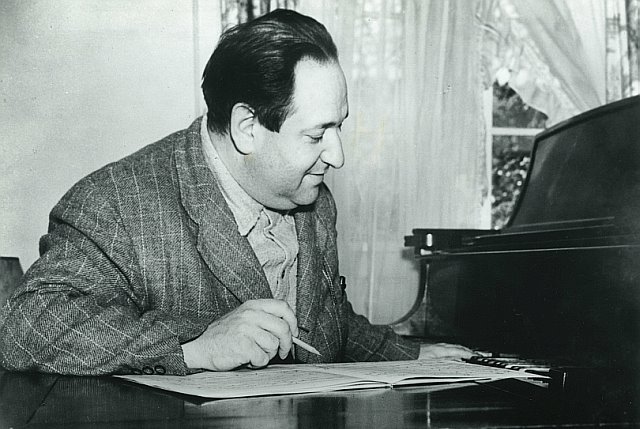
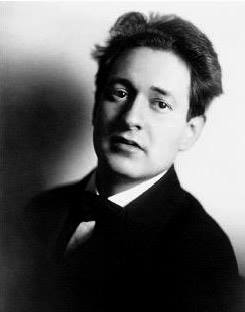
  • Erich Wolfgang Korngold: Hollywood’s Prodigy

    Erich Wolfgang Korngold: Hollywood’s Prodigy

    Today is the birthday of one of my favorite composers, Erich Wolfgang Korngold (1897-1957). I don’t know, maybe it has something to do with watching those Errol Flynn movies on television as a kid – you know, the ones that inspire you to take down the curtain rods and start dueling around the house.

    Korngold was one of music’s great child prodigies. His ballet-pantomime “Der Schneemann” (“The Snowman”), composed at the age of 11, was performed at the Vienna Court Opera before Emperor Franz Josef. His early piano and chamber works were picked up by Artur Schnabel. His “Sinfonietta” (a full-scale symphony in all but name) was performed by Felix Weingartner and the Vienna Philharmonic when he was 15. At one performance, Korngold shared a box with Richard Strauss.

    Several of his operas are knock-outs. The double premiere in Hamburg and Cologne of “Die tote Stadt” (“The Dead City”) in 1920 made Korngold, at the age of 23, one of the leading opera composers of his time.

    Several factors contributed to an enormous shake-up in Korngold’s reputation. One was the fact that his musical language never really developed. His earliest works are as finely crafted and as fully realized as those written at the end of his life – most impressive, except that what seemed strikingly modern when he was a teen later seemed hopelessly romantic and passé.

    Another was that Korngold followed theatrical impresario Max Reinhardt to Hollywood for a big screen adaptation of “A Midsummer Night’s Dream.” This led to further offers from Warner Brothers, under terms he couldn’t refuse. In the meantime, the Nazis rolled into Austria, effectively sealing off his return home.

    For decades, Korngold’s reputation among “serious” music aficionados suffered. His Violin Concerto was famously derided by one critic as “more Korn than Gold.” But that all began to change in the 1970s, with the issue of an album on the RCA label, featuring music from Flynn’s “The Sea Hawk,” “Captain Blood” and “The Adventures of Robin Hood,” that proved there was indeed a market for classic film music. Ironically, the very projects that had dragged him down in the eyes of some served to jumpstart his posthumous revival.

    With the advent of compact disc, with labels searching for worthwhile though underexposed repertoire to lure consumers who had already replaced their entire record collections, Korngold’s reputation again began to soar. While he will never be regarded as the next Mahler or even Richard Strauss, it’s fairly obvious at this point that his place in “serious music” is secure.

    Still it is with affection that many remember his film scores, which he regarded as operas without words. It was Korngold who brought Old World opulence to New World popular culture. His efforts earned him two Academy Awards.

    This week on “Picture Perfect,” we’ll have two scores by Korngold as part of our second installment celebrating the films of 1939, which film historians frequently refer to as “Hollywood’s greatest year.” The first installment aired in February, and featured music from “The Wizard of Oz,” (Harold Arlen & Herbert Stothart) “Of Mice and Men” (Aaron Copland), “Gunga Din” (Alfred Newman) and “Goodbye, Mr. Chips” (Richard Addinsell).

    This week’s episode will include Korngold’s “Juarez,” an historical drama about Mexican resistance against the French army of Napoleon III, which starred Paul Muni, Bette Davis and Claude Rains, and “The Private Lives of Elizabeth and Essex,” with Davis and Errol Flynn, as Elizabeth I and Robert Devereux, 2nd Earl of Essex, respectively. The latter features plenty of Korngold’s signature pageantry.

    The show will also include two scores by Alfred Newman, for “Wuthering Heights” and “The Hunchback of Notre Dame.”

    A third installment, focusing on the indefatigable Max Steiner – who worked on 13 films in 1939 – will air in the fall. So no more brickbats from you “Gone With the Wind” fans, please!

    Join us on the second leg of our journey to celebrate the 75th anniversary of “Hollywood’s greatest year,” on “Picture Perfect,” Friday evening at 6, or enjoy it later as a webcast at http://www.wwfm.org.

    PHOTO: Erich Wolfgang Korngold (right) works with a score mixer laying down the tracks for “Juarez.” That’s Paul Muni onscreen.

Tag Cloud

Aaron Copland (92) Beethoven (95) Composer (114) Film Music (123) Film Score (143) Film Scores (255) Halloween (94) John Williams (187) KWAX (229) Leonard Bernstein (101) Marlboro Music Festival (125) Movie Music (138) Opera (202) Philadelphia Orchestra (89) Picture Perfect (174) Princeton Symphony Orchestra (106) Radio (87) Ralph Vaughan Williams (85) Ross Amico (244) Roy's Tie-Dye Sci-Fi Corner (290) The Classical Network (101) The Lost Chord (268) Vaughan Williams (103) WPRB (396) WWFM (881)

DON’T MISS A BEAT

Receive a weekly digest every Sunday at noon by signing up here


RECENT POSTS