Tag: Divertimento

  • Dvořák & Bartók at Marlboro: Serenades & Divertimenti

    Dvořák & Bartók at Marlboro: Serenades & Divertimenti

    This week on “Music from Marlboro,” two Central European composers look back to the 18th century – in a sense. We’ll hear a serenade by Czech master Antonin Dvořák, and then a divertmento by Hungarian master Béla Bartók.

    I say in a sense, because both designations, “serenade” and “divertimento,” have their roots in the 18th century as entertainment music. The classical prototypes, as they were originally intended, avoided weighty arguments, profound introspection, and showy virtuosity of the type one might expect of more substantial forms, like the symphony, the concerto, or the string quartet.

    Dvořák’s unpretentious “Serenade for Winds” was given its first performance in 1878, when the composer was 37 years-old. The serenade is written in the tried-and-true “Slavonic style” that established Dvořák’s fame. Its instrumentation and emphasis on melody recall occasional and ceremonial serenades of the 18th century.

    We’ll hear a recording made in 1957, by Marlboro wind players directed by Louis Moyse.

    In addition to being one of the greatest composers of the 20th century, Bartók was a pioneering ethnomusicologist, who did much to expand and deepen our musical understanding, through his documentary journeys and insights into the cultures of Eastern Europe and North Africa.

    He also happened to be one of the most innovative of musical thinkers, beating an alternative route to modernism through the assimilation of folk music and forging a highly personal idiom that owes little to either Stravinsky or Schoenberg.

    Bartók’s “Divertimento for String Orchestra,” from 1939, is a fascinating chimera. It takes its name from an 18th century form (appropriate for its neo-classical ambitions), shares qualities with the Baroque concerto grosso (with its small group of soloists at times contrasting with the greater body of strings), and yet remains distinctly of its time. Even here, the composer’s love of folk music is evident.

    The “Divertimento” was Bartók’s final composition before fleeing Nazi Europe for the United States. He was 58 years-old. He completed the piece in only fifteen days, while a guest at the Swiss chalet of conductor Paul Sacher, who had commissioned the work. Though it was composed very quickly, as befits a divertimento, Bartók left meticulous instructions for its performance.

    We’ll hear it played at Marlboro in 1974, by a string orchestra conducted by Sándor Végh. Végh actually knew Bartók. He participated in the first Hungarian performance of the composer’s String Quartet No. 5.

    I hope you’ll join me for a diverting hour, on the next “Music from Marlboro.” If you’re Hungary for worthwhile music, Czech it out, this Wednesday evening at 6:00 EST, on WWFM – The Classical Network and wwfm.org.

    Marlboro School of Music and Festival: Official Page


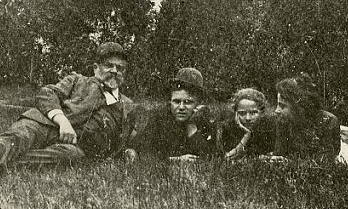
    PHOTOS: Dvořák and Bartók go al fresco

  • Dvořák & Bartók at Marlboro: Serenades Reimagined

    Dvořák & Bartók at Marlboro: Serenades Reimagined

    This week on “Music from Marlboro,” two Central European composers look back to the 18th century – in a sense. We’ll hear a serenade by Czech master Antonin Dvořák, and then a divertmento by Hungarian master Béla Bartók.

    I say in a sense, because both designations, “serenade” and “divertimento,” have their roots in the 18th century as entertainment music. The classical prototypes, as they were originally intended, avoided weighty arguments, profound introspection, and showy virtuosity of the type one might expect of more substantial forms, like the symphony, the concerto, or the string quartet.

    Dvořák’s unpretentious “Serenade for Winds” was given its first performance in 1878, when the composer was 37 years-old. The serenade is written in the tried-and-true “Slavonic style” that established Dvořák’s fame. Its instrumentation and emphasis on melody recall occasional and ceremonial serenades of the 18th century.

    We’ll hear a recording made in 1957, by Marlboro wind players directed by Marcel Moyse. Moyse co-founded the Marlboro Music Festival in 1951.

    In addition to being one of the greatest composers of the 20th century, Bartók was a pioneering ethnomusicologist, who did much to expand and deepen our musical understanding, through his documentary journeys and insights into the cultures of Eastern Europe and North Africa.

    He also happened to be one of the most innovative of musical thinkers, beating an alternative route to modernism through the assimilation of folk music and forging a highly personal idiom that owes little to either Stravinsky or Schoenberg.

    Bartók’s “Divertimento for String Orchestra,” from 1939, is a fascinating chimera. It takes its name from an 18th century form (appropriate for its neo-classical ambitions), shares qualities with the Baroque concerto grosso (with its small group of soloists at times contrasting with the greater body of strings), and yet remains distinctly of its time. Even here, the composer’s love of folk music is evident.

    The “Divertimento” was Bartók’s final composition before fleeing Nazi Europe for the United States. He was 58 years-old. He completed the piece in only fifteen days, while a guest at the Swiss chalet of conductor Paul Sacher, who had commissioned the work. Though it was composed very quickly, as befits a divertimento, Bartók left meticulous instructions for its performance.

    We’ll hear it played at Marlboro in 1974, by a string orchestra conducted by Sándor Végh. Végh actually knew Bartók. He participated in the first Hungarian performance of the composer’s String Quartet No. 5.

    I hope you’ll join me for a diverting hour, on the next “Music from Marlboro.” If you’re Hungary for worthwhile music, Czech it out, this Wednesday evening at 6:00 EST, on WWFM – The Classical Network and wwfm.org.

    Marlboro School of Music and Festival: Official Page


    PHOTOS: Dvořák and Bartók go al fresco

  • Dvořák & Bartók at Marlboro: Serenades & Divertimento

    Dvořák & Bartók at Marlboro: Serenades & Divertimento

    This week on “Music from Marlboro,” two Central European composers look back to the 18th century – in a sense. We’ll hear a serenade by Czech master Antonin Dvořák, and then a divertmento by Hungarian master Béla Bartók.

    I say in a sense, because both designations, “serenade” and “divertimento,” have their roots in the 18th century as entertainment music. The classical prototypes, as they were originally intended, avoided weighty arguments, profound introspection, and showy virtuosity of the type one might expect of more substantial forms, like the symphony, the concerto, or the string quartet.

    Dvořák’s unpretentious “Serenade for Winds” was given its first performance in 1878, when the composer was 37 years-old. The serenade is written in the tried-and-true “Slavonic style” that established Dvořák’s fame. Its instrumentation and emphasis on melody recall occasional and ceremonial serenades of the 18th century.

    We’ll hear a recording made in 1957, by Marlboro wind players directed by Louis Moyse.

    In addition to being one of the greatest composers of the 20th century, Bartók was a pioneering ethnomusicologist, who did much to expand and deepen our musical understanding, through his documentary journeys and insights into the cultures of Eastern Europe and North Africa.

    He also happened to be one of the most innovative of musical thinkers, beating an alternative route to modernism through the assimilation of folk music and forging a highly personal idiom that owes little to either Stravinsky or Schoenberg.

    Bartók’s “Divertimento for String Orchestra,” from 1939, is a fascinating chimera. It takes its name from an 18th century form (appropriate for its neo-classical ambitions), shares qualities with the Baroque concerto grosso (with its small group of soloists at times contrasting with the greater body of strings), and yet remains distinctly of its time. Even here, the composer’s love of folk music is evident.

    The “Divertimento” was Bartók’s final composition before fleeing Nazi Europe for the United States. He was 58 years-old. He completed the piece in only fifteen days, while a guest at the Swiss chalet of conductor Paul Sacher, who had commissioned the work. Though it was composed very quickly, as befits a divertimento, Bartók left meticulous instructions for its performance.

    We’ll hear it played at Marlboro in 1974, by a string orchestra conducted by Sándor Végh. Végh actually knew Bartók. He participated in the first Hungarian performance of the composer’s String Quartet No. 5.

    I hope you’ll join me for a diverting hour, on the next “Music from Marlboro.” If you’re Hungary for worthwhile music, Czech it out, this Wednesday evening at 6:00 EST, on WWFM – The Classical Network and wwfm.org.

    Marlboro School of Music and Festival: Official Page


    PHOTOS: Dvořák and Bartók go al fresco
  • Haydn & Heiden at Marlboro

    Haydn & Heiden at Marlboro

    Stereophonic homophones dominate this week’s “Music from Marlboro.” Worlds collide through the juxtaposition of music by Haydn and Heiden.

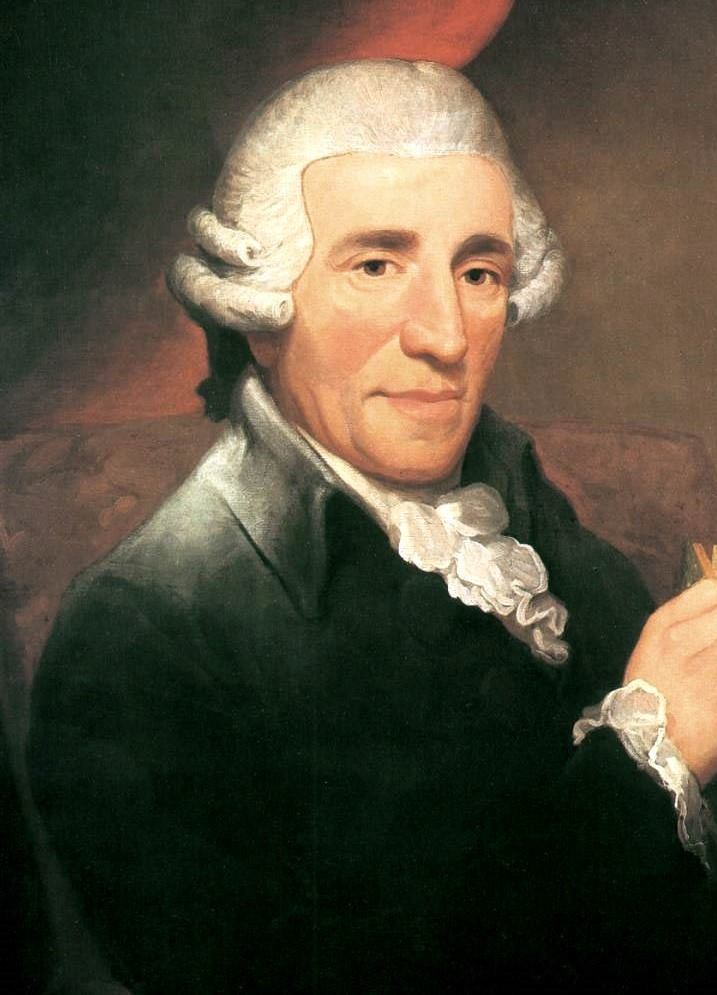
    Franz Joseph Haydn, of course, requires little introduction. For a quarter century, he was music director at the remote estate of Esterháza, where he essentially created the modern symphony and legitimized the string quartet. He established the piano trio as an accepted combination and standardized sonata form. His music was written for the delectation of Prince Nikolaus Esterházy and his associates. Even so, by the time of his death in 1809, at the age of 77, he had become one of the most celebrated composers in Europe.

    Bernhard HEIDEN was a Hindemith pupil, who fled fascism in Germany to settle in the American Midwest. There, he conducted the Detroit Chamber Orchestra and taught at the Art Center Music School. Later, he joined the faculty of the Indiana University School of Music. To him, it was more important to reach performers than an audience, for the practical reason that audiences change and performers need to believe in the music in order to be able to sell it. He composed prolifically right up until his death in 2000 at the age of 89.

    On this evening’s program, we’ll hear a serenade and two divertimentos (“divertimenti” for those who prefer the Italian). What’s the difference? There’s a lot of blurring of boundaries between these 18th century categories – divertimento, serenade, cassation, notturno. Basically it’s all entertainment music, at least as it was originally intended. No weighty arguments, profound introspection, or showy virtuosity of the type one might expect from a symphony, concerto, or string quartet.

    The cassation was often a piece designed for outdoor performance, a loosey-goosey assemblage of undemanding, blissfully short movements one might listen to while eating cucumber sandwiches or admiring a sculpted hedge.

    The interchangeability of the terms led Haydn to give his Divertmento in F the alternate title of “Cassation.” What’s in a name? We’ll hear it performed at the 1981 Marlboro Music Festival by violinists Lucy Chapman (Stoltzman) and Carmit Zori, violists Thomas Turner and Toby Hoffman, cellist Gary Hoffman, double bassist Carolyn Davis, oboists Elaine Douvas and John Ferrillo, hornists Robin Graham and Stewart Rose, and bassoonist Stefanie Przybylska.

    A serenade, too, was originally a light, tuneful diversion, often intended as “occasional” music (that is to say, music written for a specific occasion) or in someone’s honor. I guess somebody forgot to tell Heiden. Though his style is generally identified as neoclassical, it is neoclassicism in the mold of Hindemith. The structure is there, but I can’t say that his serenade of 1955 is all that buoyant, and the tunes are secondary. It does score points, however, for its unusual instrumentation.

    It was performed at the 1984 Marlboro Music Festival by bassoonist Nancy Goeres, violinist Saschko Gawriloff, violist Ah Ling Neu, and cellist Grace Bahng.

    We’ll round out the hour with a refreshing after dinner mint in the form of the Divertimento in F Major (K. 213) by Wolfgang Amadeus Mozart. It was performed at Marlboro in 1990 by oboists Rudolf Vrbsky and Alex Klein, bassoonists Clelia Goldings and Matthew Carr, and hornists Christine Chapman and Chris Komer.

    Forget your cares! Join me for an hour of diverting music on the next “Music from Marlboro,” this Wednesday evening at 6:00 EST, on WWFM – The Classical Network and wwfm.org.

    Marlboro School of Music and Festival: Official Page


    DUELING PORTRAITS: Haydn & Heiden

Tag Cloud

Aaron Copland (92) Beethoven (95) Composer (114) Film Music (123) Film Score (143) Film Scores (255) Halloween (94) John Williams (187) KWAX (229) Leonard Bernstein (101) Marlboro Music Festival (125) Movie Music (138) Opera (202) Philadelphia Orchestra (89) Picture Perfect (174) Princeton Symphony Orchestra (106) Radio (87) Ralph Vaughan Williams (85) Ross Amico (244) Roy's Tie-Dye Sci-Fi Corner (290) The Classical Network (101) The Lost Chord (268) Vaughan Williams (103) WPRB (396) WWFM (881)

DON’T MISS A BEAT

Receive a weekly digest every Sunday at noon by signing up here


RECENT POSTS