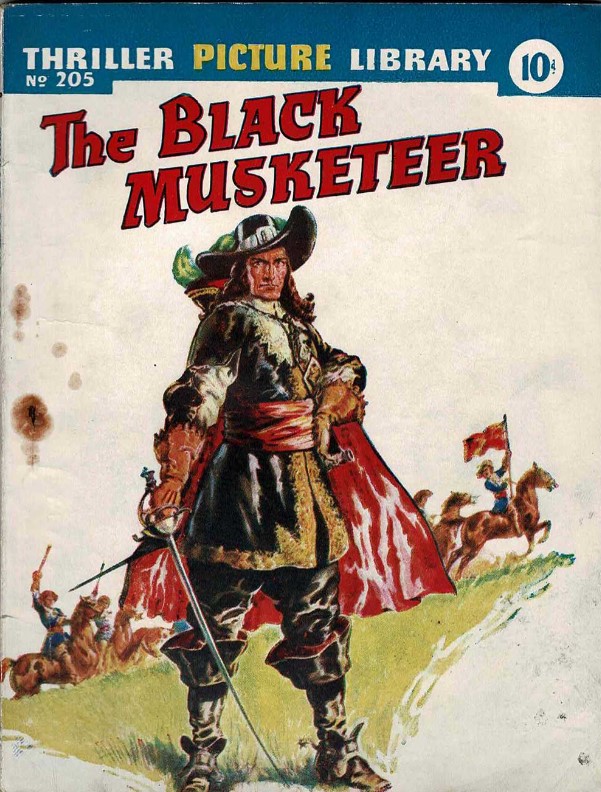
Very little is known about the Chevalier de Meude-Monpas. Among what we DO know is that he was a musketeer in the service of Louis XVI, who went into exile with the onset of the French Revolution. He also studied music in Paris and published six concertos for violin in 1786. In 1997, violinist Rachel Barton (now Rachel Barton Pine) put together a revelatory album for Cedille Records, “Violin Concertos by Black Composers of the 18th and 19th Centuries.” Meude-Monpas’ Violin Concerto No. 4 will be among the featured works this morning on “Sweetness and Light,” cumulatively guaranteed to put a smile on your face.*
Much better known, William Grant Still was regarded in his day as the “Dean of Afro-American Composers.” He the first composer of color to have a symphony performed by a major orchestra, the first to have a symphony widely performed, the first to conduct a major orchestra, and the first to have an opera televised nationally. A pupil of both George Whitefield Chadwick and Edgard Varèse, Still certainly had “serious” credentials, but he also worked in pit bands and wrote arrangements for Hollywood musicals. In many senses, he was the quintessential American composer. Also, he always knew how to write a good tune. This morning we’ll enjoy his “Danzas de Panama,” performed by the Oregon String Quartet.
It took nearly 90 years for Florence Price to become an overnight success. Price was the first African American woman to have a symphony performed by a major orchestra. Her Symphony No. 1 was played by the Chicago Symphony, conducted by Frederick Stock, in 1933. But it’s only fairly recently, after decades of comparative neglect, that her music has finally begun to gain traction. From a 2-disc set devoted to her piano works on the Guild label, we’ll hear Kirsten Johnson play “Dreamboat.”
Duke Ellington requires little introduction. He was a major figure in American music, especially in the field of jazz. But for the past hundred years or so, there has been quite a bit of “blurring of the lines” between genres of art music. In 1943, Ellington composed “New World a-Comin’,” a work for piano and 15-piece band. He never wrote down the piano part, so it was reconstructed by ear by Maurice Peress from a recording made of an Ellington concert at Carnegie Hall in 1943. Subsequently, Peress expanded the jazz band to full orchestra. The soloist on the recording we’ll hear, Jeffrey Biegel, obtained permission from Sir Roland Hanna to transcribe the improvised final cadenza from a recording Hanna made with the American Symphony Orchestra under Peress’ baton.
We’ll be enjoying our coffee black on “Sweetness and Light,” this Saturday morning at 11:00 EST/8:00 PST, exclusively on KWAX Classical Oregon!
Stream it, wherever you are, at the link:
https://kwax.uoregon.edu/
——–
* Please note: Meude-Monpas is not to be confused with that other swashbuckling composer, the Chevalier de Saint-Georges, whose music also appears on Barton Pine’s record.
Tag: Duke Ellington
-
Black Composers Shine on KWAX Radio
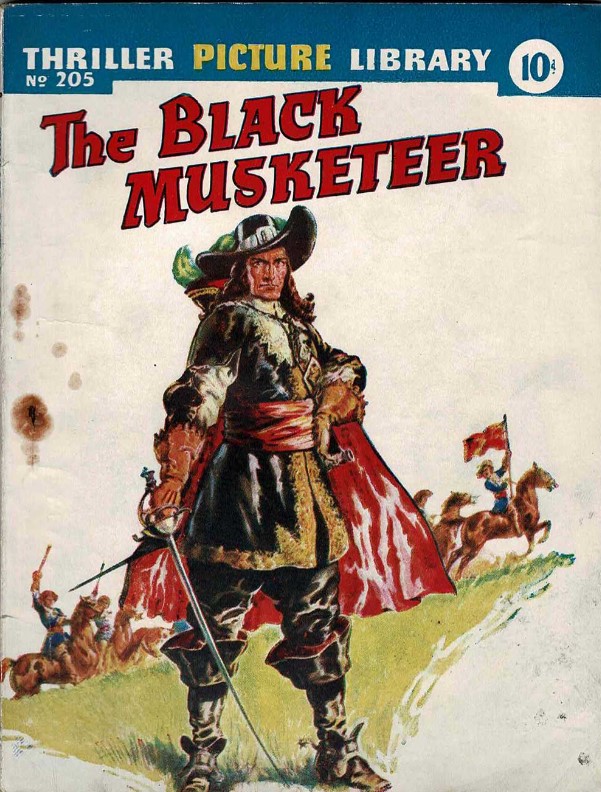
Very little is known about the Chevalier de Meude-Monpas. Among what we DO know is that he was a musketeer in the service of Louis XVI, who went into exile with the onset of the French Revolution. He also studied music in Paris and published six concertos for violin in 1786. In 1997, violinist Rachel Barton (now Rachel Barton Pine) put together a revelatory album for Cedille Records, “Violin Concertos by Black Composers of the 18th and 19th Centuries.” Meude-Monpas’ Violin Concerto No. 4 will be among the featured works this morning on “Sweetness and Light,” cumulatively guaranteed to put a smile on your face.*
Much better known, William Grant Still was regarded in his day as the “Dean of Afro-American Composers.” He the first composer of color to have a symphony performed by a major orchestra, the first to have a symphony widely performed, the first to conduct a major orchestra, and the first to have an opera televised nationally. A pupil of both George Whitefield Chadwick and Edgard Varèse, Still certainly had “serious” credentials, but he also worked in pit bands and wrote arrangements for Hollywood musicals. In many senses, he was the quintessential American composer. Also, he always knew how to write a good tune. This morning we’ll enjoy his “Danzas de Panama,” performed by the Oregon String Quartet.
It took nearly 90 years for Florence Price to become an overnight success. Price was the first African American woman to have a symphony performed by a major orchestra. Her Symphony No. 1 was played by the Chicago Symphony, conducted by Frederick Stock, in 1933. But it’s only fairly recently, after decades of comparative neglect, that her music has finally begun to gain traction. From a 2-disc set devoted to her piano works on the Guild label, we’ll hear Kirsten Johnson play “Dreamboat.”
Duke Ellington requires little introduction. He was a major figure in American music, especially in the field of jazz. But for the past hundred years or so, there has been quite a bit of “blurring of the lines” between genres of art music. In 1943, Ellington composed “New World a-Comin’,” a work for piano and 15-piece band. He never wrote down the piano part, so it was reconstructed by ear by Maurice Peress from a recording made of an Ellington concert at Carnegie Hall in 1943. Subsequently, Peress expanded the jazz band to full orchestra. The soloist on the recording we’ll hear, Jeffrey Biegel, obtained permission from Sir Roland Hanna to transcribe the improvised final cadenza from a recording Hanna made with the American Symphony Orchestra under Peress’ baton.
So, yeah, it’s February 1 – Black History Month – not that any excuse is required to share these delights. But it does ensure that they will make it to the air waves and, hopefully, your ears. We’ll be enjoying our coffee black on “Sweetness and Light,” this Saturday morning at 11:00 EST/8:00 PST, exclusively on KWAX, the radio station of the University of Oregon!
Stream it, wherever you are, at the link:
- Please note: Meude-Monpas is not to be confused with that other swashbuckling composer, the Chevalier de Saint-Georges, whose music also appears on Barton Pine’s record.
-

Duke Ellington Turns 125 Cool Cat Birthday
Today is the 125th anniversary of Duke Ellington’s birth. With late April temperatures expected to push 90 on the East Coast, here’s a photo of this coolest of cats keeping cool with some ice cream.
Duke’s cool lesson lost on an uncool audience
The Duke and Ella on Ed Sullivan
“Hot and Bothered”
“Mr. Gentle and Mr. Cool”
Duke unadorned (highly recommended)
-
MLK Ellington Music Meaning Faith
“Everybody longs for meaning. Everybody needs to love and be loved. Everybody needs to clap hands and be happy. Everybody longs for faith. In music… there is a stepping stone towards all of these.”
– Martin Luther King, Jr.
Duke Ellington’s eulogy to MLK, “Three Black Kings” (King of the Magi, King Solomon, and Martin Luther King Jr.)
https://www.youtube.com/watch?v=lhr1ZQ7vPeY
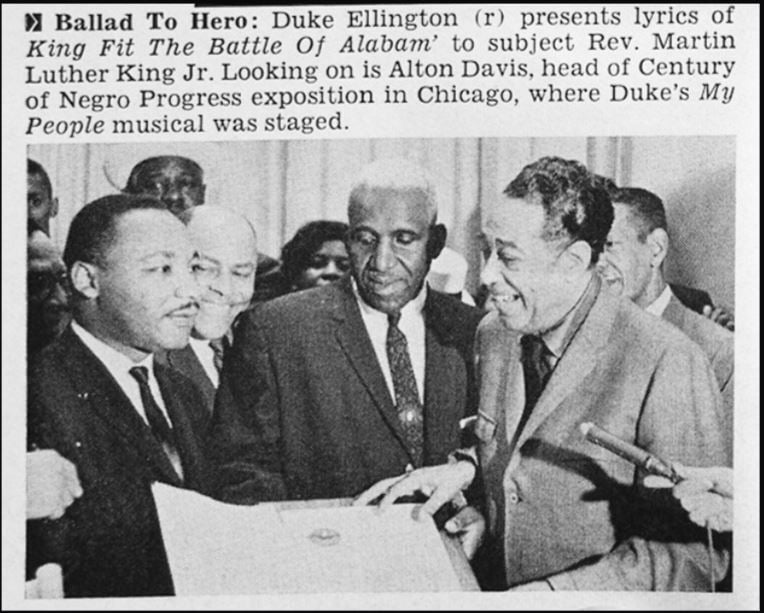
“King Fit the Battle of Alabam’”
Ellington meets MLK in Chicago
-
Paris Blues Guitarist Serge Reggiani Mystery Solved
A few days ago, following the death of Sidney Poitier, I shared a clip from “Paris Blues” (1961), in which Louis Armstong engages in a “battle royal” in a subterranean jazz club with a trombonist played by Paul Newman. Poiter’s character plays tenor sax.
Unsurprisingly, the actors are ghosted on the soundtrack by Murray McEachern (Newman) and Paul Gonsalves (Poitier), both members of Duke Ellington’s band. Ellington also composed the film’s underscore. To refresh your memory, here’s the clip I included with the original post:
Now, only this morning, I was asked about the identity of the guitarist in the scene. The answer turned out to be pretty involved, so to increase the return on my investment, I figured I might as well recycle it as a separate post. I hope you find it interesting:
“This was a tangle that took me a little while to unravel. There are two guitarists credited among the personnel of Ellington’s offscreen band (ghosting for Newman and the rest): Les Spann (who is black) and Jimmy Gourley (who is white, but looks nothing like the character).
“For a minute, I thought maybe it could be Johnny Reinhardt, younger brother of Django Reinhardt (who died in 1953). Johnny was also featured in a film called ‘Paris Blues,’ but I believe this was an entirely different animal, possibly a short. None of these guitarists resembles the musician onscreen.
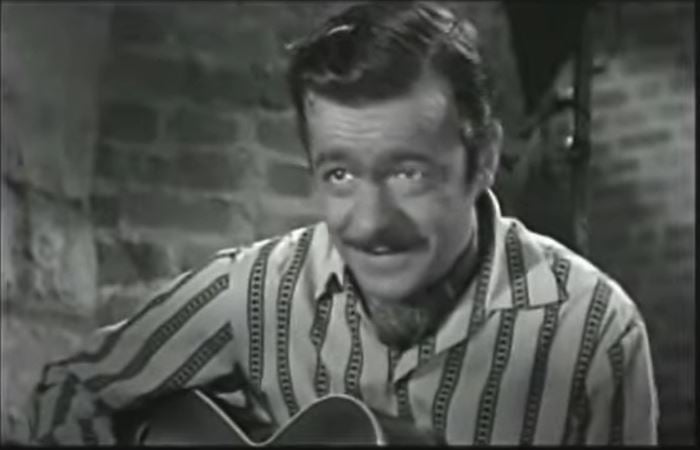
“Finally, I figured out it was actor Serge Reggiani (photo attached), credited as The Gypsy. A few years after his appearance in ‘Paris Blues,’ Reggiani embarked on a parallel career as a singer of French chansons.
“I was thrown off the scent by TCM, of all things, since they misattribute the part to Roger Blin in the clip below. Blin, who actually played Fausto the Moor, was also a renowned director, especially in connection with the plays of Samuel Beckett. He staged the first performances of ‘Waiting for Godot,’ ‘Happy Days,’ and ‘Endgame’ (the latter of which was dedicated to him).
“Here are a few glimpses of Reggiani the actor, misidentified as Blin:
Another musical mystery solved. I hope Turner Classic Movies sees this and offers me a job!
BONUS: Reggiani sings “Sarah”
Tag Cloud
Aaron Copland (94) Beethoven (95) Composer (114) Film Music (148) Film Score (143) Film Scores (255) Halloween (97) John Williams (196) KWAX (232) Leonard Bernstein (105) Marlboro Music Festival (125) Movie Music (163) Mozart (91) Opera (215) Philadelphia Orchestra (90) Picture Perfect (174) Princeton Symphony Orchestra (110) Radio (90) Ross Amico (244) Roy's Tie-Dye Sci-Fi Corner (290) The Classical Network (101) The Lost Chord (269) Vaughan Williams (107) WPRB (397) WWFM (881)