Tag: Elgar

  • Elgar Remastered Accidental Stereo

    Elgar Remastered Accidental Stereo

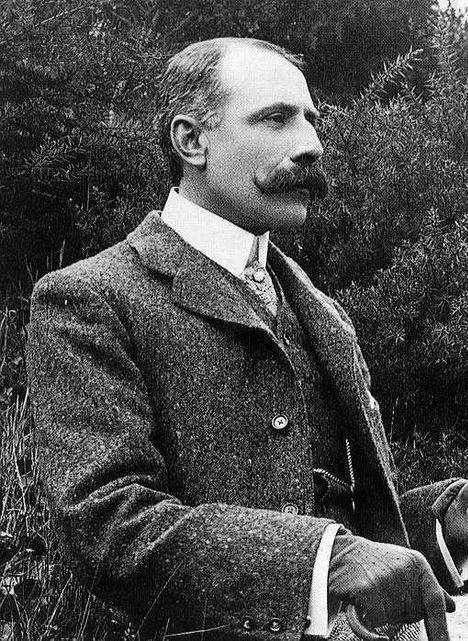
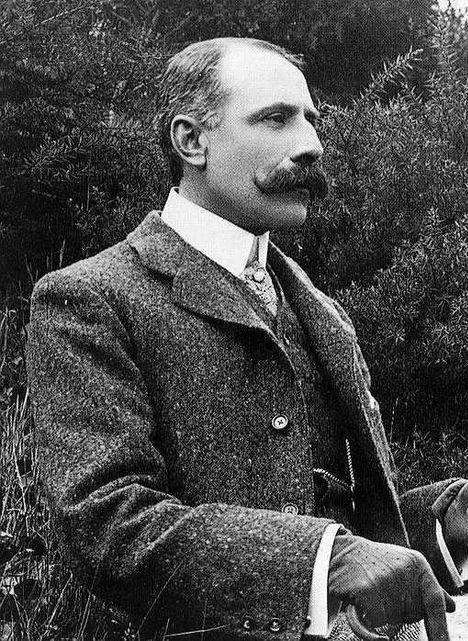
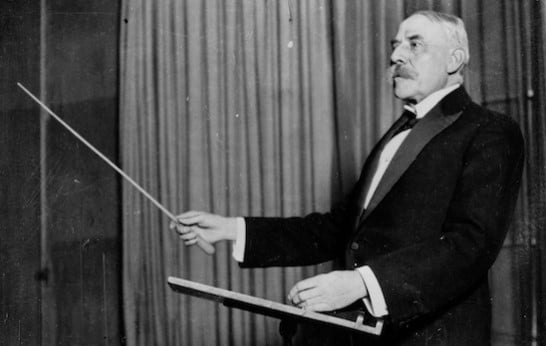
    This Sunday night on “The Lost Chord,” there may not be glorious Technicolor or breathtaking Cinemascope, but what would Cole Porter say, to hear Sir Edward Elgar in stereophonic sound?

    Elgar was one of the first of the great composers to endeavor to set down “definitive” interpretations of his own works on recordings. Or so it has been thought. But did Elgar really regard these performances as definitive? In fact, Elgar took great care to “grade” the various takes from his recording sessions. Some of these, he instructed, were to be destroyed outright; others were held, as the composer took the time to consider.

    What emerges, upon listening to a 4-CD set, “Elgar Remastered,” on the SOMM Recordings label, are the impressions that (1) Elgar was fairly meticulous when it came to preserving his legacy, and (2) he also understood that there’s more than one way to skin a cat. Rediscovered alternative takes make clear that the composer was amenable to looking at his own works from a variety of perspectives.

    For their parts, the conscientious engineers at EMI employed multiple machines to guard against technological failure. This was back in the late 1920s and early ‘30s. Now, for the first time, the elements have been brought together and skillfully combined to create a kind of “accidental” stereo.

    Engineer Lani Spahr has worked wonders with these recordings, from the private collection of Arthur Reynolds, chairman of the North American Branch of the Elgar Society. He also goes into considerable detail in his liner notes – in fact, to a degree that would be impractical to relate here.

    A good deal of the set is devoted to recordings and alternative takes of Elgar’s Cello Concerto. As on the composer’s authorized recording, issued on EMI, Beatrice Harrison is the soloist. These include the first complete electrical recording, from 1928 – the one which would ultimately be published, in mono – with previously unissued, alternative takes from the same sessions. There is also an earlier, truncated recording from 1920, set down using the acoustic process, and a performance of the concerto’s Adagio movement alone, with Harrison accompanied at the keyboard by Princess Victoria.

    The gem of the set is Harrison’s celebrated 1928 recording, heard here for the first time entirely in stereo, or what passes for stereo.

    Harrison was Elgar’s preferred soloist. He lavished praise on her performances, even as she took liberties with the score. At the session for this particular recording, he was overheard to say, “Give it ‘em, Beatrice, give it ‘em. Don’t mind about the notes or anything. Give ‘em the spirit.”

    Worlds away from the effusive, heart-on-the-sleeve approach of Jacqueline du Pré, Harrison’s interpretation is nonetheless riveting on its own terms. As with the other recordings in the collection, it is a kind of time capsule of period performance practice – with swooping portamenti (audible slides between notes) – and the musicians’ flexibility in regard to both tempo and phrasing.

    And Elgar can be such a volatile conductor! In addition, we’ll hear a cracking rendition of the “Cockaigne Overture” and a performance of the prelude to the oratorio “The Kingdom,” which really takes flight.

    Hear Elgar as you’ve never heard him before – in “accidental” stereo – on “Pomp and Happenstance,” this Sunday night at 10:00 EDT, on WWFM – The Classical Network and wwfm.org.
  • Royal Albert Hall Celebrates & Classical Greats

    Royal Albert Hall Celebrates & Classical Greats

    Quite the day for musical Anglophiles!

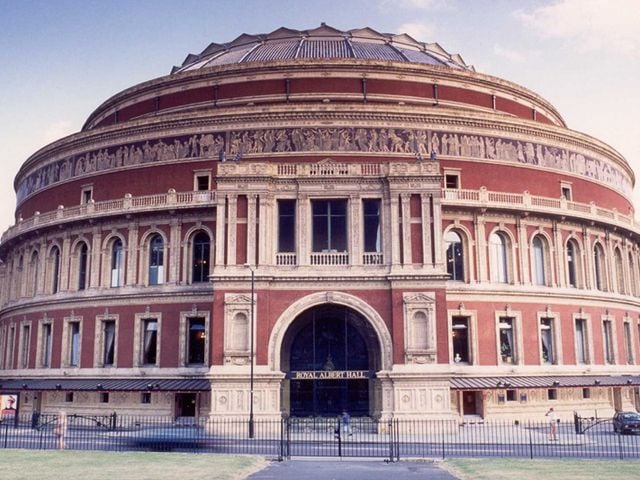
    In addition to it being the birthdays today of Sir William Walton and Sir Richard Rodney Bennet, it’s also the 150th anniversary of the opening of Royal Albert Hall.

    Wagner conducted there. Hitchcock filmed there. Muhammad Ali fought there.

    The hall was opened by Queen Victoria in 1871.

    Of course, at this point, a lot of emphasis is being placed on the popular bands and singers who performed there. I don’t know why, but I have never had the slightest interest in rock music. I continue to scratch my head at the rest of the world.

    Here’s an article on the history of Albert Hall that includes some of its quirkier events (still a little weak on the classical music, which you’d probably expect from the derogatory use of “stuffy” in the first sentence):

    https://www.bbc.com/news/uk-england-london-56428543

    Hate to refer you to the Wikipedia page, but it’s got more information than most:

    https://en.wikipedia.org/wiki/Royal_Albert_Hall

    Footage of Royal Albert Hall in 1967:

    Hitchcock filmed the climax of both versions of “The Man Who Knew Too Much” there, in 1934 and 1956. Bernard Herrmann is seen conducting the orchestra in the 1956 version. Don’t watch the clip if you haven’t seen the film yet and plan to do so!

    Audio of Elgar conducting his “Enigma Variations” there in 1926:

    Vaughan Williams conducting his Symphony No. 5 there in 1952:

  • Happy Birthday Schumann Symphony No 4

    Happy Birthday Schumann Symphony No 4

    Happy birthday, Robert Schumann!

    Here’s a fabulous performance of Schumann’s Symphony No. 4, from perhaps an unexpected source:

    I. https://www.youtube.com/watch?v=y-V6qHLCyto

    II. https://www.youtube.com/watch?v=jXWHDBcAy0o

    III. https://www.youtube.com/watch?v=22Gr4oS8xAI

    IV. https://www.youtube.com/watch?v=l5gyhln2Veg

    Nice to hear Sir Adrian excel in something other than Elgar and Vaughan Williams!

  • Fauré and Elgar A Musical Meeting

    Fauré and Elgar A Musical Meeting

    On Gabriel Fauré’s birthday, I am fascinated to learn that the composer was not only hugely popular in England, having visited there many times, he was also greatly admired by Sir Edward Elgar.

    Fauré was staying the month with Elgar’s friend, Frank Schuster, prior to the London premiere of Elgar’s Symphony No. 1, in 1908. Following a rehearsal, the two attended a dinner party held by Schuster in their honor.

    What did the two of them talk about? Their moustaches, I hope.

  • Fauré Elgar Bromance

    Fauré Elgar Bromance

    On Gabriel Fauré’s birthday, I am fascinated to learn that the composer was not only hugely popular in England, having visited there many times, he was also greatly admired by Sir Edward Elgar.

    Fauré was staying the month with Elgar’s friend, Frank Schuster, prior to the London premiere of Elgar’s Symphony No. 1, in 1908. Following a rehearsal, the two attended a dinner party held by Schuster in their honor.

    What did the two of them talk about? Their moustaches, I hope.

Tag Cloud

Aaron Copland (92) Beethoven (95) Composer (114) Film Music (119) Film Score (143) Film Scores (255) Halloween (94) John Williams (185) KWAX (229) Leonard Bernstein (99) Marlboro Music Festival (125) Movie Music (134) Opera (198) Philadelphia Orchestra (86) Picture Perfect (174) Princeton Symphony Orchestra (106) Radio (87) Ralph Vaughan Williams (85) Ross Amico (244) Roy's Tie-Dye Sci-Fi Corner (290) The Classical Network (101) The Lost Chord (268) Vaughan Williams (102) WPRB (396) WWFM (881)

DON’T MISS A BEAT

Receive a weekly digest every Sunday at noon by signing up here


RECENT POSTS