Tag: Elgar

  • Fauré and Elgar A Musical Friendship

    Fauré and Elgar A Musical Friendship

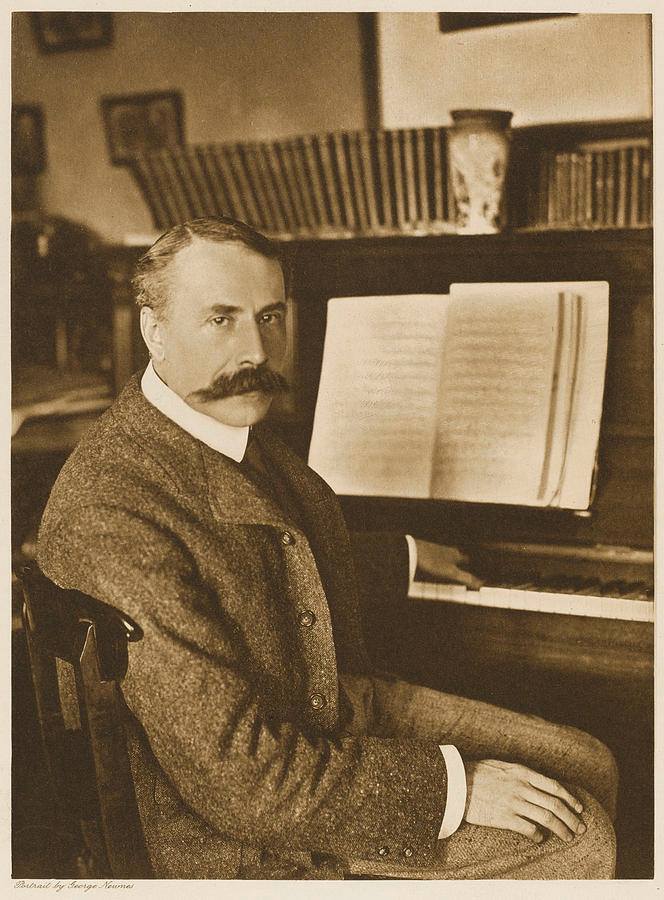
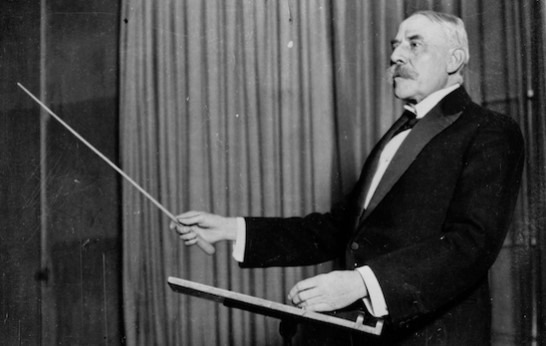
    On Gabriel Fauré’s birthday, I am fascinated to learn that the composer was not only hugely popular in England, having visited there many times, he was also greatly admired by Sir Edward Elgar.

    Fauré was staying the month with Elgar’s friend, Frank Schuster, prior to the London premiere of Elgar’s Symphony No. 1, in 1908. Following a rehearsal, the two attended a dinner party held by Schuster in their honor.

    What did the two of them talk about? Their moustaches, I hope.

  • Elgar’s Third: A Symphony Realized

    Elgar’s Third: A Symphony Realized

    What can I say? I’m a man of contradictions.

    Still fairly close on the heels of last Saturday’s post in which I expressed my reservations surrounding the completion of Mahler’s Tenth Symphony, here I am, celebrating the realization of Elgar’s sketches for an unfinished Third.

    This Sunday night on “The Lost Chord,” we’ll have a remarkably vivid piece of wishful thinking.

    Sir Edward Elgar produced no major works following the death of his wife in 1920. It was his friend and champion, George Bernard Shaw, who, in an attempt to keep one of England’s greatest composers from withering on the vine, persuaded the BBC to commission from Elgar a Third Symphony.
    Elgar, who died in 1934, worked at the piece during the last year of his life, jotting down his ideas – some merely a few bars in length; others, pages in full score. As his health deteriorated, he realized he would never be able to complete the work, and he made contradictory remarks concerning his intentions over the fate of the sketches.

    Another of his friends, the violinist W.H. Reed, passed many hours playing through what existed of the piece, with the composer at the piano. After Elgar’s death, Reed published 40 pages worth of sketches into a memoir, which kept the work at the periphery of the public consciousness.

    Several attempts were made over the decades to make something more of the sketches, but musicians and musicologists were always stopped short by the Elgar estate.

    The composer Anthony Payne became interested in the fragments in 1972. For many years, he worked at a realization of the piece, again meeting resistance from Elgar’s heirs, until it became apparent that, due to the publication of the sketches in Reed’s book, the material would soon fall into the public domain. The family opted to capitalize on what control it had left and finally authorized Payne’s efforts.

    His realization was given its premiere in 1998 and granted broad exposure through performances by major orchestras, particularly in England and the United States (including the Philadelphia Orchestra), and the piece has been recorded at least four times.

    The formal title is “Edward Elgar: The Sketches for Symphony No. 3, Elaborated by Anthony Payne” – known for short as the “Elgar/Payne Symphony No. 3.” You’ll have a chance to hear it tonight.

    I guess the reason I am so forgiving of Elgar’s Third is because at no level is anyone trying to pass it off as Elgar’s actual symphony. Rather, it is a fascinating amalgam that manages both to recall Elgar and bring out the best in Payne. The two creative voices mix remarkably well to form a cohesive work of art.

    I hope you’ll join me for “No Payne, No Gain,” this Sunday night at 10:00 EDT, on WWFM – The Classical Network and wwfm.org.


    PHOTOS: A Payne on Elgar’s side

  • Elgar & Vaughan Williams Quintets Marlboro

    Elgar & Vaughan Williams Quintets Marlboro

    English music is more than simply ham, lamb, and strawberry jam. On the next “Music from Marlboro,” we’ll highlight one of the most deeply personal utterances of perhaps Albion’s most respected composer.

    In the spring of 1918, Sir Edward Elgar underwent an operation in London to have an infected tonsil removed. At the time, this was considered a dangerous operation for a 61 year-old man. When the composer regained consciousness, the first thing he did was ask for a piece of paper, and he jotted down the opening theme of what was to become his last major work, the Cello Concerto in E minor.

    The Elgars retired to Brinkwells, a thatched cottage that was their summer home near Fittleworth, in Sussex, so that they could have time to relax and recover from their ailments. Even in this idyllic setting, with its trees and farmland, the guns could be heard at night rumbling across the Channel. The First World War had a profound effect on Elgar, as it did on everyone, but most especially those of the older generation, who had regarded the Boer War as a yardstick against which the cost and loss of armed conflict had been measured.

    Nevertheless, by August, Elgar was composing again. In quick succession came the Violin Sonata in E minor, the Piano Quintet in A minor, and the String Quartet in E minor. All three works were given their first performances one hundred years ago, in May of 1919, at which point Elgar launched into the Cello Concerto, which was to be his final masterpiece.

    Elgar labored with great intensity, rising at 4 or 5:00 every morning. His music from this period is spare and almost confessional in nature, colored by nostalgia, introspection, and a kind of sad beauty.

    But when it came time to play through the quintet, the composer was surrounded by some of his closest confidantes, and he couldn’t have been happier. These included W.H. Reed, with whom he had worked on the Violin Concerto; Albert Sammons, who would make the concerto’s first complete recording, and Felix Salmond, who would assist him on the Cello Concerto.

    We’ll hear a performance of Elgar’s Piano Quintet from the 2002 Marlboro Music Festival, featuring pianist Jeremy Denk, violinists Erin Keefe and Bradley Creswick, violist Teng Li, and cellist Joel Noyes.

    That will be prefaced by another quintet, from 1912, by Ralph Vaughan Williams. Vaughan Williams’ “Phantasy Quintet” was one of a number of works commissioned from England’s great composers by Walter Wilson Cobbett, a businessman and amateur musician whose dual passions were chamber music and music of the Elizabethan era. (“Phantasy” was Cobbett’s preferred spelling.)

    Vaughan Williams’ quintet is full of Tudor inflections and stamped by the composer’s tell-tale love of folk music. RVW doubles his violas, and the instrument is heard to great effect throughout the piece. We’ll enjoy it in a 1975 performance from Marlboro, featuring violinists James Buswell and Sachiko Nakajima, violists Philipp Naegele and Caroline Levine, and cellist Anne Martindale.

    I hope you’ll join me for the quintessence of English quintets – and one fantastic phantasy – on the next “Music from Marlboro,” this Wednesday evening at 6:00 EDT, on WWFM – The Classical Network and wwfm.org.

    Marlboro School of Music and Festival: Official Page
  • Elgar Remastered in Accidental Stereo

    Elgar Remastered in Accidental Stereo

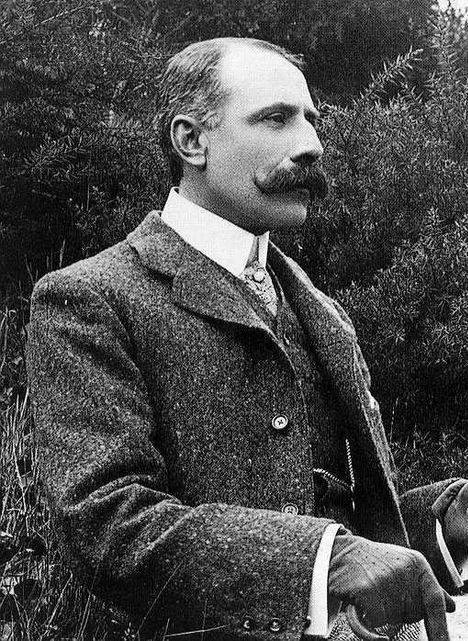
    This Sunday night on “The Lost Chord,” we’ve a present for Sir Edward Elgar, on his birthday.

    Elgar was one of the first of the great composers to endeavor to set down “definitive” interpretations of his own works on recordings. Or so it has been thought. But did Elgar really regard these performances as definitive? In fact, Elgar took great care to “grade” the various takes from his recording sessions. Some of these, he instructed, were to be destroyed outright; others were held, as the composer took the time to consider.

    What emerges, upon listening to a 4-CD set, “Elgar Remastered,” on the SOMM Recordings label, are the impressions that (1) Elgar was fairly meticulous when it came to preserving his legacy, and (2) he also understood that there’s more than one way to skin a cat. Rediscovered alternative takes make clear that the composer was amenable to looking at his own works from a variety of perspectives.

    For their parts, the conscientious engineers at EMI employed multiple machines to guard against technological failure. This was back in the late 1920s and early ‘30s. Now, for the first time, the elements have been brought together and skillfully combined to create a kind of “accidental” stereo.

    Engineer Lani Spahr has worked wonders with these recordings, from the private collection of Arthur Reynolds, chairman of the North American Branch of the Elgar Society. He also goes into considerable detail in his liner notes – in fact, to a degree that would be impractical to relate here.

    A good deal of the set is devoted to recordings and alternative takes of Elgar’s Cello Concerto. As on the composer’s authorized recording, issued on EMI, Beatrice Harrison is the soloist. These include the first complete electrical recording, from 1928 – the one which would ultimately be published, in mono – with previously unissued, alternative takes from the same sessions. There is also an earlier, truncated recording from 1920, set down using the acoustic process, and a performance of the concerto’s Adagio movement alone, with Harrison accompanied at the keyboard by Princess Victoria.

    The gem of the set is Harrison’s celebrated 1928 recording, heard here for the first time entirely in stereo, or what passes for stereo.

    Harrison was Elgar’s preferred soloist. He lavished praise on her performances, even as she took liberties with the score. At the session for this particular recording, he was overheard to say, “Give it ‘em, Beatrice, give it ‘em. Don’t mind about the notes or anything. Give ‘em the spirit.”

    Worlds away from the effusive, heart-on-the-sleeve approach of Jacqueline du Pré, Harrison’s interpretation is nonetheless riveting on its own terms. As with the other recordings in the collection, it is a kind of time capsule of period performance practice – with swooping portamenti (audible slides between notes) – and the musicians’ flexibility in regard to both tempo and phrasing.

    And Elgar can be such a volatile conductor! In addition, we’ll hear a cracking rendition of the “Cockaigne Overture” and a performance of the prelude to the oratorio “The Kingdom,” which really takes flight.

    Hear Elgar as you’ve never heard him before – in “accidental” stereo – on “Pomp and Happenstance,” this Sunday night at 10:00 EDT, on WWFM – The Classical Network and wwfm.org.

  • Celebrating Adrian Boult and Musical Birthdays

    Celebrating Adrian Boult and Musical Birthdays

    As a self-professed anglophile, I do so enjoy the recordings of Sir Adrian Boult. I am especially grateful for the famous ones, the recordings and re-recordings of the repertoire with which he is most closely associated – the works of Elgar, Vaughan Williams, Holst, and some of the lesser sons of Albion.

    But Boult’s interests – and excellence – extended across a considerably wider field, and though not always reflected in the comparative timidity of what record companies were prepared to roll the dice on, Sir Adrian was always game for Bach, Beethoven, Verdi, Stravinsky, and even the Second Viennese School.

    I’m hoping to reflect just a little of that questing spirit in what I have to work with, this afternoon on The Classical Network, as I celebrate Boult’s birthday with compelling performances of Sibelius and Schumann alongside perhaps the more expected fare.

    It will be a very competitive playlist, however, as I’d also like to offer salutes to John Antill, Franco Corelli, Asger Hamerik, Josef Krips, Karl Hermann Pillney, and Giuseppe Tartini, all of whom were also born on this date. I’ve only got three hours to do so, and each of these figures, it seems, is more fascinating than the last.

    When so spoiled for choice, what’s a poor radio host to do? Sense my frantic indecision when you tune in today, from 4 to 7 p.m. EDT, to WWFM – The Classical Network and wwfm.org.


    PHOTO: Boult, a spring chicken at 80. He died in 1983, at the age of 93.

Tag Cloud

Aaron Copland (92) Beethoven (95) Composer (114) Film Music (119) Film Score (143) Film Scores (255) Halloween (94) John Williams (185) KWAX (229) Leonard Bernstein (99) Marlboro Music Festival (125) Movie Music (134) Opera (198) Philadelphia Orchestra (86) Picture Perfect (174) Princeton Symphony Orchestra (106) Radio (87) Ralph Vaughan Williams (85) Ross Amico (244) Roy's Tie-Dye Sci-Fi Corner (290) The Classical Network (101) The Lost Chord (268) Vaughan Williams (102) WPRB (396) WWFM (881)

DON’T MISS A BEAT

Receive a weekly digest every Sunday at noon by signing up here


RECENT POSTS