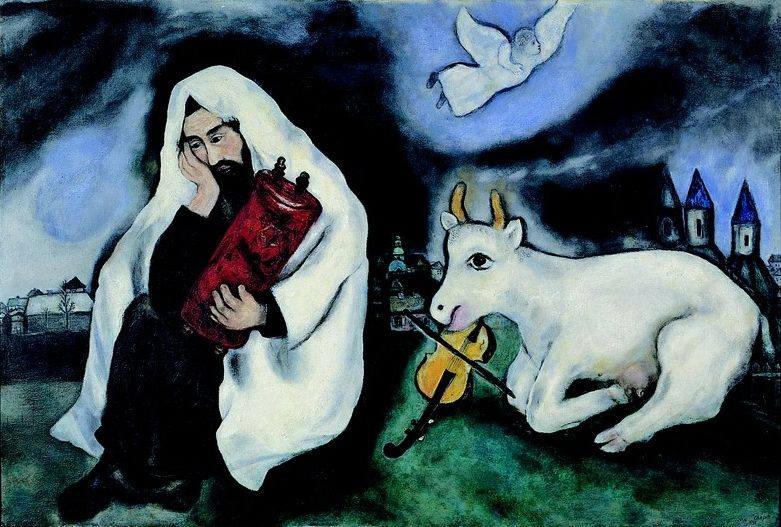
Yom Kippur, the Day of Atonement, begins at sundown. To mark the occasion, the holiest day on the Jewish calendar, I’ll present Jacob Weinberg’s String Quartet, Op. 55, which incorporates melodies for the High Holy Days; Enest Bloch’s moving “Israel Symphony;” Joseph Joachim’s “Hebrew Melodies;” David Stock’s “Yizkor;” and Emil Nikolaus von Reznicek’s “Symphonic Variations on ‘Kol Nidre.’” It all begins at 2 p.m. EDT, on WWFM – The Classical Network and wwfm.org. G’mar Hativa Tova.
Tag: Ernest Bloch
-

Bloch’s “America” An Immigrant’s Rhapsody
He came to love and revere his adopted country as only an outsider could.
Just in time for Independence Day, we’ll have music by immigrant-turned-naturalized-American-citizen, Ernest Bloch. Bloch, born in Switzerland, is probably best remembered for his music on Jewish themes, including the rhapsody for cello and orchestra, “Schelomo,” the suite for violin and piano “Baal Shem,” and the humanitarian oratorio, “Sacred Service.”
With a rise in anti-Semitism in Europe, Bloch decided to make the United States his permanent home. His epic rhapsody, “America,” was written, according to the composer, “in love for this country, in reverence to its past, in faith in its future.” He dedicated the work to Abraham Lincoln and Walt Whitman.
Bloch first conceived the idea for the piece in 1916, as his steamer entered New York Harbor. The conflict of the First World War gave further impetus to the composition of what he envisioned as an American anthem, but it wasn’t until 1925 that the work began to take concrete form.
For modern listeners, it’s possible that this symphony in all but name crosses the line at times into the Realm of Hokey, with its quotations of “Pop Goes the Weasel” and “Yankee Doodle” – it is certainly a time capsule – however, Bloch’s heartfelt conviction and his love for his adopted country remain palpable.
Hear Bloch himself, full of patriotic fervor, introduce this homage to his adopted land. Leopold Stokowski conducts the Symphony of the Air. I hope you’ll join me for “Rhapsody in Red, White and Blue,” this Sunday night at 10:00 EDT, on WWFM – The Classical Network and wwfm.org.
Bloch was also interested in the visual arts, especially photography, and developed a close friendship with Alfred Stieglitz, which you can read about here:
http://ericjohnsonphoto.com/ernest-bloch-and-alfred-stieglitz-a-sunday-morning-conversion/
-
Forgotten Swiss Music Bloch & Huber
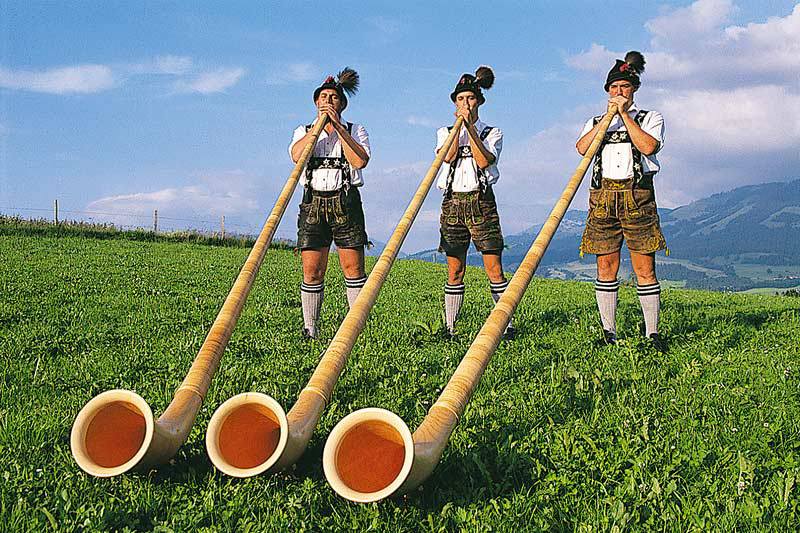
Enough with your jokes about alphorns and cuckoo clocks! This Sunday night on “The Lost Chord,” we listen to forgotten music from Switzerland.
Ernest Bloch, who is best known for his music on Jewish themes (such as his Hebraic rhapsody “Schelomo”), actually spent most of his life in the United States. He died in Portland, OR, in 1959, at the age of 78.
50 years earlier, while still in Switzerland, he composed his song cycle “Poèmes d’automne.” At the time, he was at work on his opera, “Macbeth,” but was sidelined when he made the acquaintance of a young poet by the name of Beatrix Rodès. He fell instantly in love with her, and set four of her poems within two months. Rodès would eventually become his mistress, though in the end Bloch chose to remain with his wife. It’s said that the texts, even in the original French, are of dubious literary quality.
The composer arranged them to form a kind of progression, in which a woman passes from sadness and desolation, to peace and love, to lamentation for the passing of her beauty, to an air of serenity as she becomes a priestess.
Okay, so it’s not his strongest work, but it is seasonal and interesting to listen to.
Hans Huber, who lived from 1852 to 1921, was the composer of nine symphonies (of which he acknowledged eight), five operas, and a number of concertos for various instruments. His four concertos for piano are somewhat unusual in that, like Brahms’ experiments in the form, they are made up of four movements, with the addition of a scherzo, as opposed to the customary three.
The Piano Concerto No. 3 first appeared on a concert in Basel, in February of 1899, which also included Beethoven’s “Leonore Overture No. 3” and Berlioz’s “Harold in Italy.”
It’s an unusual piece, for, among other things, presenting in the first movement the theme from the work’s finale as the underpinnings of a passacaglia.
I hope you’ll join me for an hour of forgotten music from Switzerland – “Swiss Missed” – this Sunday night at 10:00 EDT, on WWFM – The Classical Network and wwfm.org.
-
America Through Foreign Eyes on WPRB
Show me the money!
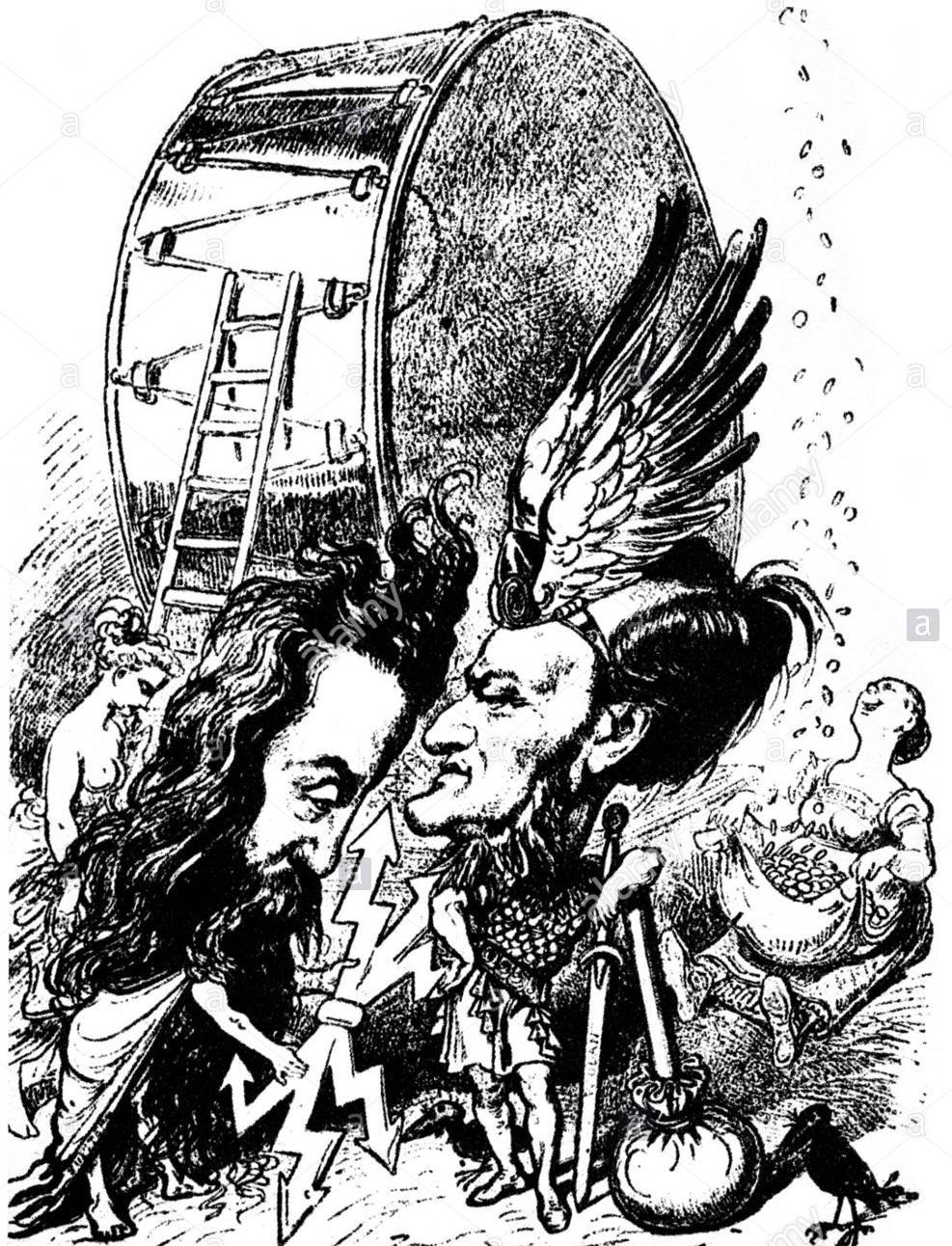
That’s what Richard Wagner said when he was approached to write something for the 1876 Centennial Exhibition in Philadelphia. He responded with an execrable march, which he himself admitted he had only done for the $5000, a very great sum at the time. America was, after all, the Land of Opportunity.
But not everyone’s motives were so transparently mercenary. Ernest Bloch composed his epic rhapsody for orchestra, “America,” in sincere appreciation of his adopted homeland. Tune in to WPRB this morning to hear these works and others like them, as we celebrate America from foreign perspectives, in anticipation of Independence Day.
We view the promise of America from distant shores this morning from 6 to 11 EDT, on WPRB 103.3 FM and wprb.com. May the Fourth be with you, on Classic Ross Amico.
-
Yom Kippur Eve Music on WWFM
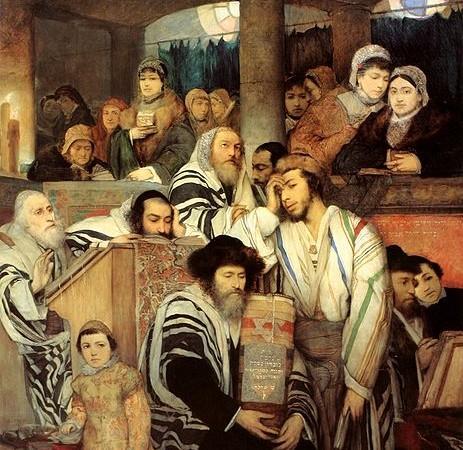
Today is the eve of Yom Kippur. The holiest day on the Jewish calendar begins at sunset. Join me this afternoon for Enest Bloch’s moving “Israel Symphony,” David Stock’s “Yizkor,” and a setting of “Kol Nidre.” They’ll be part of the usual mix, between noon and 4 EDT on WWFM – The Classical Network and at wwfm.org.
Tag Cloud
Aaron Copland (94) Beethoven (95) Composer (114) Film Music (149) Film Score (143) Film Scores (255) Halloween (97) John Williams (197) KWAX (232) Leonard Bernstein (105) Marlboro Music Festival (125) Movie Music (164) Mozart (91) Opera (215) Philadelphia Orchestra (90) Picture Perfect (174) Princeton Symphony Orchestra (110) Radio (90) Ross Amico (244) Roy's Tie-Dye Sci-Fi Corner (290) The Classical Network (101) The Lost Chord (269) Vaughan Williams (107) WPRB (397) WWFM (881)