Tag: Eugene Ormandy

  • Rachmaninoff’s Lost Symphonic Dances Rediscovered

    Rachmaninoff’s Lost Symphonic Dances Rediscovered

    On September 4, Marston Records will release a newly rediscovered document of Sergei Rachmaninoff performing his “Symphonic Dances.”

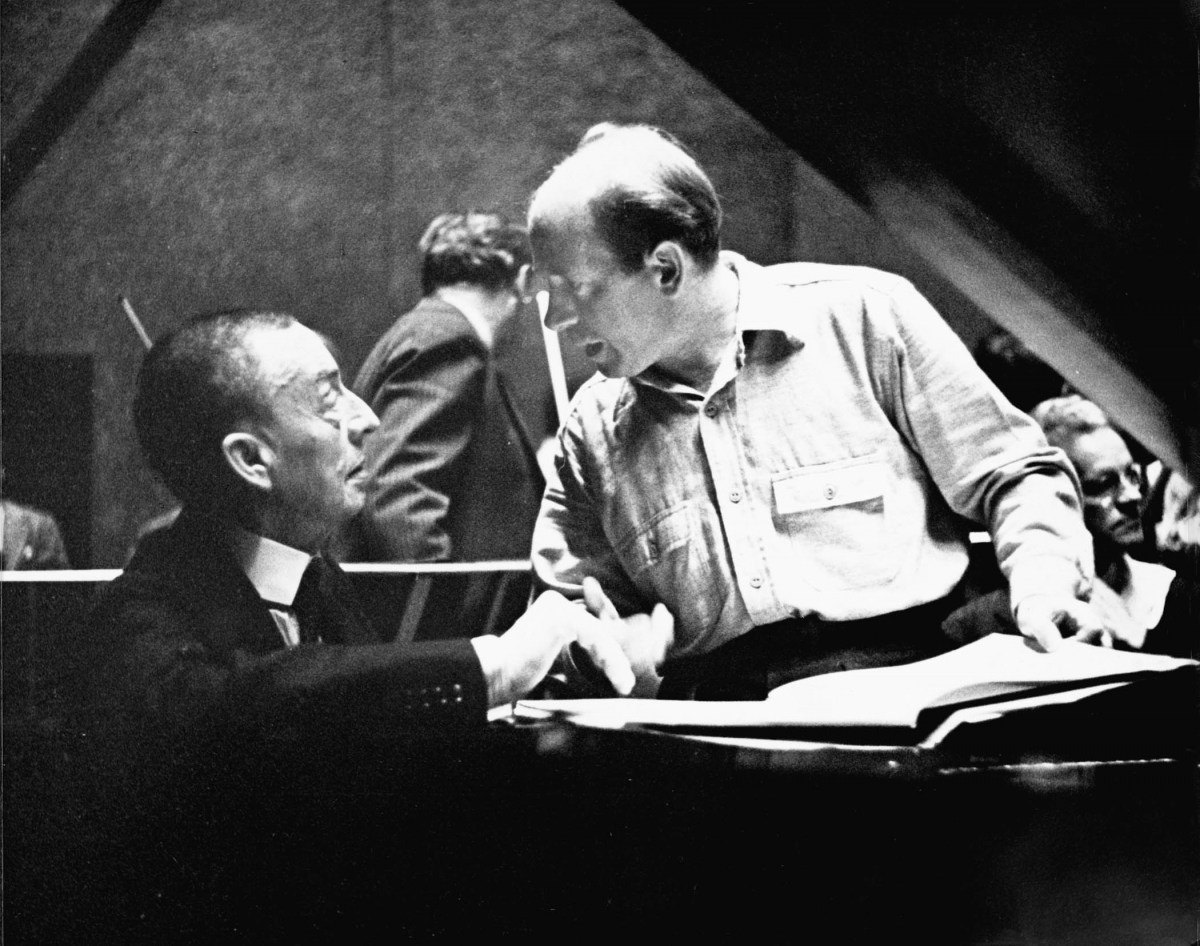
    The work is heard in a reduction for solo piano, with the composer himself going over the score with Eugene Ormandy, who conducted its premiere with the Philadelphia Orchestra. The recording includes audio of the pianist speaking and singing his instructions. The Marston release will also feature a meticulously edited version, with Rachmaninoff playing through 2/3 of the score without interruption.

    Any unknown audio of Rachmaninoff at the keyboard is a major discovery, and to hear him play, as might a fly on the wall, outside of a commercial setting, is extremely rare. The bonus material will include every known non-commercial recording ever made of the legendary pianist.

    The remarkable Ward Marston, blind from birth, lives outside Philadelphia with his seeing eye dog, Vinnie, and a collection of over 30,000 records. He is one of the industry’s most revered audio engineers. His remasterings of the great performers of the past have been acclaimed as revelatory and even miraculous.

    The liner notes of the Rachmaninoff release are by musicologist Richard Taruskin, also at the forefront of his field. Taruskin, particularly renowned for his knowledge and insights into Russian music, is a visiting scholar this week at the 29th Annual Bard Music Festival: Rimsky-Korsakov and His World at Bard College.

    Interestingly, Rimsky’s score for “Le Coq d’or” (“The Golden Cockerel”) was the only work by another composer that Rachmaninoff brought with him when he left Russia in 1917. The three-note motif that opens his “Symphonic Dances” recalls the Queen of Shemakha’s theme from Rimsky’s opera.

    Rachmaninoff and Vladimir Horowitz once played through Rachmaninoff’s Third Piano Concerto together in 1928, in an impromptu performance in the basement of Steinway Hall. Can you imagine? Rachmaninoff later approached Victor Records about recording the “Symphonic Dances” with Horowitz on a second piano. The label dismissed the proposal out of hand as being commercially unviable.


    The album “Rachmaninoff Plays Symphonic Dances:”

    Rachmaninoff Plays Symphonic Dances

    More information on Marston:

    http://www.wardmarston.com/about.html

    A sample from the upcoming release:
  • Yardumian Centennial Philadelphia Composer

    Yardumian Centennial Philadelphia Composer

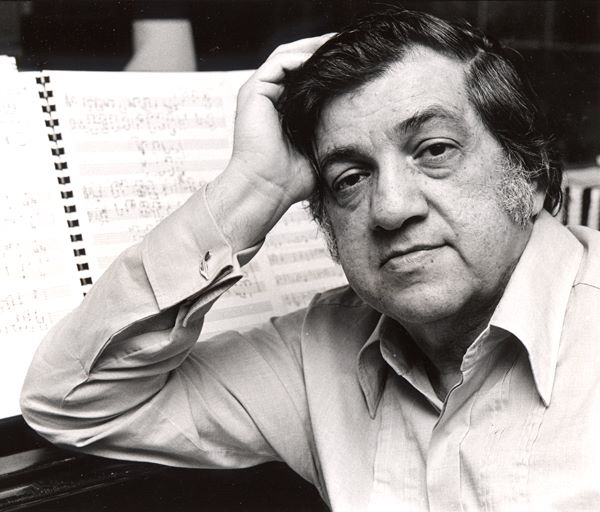
    Today is the 100th anniversary of the birth of Philadelphia composer Richard Yardumian. Yardumian served as The Philadelphia Orchestra’s composer-in-residence from 1949 to 1964. The orchestra gave first performances of no less than ten of his pieces, beginning with “Desolate City” in 1945. Eugene Ormandy recorded six of them. I remember well playing these during my apprentice years in community radio. The music is attractive, well-made, and often deeply felt, with insights into the composer’s spiritual convictions and Armenian heritage. Why, why, why, Sony, have you never reissued these recordings?

    In the 1990s, Albany Records briefly revived some of the lesser-known American classics that had been championed by Ormandy – among them, works by the equally neglected Louis Gesensway and John Vincent – so my hopes were high to finally acquire those Yardumian recordings on CD. But it was not to be. The series petered out after only three volumes.

    Yardumian, who was largely self-taught as a composer, was 19 when he wrote his most popular piece, the “Armenian Suite.” We’ll hear it this afternoon, alongside “Veni Sancte Spiritus” (“Come, Creator Spirit”), another orchestral work, from 1959. In addition, we’ll mark the birthday anniversaries of composers Louis Spohr and Albert Roussel and conductor Herbert von Karajan.

    At 4:00, I will be joined by Lyn Ransom, founder and music director of VOICES Chorale, now in its 30th season. Ransom will be directing Brahms’ “Ein Deutsches Requiem” in its rarely-heard London edition, performed on four-hand piano, this Saturday at 7:30 p.m., at The College of New Jersey’s TCNJ-Mayo Concert Hall in Ewing Township; and then again, with orchestra, in collaboration with Riverside Symphonia, at Princeton University’s Richardson Auditorium, on June 16th at 8 p.m. Tune in this afternoon to learn more, or check the organization’s website, at http://www.voiceschorale.org.

    I’ll be sharing the music, from 4 to 7 p.m. EDT, on WWFM – The Classical Network and at wwfm.org.

  • Eugene Ormandy Underrated Maestro

    Eugene Ormandy Underrated Maestro

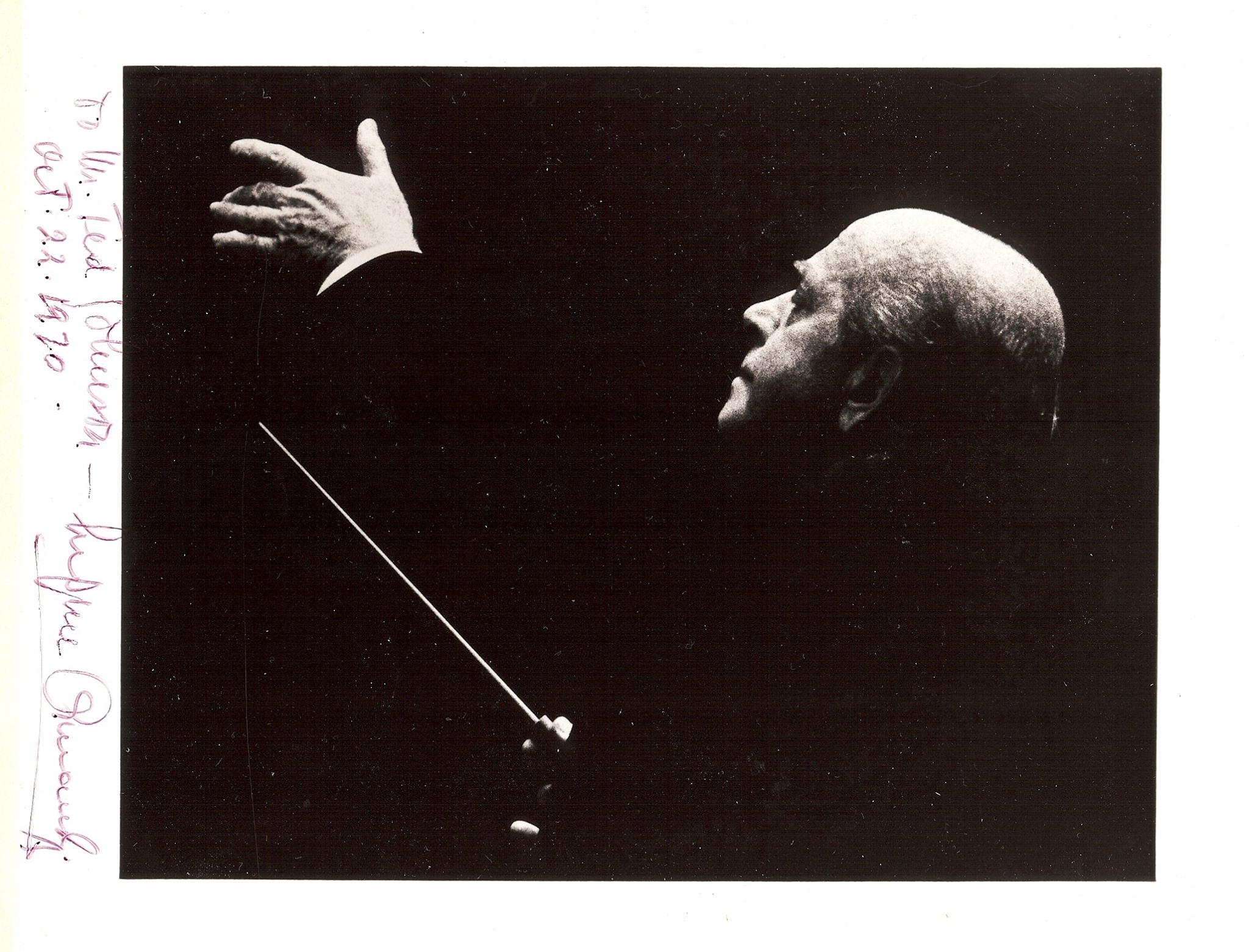
    What’s the big deal about this guy, Jenő Blau? Well, you probably know him better by his adopted name, Eugene Ormandy.

    Ormandy, a Hungarian-born violinist, who had studied with Jenő Hubay (for whom he was named), became a naturalized American citizen in 1927. He ultimately wound up directing the Philadelphia Orchestra for 44 years. In that capacity, he became one of the world’s most-recorded conductors.

    However, in some respects, he remains a vastly underrated one. Sure, he was a superb interpreter of 19th century and post-romantic classics, but he also championed much contemporary music and new works written by his adopted countrymen. Also, if there was a more sensitive accompanist in the concerto repertoire, I don’t know of him.

    Join me this afternoon, from 4 to 6 EST, as we honor Eugene Ormandy on the anniversary of his birth (in 1899), on WWFM – The Classical Network and at wwfm.org.

  • Vaughan Williams Pastoral Symphony Ormandy 1972

    Vaughan Williams Pastoral Symphony Ormandy 1972

    On this, the day after Memorial Day, I’ve stumbled across a YouTube video of a concert broadcast of Eugene Ormandy conducting the Philadelphia Orchestra in Ralph Vaughan Williams’ “A Pastoral Symphony” (his Symphony No. 3), which was completed in 1922.

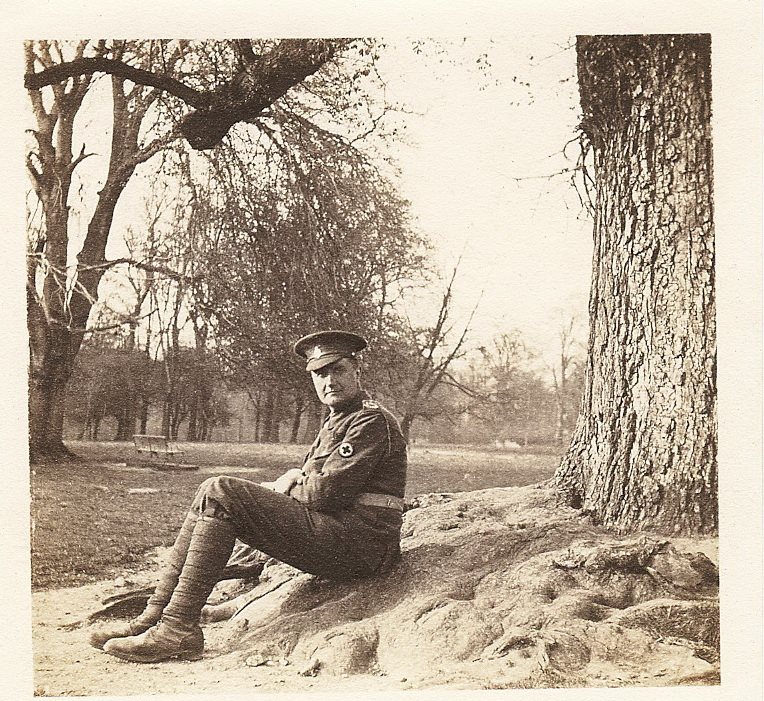
    While a good many of Vaughan Williams’ pieces are indeed pastoral, this one has something of a haunted undertow that belies its placid moniker. The composer was serving with the Royal Army Medical Corps in France during the First World War. At the end of the day, he would drive his ambulance up to the top of a hill and listen to a bugler practicing. On one occasion, the bugler accidentally played the interval of a seventh, as opposed to an octave. The trumpet solo in the second movement of the symphony enshrines this memory.

    It is pastoral, all right. As peaceful as the dead. The great Benita Valente sings the wordless soprano part in the final movement, like a distant milkmaid wandering the countryside. The contrast with the waste and destruction of the war leads to a moving and intense elegy that takes over, in this particular recording, around the 31 minute mark.

    Vaughan Williams’ next symphony, the Symphony No. 4, spilled over with rage and violence, clearing the air for one of the most hopeful utterances in all of music, his Symphony No. 5, composed, oddly enough, during the darkest days of World War II.

    Peter Warlock, who famously characterized Vaughan Williams’ music as “just a little too much like a cow looking over a gate,” called the Pastoral Symphony “a truly splendid work” and “the best English orchestral music of this century.”

    Ormandy and the Philadelphians performed the piece on October 12, 1972, to mark the centennial of Vaughan Williams’ birth. 1972 also happened to mark the semicentennial of “A Pastoral Symphony.”

  • Sibelius Celebrated on WPRB 103.3 FM

    Sibelius Celebrated on WPRB 103.3 FM

    We continue our celebration of the 150th anniversary of the birth of Jean Sibelius (which occurred on December 8, 1865). Right now, we’re in the middle of an hour of his final masterworks, including incidental music from “The Tempest,” the tone poem “Tapiola,” and the Symphony No. 7.

    Then at 10:00 we’ll ricochet back to one of his early successes, “Four Legends from the Kalevala,” in a fantastic recording with Eugene Ormandy and the Philadelphia Orchestra.

    It’s all-Sibelius until 11 ET, on WPRB 103.3 FM and at wprb.com.

    #Sibelius150

    PHOTO: Sibelius with Eugene Ormandy

Tag Cloud

Aaron Copland (92) Beethoven (95) Composer (114) Film Music (123) Film Score (143) Film Scores (255) Halloween (94) John Williams (187) KWAX (229) Leonard Bernstein (101) Marlboro Music Festival (125) Movie Music (138) Opera (202) Philadelphia Orchestra (89) Picture Perfect (174) Princeton Symphony Orchestra (106) Radio (87) Ralph Vaughan Williams (85) Ross Amico (244) Roy's Tie-Dye Sci-Fi Corner (290) The Classical Network (101) The Lost Chord (268) Vaughan Williams (103) WPRB (396) WWFM (881)

DON’T MISS A BEAT

Receive a weekly digest every Sunday at noon by signing up here


RECENT POSTS