Tag: Felix Mendelssohn

  • Mendelssohn: Underrated Genius and Musical Revolutionary

    Mendelssohn: Underrated Genius and Musical Revolutionary

    I am starting to get just a little bit tired of hearing that if Felix Mendelssohn had never lived, music history would not have turned out any differently. He’s second-rate, he’s sentimental, he’s an academician, blah blah blah. When are these pompous idiots going to open their ears and acknowledge the fact that he was only one of the most influential composers of the 19th century? Especially in Germany, England and America, did any serious musician escape his sway?

    Mendelssohn was essentially adopted as England’s national composer. Figures from William Sterndale Bennett through Sir Arthur Sullivan gleefully played in his shadow. In fact, Mendelssohn was the hottest composer in England since Handel. Such a stranglehold did Handel and Mendelssohn have on English concertgoers’ affections that, in Germany, England was mocked as “Das Land ohne Musik” – The Land without Music. The best English composers were all German.

    But if the Germans were to be at all honest with themselves, they would have realized that all the best German composers were also followers of Mendelssohn. What about Wagner, you say, surely one of the most progressive composers who ever lived? There’s plenty of Mendelssohn in early Wagner. Ditto for Richard Strauss. As for the “second rank,” the more conservative school, just about everyone emulated Mendelssohn.

    Of himself, of course, Mendelssohn was one of the most astonishing of musical prodigies. He composed two of the most enduring masterpieces in the repertoire, the overture to a “Midsummer Night’s Dream” and the Octet for Strings, at 16 and 17 respectively. In terms of maturity and polish, these were certainly on a par with anything written by the teenaged Mozart.

    Yes, Mendelssohn was a traditionalist. He structured his music on foundations laid in the past. Even so, he cautiously ventured into the mists of Romanticism. Occasionally, he even subverted expectations, in works like his famous Violin Concerto. Furthermore, he was respectful, if not kind, to everyone, even those of whose music he disapproved.

    As a conductor, there’s no question he was one of the most influential musicians in Europe, if not the world. For twelve years, he led the Leipzig Gewandhaus Orchestra, an ensemble full of players who went on to distinction in their own right. He was admired for the precision of his performances. He was also the one who essentially drew up the blueprint for modern orchestras in developing a musical “canon.” He gave important premieres of music by his contemporaries, while also reviving works of Bach, Mozart, and Beethoven.

    In particular, he is credited with resuscitating the reputation of Johann Sebastian Bach, not only through his resurrection of the “St. Matthew Passion,” but in overseeing an edition of Bach’s organ works, along with an edition of Handel’s oratorios, both of which were published in England.

    So music history would have been quite different if not for Mendelssohn, thank you very much. He may not have been the most seismic of innovators, but there’s something to be said for being a master of one’s craft.

    Mendelssohn died in Leipzig, after a series of strokes, at the age of 38. Did he live up to his potential? Who among us is really qualified to judge? How much is one man expected to accomplish, anyway?

    No radio station in the world is going to devote a full day to Mendelssohn’s music. Since the death of Victoria, I don’t think Mendelssohn has ever really been fashionable, except perhaps at weddings. But who doesn’t love the overture to “A Midsummer Night’s Dream,” the Octet for Strings, the “Hebrides Overture,” the “Italian” Symphony, or the Violin Concerto in E minor?

    Morton Feldman once said, “The people you think are radicals might really be conservative. The people who you think are conservative might really be radical.”

    I don’t know that I would ever go so far as to label Mendelssohn a radical, but he most certainly did change the world, and those of us who love music would have been a lot poorer without him.

    Happy birthday, Felix Mendelssohn!


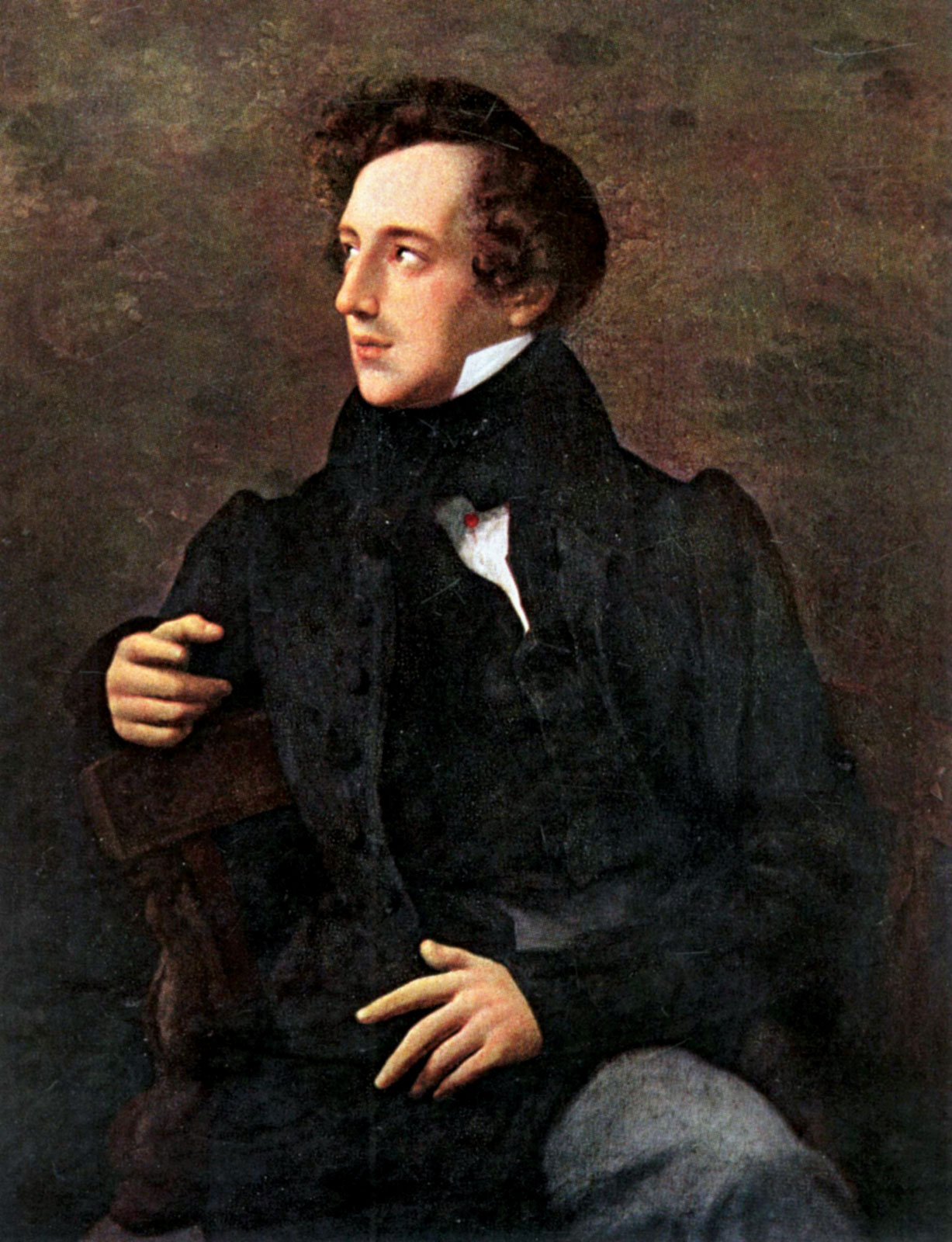
    IMAGE: Another view of Mendelssohn

  • Autumn Arrives Summer’s Last Rose & Stenhammar

    Autumn Arrives Summer’s Last Rose & Stenhammar

    Summer 2021 is on the wane. Autumn begins tomorrow afternoon at 3:20 EDT.

    Felix Mendelssohn, “Fantasy on ‘The Last Rose of Summer’”

    Heinrich Wilhelm Ernst, “Variations on ‘The Last Rose of Summer’”

    And for a change of pace…

    “Late Summer Nights” by Wilhelm Stenhammar

    I only just realized, 2021 marks the 150th anniversary of Stenhammar’s birth! Here’s an analysis of the first movement of “Late Summer Nights”:

  • Ferdinand Hiller

    Ferdinand Hiller

    Who was Ferdinand Hiller, and what does he have to do with the most famous setting of “Kol Nidre” in all of classical music?

    Hiller, born to Jewish parents in 1811 (his father changed his name from Hildesheim), was a child prodigy. By 10, he was playing Mozart piano concertos in public, and by 12, he completed his first original composition. As a child, he met Felix Mendelssohn, who was two years his senior. Their friendship deepened in their teens and endured for over 20 years. Eventually, Hiller succeeded Mendelssohn as director of the Leipzig Gewandhaus Orchestra, which likely precipitated a rapid cooling between them. Within four years, Mendelssohn was dead at the age of 38.

    Hiller, who nearly doubled his friend’s lifespan (he died in 1885), composed in all forms – opera, symphony, concerto, chamber and instrumental works, and choral music, including an oratorio, “The Destruction of Jerusalem.” An outstanding pianist, he became the dedicatee of Robert Schumann’s Piano Concerto. Chopin also dedicated his three Nocturnes, Op. 15, to him.

    Hiller was a forceful writer on music and an influential teacher. His star pupil was Max Bruch, who was not Jewish. Bruch became acquainted with the cantorial chant “Kol Nidre” after being introduced by Hiller to the Berlin hazzan, Abraham Lichtenstein. In 1880, the same year that Bruch composed his “Scottish Fantasy” for the violinist Pablo de Sarasate, he embarked on his famous cello elegy.

    “Even though I am a Protestant, as an artist I deeply felt the outstanding beauty of these melodies,” Bruch wrote in 1889. He uses the plural because the second section of the work is a treatment of a setting by Isaac Nathan of Lord Byron’s “Oh! Weep for those that wept by Babel’s stream.”

    “Kol Nidre” – the traditional prayer, not the cello work – opens the evening service on Yom Kippur. The Day of Atonement, the holiest day on the Jewish calendar, begins tonight at sunset.


    Bruch, “Kol Nidrei”

    Nathan’s setting of Byron, which supplies the work’s B-section.

    Selections from Hiller’s neglected oratorio, “The Destruction of Jerusalem”

    His once popular Piano Concerto No. 2

    An absorbing article on the power, influence, and universality of “Kol Nidre”

    https://www.timesofisrael.com/how-the-haunting-kol-nidre-melody-harnessed-the-power-to-convert/


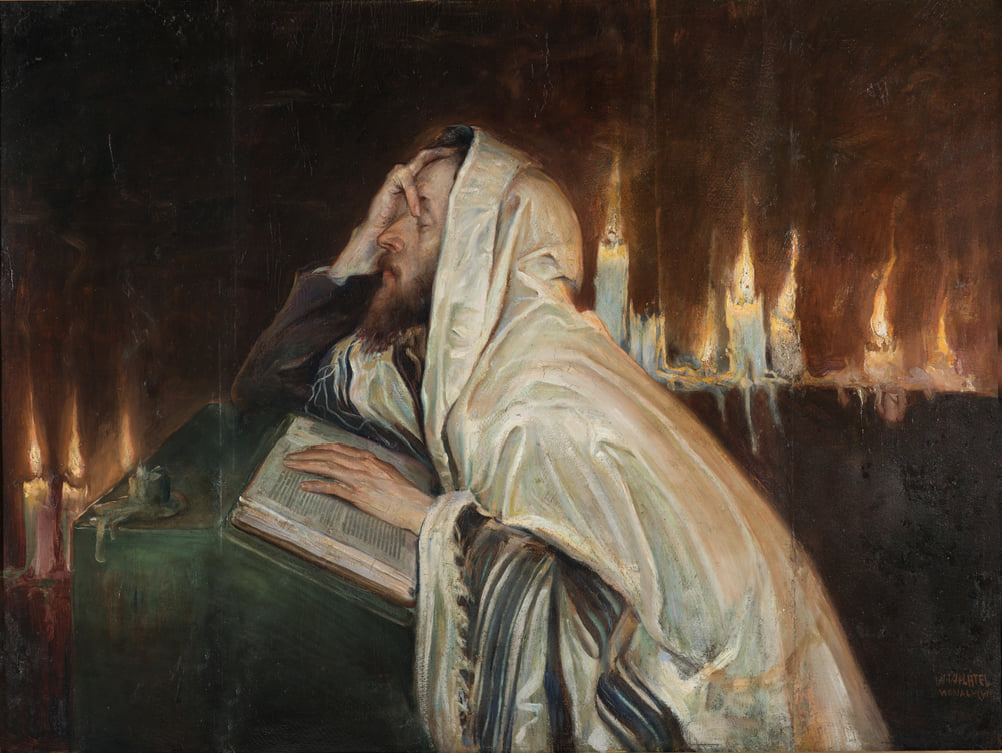
    IMAGES (counterclockwise from top): “Kol Nidre” by Wilhelm Wachtel; Ferdinand Hiller; Janos Starker’s classic recording of “Kol Nidrei;” and its composer, Max Bruch

  • Mendelssohn, Schubert, and Composer Birthdays

    Mendelssohn, Schubert, and Composer Birthdays

    Mozart’s birthday is always a signal to me that we are entering a season of great composer birthdays.

    Perhaps it is all coincidence, but for whatever reason, music history has arrayed itself in such a way that larger patterns can be discerned. Autumn is heavy with birthdays of significant American composers (Gershwin, Ives, Hanson, Copland, and Virgil Thomson, to name a few). Revered violinists Fritz Kreisler and Jascha Heifetz were born on the same day (February 2), as were venerated pianists Sergei Rachmaninoff and Ferruccio Busoni (April 1). Brahms and Tchaikovsky share a birthdate (May 7). So do two of the most prominent film composers, Max Steiner and Dimitri Tiomkin (May 10). After 34 years in radio, these natal serendipities are etched in my memory like tablets carved on Mount Sinai.

    Nonetheless, even as I anticipated the birthday of Franz Schubert (January 31), in my eagerness to pay tribute to Mario Lanza on the occasion of his centenary, I inadvertently let it slip by. Please forgive me, Schwammerl. Today, on the anniversary of the birth of Felix Mendelssohn (1809-1847), I hope to make amends.

    Mendelssohn, of course, was one of the most astonishing of musical prodigies. He composed his earliest masterpieces, the overture to “A Midsummer Night’s Dream” and the Octet for Strings in E-flat major, at the ages of 16 and 17 respectively. This is some of the “youngest” music in the entire repertoire. In their precocity and polish, both pieces are on a par with anything written by the teenaged Mozart.

    Of course, by then, Mendelssohn had already generated piles of manuscripts – dozens of works, including three piano quartets, a violin sonata, a piano sonata, a singspiel, songs and “Songs without Words,” twelve symphonies for strings, and his first symphony for full orchestra.

    And he would go on to write his “Italian” Symphony, his “Scottish” Symphony, the “Hebrides Overture,” the Violin Concerto in E minor, and the oratorio “Elijah,” all of which are still played in heavy rotation, both on radio and in the concert hall.

    As a conductor, there’s no question he was one of the most influential musicians in Europe, if not the world. For twelve years, he directed the Leipzig Gewandhaus Orchestra, many of whose players went on to distinction in their own right. His performances were especially admired for their precision. He also laid the groundwork for modern concerts in developing a musical “canon.”

    He gave important premieres of music by his contemporaries, while also reviving works of Mozart, Beethoven, and of course Johann Sebastian Bach. It was Mendelssohn who famously dusted off the “St. Matthew Passion,” reinvigorating Bach’s reputation.

    Another composer who benefited from Mendelssohn’s advocacy was Franz Schubert. In 1838, ten year’s after Schubert’s death, his brother, Ferdinand, shared an unpublished manuscript with Robert Schumann, during one of the latter’s visits to Vienna. Schumann returned to Leipzig with a copy of the piece, a Symphony in C major. Mendelssohn gave the symphony its first public performance in 1839.

    Schumann reviewed the concert in the Neue Zeitschrift für Musik, famously praising the work for its “heavenly length.” For this reason, and to distinguish it from an earlier, shorter Schubert symphony composed in the same key, it is usually identified as the “Great” C major.

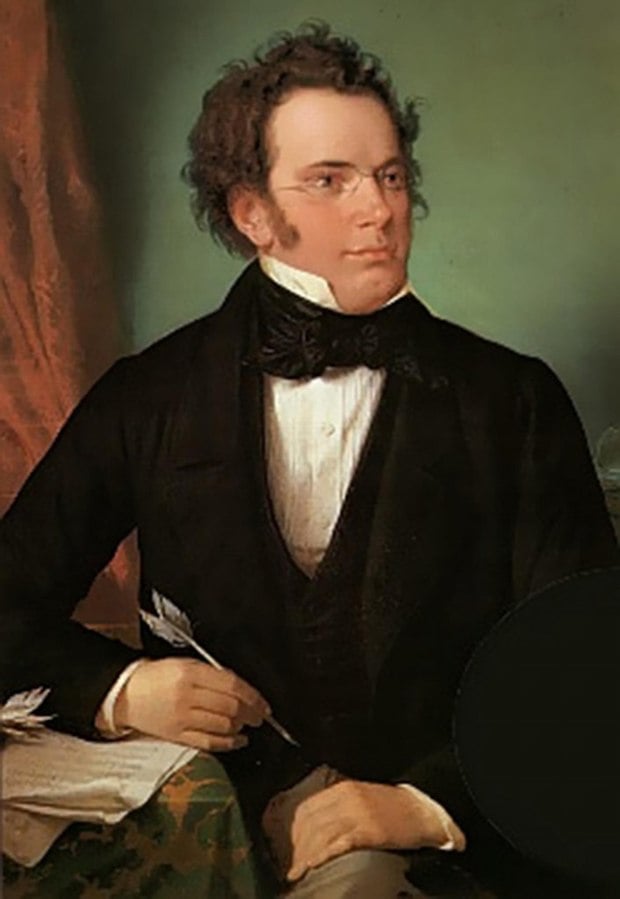
    Standing only five-foot-one, Schubert himself bore the nickname “Schwammerl” (“Little Mushroom”), bestowed upon him by his friends. Even a minute fungus, it would seem, is more than capable of creating something “Great.”

    Happy birthday, Felix Mendelssohn, and happy belated birthday, Franz Schubert.


    Mendelssohn, “Hebrides Overture”

    His first masterpiece, the Octet in E-flat major, composed at the age of 16:

    Live performance of Leonard Bernstein conducting Schubert’s Symphony No. 9 “Great”

    https://www.youtube.com/watch?v=hCuC8–m-98

  • Rethinking Mendelssohn’s Influence on Music History

    Rethinking Mendelssohn’s Influence on Music History

    I am starting to get just a little bit tired of hearing that if Felix Mendelssohn had never lived, music history would not have turned out any differently. He’s second-rate, he’s sentimental, he’s an academician, blah blah blah. When are these pompous idiots going to open their ears and acknowledge the fact that he was only one of the most influential composers of the 19th century? Especially in Germany, England and America, did any serious musician escape his sway?

    Mendelssohn was essentially adopted as England’s national composer. Figures from William Sterndale Bennett through Sir Arthur Sullivan gleefully played in his shadow. In fact, Mendelssohn was the hottest composer in England since Handel. Such a stranglehold did Handel and Mendelssohn have on English concertgoers’ affections that, in Germany, England was mocked as “Das Land ohne Musik” – The Land without Music. The best English composers were all German.

    But if the Germans were to be at all honest with themselves, they would have realized that all the best German composers were also followers of Mendelssohn. What about Wagner, you say, surely one of the most progressive composers who ever lived? There’s plenty of Mendelssohn in early Wagner. Ditto for Richard Strauss. As for the “second rank,” the more conservative school, just about everyone emulated Mendelssohn.

    Of himself, of course, Mendelssohn was one of the most astonishing of musical prodigies. He composed two of the most enduring masterpieces in the repertoire, the overture to a “Midsummer Night’s Dream” and the Octet for Strings, at 16 and 17 respectively. In terms of maturity and polish, these were certainly on a par with anything written by the teenaged Mozart.

    Yes, Mendelssohn was a traditionalist. He structured his music on foundations laid in the past. Even so, he cautiously ventured into the mists of Romanticism. Occasionally, he even subverted expectations, in works like his famous Violin Concerto. Furthermore, he was respectful, if not kind, to everyone, even those of whose music he disapproved.

    As a conductor, there’s no question he was one of the most influential musicians in Europe, if not the world. For twelve years, he led the Leipzig Gewandhaus Orchestra, an ensemble full of players who went on to distinction in their own right. He was admired for the precision of his performances. He was also the one who essentially drew up the blueprint for modern orchestras in developing a musical “canon.” He gave important premieres of music by his contemporaries, while also reviving works of Bach, Mozart, and Beethoven.

    In particular, he is credited with resuscitating the reputation of Johann Sebastian Bach, not only through his resurrection of the “St. Matthew Passion,” but in overseeing an edition of Bach’s organ works, along with an edition of Handel’s oratorios, both of which were published in England.

    So music history would have been quite different if not for Mendelssohn, thank you very much. He may not have been the most seismic of innovators, but there’s something to be said for being a master of one’s craft.

    Mendelssohn died in Leipzig, after a series of strokes, at the age of 38. Did he live up to his potential? Who among us is really qualified to judge? How much is one man expected to accomplish, anyway?

    No radio station in the world is going to devote a full day to Mendelssohn’s music. Since the death of Victoria, I don’t think Mendelssohn has ever really been fashionable, except perhaps at weddings. But who doesn’t love the overture to “A Midsummer Night’s Dream,” the Octet for Strings, the “Hebrides Overture,” the “Italian” Symphony, or the Violin Concerto in E minor?

    Morton Feldman once said, “The people you think are radicals might really be conservative. The people who you think are conservative might really be radical.”

    I don’t know that I would ever go so far as to label Mendelssohn a radical, but he most certainly did change the world, and those of us who love music would have been a lot poorer without him.

    Happy birthday, Felix Mendelssohn! Felix the burn, from 4 to 7 p.m. EST on WWFM – The Classical Network and wwfm.org.


    PHOTO: Another view of Mendelssohn

Tag Cloud

Aaron Copland (92) Beethoven (95) Composer (114) Film Music (123) Film Score (143) Film Scores (255) Halloween (94) John Williams (187) KWAX (229) Leonard Bernstein (101) Marlboro Music Festival (125) Movie Music (138) Opera (202) Philadelphia Orchestra (89) Picture Perfect (174) Princeton Symphony Orchestra (106) Radio (87) Ralph Vaughan Williams (85) Ross Amico (244) Roy's Tie-Dye Sci-Fi Corner (290) The Classical Network (101) The Lost Chord (268) Vaughan Williams (103) WPRB (396) WWFM (881)

DON’T MISS A BEAT

Receive a weekly digest every Sunday at noon by signing up here


RECENT POSTS