Tag: Ferruccio Busoni

  • Roberta Flack Classical Roots Revealed

    Roberta Flack Classical Roots Revealed

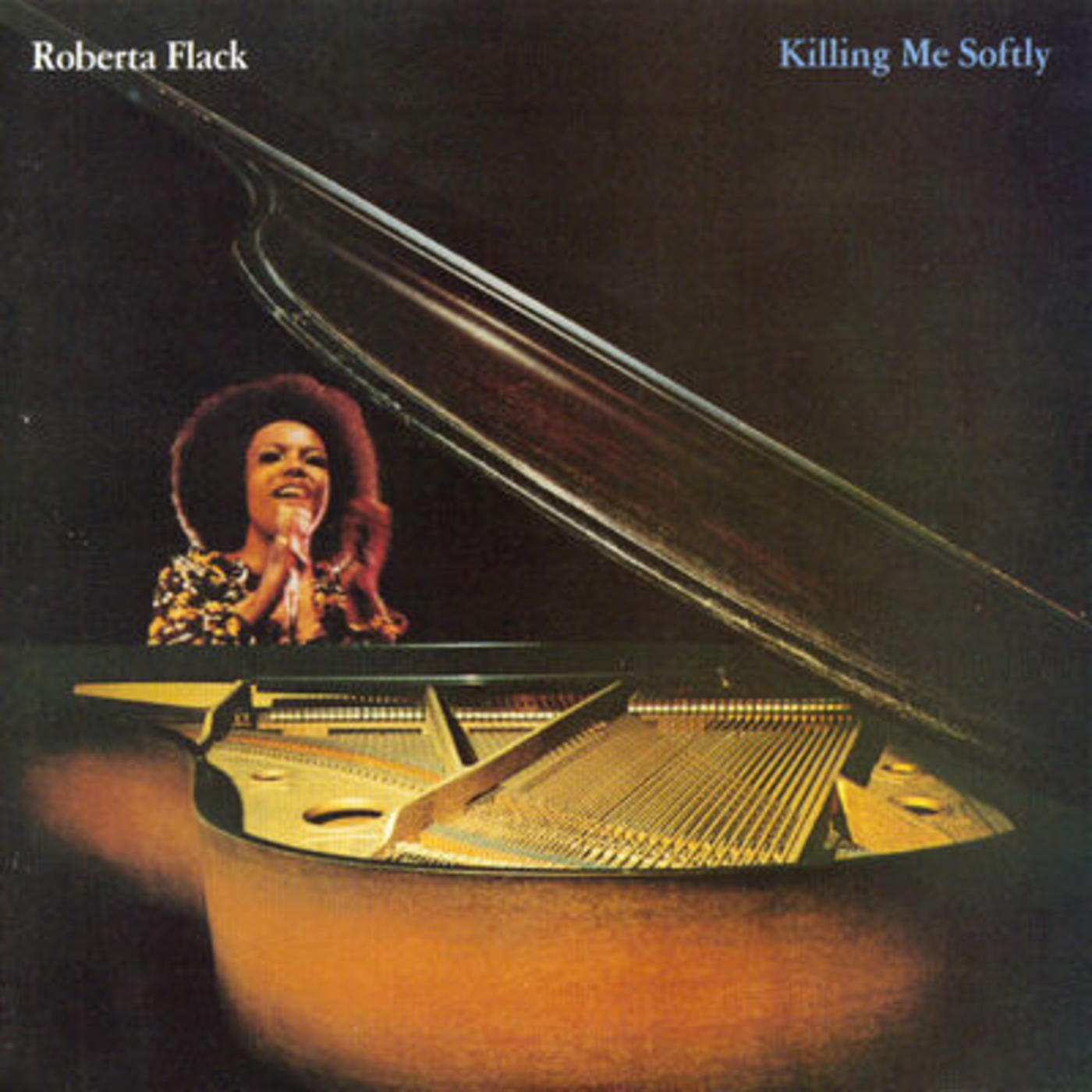
    Interesting to learn of Roberta Flack’s classical roots. Playing the organ, exposure to “Messiah,” the Bach “Christmas Oratorio,” the Mozart Requiem. At 9, she began to study classical piano. Her early ambition was to become a concert pianist.

    From an article in The Oklahoman from 2004:

    “Flack said her earliest musical influences came from church. Her mother, Irene Flack, played piano for a Methodist church, and her father, Laron Flack, was a self-taught jazz piano stylist. At home, Flack’s father repaired an old upright piano, and she began to pick out tunes while sitting on her mother’s lap. At age 9, Flack began taking piano lessons and also started to listen to a wide range of popular music, R&B, jazz, blues and pop.

    “‘Everyone in my family did something, and I guess, in terms of who got the buzz among my siblings, it was me,’ she said. ‘I wanted to be a concert pianist for many years, and I worked hard at it. I was one of the most blessed young people in this country.’

    “Flack cited teachers Alma Blackman, the late Hazel Harrison and Vivian Scott for providing her educational foundation in classical music.

    “Blackman was a classical music teacher at Oakland College, a Seventh-Day Adventist College in Huntsville, Ala. Harrison, who taught at Howard University, was known as the ‘premiere black classical pianist’ for four decades and studied with Ferruccio Busoni and performed with the Berlin Philharmonic. Scott, a concert pianist, was a former student of Harrison and studied the Juilliard School of Music in New York and the Curtis Institute of Music in Philadelphia.”

    FLACK STUDIED WITH A STUDENT OF FERRUCCIO BUSONI??? My head just exploded.

    https://www.oklahoman.com/story/news/2004/04/11/the-classic-roberta-flackbrtraining-as-pianist-and-singer-prepared-flack-for-her-careers-endurance/61994555007/

    She talks more about her early musical experiences here:

    Flack died yesterday at the age of 88. That piano is no mere prop (even if on “Killing Me Softly“ the instrument is electric).

    Boy, this song sure does take me back…

  • Busoni’s Piano Concerto A Centenary & My Wake-Up

    Busoni’s Piano Concerto A Centenary & My Wake-Up

    Ferruccio Busoni died on his date one hundred years ago. He was 58 years old. The age I am now. I’d better get started on my epic piano concerto!

    More about Busoni’s titanic opus (with male chorus!) in this post I wrote in 2021:

    https://www.facebook.com/photo/?fbid=1812926358874646&set=a.279006378933326

  • Richard Goode: Marlboro Music Spotlight

    Richard Goode: Marlboro Music Spotlight

    If it’s Goode, you know it’s got to be great.

    On this week’s “Music from Marlboro,” we’ll celebrate pianist Richard Goode. Goode served as co-artistic director (with Mitsuko Uchida) of the Marlboro Music School and Festival, from 1999 to 2013. On and off, he’s been part of the fabric of Marlboro since he was 14 years-old.

    We’ll sample his artistry in outstanding performances of music by Ferruccio Busoni and Johannes Brahms.

    Inspired in part by Bach’s “Art of the Fugue,” Busoni composed his “Fantasia contrappuntistica” for solo piano in a flurry of inspiration in 1910. His arrangement for two pianos followed. I think you’ll agree, there’s no substitute for its thrilling antiphonal effects.

    The work is built into one continuous span, but subdivided into twelve parts – a prelude and variations on the Bach chorale “Ehre sei Gott in der Höhe” (“Glory to God in the Highest”) – capped by a quadruple fugue. The laws of counterpoint are rigorously applied, in a manner that would have made even Max Reger smile.

    The work was composed during a whirlwind tour of the United States. Busoni was especially proud of his ability to make every note of the fugue “sound.”

    We’ll hear it performed on a Marlboro spin-off recording from 1964, with Richard Goode and Peter Serkin, making musical mincemeat of this vertiginous knuckle-buster. Goode was only 20 years-old at the time – and Serkin was 16!

    Bach was also an important source of inspiration for Johannes Brahms. Following the death of his mother, the composer was discovered by one of his friends, weeping over the keyboard as he played through works by the Baroque master.

    Also stemming from his loss was Brahms’ Horn Trio in E flat major, Op. 40. The horn, which takes the place of the cello in the traditional configuration of the piano trio, was a highly unusual choice for chamber music, but one which must have recalled for Brahms the lessons he had taken as a child.

    Fortuitously, the instrument also has rustic associations. It was during a walk in the Black Forest that the composer first “heard” the trio’s opening theme. While the work is a celebration of nature, and in the last movement, perhaps even the hunt, the tempo marking of the third movement adagio is characterized as “slow and sad.” Brahms uncovers a well of emotion in the quotation of a German funeral melody, “Wer nur den lieben Gott läßt walten” (“If thou but suffer God to guide thee”).

    Demonstrating the kind of continuity that makes Marlboro shine among summer music festivals, we’ll again hear Richard Goode, this time in middle age, joining hornist Marie-Luise Neunecker and violinist Mark Steinberg, in 1989.

    We’ve never had it so Goode, on the next “Music from Marlboro,” this Wednesday evening at 6:00 EST, on WWFM – The Classical Network and wwfm.org.

    Marlboro School of Music and Festival: Official Page


    FOR THE GREATER GOODE: Richard Goode at Marlboro in 2011

  • Othmar Schoeck Forgotten Swiss Composer

    Othmar Schoeck Forgotten Swiss Composer

    On this day when the birthdays of Johann Pachelbel and Engelbert Humperdinck are generally observed, I would like to say a few things about Othmar Schoeck.

    Schoeck (1886-1957) may be largely forgotten these days, though he once enjoyed international recognition for his art songs, which he composed prolifically. He also produced opera, orchestral and instrumental works. His ambitious Violin Concerto – some 40 minutes in length – was composed at white heat, out of love for Stefi Geyer, the same violinist who captivated Bela Bartok and moved him to write his Violin Concerto No. 1.

    Schoeck was born in Switzerland and spent most of his life there, other than a brief period he lived in Leipzig, where he studied with Max Reger. He had considered pursuing a career in the visual arts, as had his father, before finally throwing himself into music. He was fortunate enough to secure patronage so that he could compose more or less undisturbed.

    When Ferruccio Busoni settled in Switzerland during the First World War, the two developed a friendship, despite some disagreements on certain artistic matters. In fact, Busoni provided the libretto for Schoeck’s opera, “Das Wandbild” (“The Picture on the Wall”), marked by the kind of chinoiserie that might have attracted Busoni to the subject of Turandot (not to be confused with the opera of Puccini).

    Schoeck’s music experienced a stylistic shift as he became acquainted with the works of Alban Berg and Arthur Honegger. A torrid affair with the pianist Mary de Senger seems to have changed him for good. When their relationship ended, so did Schoeck bid farewell to his earlier, Romantic style.

    Though he was no Nazi sympathizer, Schoeck had the bad judgment or naivete to attend the premiere of one of his operas in Berlin in 1943. This led to a lot of stress at home, with the Swiss unhappy with his actions. Schoeck suffered a heart attack, but continued to compose. He lived until 1957.

    I seem to recall his reputation was such that the writer Herrmann Hesse would refer to Schoeck in one of his books – I think it was “Journey to the East” – in the same breath as Richard Strauss. I suppose it didn’t hurt that Schoeck set some of Hesse’s poems (as did Strauss).

    Here is Schoeck’s lovely pastoral intermezzo, as the composer described it, “Summer Night.” It tells of a summer harvest, during which field hands come to the aid of a widow and work all night in order to get in her crop, before returning to their own day jobs.

    Here’s a song, “Summer Night,” after a text of Hesse, with Dietrich Fischer-Dieskau performing:

    https://www.youtube.com/watch?v=AflKXAZaUsY

    And the composer’s Violin Concerto:

    Happy birthday, Othmar Schoeck!


    PHOTO: All Schoeck up

Tag Cloud

Aaron Copland (92) Beethoven (95) Composer (114) Film Music (123) Film Score (143) Film Scores (255) Halloween (94) John Williams (187) KWAX (229) Leonard Bernstein (101) Marlboro Music Festival (125) Movie Music (138) Opera (202) Philadelphia Orchestra (89) Picture Perfect (174) Princeton Symphony Orchestra (106) Radio (87) Ralph Vaughan Williams (85) Ross Amico (244) Roy's Tie-Dye Sci-Fi Corner (290) The Classical Network (101) The Lost Chord (268) Vaughan Williams (103) WPRB (396) WWFM (881)

DON’T MISS A BEAT

Receive a weekly digest every Sunday at noon by signing up here


RECENT POSTS