Tag: Film Composers

  • Herrmann’s Mentor: Percy Grainger

    Herrmann’s Mentor: Percy Grainger

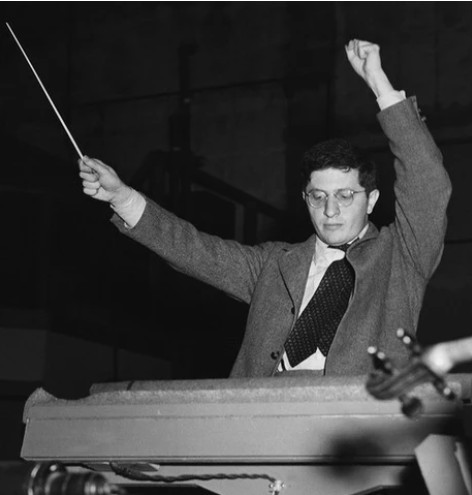
    Bernard Herrmann may be best-recognized as the greatest film composer the United States ever produced, but he was also a passionate Anglophile. I’ve written a lot about Herrmann over the years, from many different perspectives, but in light of my recent visit to the Percy Grainger Home & Studio in White Plains, NY (where Grainger lived for 40 years), I thought I’d share a little bit about the relationship of these two artists today, for the anniversary of Herrmann’s birth.

    Herrmann studied composition with Grainger at New York University in the early 1930s. Even in untested youth, his extensive knowledge and passion for English music (and music in general) endeared him to his mentor – they also shared an ear for unusual orchestration – and a genuine affection sprang up between them. In particular, they both adored Frederick Delius, whom Grainger got to know fairly well in the early years of the 20th century. (Grainger, born in Melbourne, lived in England from 1901-14.)

    For Herrmann, Grainger was like a magic fountain of information about many of the living composers he so admired. Herrmann himself would later get to know some of them himself during guest conducting engagements with the BBC Symphony, the Halle Orchestra, and the London Symphony Orchestra.

    Here’s a little more about Grainger and Herrmann, largely drawn from Steven C. Smith’s Herrmann biography, “A Heart at Fire’s Center.” I’ve read Smith’s book, of course, but for convenience’s sake, I am cutting and pasting this excerpt from an article about Herrmann’s Anglophilia compiled by Ian Lace for the MusicWeb International website. To access the complete article, which would certainly be worth your while, if it’s a topic that interests you, look for the link below.


    From Lace’s piece:

    Also in 1932 Herrmann attended a bi-weekly course in advanced composition and orchestration led by the brilliant but wildly unorthodox Percy Grainger.

    ‘Percy Grainger was Australia’s most innovative advocate of music past and present, from his childhood days as “the flaxen-haired phenomenon” of Melbourne to his years of international fame as folk song collector, composer, and recitalist. At the heart of Grainger’s unstable, erratic character was a fixation on truth, contempt for tradition and a passion for the outrageous.

    ‘Since becoming head of NYU’s music department in 1931, Grainger had offered a syllabus of musical eccentricity and frequent brilliance that left many students puzzled and unimpressed. The class of 1932, however, had one exception. In Grainger, Herrmann saw qualities he himself was cultivating: individualism and dedication to one’s craft and beliefs, however unpopular and unfashionable.

    ‘The relationship between the fifty-year-old teacher and the twenty-one year old student was one of mutual respect. “Grainger did not place orchestration examples before [his students],” Grainger biographer John Bird wrote, “Instead, he allowed them to choose their pieces and gave them advice when and where needed. Herrmann for instance, decided to orchestrate MacDowell’s Celtic Sonata and felt the need to employ the sonorities of a tenor tuba. The Australian knew little of this unusual piece of plumbing, so together, they familiarised themselves with the instrument and found suitable moments to include it.”

    ‘Herrmann and Grainger also discovered a shared love of Whitman and the music of Delius. One of Herrmann’s favourite NYU memories peripherally involved the latter: one morning the gaunt, sprightly Grainger leapt onto the lecture stage and announced, “The three greatest composers who ever lived are Bach, Delius and Duke Ellington. Unfortunately Bach is dead, Delius is very ill – but we are happy to have with us today the Duke!” Ellington and his band then mounted the stage and played for the next two hours.

    ‘If other Grainger lectures were less dramatic, they were no less influential to Herrmann: ancient monophony, folk music, atonality, polyphony, the indigenous rhythms of Africa, Asia, and the South Seas – each was examined by Grainger with alternating lucidity and jumbled mysticism. When the scholastic year ended in mid-August 1933, Grainger considered his work a failure, as few students had been as responsive as Herrmann; but it cemented a friendship between him and his intense young pupil that affected Herrmann for the rest of his life.’

    https://www.musicweb-international.com/classrev/2003/oct03/herrmann_anglophile.htm?fbclid=IwY2xjawLOBDtleHRuA2FlbQIxMABicmlkETFPTEczaGdzU1B4S0kzTWU3AR62TG3w1_v7tT4klupSLkdpPpTqX4vX0pwpvI3BPd3MVjNKSI3Mr_xsxg77Qg_aem_mH_vuFF2bUoZiXE-rhwFJw


    For more about Grainger and Herrmann (and Herrmann’s chum Jerome Moross), there’s also this entry on the Percy Grainger Society website.

    https://percygrainger.org/blog/8103609

    Happy birthday, Bernard Herrmann!


    PHOTOS (clockwise from upper left): Herrmann conducting at CBS radio in the 1930s; Grainger conducting the National High School Orchestra at Interlochen in 1937; Grainger with Duke Ellington at New York University in 1932; Herrmann and Orson Welles at CBS

  • Olympic Music on Picture Perfect KWAX

    Olympic Music on Picture Perfect KWAX

    Citius! Altius! Fortius!

    This week on “Picture Perfect,” to coincide with the Summer Games in Paris, we’ll get the blood pumping, with selections from Olympic opening ceremonies and television broadcasts.

    Featured composers with include Leo Arnaud (a Ravel pupil, who worked on “The Wizard of Oz” and went on to write THE classic Olympic theme), Angelo Badalamenti (David Lynch’s composer of choice), Basil Poledouris (composer of “Conan the Barbarian” and “The Hunt for Red October”), and John Williams (‘nuff said).

    In addition, there will be a suite from the Olympic documentary “16 Days of Glory,” by Lee Holdridge (recipient of seven Emmys and a Grammy).

    We’ll be shoveling in the Wheaties and going for the gold, on “Picture Perfect,” music for the movies – or at the very least music by film composers – now in syndication on KWAX, the radio station of the University of Oregon!


    Clip and save the start times for all three of my recorded shows:

    PICTURE PERFECT, the movie music show – Friday at 8:00 PM EDT/5:00 PM PDT

    SWEETNESS AND LIGHT, the light music program – ALL NEW! – Saturday at 11:00 AM EDT/8:00 AM PDT

    THE LOST CHORD, unusual and neglected rep – Saturday at 7:00 PM EDT/4:00 PM PDT

    Stream them, wherever you are, at the link!

    https://kwax.uoregon.edu/

  • Laurie Johnson Avengers Composer Remembered on KWAX

    Laurie Johnson Avengers Composer Remembered on KWAX

    This week on “The Lost Chord,” we’ll honor English composer and bandleader Laurie Johnson, who died on Tuesday at the age of 96.

    Among other things, Johnson was the composer of super-cool TV music for shows such as “Jason King,” “The Professionals,” and of course “The Avengers,” the elegant and often surreal spy-fi series, at its peak starring Patrick Macnee and Diana Rigg.

    He also wrote for film, providing scores for Stanley Kubrick’s “Dr. Strangelove,” “The First Men in the Moon” (with special effects by Ray Harryhausen), and the Hammer cult-classic “Captain Kronos – Vampire Hunter.”

    Johnson’s “Symphony (Synthesis)” will be the main attraction on a triple feature of concert works by composers better known for their work in film.

    Gramophone Magazine described the symphony, composed in 1971, as a masterpiece. “The work becomes increasingly fascinating with each listening,” writes the critic. “This is perhaps the first truly successful combination of the Jazz and European music traditions.”

    The recording, made under the composer’s direction, features a number of prominent jazz artists, including Tubby Hayes, Don Lusher, Joe Harriott, Kenny Wheeler and Stan Tracey.

    Also on the program will be music by Jerome Moross, who has been ensured a kind of immortality in the hearts of moviegoers by his Academy Award nominated score for “The Big Country.” He composed music for 16 films in all – comparatively few, actually, on account of a bicoastal career. (He was based in New York City.)

    Off-screen, he wrote music for five ballets, a symphony, a flute concerto, various works for orchestra and chamber ensemble, and a one-act opera, “Sorry, Wrong Number.” His best-known musical theatre piece is “The Golden Apple,” which spawned the ever-green “Lazy Afternoon.”

    We’ll hear Moross’ delightful “Sonatina for Clarinet Choir” of 1966.

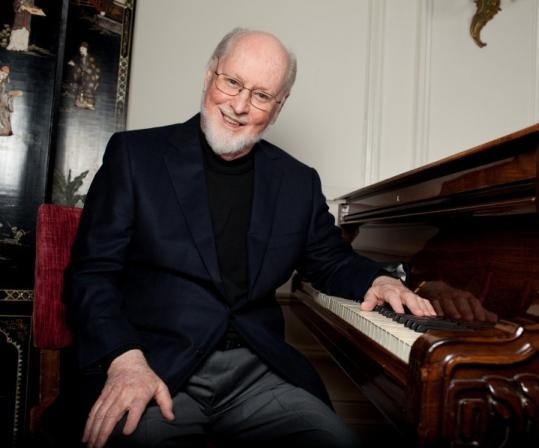
    Very little need be said of John Williams. The most successful film composer of all time, Williams has been a household name since the 1970s, thanks to the one-two punch of “Jaws” and “Star Wars.” But by then, he was already two decades into a career that’s now spanned some 70 years. With 54 Academy Award nominations and five wins, he is the second most nominated figure in the history of the Academy, behind only Walt Disney.

    For the concert hall, Williams has written music for just about every instrument, including an impressive body of concertos. We’ll hear his “Essay for Strings,” composed in 1965, when he was 33 years-old.

    It’s not always about images. Film composers cast themselves against type, on “Typecast IV: The Curse of Typecast” – including a salute to Laurie Johnson – on “The Lost Chord,” now in syndication on KWAX, the radio station of the University of Oregon!


    Remember, KWAX is on the West Coast, so there’s a three-hour difference for those of you listening in the East. Here are the respective air-times for all three of my recorded shows (with East Coast conversions in parentheses):

    PICTURE PERFECT, the movie music show – Friday on KWAX at 5:00 PM PACIFIC TIME (8:00 PM EST)

    SWEETNESS AND LIGHT, the light music program – ALL NEW! – Saturday on KWAX at 8:00 AM PACIFIC TIME (11:00 AM EST)

    THE LOST CHORD, unusual and neglected rep – Saturday on KWAX at 4:00 PM PACIFIC TIME (7:00 PM EST)

    Stream all three, at the times indicated, by following the link!

    https://kwax.uoregon.edu/

  • Alex North Remembered Williams Interview

    Alex North Remembered Williams Interview

    I posted earlier about film composer Alex North (“A Streetcar Named Desire,” “Death of a Salesman,” “Spartacus,” “Cleopatra,” “Who’s Afraid of Virginia Woolf?”) on his birthday. Now here’s a two-part interview about North with John Williams!

    Part 1 https://www.youtube.com/watch?v=iKq1c-wpVe4

    Part 2 https://www.youtube.com/watch?v=rYSmemYleEE

  • Harryhausen on Herrmann Rózsa & Rejected Barry

    Harryhausen on Herrmann Rózsa & Rejected Barry

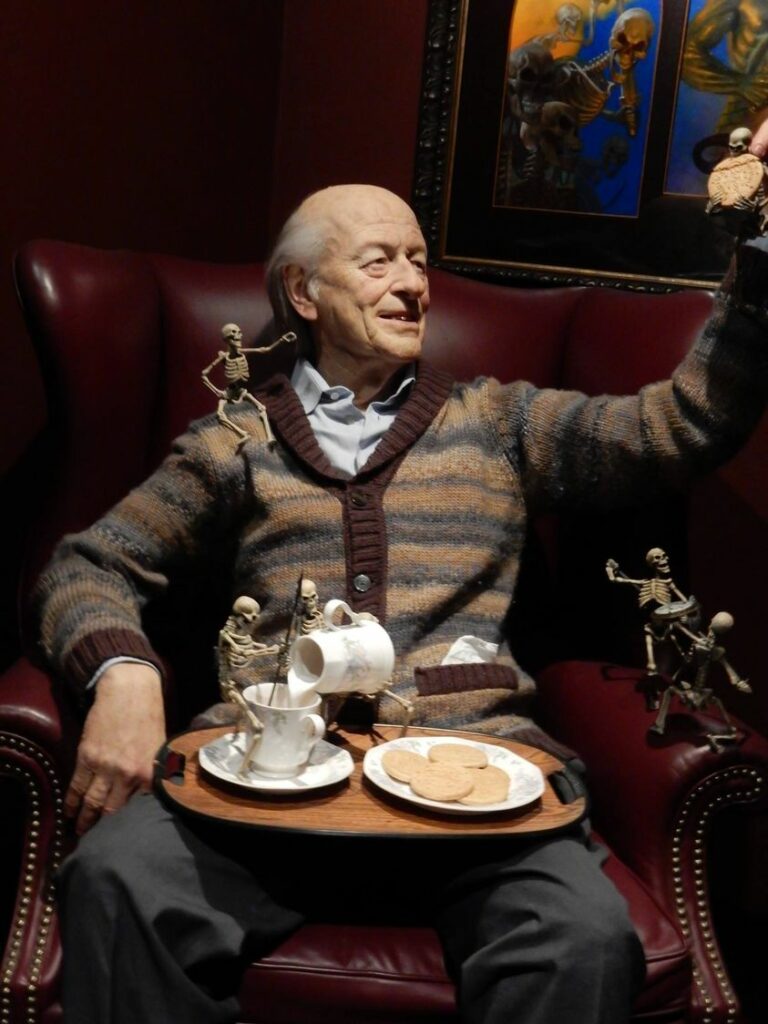
    This was shared yesterday on the Bernard Herrmann Society page. At the link, you’ll find a couple of letters written by special effects legend Ray Harryhausen, in which he comments on the various composers he had the privilege to work with. He has especially high praise for Herrmann and Miklós Rózsa.

    Ray Harryhausen On Miklos Rozsa … Bernard Herrmann … And Max Steiner

    Interestingly, on his last film, “Clash of the Titans,” Harryhausen apparently rejected a score-in-progress by Academy Award winning composer John Barry (composer of “Born Free,” “Out of Africa,” “Dances with Wolves,” and the James Bond franchise). In a later interview, Barry, who had been hired because Harryhausen was impressed by his score for “The Lion in Winter,” claimed not to remember much about the experience, beyond the fact that he had provided a few demos.

    Some of the music can actually be heard in this installment of the Ray Harryhausen Podcast.

    The composer’s fragmentary contributions begin at the following times:

    • 6:48, “Heroic 1”

    • 1:27:10, “Andromeda”

    • 1:28:43, “Persius Growing Up”

    • 1:30:49, “Scorpion”

    Barry was replaced by Laurence Rosenthal (composer of “A Raisin in the Sun,” “The Miracle Worker,” “Becket,” “The Return of a Man Called Horse,” “The Island of Dr. Moreau,” and “The Young Indiana Jones Chronicles”).

    But don’t shed any tears for Barry. He wound up doing just fine.

Tag Cloud

Aaron Copland (92) Beethoven (95) Composer (114) Film Music (120) Film Score (143) Film Scores (255) Halloween (94) John Williams (185) KWAX (229) Leonard Bernstein (100) Marlboro Music Festival (125) Movie Music (135) Opera (198) Philadelphia Orchestra (88) Picture Perfect (174) Princeton Symphony Orchestra (106) Radio (87) Ralph Vaughan Williams (85) Ross Amico (244) Roy's Tie-Dye Sci-Fi Corner (290) The Classical Network (101) The Lost Chord (268) Vaughan Williams (103) WPRB (396) WWFM (881)

DON’T MISS A BEAT

Receive a weekly digest every Sunday at noon by signing up here


RECENT POSTS