Tag: Film Composers

  • Film Composers Beyond the Screen

    Film Composers Beyond the Screen

    Played out on the Oscars?

    This Sunday night on “The Lost Chord,” enjoy a triple-feature of concert works by composers better recognized for their work in film.

    First, Jerome Moross was ensured a kind of immortality in the hearts of moviegoers for his Academy Award nominated score for “The Big Country.” He composed music for 16 films in all – comparatively few, actually, on account of a bicoastal career. (He was based in New York City.)

    Off-screen, he wrote music for five ballets, a symphony, a flute concerto, various works for orchestra and chamber ensemble, and a one-act opera, “Sorry, Wrong Number.” His best-known musical theatre piece is “The Golden Apple,” which spawned the ever-green “Lazy Afternoon.”

    Tonight, we’ll hear his delightful “Sonatina for Clarinet Choir” of 1966.

    Very little need be said of John Williams. The most successful film composer of all time, Williams has been a household name since the 1970s, thanks to the one-two punch of “Jaws” and “Star Wars.” But by then, he was already two decades into a career that’s now spanned 65 years. With 52 Academy Award nominations and five wins, he is the second most nominated figure in the history of the Academy, behind only Walt Disney.

    For the concert hall, Williams has written music for just about every instrument, including an impressive body of concertos. Tonight, we’ll hear his “Essay for Strings,” composed in 1965, when he was 33 years-old.

    Finally, English composer Laurie Johnson (pictured) – still with us at 94 – is appreciated for his contributions to, among others, Stanley Kubrick’s “Dr. Strangelove,” the Hammer cult favorite “Captain Kronos – Vampire Hunter,” and the classic TV series “The Avengers.”

    Gramophone Magazine described his “Symphony: Synthesis,” composed in 1971, as a masterpiece. “The work becomes increasingly fascinating with each listening,” writes the critic. “This is perhaps the first truly successful combination of the Jazz and European music traditions.”

    The recording we’ll hear, made under the composer’s direction, features a number of prominent jazz artists, including Tubby Hayes, Don Lusher, Joe Harriott, Kenny Wheeler and Stan Tracey.

    It’s not always about images. Film composers cast themselves against type, on “Typecast IV: The Curse of Typecast.” It will be there for you when the Oscars sputter, this Sunday night at 10:00 EDT; or enjoy it later, as a webcast, on WWFM – The Classical Network and at wwfm.org.

  • Film Composers on TV Picture Perfect

    Film Composers on TV Picture Perfect

    The music is big… it’s the PICTURES that got small.

    This week on “Picture Perfect,” it’s an hour of music from television scores by composers better known for their work in film.

    Bernard Herrmann began his film career right at the top, with “Citizen Kane” in 1941. He is perhaps best recognized for his scores for the films of Alfred Hitchcock, many of which have gone on to become classics, including those for “Vertigo,” “North by Northwest,” and especially “Psycho.”

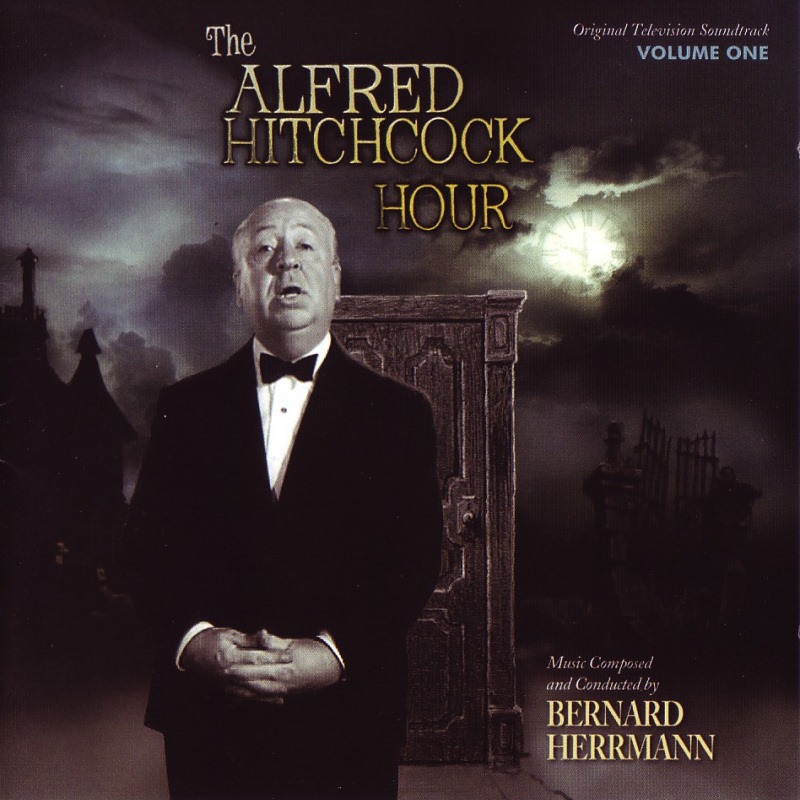
    Less well known is his work on the television series “The Alfred Hitchcock Hour,” which ran from 1963 to 1965. Herrmann composed music for 17 of the episodes. He was also responsible for suggesting Hitchcock’s signature tune, Charles Gounod’s “Funeral March of a Marionette,” which appears throughout the series in Herrmann’s own arrangement.

    Jerome Moross, Herrmann’s friend since childhood, had also enjoyed his share of success on the silver screen. Moross is best-remembered for having written the score for “The Big Country.” Nobody wrote western music quite like Moross. So it’s hardly surprising he would be asked to contribute to twelve episodes of “Wagon Train.”

    When someone noticed that the “Wagon Train” theme bore a striking resemblance to some of Moross’ music written for the film “The Jayhawkers,” two competing studios were kind enough to look the other way.

    Unlike Moross and Herrmann, who were both well-known by the time they ventured into television, John Williams was still very much on his way up. Williams, then billed as “Johnny,” was active in the movies throughout the 1960s, but his film projects at the beginning were mostly undistinguished, with titles like “Daddy-O,” “Gidget Goes to Rome,” and “John Goldfarb, Please Come Home.”

    Of course, he worked as a musician on more reputable projects, appearing as pianist on the soundtracks of “The Big Country,” “To Kill a Mockingbird” and “Charade.” He also worked as an orchestrator on “The Guns of Navarone.”

    But what provided much of Williams’ bread-and-butter throughout the ‘60s was his work on television series like “Checkmate,” “Gilligan’s Island,” and – for our purposes this week – “Lost in Space.” Happily, that “Williams sound,” so beloved by fans of “Stars Wars,” “Raiders of the Lost Ark,” and “E.T.,” was already in place.

    Finally, Jerry Goldsmith may have been a little bit ahead of Williams in the ‘60s, in terms of being offered more substantial films, but he too worked in television, providing scores for “Have Gun, Will Travel,” “The Twilight Zone,” and “Dr. Kildare.” We’ll conclude the hour with a medley of familiar Goldsmith television themes, with the composer conducting the London Symphony Orchestra.

    You’re invited to think inside the box, as film composers write for television this week, on “Picture Perfect,” this Saturday evening at 6:00 EST, on WWFM – The Classical Network and wwfm.org.

  • Herrmann Radio Days A Heart at Fire’s Center

    Herrmann Radio Days A Heart at Fire’s Center

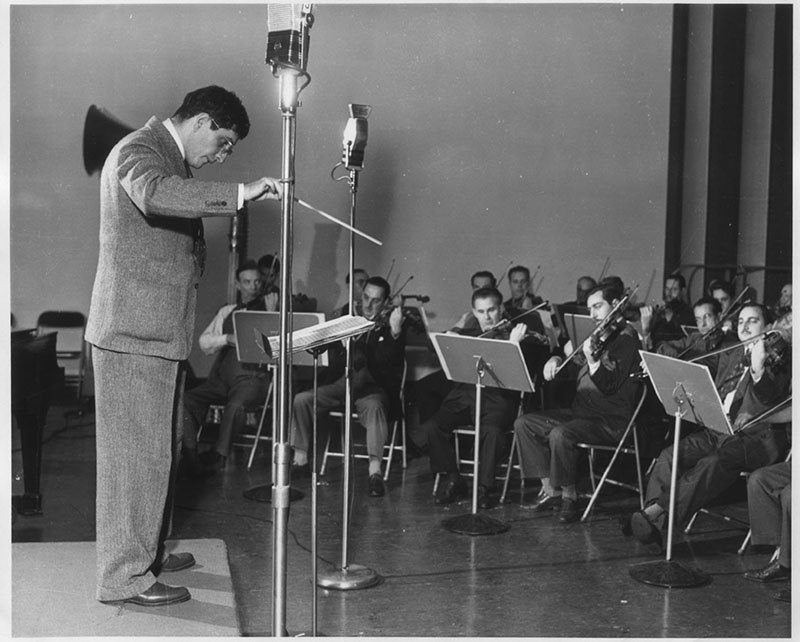
    I’m in the process of rereading Steven C. Smith’s biography of Bernard Herrmann, “A Heart at Fire’s Center,” which I first encountered nearly 30 years ago (!!!), shortly after its publication in 1991. Bernard Herrmann, of course, was one of the great film composers, perhaps the greatest, but he really got his start in the medium of radio. He was hired as a conducting assistant by CBS. It wasn’t long before he was providing original music and serving as musical director of its resident orchestra.

    It is sobering to recall just how high-minded radio was in its infancy, with the arts very much front and center. Classical music, dramatizations of classic literature, and poetry readings with musical accompaniment – all of these were a regular part of the programming at CBS. In fact, the network, in its original incarnation, had been founded by Arthur Judson, a violinist and concert promoter, who had been laughed out of NBC for his idealistic proposals.

    These were not dumbed-down music programs! Toscanini concerts with the New York Philharmonic tended to be a little more conservative (later, of course, the conductor would find a home, with his own orchestra, at NBC), but the programs supervised by Herrmann, then only in his 20s, but already possessed of an encyclopedic knowledge of both music and literature, introduced works by Charles Ives, Henry Cowell, Gian Francesco Malipiero, Alexander Gretchaninov, Nikolai Myaskovsky, Hermann Goetz, Joachim Raff, Niels Wilhelm Gade, Richard Arnell, Lord Berners, Edmund Rubbra, and countless others. Even Schoenberg and Webern could be heard over CBS during those years.

    Herrmann had known Ives personally since he was in his teens. He had discovered Ives’ “114 Songs” in the New York Public Library and was instrumental in shopping them around, even introducing them to Aaron Copland. He studied with Percy Grainger at NYU. Together, the two undertook the bass tuba, since Herrmann wanted to include the instrument in one of his orchestrations. He was also best friends with one of his Brooklyn classmates, Jerome Moross, who himself would become a notable film composer. Herrmann and Moross would sneak into rehearsals of the New York Philharmonic together at Carnegie Hall.

    Herrmann was unfailingly outspoken. Apparently he had no filter. Once, when CBS president William S. Paley balked at one of his proposals, Herrmann snapped, “You’re assuming the public is as ignorant about music as you are.” That’s just the kind of guy Herrnann was. Totally tactless, but usually right. After that, we’re told, he was given near-unlimited freedom over musical programming at CBS.

    Sometimes he would go out of his way to provoke. Once, during a rehearsal, he said to Benny Goodman, “Who told you you could play the clarinet?” Without missing a beat, Goodman responded, “Who told you you could conduct?” Everyone lived in fear of Herrmann’s acid tongue, but no one ever said no, and in fact a great many found his irascible nature to be surprisingly endearing. Often, he would deliberately stir the pot. He routinely provoked the head of the music library, which led to some lively exchanges, but these eventually resulted in a dinner invitation to the librarian’s home.

    I venture to guess, few people currently affiliated with CBS, and even fewer in its audience, have any idea of the network’s roots. It’s interesting to look back on the histories of these institutions and note how careful a balance was maintained between art and commerce. Alongside the radio comedies and entertainment music was plenty to educate the mind, enrich the soul, and ennoble the spirit. But gradually the balance shifted, as over the decades more and more ways were found to wring the sponge. Now you switch on cable, and it’s like a visit to the Circus Maximus. Little to nourish, just blood and skin. I’m convinced it has affected people’s patience, contributed to societal aggression and hostility, and impacted the nation’s overall ability to reason. There is no place for the spirit in a world fueled by adrenaline.

    In Herrmann’s day, there were those who believed that it was their responsibility to use technology as a tool to disseminate art and culture. It was seen as a civilizing influence. Herrmann himself dreamed of a time when filmed opera – as in, opera rendered cinematically – would be a thing. Good luck with that. In the meantime, he would soon come together with Orson Welles, as musical director for “Mercury Theater on the Air,” participating in the notorious “The War of the Worlds” radio broadcast and following Welles to Hollywood to score “Citizen Kane.” But already in radio, Herrmann was a force to be reckoned with.

    Interestingly, it had always been Herrmann’s ambition to be recognized as a great conductor. Leopold Stokowski was his hero. While he never realized that ambition, it was not for want of trying. Here is an audio file I came across this morning of a 1947 concert with Herrmann and the CBS Orchestra performing works by Mozart, Ravel and Cowell.

    https://pastdaily.com/2020/08/09/hilde-somer-with-bernard-herrmann-and-the-cbs-symphony-play-music-of-mozart-ravel-and-cowell-1946-past-daily-weekend-gramophone/

  • Steiner & Tiomkin Movie Music Crossword Puzzle

    Steiner & Tiomkin Movie Music Crossword Puzzle

    Today marks the dual birthdays of film composers Max Steiner and Dimitri Tiomkin. Since I am not on the radio, I’ve put together a crossword puzzle to celebrate their achievements. The clues not only allude to specifics of their respective lives and careers, but they should also be of ample interest, I hope, to classic movie buffs. So even if you’re convinced you don’t know a lot about music, do check it out if, like me, you happen to watch a lot of movies from the ‘30s, ‘40s, and ‘50s.

    To fill out the puzzle, follow the link and select “solve online” at the bottom of the page. You’ll then be able to type directly into the squares. Once you feel you’ve exhausted the puzzle, you’ll find the solutions by clicking on “Answer Key PDF.”

    https://www.armoredpenguin.com/crossword/Data/2020.05/1007/10071219.977.html


    If you’re having a slow Sunday, here are links to additional puzzles from the past two weeks. They’re great for Mom, too!

    CAFFEINATED CLASSICS

    https://www.armoredpenguin.com/crossword/Data/2020.04/2606/26063743.014.html?fbclid=IwAR1hVDkahxxccD4EPyI0conCbo92RWhyNIiaLwnd5JYm05WtzOSUQ0kWSrk

    SPRING INTO MUSIC

    https://www.armoredpenguin.com/crossword/Data/2020.05/0305/03054400.876.html?fbclid=IwAR07w4LOBxeHU7TuVbhkeruH_BXGo4cKZ_oZ1IoRhyHBL44v6ie1cOTRtJ4

  • National Geographic’s Epic TV Scores

    National Geographic’s Epic TV Scores

    Years in advance of modern cable, at the very dawn of color television, the National Geographic Society aired its first “special” on September 10, 1965. The program, titled “Americans on Everest,” featured stunning footage taken from the summit of the world’s tallest peak. These specials really were special, with breathtaking images and real-life adventures unlike anything previously experienced in American living rooms.

    Three months later, viewers were introduced to the familiar “National Geographic Theme,” which was composed by Elmer Bernstein for the third of the broadcast specials, “Voyage of the Brigantine Yankee.” When one realizes that Bernstein also wrote the score for “The Magnificent Seven,” it becomes one of those “Of course!” moments. Both themes remain among the most recognized by American audiences.

    National Geographic went on to work with a number of the top film composers of the day. This week on “Picture Perfect,” we’ll travel the world with four of them.

    Bernstein, who was also responsible for the music for “The Ten Commandments,” “The Great Escape,” and “To Kill a Mockingbird,” returned in 1967 to write the music for a follow-up to “Voyage of the Brigantine Yankee,” called “Yankee Sails Across Europe.”

    Ernest Gold, composer of “Exodus,” was engaged in 1972 to write the score for “The Last Vikings,” a documentary about the inhabitants of the rugged northern coast of Norway, who at the time still practiced some of the traditions followed centuries before by their Norse forebears. Gold’s score is a good example of what a talented composer can accomplish through an economy of means – in this case, a wind ensemble, harp, cello and percussion.

    Leonard Rosenman, a pupil of Arnold Schoenberg, Roger Sessions and Luigi Dallapiccola – a most unlikely pedigree on which to build a career in Hollywood – wrote classic scores for “East of Eden,” “Rebel Without a Cause,” and “Fantastic Voyage.” He also composed the music for one of the best known of the National Geographic specials, “Dr. Leakey and the Dawn of Man,” in 1966.

    Finally, Jerome Moross wrote a charming and buoyant Americana score for “Grizzly!,” which aired in 1967. Moross, of course, was the composer of one of the all-time great western scores, for “The Big Country.”

    Of course we’ll also get more than our share of that iconic National Geographic theme. All of this music was issued on limited edition compact discs from the Intrada label.

    I hope you’ll join me for music from outstanding television documentaries produced by National Geographic, on “Picture Perfect,” this Friday evening at 6:00 EST, on WWFM – The Classical Network and wwfm.org.

Tag Cloud

Aaron Copland (92) Beethoven (95) Composer (114) Film Music (120) Film Score (143) Film Scores (255) Halloween (94) John Williams (185) KWAX (229) Leonard Bernstein (100) Marlboro Music Festival (125) Movie Music (135) Opera (198) Philadelphia Orchestra (88) Picture Perfect (174) Princeton Symphony Orchestra (106) Radio (87) Ralph Vaughan Williams (85) Ross Amico (244) Roy's Tie-Dye Sci-Fi Corner (290) The Classical Network (101) The Lost Chord (268) Vaughan Williams (103) WPRB (396) WWFM (881)

DON’T MISS A BEAT

Receive a weekly digest every Sunday at noon by signing up here


RECENT POSTS