Tag: Film Composers

  • Film Composers’ Concert Music

    Film Composers’ Concert Music

    What’s that you say? You could care less about the Oscars? Perhaps then you’d be interested in a little counterprogramming. This Sunday night on “The Lost Chord,” we’ll both deny and complement the ceremony by listening to concert works by composers better known for their work in film.

    Franz Waxman was a two-time Academy Award winner, honored with back-to-back Oscars, in 1950 and 1951, for his work on “Sunset Boulevard” and “A Place in the Sun.” Some of his other classic scores include those for “The Bride of Frankenstein,” “Rebecca,” “Rear Window,” “Peyton Place” and “The Nun’s Story.”

    In 1955, he was traveling from California to Zurich to conduct a new piece commissioned by Rolf Liebermann. When Waxman reached New York he was met with a request from Lieberman’s office for program notes for the impending premiere. Waxman was forced to admit he hadn’t yet begun work on the piece, which he had planned to write during the ocean voyage. Fortunately, he was accustomed from his experience in Hollywood to write very quickly. The result was his “Sinfonietta for String Orchestra and Timpani.”

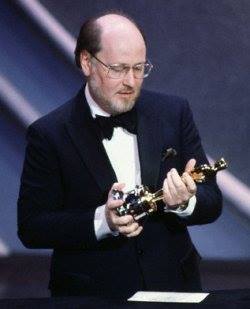
    Five-time Academy Award winner John Williams – whose 51st nominated score, for “Star Wars: The Last Jedi,” is in contention tonight – is of course very well-known for his collaborations with George Lucas and Steven Spielberg. Over the years, he’s also accrued an impressive quantity of concertos. One of the more immediately attractive of these is his Tuba Concerto of 1985, written for the 100th anniversary of the Boston Pops.

    Finally, we’ll turn to three-time Academy Award winner Miklós Rózsa, honored for his work on Alfred Hitchcock’s “Spellbound” in 1945, the Ronald Colman thriller “A Double Life” in 1947, and “Ben-Hur” in 1959. He also composed quite a bit of concert music, including concertos for Jascha Heifetz, Gregor Piatigorsky, Janos Starker, Leonard Pennario and Pinchas Zukerman.

    Rózsa, Hungarian by birth, turned to film after a period of struggle as a young artist in Paris, where he learned from Arthur Honegger that he was able to pay the rent by supplementing his concert music with cinematic efforts. Rózsa’s “Theme, Variations and Finale,” Op. 13, of 1933, preceded the start of his film career by a few years. He revised the piece in 1943, by which time he had already completed his classic fantasy scores for Alexander Korda’s “The Thief of Bagdad” and “Jungle Book,” and was on the verge of becoming a leading composer of film noir.

    “Theme, Variations and Finale” received performances by Charles Munch, Karl Böhm, Georg Solti, and Eugene Ormandy. It was also one of the works that featured on the legendary concert that launched Leonard Bernstein with the New York Philharmonic, on November 14, 1943, when the young assistant conductor substituted at the last minute for an ailing Bruno Walter.

    I hope you’ll join me for an hour of concert music by composers better known for their work in film – “Against Type” on “The Lost Chord” – this Sunday night at 10:00 EST, on WWFM – The Classical Network and wwfm.org.

    PHOTOS: Has anyone here seen Kelly? (Clockwise from left) John Williams wins the Oscar for “Star Wars;” Franz Waxman and Miklós Rózsa receive their awards from the hands of Gene Kelly
  • Olympic Music Fever Film Composers Soundtrack

    Olympic Music Fever Film Composers Soundtrack

    Nevermind the flu – we’ve got ourselves a case of Olympic Fever!

    This week on “Picture Perfect,” in honor of the Winter Games in Pyeongchang, we’ll try something a little different, since most of the music we’ll be listening to was, strictly speaking, not written for film. However, all of it was composed by artists closely associated with film. Much of it will be ceremonial music, heard during the opening ceremonies and television broadcasts, but we’ll also have a suite from a score composed for a documentary on the games.

    Featured composers with include Leo Arnaud (a Ravel pupil who worked on “The Wizard of Oz” and went on to write THE classic Olympic theme), Angelo Badalamenti (David Lynch’s composer of choice), Lee Holdridge (a multifaceted musician who is the recipient of seven Emmys and a Grammy), Basil Poledouris (composer of “Conan the Barbarian” and “Lonesome Dove”), and John Williams (‘nuff said).

    I’ve got a fever, and the only prescription is Olympic music, on “Picture Perfect,” this Friday evening at 6:00 EST, on WWFM – The Classical Network and wwfm.org.

  • Jerry Goldsmith Hollywood Star Is Long Overdue

    Jerry Goldsmith Hollywood Star Is Long Overdue

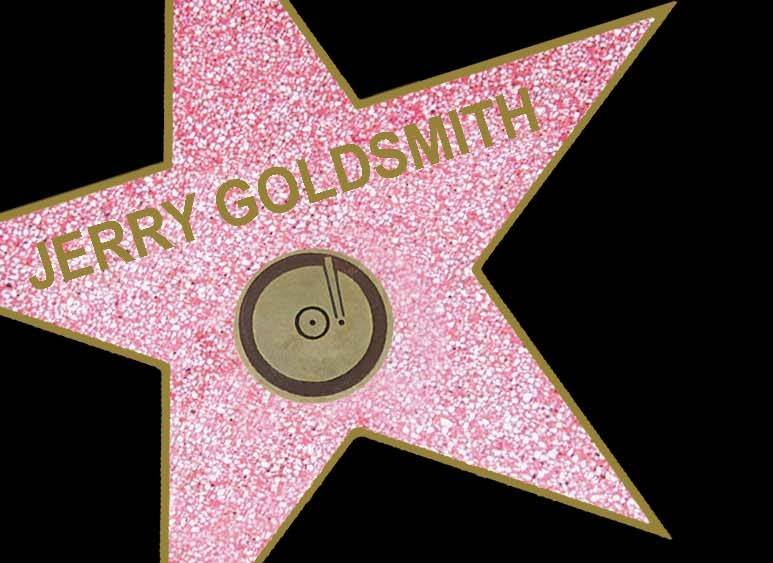
    Film composer Jerry Goldsmith finally receives a star on the Hollywood Walk of Fame.

    http://variety.com/2017/music/spotlight/jerry-goldsmith-star-walk-of-fame-1202421229/

    I only wish we still had film composers this good. Then again, I wish we still had movies like “Planet of the Apes” (1968), “Patton,” “Chinatown,” and “The Wind and the Lion.”

  • Oscars La La Land & Film Composers Concert

    Oscars La La Land & Film Composers Concert

    They don’t make ‘em like they used to. That statement could just as easily apply to the Academy Awards ceremonies as to the films they celebrate.

    Certainly, they don’t write film scores like they used to, which is what makes the unabashedly retro romanticism of “La La Land” so refreshing. Best wishes to Princeton High School alumnus, director Damian Chazelle, and his Harvard roommate, composer Justin Hurwitz.

    If you are immune to “La La Land” fever, you might consider tuning in tonight to “The Lost Chord” for an alternative to the Oscars, as I’ll present concert music by three composers generally associated with film.

    Maurice Jarre was the recipient of three Academy Awards, for his work on the David Lean epics “Lawrence of Arabia,” “Doctor Zhivago,” and “A Passage to India.” Big orchestral gestures don’t tell the whole story, however, and late in his career, Jarre turned increasingly to electronic music and electronic-acoustic blends.

    It was not an entirely new wrinkle in his development. He had met Maurice Martenot in the 1940s, and immediately recognized the potential of his invention, the ondes Martenot, an electronic instrument sounding somewhat like the theremin but offering more precision due to the addition of a keyboard. Jarre was in his mid-20s when he composed “Three Dances for Ondes Martenot and Percussion.”

    Composer Thomas Newman has never won a competitive Oscar, despite his having been nominated 14 times. (He’s up for his music for “Passengers” tonight, but against “La La Land,” he doesn’t have a prayer.) He’s still one nomination short of the record-holder, poor Alex North, composer of “A Streetcar Named Desire,” “Spartacus,” and “Who’s Afraid of Virginia Woolf,” who was finally recognized with an honorary Oscar in 1986. Tonight, we’ll feature North’s rarely-heard “Holiday Set,” from an old Spa Records 33 ½ LP.

    Finally, Miklós Rózsa was the recipient of three Academy Awards, most notably for his music for the 1959 version of “Ben-Hur.” Rozsa’s colorful and energetic “Three Hungarian Sketches,” composed in 1938, draws on musical inflections of his homeland.

    If you just can’t bear the Oscars, I hope you’ll join me for another installment of “Typecast” (we’ve visited this topic before), film composers in the concert hall, this Sunday night at 10:00 EST, on WWFM – The Classical Network and at wwfm.org.

  • Film Composers on WPRB Radio Today

    Film Composers on WPRB Radio Today

    This morning on WPRB, we get “reel.” It’s concert music by composers better known for their work in film, with examples of their music for the movies.

    The playlist is still taking shape – a show is always a thing in progress – but the Box of Wonders contains enchantments by the likes of Elmer Bernstein, Bruce Broughton, Ernest Gold, Jerry Goldsmith, Bernard Herrmann, Erich Wolfgang Korngold, Jerome Moross, Ennio Morricone, Rachel Portman, Nino Rota, Miklós Rózsa, Lalo Schifrin, Franz Waxman and John Williams.

    Daniel Spalding will drop by at around 10:00. Spalding will conduct the New Jersey Capital Philharmonic Orchestra in a blockbuster program of “Cinematic Classics” this weekend, including works by Rózsa, Herrmann and William Walton, with Odin Rathnam the soloist in Korngold’s Violin Concerto. The concert will take place at the Trenton War Memorial on Saturday evening at 7:30.

    Past WPRB guests, JoAnn Falletta and Mariusz Smolij, music director of the Riverside Symphonia in Lambertville, will be represented this morning in fine recordings of music by Moross and Rózsa, respectively.

    The concert hall becomes a screening room, from 6 to 11 EDT, on WPRB 103.3 FM and at wprb.com. We’re ready for our close-up, on Classic Ross Amico.

Tag Cloud

Aaron Copland (92) Beethoven (95) Composer (114) Film Music (120) Film Score (143) Film Scores (255) Halloween (94) John Williams (185) KWAX (229) Leonard Bernstein (100) Marlboro Music Festival (125) Movie Music (135) Opera (198) Philadelphia Orchestra (88) Picture Perfect (174) Princeton Symphony Orchestra (106) Radio (87) Ralph Vaughan Williams (85) Ross Amico (244) Roy's Tie-Dye Sci-Fi Corner (290) The Classical Network (101) The Lost Chord (268) Vaughan Williams (103) WPRB (396) WWFM (881)

DON’T MISS A BEAT

Receive a weekly digest every Sunday at noon by signing up here


RECENT POSTS