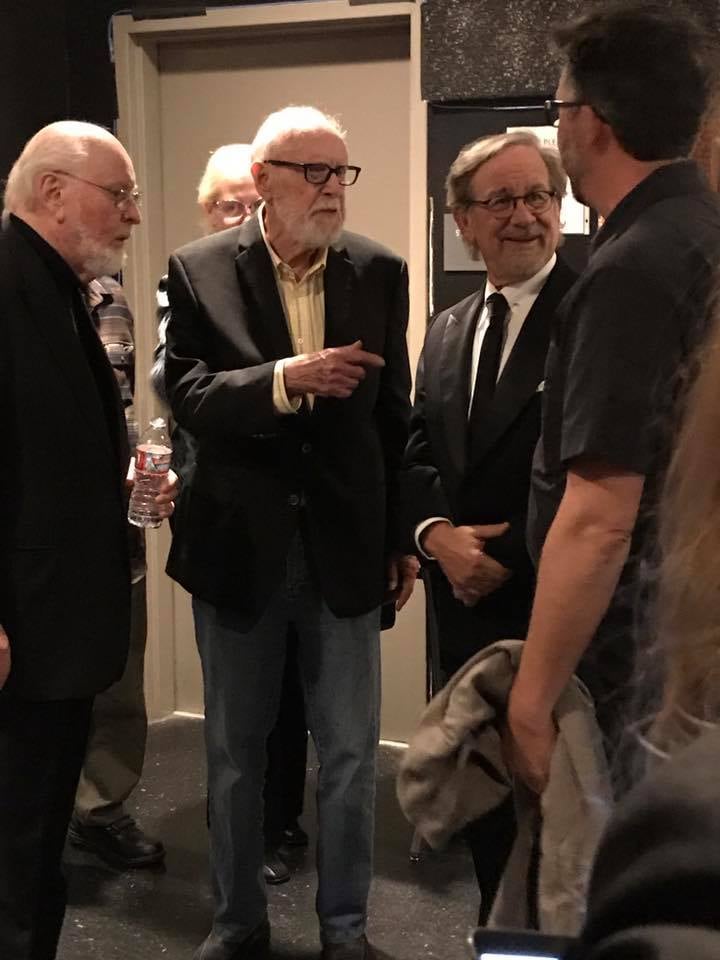
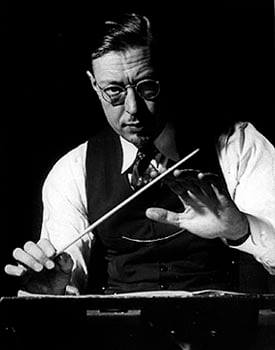
Kenneth Wannberg, a major influence on the shaping of John Williams’ classic film scores, has died at the age of 91.
In the capacity of Williams’ music editor, Wannberg was responsible for, among other things, selecting the best takes from the recording sessions of a particular cue and assembling them into a coherent whole. The main title to “Star Wars” was recorded five times for the original movie. Wannberg used the best three takes to produce the final version as heard in the film.
He was also responsible for the placement of streamers and punches on the work print of a film for the conductor (in this case, Williams), and for the assembly of the soundtrack album.
In the special editions of the original “Star Wars” trilogy and in the subsequent prequel trilogy, George Lucas had a tendency to ramp up Ben Burtt’s sound effects at the expense of Williams’ music. At a time when seemingly everyone had become a Lucas yes-man, Wannberg stepped up during the mixing of “Revenge of the Sith” to point out that the effects were too noisy. When Wannberg explained that the music was the “thread through the montage of cutting back and forth” in the climactic duel scene, and that it needs to “live a little,” Lucas considered his words and ultimately conceded. There weren’t very many people who would have stood up to Lucas at that point in his career.
Wannberg worked with Williams at least as far back as 1967, when Williams provided music for “Valley of the Dolls.” He also assisted him on the Reader’s Digest-produced screen musical “Tom Sawyer” (with songs by the Sherman Brothers). Most significantly, he was at the composer’s side all throughout his heroic hot streak of “Star Wars,” “Close Encounters of the Third Kind,” “Raiders of the Lost Ark,” and “E.T. The Extra-Terrestrial.” He remained with Williams until his retirement, following work on “Revenge of the Sith,” “Memoirs of a Geisha,” and “Munich,” in 2005.
Williams, who dedicated to Wannberg a concert version of “Star of Bethlehem” (originally from Williams’ score to “Home Alone”), will turn 90 on February 8.
Wannberg was a composer himself, providing scores for “The Late Show,” with Art Carney and Lily Tomlin, “Losin’ It,” with Tom Cruise, and “The Philadelphia Experiment.”
In researching the music for tonight’s discussion of “THX 1138” on Roy’s Tie-Dye Sci-Fi Corner, I was interested to note Israel Baker among the film’s musical personnel. In addition to working in the movies, Baker made many recordings for Columbia Records (now Sony), with the likes Jascha Heifetz, Bruno Walter, Glenn Gould, and Igor Stravinsky.
At different points of his career, he was concertmaster of Stokowski’s All-American Youth Orchestra, a member of Toscanini’s NBC Symphony (where he would have played with flutist Carmine Coppola – father of Francis Ford Coppola – also listed among the “THX” personnel), leader of the Los Angeles Chamber Orchestra, and concertmaster of the Columbia Symphony. In addition, he led the classical and jazz ensembles at Capitol Records.
Baker was Stravinsky’s first choice to record his Violin Concerto, but Columbia overruled in favor of the more marketable Isaac Stern. Alongside his work in the film and classical music fields, Baker appeared on hundreds of recordings by artists such as Benny Carter, Ella Fitzgerald, Johnny Mathis, Frank Sinatra, Barbra Streisand, Mel Tormé, Sarah Vaughan, Tom Waits, and The Dameans.
Perhaps his most notorious contribution to film was as concertmaster at the recording sessions for Bernard Herrmann’s score to Alfred Hitchcock’s “Psycho” (in which capacity he played in the infamous shower scene). Baker also worked with Alfred Newman, Franz Waxman, André Previn, Elmer Bernstein, Maurice Jarre, John Barry, John Williams, and – in the case of “THX 1138” – Lalo Schifrin.
He died on Christmas Day, 2012, at the age of 92.
Baker plays the opening of “Scheherazade” with Erich Leinsdorf and the Concert Arts Orchestra
Stravinsky’s “Pastorale”
The dream team of Jascha Heifetz, Israel Baker, William Primrose, Gregor Piatigorsky, and Leonard Pennario, in César Franck’s Piano Quintet in F minor
Playing Schoenberg with Glenn Gould
An interview with Baker at the age of 90
More about tonight’s discussion of “THX 1138”
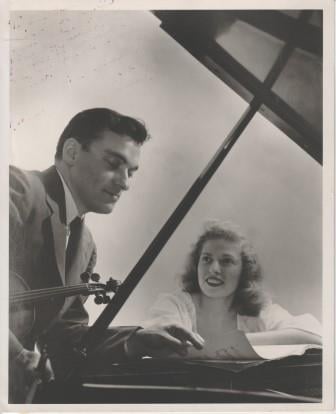
PHOTO: Baker with his frequent duo partner, Yaltah Menuhin, sister of the famed violinist Yehudi Menuhin
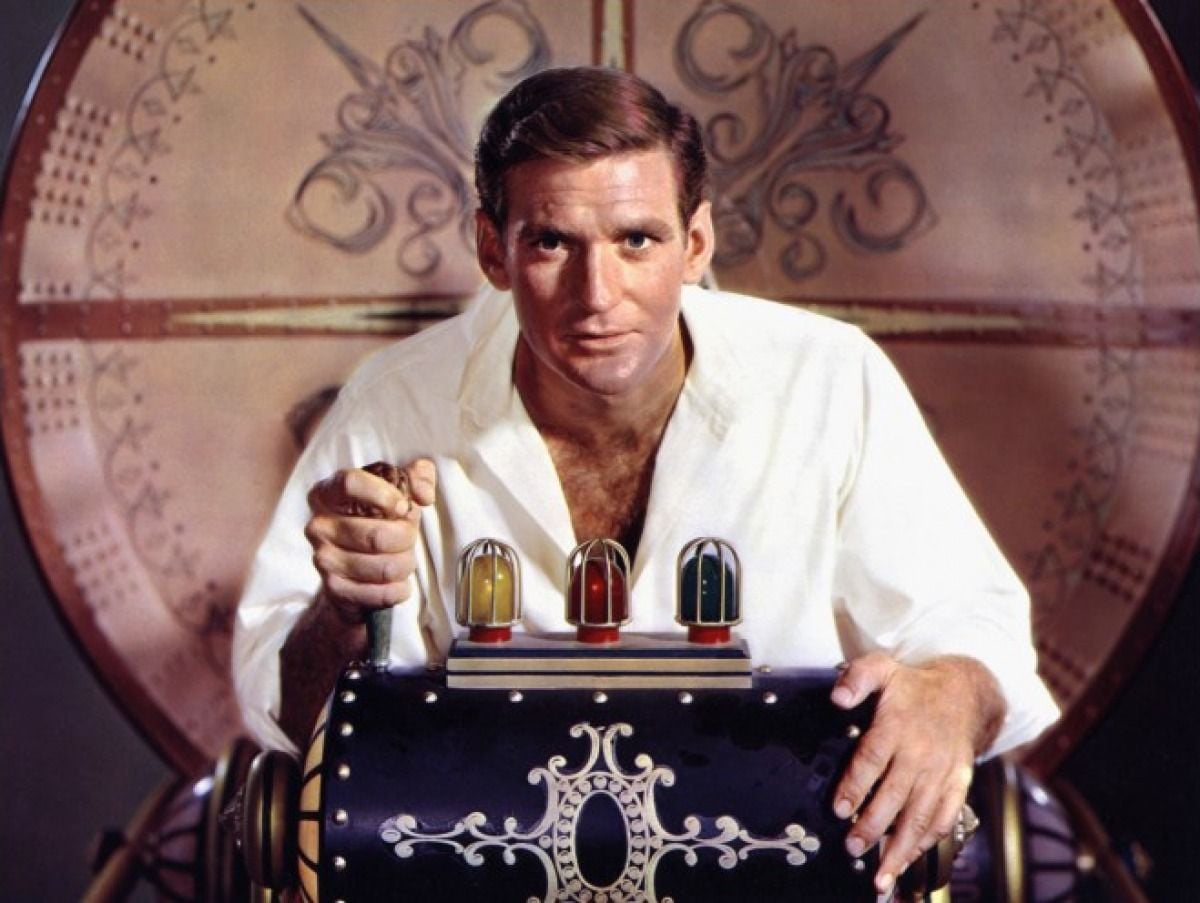
This week on “Picture Perfect,” spring into the new year with an hour of time travel adventures!
Look forward – and back – to selections from “The Time Machine” (1960) by Russell Garcia, “Time After Time” (1979) by Miklós Rózsa, “Somewhere in Time” (1980) by John Barry, and “Back to the Future” (1985) by Alan Silvestri.
It’s a time travel toddy for New Year’s, on “Picture Perfect,” music for the movies, this Saturday evening at 6:00 EST, on WWFM – The Classical Network and wwfm.org.
For 40 years, you were director of the Eastman School of Music. You were the recipient of the Pulitzer Prize in 1944, for your Symphony No. 4, “Requiem,” dedicated to the memory of your father.
You championed innumerable American composers, as conductor of the Eastman-Rochester Orchestra, an ensemble you founded. The lucky ones made it onto your now highly-collectible recordings for the Mercury label.
Undoubtedly, your best-known music is the Symphony No. 2, “Romantic,” composed in 1930. The trademark “Hanson sound” is one of heart-on-the-sleeve lyricism, with wistful melodies arrayed in lambent orchestration.
The Symphony No. 2 has been a great favorite in Hollywood, at least since the 1970s. How else would you have turned up in the end credits of “Alien” (1979), or been evoked in the bicycle chase and finale of “E.T.” (1982), or, most recently, been cribbed for “The Boss Baby” (2017)?
Romantic Hanson in “Alien”:
Hans Zimmer borrows for “The Boss Baby”:
John Williams’ most glorious music, for the last 15 minutes of “E.T.,” would not have been the same without your influence.
As it’s heard in the original:
“E.T.” is a brilliant score, but clearly Williams was a fan of your “Romantic Symphony.”
Happy birthday, Howard Hanson!
Romantic Symphony (complete)
Piano Concerto
“Elegy in Memory of Serge Koussevitzky”
Koussevitzky conducts Hanson’s Symphony No. 3
“Pastorale” for Oboe, Harp and Strings
Hanson conducts Henry Cowell’s Symphony No. 4, a recording that never made it to compact disc