Tag: Film Music

  • Remembering Jerry Goldsmith Film Music Legend

    Remembering Jerry Goldsmith Film Music Legend

    Poor Jerry Goldsmith. He wrote some of the great film scores of his time, including those for “The Sand Pebbles” (1966), “The Blue Max” (1966), “The Flim-Flam Man” (1967), “Planet of the Apes” (1968), “Patton” (1970), “Papillon” (1973), “Chinatown” (1974), “The Wind and the Lion” (1975), “MacArthur” (1977), “The Boys from Brazil” (1978), “The Great Train Robbery” (1979), “Alien” (1979, butchered in the sound editing), and “Star Trek: The Motion Picture” (1979).

    For television, he wrote for “Dr. Kildare,” “The Twilight Zone,” “Gunsmoke,” “The Man from U.N.C.L.E.” and “The Waltons.”

    By the 1980s, the films began to get weaker. It seemed like Goldsmith was always getting tossed the projects John Williams passed on, or cheap knockoffs of Williams’ successes. By his final decade, he was stuck writing for such garbage as “The Mummy” (1999), “The Haunting” (1999), and “Looney Tunes: Back in Action” (2003). A notable exception was “L.A. Confidential” (1997), but rarely were his later projects up to his talent.

    Goldsmith had a reputation for being able to compose at white heat, so he was frequently called upon to write replacement scores for films like “The River Wild” (1994), “Air Force One” (1997) and “The 13th Warrior” (1999). He composed and recorded the score to “Chinatown,” one of the best of the 1970s, in only ten days.

    Incredibly, he was honored with only a single Academy Award, for his influential score to “The Omen” (1976). Goldsmith died in 2004, at the age of 75. If he were to come back today, he would mop the joint with all the Hans Zimmer clones of the world.

    Happy birthday, Jerry Goldsmith. I sure does miss you.

    #JerryGoldsmith


    The Man from U.N.C.L.E.:

    Planet of the Apes:

    Patton:

    https://www.youtube.com/watch?v=vdEy4GneZfw

    Chinatown:

    The Wind and the Lion:

    The Omen (perfect for Lent):

    Star Trek: The Motion Picture:

  • Princeton Symphony Orchestra’s Silver Screen Pops

    Princeton Symphony Orchestra’s Silver Screen Pops

    The shrieking violins of “Psycho.” The menacing double-basses of “Jaws.” Both exemplify the lingering power of exceptionally well-suited music and visuals.

    Both will be represented on a concert of the Princeton Symphony Orchestra, which will take place at Princeton University’s Richardson Audition tomorrow night at 8:00. The orchestra’s annual “Saturday Evening POPS!” is a sequel of sorts to last year’s “Silver Screen Salute.”

    The program will include music from classic films like “Ben-Hur” and “Star Wars,” with songs from more recent favorites like “Titanic” and “Frozen.”

    Lucas Richman will conduct. Richman has worked in films for nearly a quarter century. He’ll be joined by Broadway vocalist Jessica Hendy for some classic love songs by George Gershwin and Marvin Hamlisch.

    You can read more about it in my article in today’s Trenton Times:

    http://www.nj.com/times-entertainment/index.ssf/2016/02/classical_music_pso_cnso_perfo.html


    PHOTO: The hand of Hendy

  • Korngold Rediscovered Vienna to Hollywood

    Korngold Rediscovered Vienna to Hollywood

    For the first edition of “The Lost Chord” for 2016, we revisit the music of Erich Wolfgang Korngold. Korngold, of course, was one of the great film composers. A two-time Academy Award winner, he provided music for such classics as “Captain Blood,” “The Prince and the Pauper,” “The Adventures of Robin Hood,” “The Sea Hawk” and “Kings Row.”

    But before he settled in Hollywood, Korngold was the toast of Vienna, one of the most lauded of contemporary composers, and the city’s brightest hope for maintaining its fin de siècle supremacy in music.

    Korngold was a child prodigy who had amazed audiences with such works as the ballet-pantomime “Der Schneemann” (or “The Snowman”), composed at the tender age of 11 (first performed at the Vienna Court Opera in the presence of Emperor Franz Josef); his Piano Trio, composed at the age of 13 (given its premiere by Arthur Schnabel and members of the Vienna Philharmonic); and the “Sinfonietta,” a symphony-in-all-but-name, composed at the age of 15 (first conducted by Felix Weingartner, Korngold sharing a box at that performance with an admiring Richard Strauss).

    With the premiere of his opera “Die tote Stadt,” in 1920, at age 23, Korngold’s reputation seemed assured. He wrote a piano concerto for Paul Wittgenstein, undertook a revival of the operettas of Johann Strauss II, and was publicly honored by the president of Austria.

    However, the trajectory of his career took an unexpected turn with the rise of Hitler. To escape the creep of fascism, Korngold embarked on a second career, settling in Hollywood to write film scores for Warner Brothers.

    The first of these was composed at the invitation of famed impresario Max Reinhardt, with whom Korngold had collaborated on the Strauss revivals. Reinhardt was in the process of adapting Shakespeare’s “A Midsummer Night’s Dream” for the big screen, and he enlisted Korngold to rework Felix Mendelssohn’s famous incidental music.

    In true Korngoldian fashion, the composer went well beyond what was expected, weaving in passages from Mendelssohn’s symphonies and “Songs Without Words,” writing his own connective material, and sprinkling the whole with fairy dust.

    Korngold’s work on “A Midsummer Night’s Dream” led to an exclusive contract at Warner’s, where the composer revolutionized the language of film music, applying the kind of opulence, pageantry and romance characteristic of his operas to silver screen historical dramas and swashbucklers.

    The result was kind of a pop cultural immortality, but to the detriment of his reputation as a serious composer. The center of European musical culture was off-limits, indeed severely limited by Nazi strictures, and the language of musical modernism, as exemplified by the output of his contemporary and compatriot Arnold Schoenberg, made Korngold seem positively old-fashioned. It would be decades before his reputation would recover, and unfortunately by then he was long dead.

    From the same year as his greatest triumph, “Die tote Stadt,” 1920, comes an earlier foray into Shakespeare, written for a stage production of “Much Ado About Nothing.” “Much Ado” contains some of Korngold’s most charming music. A concert suite of some 20 minutes has been in circulation for decades.

    However, what we have for you this evening is the first COMPLETE recording of the score, with spoken dialogue. A 2013 release, on the Toccata Classics label, it features actors and musicians of the University of North Carolina School of the Arts, conducted by John Mauceri.

    I hope you’ll join me for “Much Ado About Korngold,” tonight at 10 ET, with a repeat Wednesday evening at 6; or that you’ll listen to it later as a webcast at wwfm.org.

  • Elmer Bernstein’s Western Film Score Legacy

    Elmer Bernstein’s Western Film Score Legacy

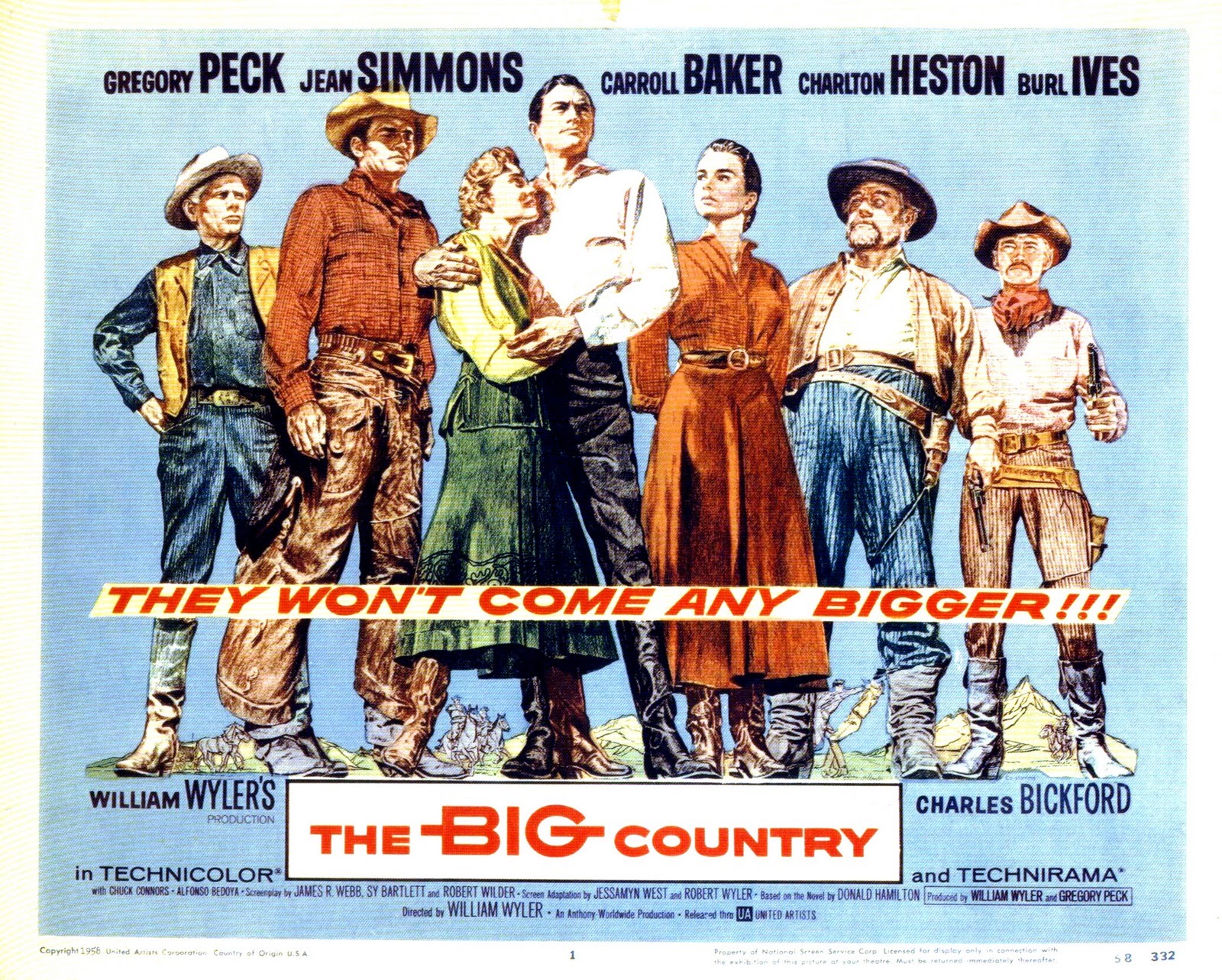
    Elmer Bernstein scored films in just about every genre – from “The Man with the Golden Arm” (1955) to “The Ten Commandments” (1956) to “To Kill a Mockingbird” (1962) to “The Great Escape” (1963) to “Animal House” (1978) to “The Age of Innocence” (1993) to his final project, the Oscar-nominated “Far from Heaven” (2002) – but he had a particular knack for the western.

    His swaggering theme for “The Magnificent Seven” (1960) is just about synonymous with most people’s idea of western adventure. (It also sold a heck of a lot of cigarettes when it was licensed by Marlboro.)

    Not surprisingly, “The Magnificent Seven” put Bernstein much in demand as a western composer, and he wrote scores for many, including most of the films of John Wayne’s final decade. What’s striking is just how much he was able to vary them. His work for “The Comancheros” (1961) is very different from that for “True Grit” (1969), for instance, and “The Shootist” (1976), Wayne’s final film, is different still.

    You’ll be able to sample some of them, when we saddle up for western scores of Elmer Bernstein, on “Picture Perfect” – music for the movies – this Friday evening at 6 ET, with a repeat Saturday morning at 6; or listen to them later on the webcast at wwfm.org.

  • Horse Racing Movie Music Perfect Picture

    Horse Racing Movie Music Perfect Picture

    It’s a rare horse race where everyone comes out a winner. This week on “Picture Perfect,” we beat the odds. We’ll have beautiful and rousing music from films about horses and horse racing.

    “The Black Stallion” (1979), based on the classic novel by Walter Farley, depicts the bonding of a shipwrecked boy and an Arabian stallion, whose shared destiny takes them to the race track. Mickey Rooney’s uncharacteristically subdued performance as the former trainer who finds a new lease on life earned him an Academy Award nomination for Best Supporting Actor.

    Francis Ford Coppola executive produced the film, and his father, Carmine Coppola, wrote the music. Reportedly the unsung Shirley Walker, who had been hired as an orchestrator, wound up contributing a fair amount to it, when the composer was put off by requests from director Carroll Ballard that portions of the music be rewritten.

    “The Reivers” (1969), after William Faulkner’s Pulitzer Prize winning novel, is a coming-of-age story about a boy swept into automobile theft and illicit horse racing in the American south. Mark Rydell directed, and Steve McQueen starred as the rakish Boon Hogganbeck. The narration was by Burgess Meredith, who reprises his role in the recording we’ll hear, with John Williams conducting his own music.

    For the film, Williams provided an alternately wistful and carefree Americana score. It’s said that the music for “The Reivers” is what moved Steven Spielberg to hire him to write the music for his first theatrical feature, “The Sugarland Express.” The Spielberg association brought Williams to “Jaws,” and the first of his truly iconic film scores. He also worked with Mark Rydell again, on “The Cowboys” (1972), “Cinderella Liberty” (1973), and “The River” (1984).

    It was inevitable that the nonfiction bestseller “Seabiscuit: An American Legend” would be given the big Hollywood treatment. The miraculous ascent of the real-life dark horse who became a symbol of hope during the Great Depression seemed tailor-made for dramatization.

    Though it presses all the right buttons, “Seabiscuit” (2003) is not to be confused with a superior documentary that was shown on PBS around the same time. Nonetheless, the film, which starred Tobey McGuire, Jeff Bridges and Chris Cooper, was nominated for seven Academy Awards, including Best Picture. Randy Newman wrote the music.

    Finally, we turn to “Hidalgo” (2004), also allegedly based on a true story, though the source material – the memoir of distance rider Frank T. Hopkins – has also inspired a fair degree of skepticism. In 1890, Hopkins became the first American invited to compete in a centuries-old 3000-mile survival race across the Arabian Desert.

    Viggo Mortensen plays Hopkins, and Omar Sharif is the sheik who asks him to put up or shut up, over the claim made by Buffalo Bill’s Wild West Show that he and his horse are the greatest distance runners in the world. The music is by James Newton Howard.

    It’s a sure thing, so place your bets on “Picture Perfect” this week, for music from films about horse racing – this Friday evening at 6, with a repeat Saturday morning at 6; or listen to it later as a webcast at wwfm.org.

Tag Cloud

Aaron Copland (92) Beethoven (95) Composer (114) Film Music (123) Film Score (143) Film Scores (255) Halloween (94) John Williams (187) KWAX (229) Leonard Bernstein (101) Marlboro Music Festival (125) Movie Music (138) Opera (202) Philadelphia Orchestra (89) Picture Perfect (174) Princeton Symphony Orchestra (106) Radio (87) Ralph Vaughan Williams (85) Ross Amico (244) Roy's Tie-Dye Sci-Fi Corner (290) The Classical Network (101) The Lost Chord (268) Vaughan Williams (103) WPRB (396) WWFM (881)

DON’T MISS A BEAT

Receive a weekly digest every Sunday at noon by signing up here


RECENT POSTS