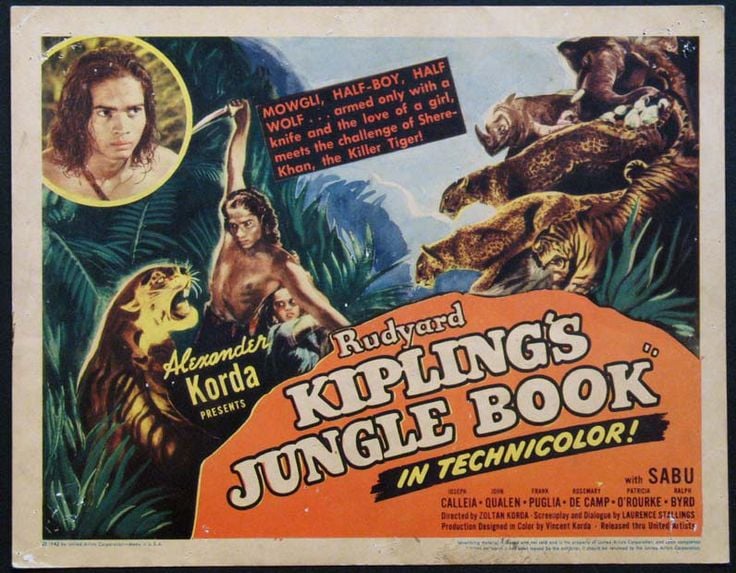
This week on “Picture Perfect,” poised as we are between the birthdays of Henry Mancini (April 16) and Miklós Rózsa (April 18), we’ll hear music by both composers as part of a cinematic carnival of the animals.
Take a walk on the wild side with music from “The Jungle Book” (1942), the classic Korda Brothers’ adaptation of Rudyard Kipling’s tale of tails. The film stars the charismatic Sabu as Mowgli. (For the record, Kipling pronounced the name such that the first syllable rhymes with “cow.”) Miklós Rózsa wrote the enchanting score.
We’ll also hear selections from John Barry’s music for “Born Free” (1966), based on Joy Adamson’s memoir about the raising of Elsa, an orphaned lion cub who grows to adulthood and is eventually released into the Kenyan wilderness. The music turned out to be a double Academy Award winner for Barry, who was recognized for Best Original Score and Best Original Song.
Jerome Moross is probably best known for his music to “The Big Country.” His “great outdoors” style lends verve to the National Geographic special, “Grizzly!” (1967), a documentary about a pair of ecologists studying North American bears. The energetic Americana score is both memorable and motivating.
And we can’t allow the hour to pass without listening to Henry Mancini’s “Baby Elephant Walk,” from “Hatari!” (So many exclamation points in these wilderness titles!) The film was directed by Howard Hawks and stars John Wayne. In case you’re wondering, “Hatari!” is Swahili for “Danger!”
No danger in treating yourself to a musical menagerie of classic film scores, on “Picture Perfect,” music for the movies, now in syndication on KWAX Classical Oregon!
——–
Clip and save the start times for all three of my recorded shows:
PICTURE PERFECT, the movie music show – Friday at 8:00 PM EDT/5:00 PM PDT
SWEETNESS AND LIGHT, the light music program – Saturday at 11:00 AM EDT/8:00 AM PDT
THE LOST CHORD, unusual and neglected rep – Saturday at 7:00 PM EDT/4:00 PM PDT
Stream them, wherever you are, at the link!
https://kwax.uoregon.edu
Tag: Film Music
-
Poetry in Motion on “Picture Perfect”
Time to sharpen your quill and replenish your laudanum. April is National Poetry Month. This week on “Picture Perfect,” the focus will be on poets at the movies.
We’ll hear music from “Dead Poets Society” (1989), Peter Weir’s beautiful-but-vacuous take on the transformative power of poetry, its “Goodbye, Mr. Chips” story arc made all the more poignant (and less cheap) by the passing of its beloved star, Robin Williams. Maurice Jarre, a long, long way from his Oscar-winning work on “Lawrence of Arabia,” wrote the music, which blends dulcimer and bagpipes (!) with electronics.
At least “Dead Poets Society” found a place in the hearts of the public. “Lady Caroline Lamb” (1973) did not. Sarah Miles plays Byron’s jilted lover, the wife of future prime minister William Lamb. Despite an impressive cast, which includes Jon Finch, Laurence Olivier, Ralph Richardson, and Richard Chamberlain (as Lord Byron, no less), and direction by venerable playwright and screenwriter Robert Bolt (“A Man for All Seasons”), the film received mixed reviews and tanked at the box office. The always fine Richard Rodney Bennett provided the atmospheric score.
“Il Postino” (1994) tells the story of a simple postman whose prosaic life is transformed through the power of metaphor. His model is the exiled Chilean poet Pablo Neruda, played by Philippe Noiret. The film’s writer and star, Massimo Troisi, died of a heart attack twelve hours after shooting was completed, having postponed surgery until he finished work. He was 41 years-old. Argentinian-Italian composer Luis Bacalov’s bandoneon-tinged score was honored with an Academy Award for Best Music.
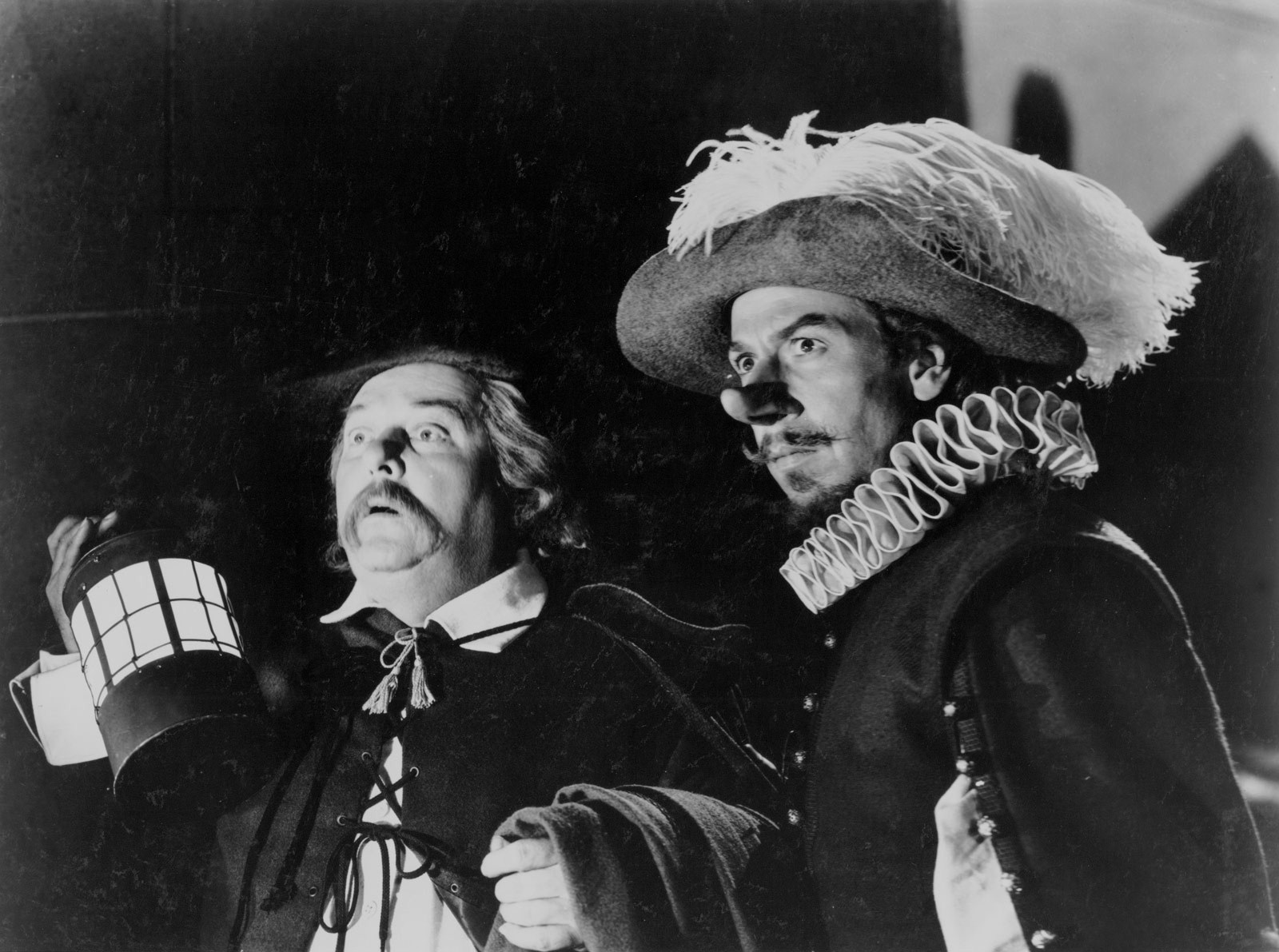
Finally, we put a point on things with the rapier wit of “Cyrano de Bergerac” (1950). José Ferrer struts his stuff as the warrior-poet with the prominent proboscis, who never wants for words, save in the presence of his beautiful cousin Roxane. Ferrer elocuted – and fenced – his way to an Academy Award for Best Actor. The score is one of Dimitri Tiomkin’s finest, and we’ll hear a recording taken from the film’s original elements, under the crisp direction of the composer.
It could be verse. Poetry warms the soul this week. It’s poetry in motion, on “Picture Perfect,” music for the movies, now in syndication on KWAX Classical Oregon!
——–
Clip and save the start times for all three of my recorded shows:
PICTURE PERFECT, the movie music show – Friday at 8:00 PM EDT/5:00 PM PDT
SWEETNESS AND LIGHT, the light music program – Saturday at 11:00 AM EDT/8:00 AM PDT
THE LOST CHORD, unusual and neglected rep – Saturday at 7:00 PM EDT/4:00 PM PDT
Stream them, wherever you are, at the link!
https://kwax.uoregon.edu -
Holy Men and Missions on “Picture Perfect”
This week on “Picture Perfect,” in this season of wall-to-wall Biblical epics, I thought we’d enjoy a bit of counterprogramming in the form of music from films about faith, conscience, and the church.
Otto Preminger’s “The Cardinal” was released in 1963. Based on the novel by Henry Morton Robinson, the story follows a fictional Boston Irish Catholic priest from his ordination in 1917 to his appointment as cardinal on the eve of World War II. Tom Tryon played the lead. Tryon would later become a best-selling author himself (as Thomas Tryon), with books like “The Other” and “Harvest Home.”
An interesting factoid: The Vatican’s liaison officer for the production was Joseph Ratzinger, the future Pope Benedict XVI.
As always, Moross’ score is irrepressibly lyrical, even buoyant. The man never seemed to run out of good tunes.
We’ll also have music from “The Shoes of the Fisherman,” from 1968, another film based on a best-selling novel, this time by Morris L. West.
Anthony Quinn plays Kiril Pavlovich Lakota, an archbishop who serves 20 years in a Siberian labor camp. He is released and sent to Rome where is promoted to the cardinalate. When the Pope dies, suddenly, Lakota, a dark horse candidate, is elected as a replacement. The story balances Lakota’s internal struggles and personal torments with mounting global turmoil.
The music is by Alex North, who sets the melancholy lyricism of Russian folksong against the steely grandeur of his music for the Vatican.
The remainder of the program will be devoted to movies about missionaries. Georges Delerue provided a noble, austere score for the 1991 Bruce Beresford film “Black Robe,” based on a novel by the Irish Canadian writer Brian Moore, in which a Jesuit priest treks through 1500 miles of Canadian wilderness on a mission to convert the native tribes of the Huron and the Algonquin.
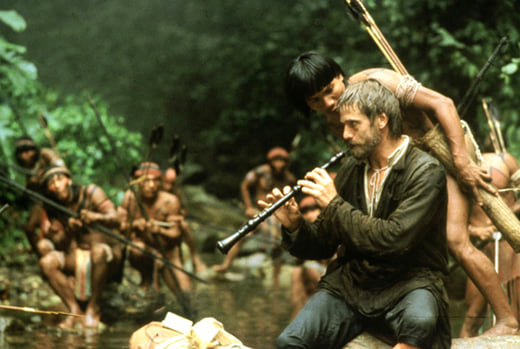
Ennio Morricone’s moving music for Roland Joffé’s 1986 film “The Mission,” which features Jeremy Irons as a Jesuit priest and Robert DeNiro as a reformed slave hunter in the South American jungle, has received a great deal of exposure over the years, both through its use in television commercials and by figure skaters, who made “Gabriel’s Oboe” a recognizable hit. It has become one of Morricone’s best-loved scores.
I hope you’ll join me for “Holy Men and Missions” this week, on “Picture Perfect,” music for the movies, now in syndication on KWAX Classical Oregon!
——–
Clip and save the start times for all three of my recorded shows:
PICTURE PERFECT, the movie music show – Friday at 8:00 PM EDT/5:00 PM PDT
SWEETNESS AND LIGHT, the light music program – Saturday at 11:00 AM EDT/8:00 AM PDT
THE LOST CHORD, unusual and neglected rep – Saturday at 7:00 PM EDT/4:00 PM PDT
Stream them, wherever you are, at the link!
https://kwax.uoregon.edu -
“The Ten Commandments” on “Picture Perfect”
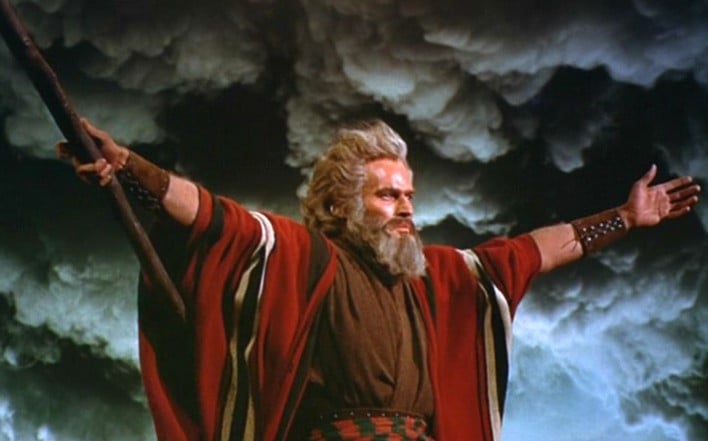
This week on “Picture Perfect,” for the 70th anniversary of the release of Cecil B. DeMille’s “The Ten Commandments – and just in time for Passover – we’ll hear selections from Elmer Bernstein’s classic score.
From a 6-CD set on the Intrada label – that includes the complete 2 ½ hour score, three commercial soundtrack releases, and bonus material intriguing enough to curl Charlton Heston’s beard – we’ll hear lovingly remastered highlights from the 1960 Dot and 1966 United Artists soundtrack re-recordings, the Pillar of Fire and parting of the Red Sea sequence from the original score, as heard in the film, and rare demos, prepared for Mr. DeMille by the composer, who announces his themes as he plays them, from the piano.
So let it be written, so let it be done!
It’s the collector’s equivalent of stone tablets handed down from Mount Sinai. Join me for the definitive “The Ten Commandments,” on “Picture Perfect,” music for the movies, now in syndication on KWAX Classical Oregon!
——–
Clip and save the start times for all three of my recorded shows:
PICTURE PERFECT, the movie music show – Friday at 8:00 PM EDT/5:00 PM PDT
SWEETNESS AND LIGHT, the light music program – Saturday at 11:00 AM EDT/8:00 AM PDT
THE LOST CHORD, unusual and neglected rep – Saturday at 7:00 PM EDT/4:00 PM PDT
Stream them, wherever you are, at the link!
https://kwax.uoregon.edu -
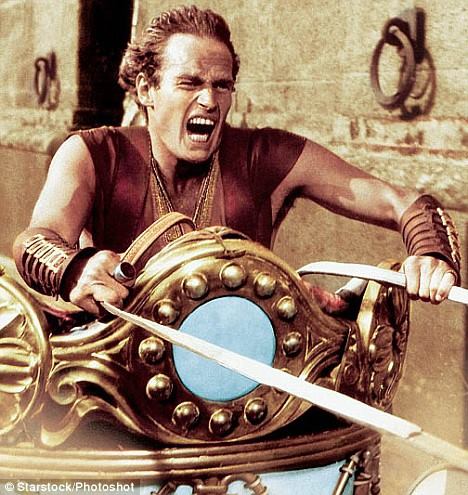
Ben-Hur: Bigger Than Jesus
When asked to name my favorite movies, my top-10 list is probably more like top-50 or 60. But one film I do love dearly is “Ben-Hur” (1959). So imagine my excitement when I saw the trailer – in an honest to goodness theater – this weekend when attending the Met “Live in HD” simulcast of Wagner’s “Tristan und Isolde.” It turns out it’s going to be given the Fathom Events treatment, shown in select theaters in a brand new 4K restoration, March 29 & 30 and April 1 & 2.
The winner of a record 11 Academy Awards, “Ben-Hur” was also a stunning popular success, at the time, becoming the second-highest grossing film in history, after “Gone with the Wind” (adjusting for inflation, STILL the all-time box office champ).
The score, by Miklós Rózsa, is a prime example of the kind of masterly music you rarely, if ever, encounter at the movies anymore. It was also the longest ever composed for film – and, before the soundtrack for “Star Wars” became a bestselling phenomenon, “Ben-Hur” found a home in record collections of folks who didn’t ordinarily seem to pay too much attention to film music. I love it. Surely, it’s in my top-10 film scores of all time. But there we go again.
In fact, I have nothing but superlatives to heap on this film. Its detractors might dismiss it as risible, histrionic, Hollywood religioso kitsch, but I’m glad I lack their cynicism. The film is actually beautifully acted, with Charlton Heston, often way over the top in everyman parts, perfect for this kind of grandiose canvas. He winds up giving one of his best performances. The tragedy of the soured friendship between Judah Ben-Hur, a Jewish prince, and his childhood friend Messala (played by Stephen Boyd), now an ambitious Roman tribune, is beautifully modulated.
Gore Vidal was fond of sharing an anecdote about their introductory scene, which, after many takes, just wasn’t working. As he told it, the director William Wyler grew increasingly frustrated, until Vidal suggested playing it with a gay subtext, an idea Boyd found fascinating. Wyler considered it for a few moments, before remarking, “Okay. But don’t tell Chuck!” Whether or not it’s true – and who cares? – the scene establishes the characters’ deep bond, soon to be dashed against the rocks of their political differences. The look Judah casts upon his friend at the end of the chariot race gets me every time. It conveys the humanity at the center of this big, big film, full of very big themes.Is it overdone? Did I mention, Jesus is in it too?
Regardless of your religious convictions, it’s a beautiful movie, with lots of painterly shots and the aforementioned chariot race, with a cast of thousands and an arena actually built, as opposed to computer generated (some of the sets were extended using matte paintings), and staged, with galloping horses and death-defying stuntmen. They just don’t make ‘em like this anymore!
For classic movie buffs, it’s also fun to spend time with Jack Hawkins, Sam Jaffe, Finlay Currie, and the always supercilious Frank Thring, who specialized in debauched rulers – and, okay, even Hugh Griffith in brown-face, ouch! (He plays an Arab sheik.)
William Wyler had an incredible batting average. Hardly any of his films rate less than four stars, and three of them – this one, “The Best Years of Our Lives,” and “The Big Country” – are among my all-time favorites.
“Ben-Hur” is a four-hour movie, presented in the grand ‘50s tradition, complete with overture and intermission music, but Fathom will be screening it at sensible hours – in most theaters, beginning at 6:00 for weekday showings and 2:00 on the weekend – but do double-check the listings for your area.
It won’t be projected from film, and you’re unlikely to be able to catch it in an old-fashioned movie palace, but for now, it’s the best we can hope for. The only other challenge is finding someone who will be willing to watch it with you!
Tickets and information available at https://www.fathomentertainment.com/releases/ben-hur-2026/
Tag Cloud
Aaron Copland (94) Beethoven (95) Composer (114) Film Music (149) Film Score (143) Film Scores (255) Halloween (97) John Williams (197) KWAX (232) Leonard Bernstein (105) Marlboro Music Festival (125) Movie Music (164) Mozart (91) Opera (215) Philadelphia Orchestra (90) Picture Perfect (174) Princeton Symphony Orchestra (110) Radio (90) Ross Amico (244) Roy's Tie-Dye Sci-Fi Corner (290) The Classical Network (101) The Lost Chord (269) Vaughan Williams (107) WPRB (397) WWFM (881)