Tag: Geirr Tveitt

  • Aurora Borealis Music on KWAX’s Lost Chord

    Aurora Borealis Music on KWAX’s Lost Chord

    All signs point north!

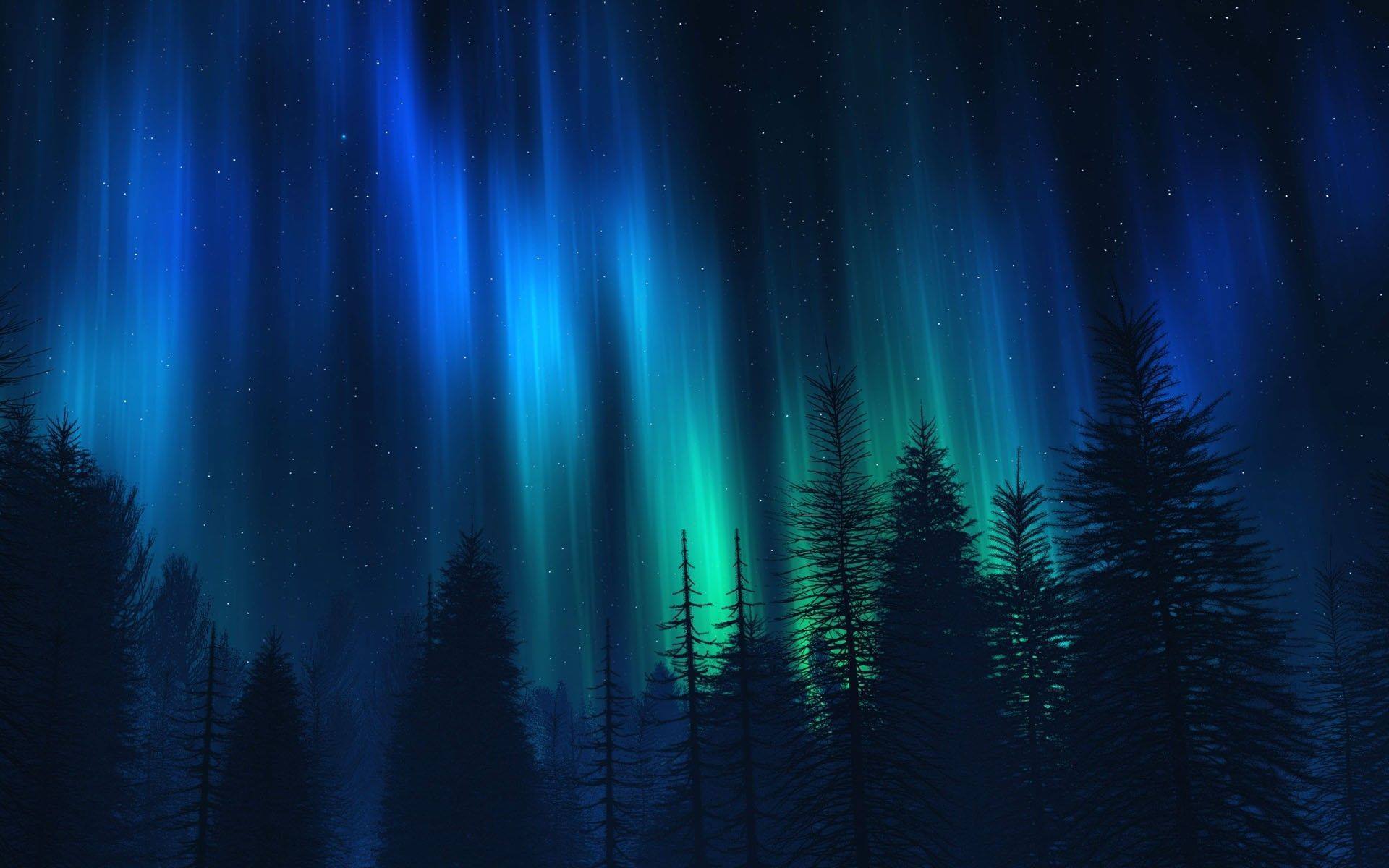
    On the next edition of “The Lost Chord,” with so much geomagnetic activity this week, we encourage you to keep looking up, with musical responses to the uncanny, natural phenomenon known as the Aurora Borealis.

    Uuno Klami studied in Helsinki, with Erkki Melartin, then in Paris and Vienna. Following the premiere of his “Northern Lights” in 1948, some critics questioned whether the content of the piece lived up to the expectations engendered by its title. Klami remarked, “The northern lights can be much more than the superficial play of colors in the sky. They can be an expression of the infinite loneliness of the human spirit.” Personally, he thought it his best work.

    Geirr Tveitt was born in Bergen, Edvard Grieg’s native city. Though he was very much influenced by folk music of the Norwegian countryside, he too acquired further polish abroad. He studied first in Leipzig and then in Paris, with Arthur Honegger, Heitor Villa-Lobos, and Nadia Boulanger.

    In 1970, a very great tragedy occurred, when a fire swept through Tveitt’s home, a farmhouse in Nordheimsund, destroying most of his unpublished manuscripts – 300 pieces, stored in wooden chests – fully 4/5ths of his compositional output. It also crippled his ability to compose. Tveitt succumbed to alcoholism and died a broken man, with little hope of being remembered, in 1981.

    Happily, since then, a number of these “lost” works have been reconstructed. In the case of his Piano Concerto No. 4, subtitled “Aurora Borealis,” from 1947, the orchestral parts survived, along with a two-piano reduction and an archived broadcast recording.

    The restored concerto falls into three movements: “The Northern Lights awaken above the autumn colors,” “Glittering in the winter heavens,” and “Fading away in the bright night of spring.”

    I hope you’ll join me for an hour of radiant music, on “Aural Borealis, on “The Lost Chord,” now in syndication on KWAX, the radio station of the University of Oregon!


    Remember, KWAX is on the West Coast, so there’s a three-hour difference for the Trenton-Princeton area. Here are the respective air-times of my recorded shows (with East Coast conversions in parentheses):

    PICTURE PERFECT, the movie music show – Friday on KWAX at 5:00 PACIFIC TIME (8:00 PM EST)

    THE LOST CHORD, unusual and neglected rep – Saturday on KWAX at 4:00 PACIFIC TIME (7:00 PM EST)

    Stream them here!

    https://kwax.uoregon.edu/

  • Aurora Borealis Classical Music Sounds North

    Aurora Borealis Classical Music Sounds North

    All signs point north!

    This Sunday night on “The Lost Chord,” keep looking up, with musical responses to the uncanny, natural phenomenon known as the Aurora Borealis.

    Uuno Klami studied in Helsinki, with Erkki Melartin, then in Paris and Vienna. Following the premiere of his “Northern Lights” in 1948, some critics questioned whether the content of the piece lived up to the expectations engendered by its title. Klami remarked, “The northern lights can be much more than the superficial play of colors in the sky. They can be an expression of the infinite loneliness of the human spirit.” Personally, he thought it his best work.

    Geirr Tveitt was born in Bergen, Edvard Grieg’s native city. Though he was very much influenced by folk music of the Norwegian countryside, he too acquired further polish abroad. He studied first in Leipzig and then in Paris, with Arthur Honegger, Heitor Villa-Lobos, and Nadia Boulanger.

    In 1970, a very great tragedy occurred, when a fire swept through Tveitt’s home, a farmhouse in Nordheimsund, destroying most of his unpublished manuscripts – 300 pieces, stored in wooden chests – fully 4/5ths of his compositional output. It also crippled his ability to compose. Tveitt succumbed to alcoholism and died a broken man, with little hope of being remembered, in 1981.

    Happily, since then, a number of these “lost” works have been reconstructed. In the case of his Piano Concerto No. 4, subtitled “Aurora Borealis,” from 1947, the orchestral parts survived, along with a two-piano reduction and an archived broadcast recording.

    The restored concerto falls into three movements: “The Northern Lights awaken above the autumn colors,” “Glittering in the winter heavens,” and “Fading away in the bright night of spring.”

    I hope you’ll join me for an hour of radiant music, on “Aural Borealis,” this Sunday night at 10:00 EST, on WWFM – The Classical Network and wwfm.org.

  • Geirr Tveitt’s Haunting Halloween Nightmare

    Geirr Tveitt’s Haunting Halloween Nightmare

    31 DAYS OF HALLOWEEN (DAY 19)

    For Geirr Tveitt’s birthday, a literal and figurative nightmare:

    Tveitt was born in Bergen, Norway, in 1908. His family originally came from the Hardanger region. Each summer, they returned to Kvam to do farm work.

    Tveitt would take up permanent residence in Hardanger in 1940. In the meantime, he studied music in Leipzig and Paris (with Honegger, Villa-Lobos, and Boulanger) and gained renown throughout Europe as a concert pianist, but it was his connection to the Norwegian countryside that would color most of his mature compositional output.

    In 1970, a great tragedy stuck, when fire swept through Tveitt’s home, a farmhouse in Nordheimsund, destroying most of his unpublished manuscripts – 300 pieces, stored in wooden chests – fully 4/5ths of his compositional output. By extension, and not surprisingly, it also destroyed his ability to compose. He succumbed to alcoholism and died a broken man, with little hope of being remembered, in 1981.

    Sadly, Tveitt did not live to see his reputation revived. In the intervening decades, musicologists have been able to piece together a number of these “lost” works, using as reference scattered orchestral parts and live concert recordings. Performances of these reconstructions have been widely distributed on the Naxos and BIS labels. The exceptional quality of what’s now available, and speculation over what’s been lost, is cause for a listener to share Tveitt’s heartbreak.

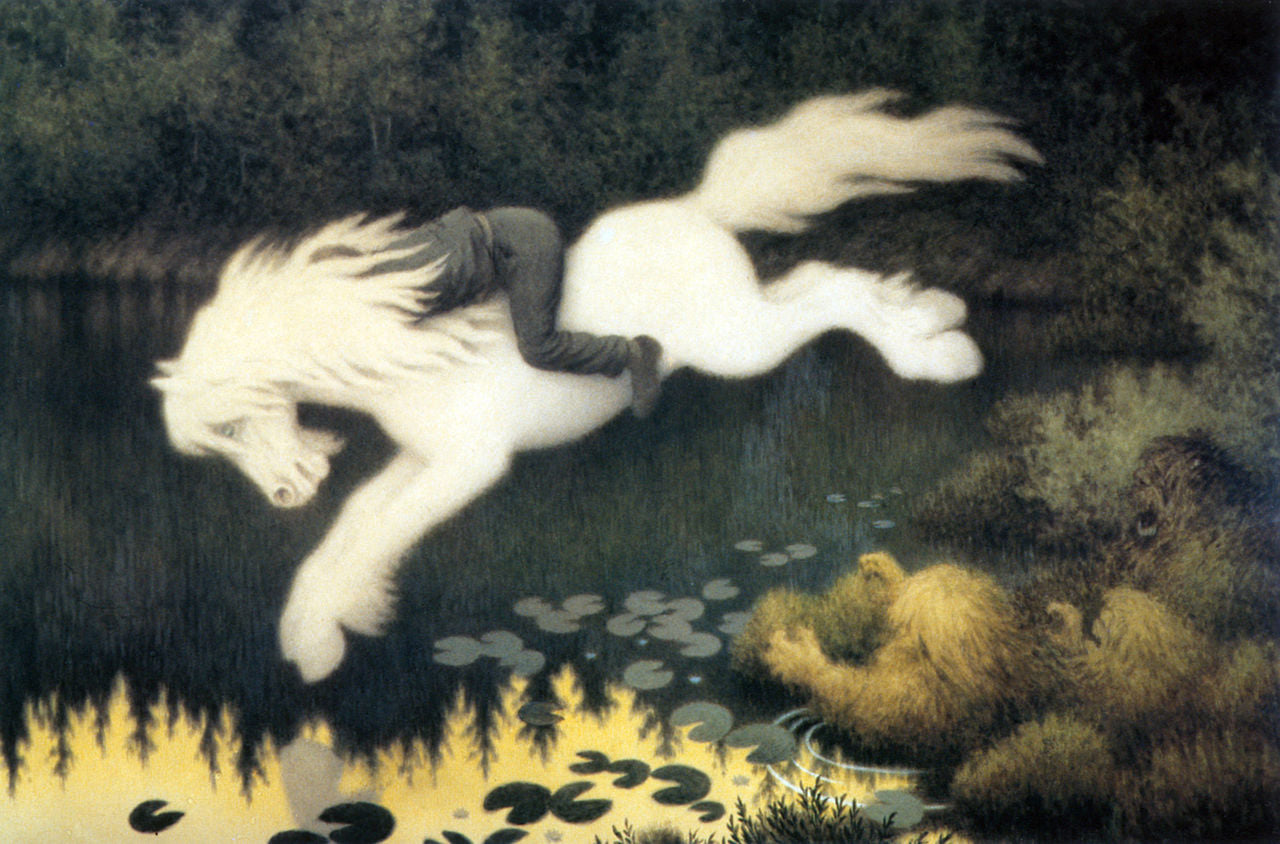
    Tveitt’s symphonic poem “Nykken,” from 1956, is about a literal “night mare,” a white horse that lurks in a nocturnal wood near a silent pond. The beauty of the horse charms a hapless wanderer into attempting a ride. But the horse plunges into the depths of the pond, dragging its victim to a watery grave.

    Here’s the music:

    Happy birthday, Geirr Tveitt.

  • Northern Lights Music Klami & Tveitt

    Northern Lights Music Klami & Tveitt

    “The northern lights can be much more than the superficial play of colors in the sky,” observed the Finnish composer Uuno Klami. “They can be an expression of the infinite loneliness of the human spirit.”

    This Sunday night on “The Lost Chord,” Klami’s “Northern Lights” (1948) will be one of two works inspired by the atmospheric phenomena, written by composers who would have been intimately acquainted with them.

    Klami’s melancholy observation seems almost superficial alongside the life experience of Norwegian composer Geirr Tveitt. In 1970, Tveitt suffered an unfathomable loss, when fire swept through his farmhouse in Nordheimsund, destroying most of his unpublished manuscripts – 300 pieces, stored in wooden chests – fully 4/5ths of his compositional output. By extension, and not surprisingly, it also destroyed his ability to compose. He succumbed to alcoholism and died a broken man, with little hope of being remembered, in 1981.

    Two of Tveitt’s piano concertos, Nos. 2 & 6, seem to have been lost forever in the conflagration. Another, No. 3, was reconstructed from a broadcast recording. Orchestral parts to the Piano Concerto No. 4 (1947) survived, along with the score to a two-piano version, and again a recording, so that the work could be restored.

    The work, subtitled “Aurora Borealis,” falls into three movements – “The Northern Lights awaken above the autumn colors;” “Glittering in the winter heavens,” and “Fading away in the bright night of spring.”

    I hope you’re moved to join me for “Aural Borealis,” this Sunday night at 10:00 EST, on WWFM – The Classical Network and wwfm.org.

  • Grieg’s Peer Gynt Plus Norwegian Gems on WWFM

    Grieg’s Peer Gynt Plus Norwegian Gems on WWFM

    This Tuesday morning at 10:00, Alice Weiss will host “The Classical Network in Concert,” featuring cellist Gabriel Cabezas, winner of the 2014 Astral Artists National Auditions. On the program will be major works for the instrument by Britten and Shostakovich, as well as transcriptions performed in association with other Astral Artists.

    On account of the earlier broadcast, there will be no noontime concert today, leaving me with a blank canvas on which to paint for the succeeding four hours. Since I’m on earlier in the afternoon on Tuesday, I like to play at least one piece that you generally wouldn’t hear during the day, due to its extraordinary length. Today, I will be dusting off a recording of the complete incidental music composed for the premiere production in 1876 of Henrik Ibsen’s “Peer Gynt,” by Edvard Grieg. I think you’ll be surprised by just how much beauty, mystery, and menace never made it into the popular suites. You’ll also have a chance to brush up on your Norwegian!

    Astonishingly, Grieg found work on the music to be a frustrating experience. He thought it a “terribly unmanageable subject,” and labored against the limitations imposed on him by the management of the theater, which gave him specifications for the duration of each number. “I was thus compelled to do patchwork,” he complained, “hence the brevity of the pieces.”

    Of course, the music was a triumphant success and includes some of Grieg’s best known melodies. However, the original score was not published until after the composer’s death, and is still rarely heard in its entirety.

    As an added bonus this afternoon, we’ll also hear one of the Hardanger fiddle concerts of Norwegian composer Geirr Tveitt. Tveitt, a late proponent of Norwegian nationalism, suffered a terrible loss from which he never emotionally recovered. In 1970, his farmhouse burned to the ground, reducing approximately 300 of his manuscripts – fully four-fifths of his compositional output – to ash. Tveitt, a broken man, drank himself to death, little realizing that, through private recordings, radio archives, and surviving orchestral parts, a sizable portion of these works would eventually be reconstructed.

    Join me today, from noon to 4 p.m. EDT, for music from Norway and more, on WWFM – The Classical Network and at wwfm.org.

Tag Cloud

Aaron Copland (92) Beethoven (95) Composer (114) Film Music (123) Film Score (143) Film Scores (255) Halloween (94) John Williams (187) KWAX (229) Leonard Bernstein (101) Marlboro Music Festival (125) Movie Music (138) Opera (202) Philadelphia Orchestra (89) Picture Perfect (174) Princeton Symphony Orchestra (106) Radio (87) Ralph Vaughan Williams (85) Ross Amico (244) Roy's Tie-Dye Sci-Fi Corner (290) The Classical Network (101) The Lost Chord (268) Vaughan Williams (103) WPRB (396) WWFM (881)

DON’T MISS A BEAT

Receive a weekly digest every Sunday at noon by signing up here


RECENT POSTS