Tag: George Gershwin

  • Remembering Oscar Levant’s Genius

    Remembering Oscar Levant’s Genius

    “Happiness isn’t something you experience; it’s something you remember.”

    Bearing in mind the words of Oscar Levant, I hope that you had a happy Christmas.

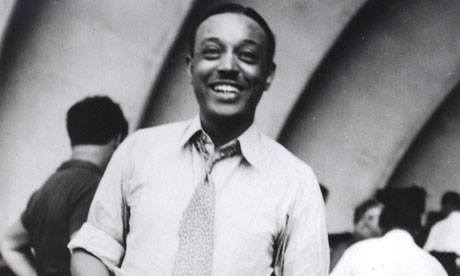
    Levant was born in Pittsburgh on this date in 1906 to Orthodox Jewish parents from Russia. It was his father’s desire that his sons become either doctors or dentists. Ever the contrarian, Levant opted to become everything else instead.

    A preternaturally talented musician, Levant studied in New York with the great Polish pedagogue Zygmunt Stojowski. By his early 20s, he was in Hollywood, where he met and befriended George Gershwin. With Gershwin’s death, Levant became regarded as the foremost interpreter of the composer’s piano music.

    Levant himself was a composer of talent. In Hollywood, he scored over 20 films. He also wrote and co-wrote popular songs, including the enduring “Blame It on My Youth.” Determined to become a “serious” composer, he sought out and undertook private studies with Arnold Schoenberg. He also found work as a Broadway composer and conductor.

    But it was likely through his memorable appearances on radio and television that he became best known, as a brilliant panelist possessed of impeccable timing and an acid wit. His remarks were invariably off the cuff, and this spontaneity would sometimes throw the sponsors into a panic. A show was cancelled after he remarked, “Now that Marilyn Monroe is kosher, Arthur Miller can eat her.”

    Now a certified – some would say certifiable – celebrity himself, Levant appeared in a number of feature films, including “An American in Paris” (1951) and “The Band Wagon” (1953). He played himself in the Gershwin biopic “Rhapsody in Blue” (1945). He would receive a star on the Hollywood Walk of Fame in recognition of his recording career.

    On top of everything else, Levant wrote three books: “A Smattering of Ignorance” (1940), “The Memoirs of an Amnesiac” (1965), and “The Unimportance of Being Oscar” (1968).

    Levant was as famous for his neuroses and hypochondria as he was for any of his actual talents. He smoked prolifically, became addicted to prescription drugs, and was frequently in and out of mental institutions. He died of a heart attack in 1972, at the age of 65.

    “There is a fine line between genius and insanity,” he once quipped. “I have erased this line.”

    Happy birthday, Oscar Levant – even if only in remembrance.


    Levant plays Gershwin:

    Levant on “The Tonight Show” with Jack Paar:
    https://www.youtube.com/watch?v=nVOl49AHD6Q

    Levant plays his Sonatina:

    Levant in “An American in Paris:”

  • American Music for Independence Day & WWFM Support

    American Music for Independence Day & WWFM Support

    Get a jump on Independence Day with The Classical Network, as we rustle up a full playlist of American music to help enliven this fourth day of our end-of-the-fiscal-year membership campaign. We have only until Saturday at 11:59 p.m. to meet our goal of $70,000. So please, step lively and help us achieve our mini-goals and challenges, because we really need to stay on track and raise this money!

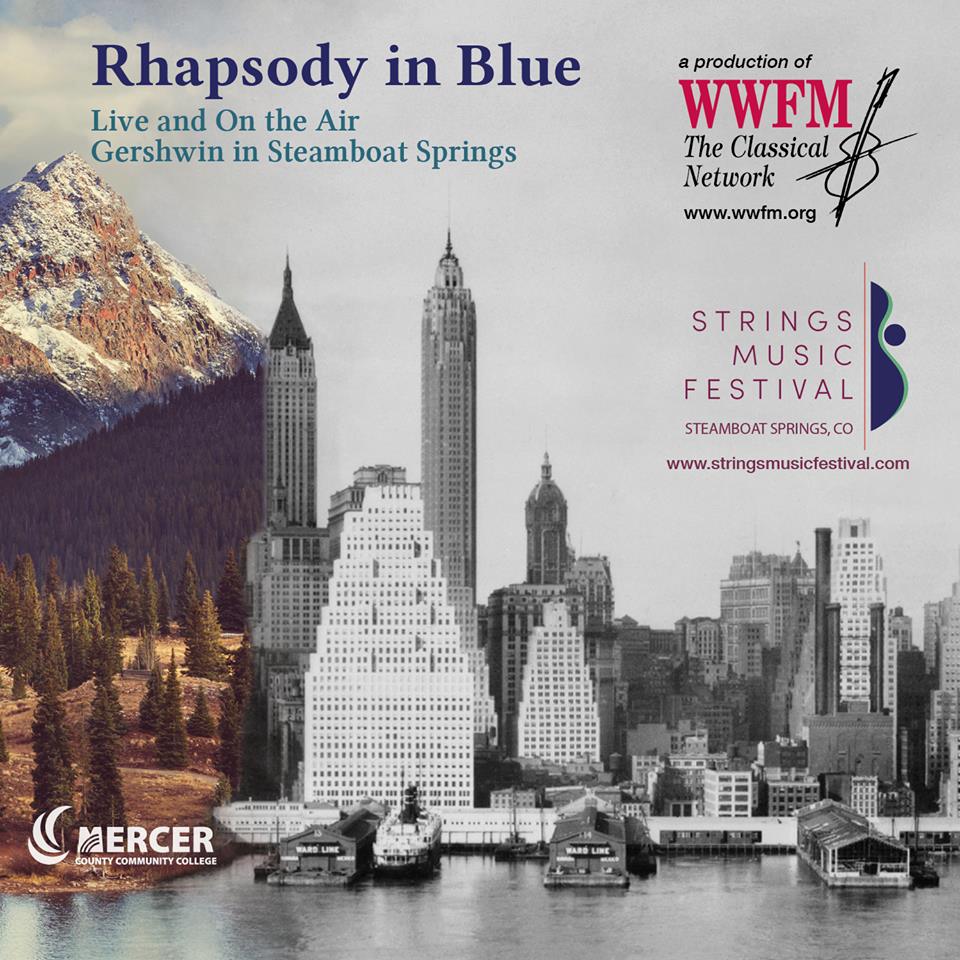
    For your contribution of $70, we’d be delighted to send you a CD of a recreation of a 1930s-style radio broadcast from the Strings Music Festival of Steamboat Springs, CO. World-class musicians, drawn from some of the country’s great orchestras (including those of Cleveland, Los Angeles, and Atlanta), perform music by George Gershwin (“Rhapsody in Blue”), Jerome Kern, Vernon Duke, and more. Sportscaster Verne Lundquist serves as master of ceremonies. The program is introduced by the speaking voice of Gershwin himself.

    The orchestral arrangements are by masters of their art, including Nelson Riddle and Herbert Spencer, who was John Williams’ right-hand man when working on the scores to “Star Wars,” “Raiders of the Lost Ark,” “E.T. The Extra-Terrestrial,” and so many others, until his death in 1992.

    The CD was produced in-house and is available exclusively through The Classical Network.

    Help us to preserve an oasis against the homogeneous clangor and insipid prattle of commercial FM radio. We are listener-supported. Our freedom to excel is made possible by YOU. It’s our patriotic duty to keep classical music strong in America! Call now, at 1-888-232-1212, or donate online at wwfm.org. We’ll be earning our stars and stripes – and hopefully Benjamins – until 7 p.m. EDT, on WWFM – The Classical Network. Thank you for your support!

  • George Gershwin American Original

    George Gershwin American Original

    He began his career as a song plugger on New York’s Tin Pan Alley. He was “discovered” by Al Jolson, who gave him his biggest hit. He composed a string of successful stage musicals with lyrics by his brother, Ira.

    Though he had classical training, he was turned away by both Nadia Boulanger and Maurice Ravel, on the grounds that they didn’t want to spoil his natural voice. He played tennis with Arnold Schoenberg, who also refused him lessons. He kept an autographed photo of Alban Berg in his apartment, next to one of Jack Dempsey.

    His musical, “Of Thee I Sing,” was the first to win a Pulitzer Prize. His opera, “Porgy and Bess,” was a failure at its premiere. His songs graced elegant screen comedies of the 1930s. In the concert hall, he was America’s most authentic voice.

    George Gershwin died of a brain tumor in 1937, at the age of 38. Reportedly, his last words were “Fred Astaire.”

    I invite you to join me this afternoon, as I salute this versatile composer on his birthday anniversary. Gershwin’s music will be among our featured highlights, between 4 and 7 p.m. EDT, on WWFM – The Classical Network and at wwfm.org.

  • Gershwin’s Birthday Astaire Tributes & Last Words

    Gershwin’s Birthday Astaire Tributes & Last Words

    Today is the birthday of George Gershwin (1898-1937)

    Here are a couple of fascinating documents, set down in 1926, of Fred and Adele Astaire singing with Gershwin at the piano.

    The Astaires headlined two of Gershwin’s Broadway musicals, “Lady Be Good!” (1924) and “Funny Face” (1927). Adele married in 1932 and retired from show business. Fred later starred in the film musicals, “Shall We Dance”(1937) and “A Damsel in Distress” (1937), both at least partially scored by Gershwin.

    Gershwin received his only Academy Award nomination for Best Original Song in 1937, for “They Can’t Take That Away from Me,” from “Shall We Dance.” The nomination was posthumous, as Gershwin had died of a brain tumor two months after the film’s release.

    It’s a testament to the two men’s friendship, or at any rate their close working relationship, that reportedly Gershwin’s last words were… “Fred Astaire.”

    PHOTO: Astaire (left) with George and Ira Gerswhin

  • William Grant Still Still the One

    William Grant Still Still the One

    He’s Still the one.

    Today is the birthday of William Grant Still (1895-1978), the so-called “Dean of Afro-American Composers.” Still emerged from unlikely circumstances (born in Woodville, Mississippi; raised in Little Rock, Arkansas) to become a major force in American music.

    Having abandoned a career in medicine for studies at the Oberlin Conservatory of Music and the New England Conservatory in Boston (where he studied with George Whitefield Chadwick), Still was a “first” in many ways.

    His was the first symphony written by a black composer to be performed by a major orchestra (the Eastman-Rochester). He was the first to be given the opportunity to conduct a major orchestra (the Los Angeles Philharmonic, at the Hollywood Bowl). His opera, “Troubled Island,” became the first to be produced by a major company (the New York City Opera). Another of his operas, “A Bayou Legend,” was the first to be performed on national television (as late as 1981).

    Any of these would be significant in and of themselves, but it just so happens that Still was a damn fine composer. Perhaps the least likely pupil of Edgard Varèse, he incorporated jazz and blues elements into his concert music, which also frequently reflected the African and African-American experiences.

    He cut his teeth writing arrangements for Paul Whiteman, W.C. Handy and Artie Shaw. According to Eubie Blake, one of Still’s improvisations in the pit band during Blake’s revue “Shuffle Along” became the basis for Gershwin’s hit tune “I Got Rhythm.” Still didn’t appear to be bitter about it, and in fact the two composers were on friendly terms and made it a point to attend performances of one another’s music.

    Still quotes the melody in the third movement of his Symphony No. 1, otherwise known as the “Afro-American Symphony.” In fact, it had always been his intention to do so, before Gershwin popularized it. (Blake went on to say the swipe was probably inadvertent, but Still had definitely gotten there first.)

    I’ve always been fond of the symphony, from the very first time I heard it. To me, it is every bit as much of a portrait of an artist as a young man as Virgil Thomson’s “Symphony on a Hymn Tune.” It’s a beautiful and wistful piece, built on lovely daydreams and uptempo, banjo-like riffs. This is the kind of music that Dvořák would have loved.

    Here it is, in a pioneering recording by Karl Krueger and the Royal Philharmonic Orchestra, after all these years, still my favorite:

    Mov’t I: https://www.youtube.com/watch?v=5s7o8UfKsV0
    Mov’t II: https://www.youtube.com/watch?v=xSQUrW8eBhU
    Mov’t III: https://www.youtube.com/watch?v=iEeaLvX82Lw
    Mov’t IV: https://www.youtube.com/watch?v=Fu_qzX5K39g

    And just to prove it was no accident, here’s the second movement of his Symphony No. 2, “Song of a New Race,” with Neeme Järvi and the Detroit Symphony:

    https://www.youtube.com/watch?v=uaHe5hvWu6w

    Now tell me Gershwin wouldn’t have killed to write that!

    Happy birthday, William Grant Still.

Tag Cloud

Aaron Copland (92) Beethoven (95) Composer (114) Film Music (119) Film Score (143) Film Scores (255) Halloween (94) John Williams (185) KWAX (229) Leonard Bernstein (99) Marlboro Music Festival (125) Movie Music (134) Opera (198) Philadelphia Orchestra (86) Picture Perfect (174) Princeton Symphony Orchestra (106) Radio (87) Ralph Vaughan Williams (85) Ross Amico (244) Roy's Tie-Dye Sci-Fi Corner (290) The Classical Network (101) The Lost Chord (268) Vaughan Williams (102) WPRB (396) WWFM (881)

DON’T MISS A BEAT

Receive a weekly digest every Sunday at noon by signing up here


RECENT POSTS