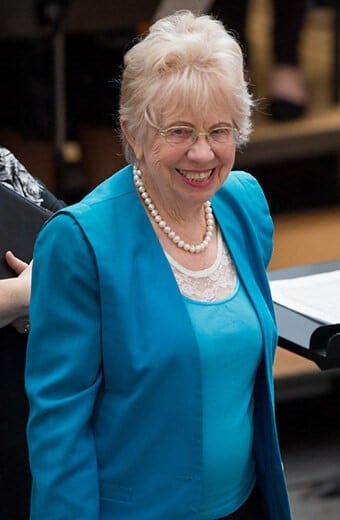
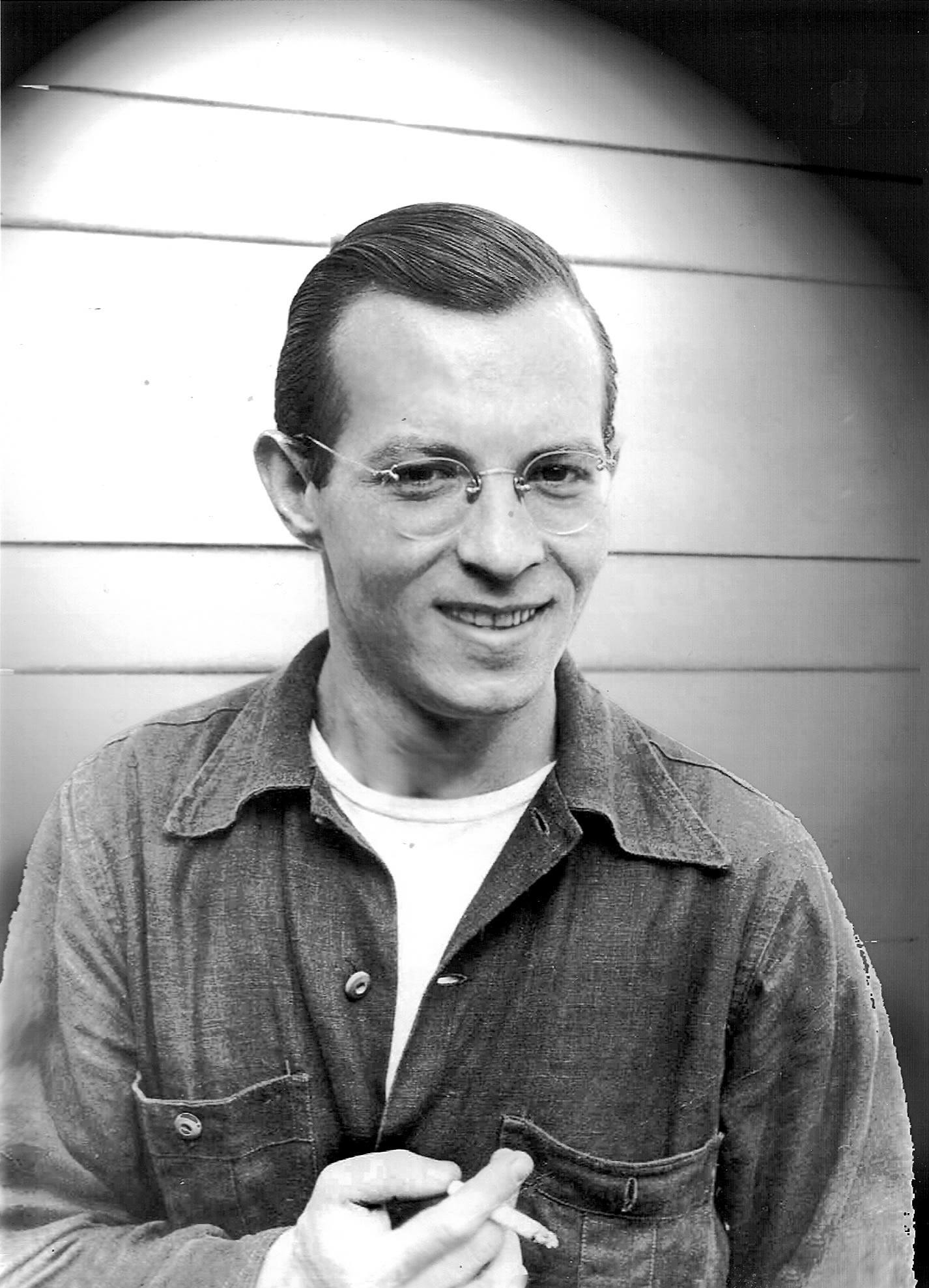
Composer Nancy Bloomer Deussen has died at the age of 88, and for the second time in two years, there are murmurs about an illegitimate child of George Gershwin. Deussen’s mother, Julia Van Norman, was exceptionally close with Gershwin, perhaps closer than the Gershwin estate would have liked.
For her part, Deussen never wished to exploit her possible kinship to promote her own music, so perhaps it’s a disservice to her memory to even mention it. I only do so, because still fresh in the memory is the death last year of Alan Gershwin, who always insisted he was George’s son.
He began his career as a song plugger on New York’s Tin Pan Alley. He was “discovered” by Al Jolson, who gave him his biggest hit. He composed a string of successful stage musicals with lyrics by his brother, Ira.
Though he had classical training, he was turned away by both Nadia Boulanger and Maurice Ravel, on the grounds that they didn’t want to spoil his natural voice. He played tennis with Arnold Schoenberg, who also refused him lessons. He kept an autographed photo of Alban Berg in his apartment, next to one of Jack Dempsey.
His musical, “Of Thee I Sing,” was the first to win a Pulitzer Prize. His opera, “Porgy and Bess,” was a failure at its premiere. His songs graced elegant screen comedies of the 1930s. In the concert hall, he was America’s most authentic voice.
George Gershwin died of a brain tumor in 1937, at the age of 38. Reportedly, his last words were “Fred Astaire.”
Here are a couple of fascinating documents, set down in 1926, of Fred and Adele Astaire singing with Gershwin at the piano.
The Astaires headlined two of Gershwin’s Broadway musicals, “Lady Be Good!” (1924) and “Funny Face” (1927). Adele married in 1932 and retired from show business. Fred later starred in the film musicals “Shall We Dance”(1937) and “A Damsel in Distress” (1937), both at least partially scored by Gershwin.
Gershwin received his only Academy Award nomination for Best Original Song in 1937, for “They Can’t Take That Away from Me,” from “Shall We Dance.” The nomination was posthumous, as Gershwin had died two months after the film’s release.
The flame that burns twice as bright burns half as long. Happy birthday, George Gershwin.
When “Porgy and Bess” concluded its New York run in 1935, George Gershwin invited Jerome Moross to join the show, on tour, as a pianist. It was while on a bus trip to Los Angeles to participate in “Porgy’s” west coast premiere that the 23 year-old made a stop in Albuquerque.
“[A]s we hit the Plains I got so excited,” Moross recollected. “. . .[T]he next day I got to the edge of town and then walked out onto the flat land with a marvelous feeling of being alone in the vastness, with the mountains cutting off the horizon. The whole thing was just too much for me . . . it was marvelous, and I just fell in love with it.”
The experience served him well, as some of his most famous music, the Academy Award-nominated score for “The Big Country,” enshrines that sense of wide-open excitement in the face of sweeping vistas. Western high-spirits and American jazz color most of Moross’ output, whether for the silver screen, musical theater, or concert hall.
At home in all forms, Moross composed concert music (including a symphony for Beecham), ballet (“Frankie and Johnny,” with female vocal trio), musical theater (the cult classic “The Golden Apple,” including the evergreen “Lazy Afternoon”), opera (“Sorry, Wrong Number”), and of course classic film scores (his magnum opus, “The Big Country”).
Happy birthday, Jerome Moross. You tackled everything with exuberance and vitality.
“The Big Country” (with a young John Williams in the orchestra, on piano):
“Lazy Afternoon,” sung by Kaye Ballard from the 1954 original cast recording:
The Sonata in G major for Piano Duet and String Quartet:
It was on this date in 1937 that George Gershwin died after undergoing surgery to remove a brain tumor. The composer collapsed on July 9, when he tried to stand up, and slipped into a coma. Needless to say, it was an abrupt and shocking end to one of the most vital figures in American music.
Here’s footage of Gerswhin playing “I Got Rhythm:”
Gershwin speaks (a comparative rarity) and plays “Strike Up the Band.”
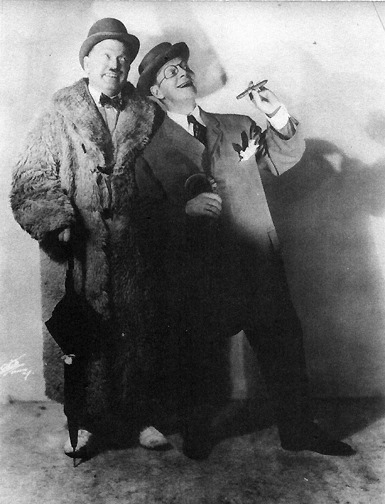
The comedians are Clark and McCullough. Bobby Clark was the fast-talking wisecracker and Paul McCullough his laid-back sidekick. Like so many other comedy teams that graced stage and screen in the ‘20s and ‘30s, Clark and McCullough came up through vaudeville, and before that the circus(!).
The cigar-smoking wise-acre was a real thing back then. Without the titles, I would have pegged the duo for Bert Wheeler and Robert Woolsey. More enduring examples of the stogie-wielding funnyman include George Burns, Milton Berle, and of course Groucho Marx. Groucho had his greasepaint mustache, and Clark had his painted-on glasses.
Clark and McCullough made about three dozen film shorts and appeared in at least two features (one, “Two Flaming Youths,” with W.C. Fields). Their Broadway hit “The Ramblers” was filmed for Hollywood by Wheeler and Woolsey and released as “The Cuckoos.” Today, they are virtually forgotten.
This Sunday night on “The Lost Chord,” we’ll cap the long Fourth of July weekend with an hour of vintage recordings of the music of George Gerswhin.
Gershwin occupied a unique place in American music, rising from Tin Pan Alley scrapper to Broadway royalty. From there, he conquered the concert hall and even the opera house, with his blend of popular song, jazz, blues, spirituals and European classical forms.
Like Franz Schubert a hundred years before, Gershwin managed to churn out an astonishing amount of music over a comparatively brief span. His songs, in particular, have been of enduring interest. His gift of lyricism and invention defied early critics as he bestrode the worlds of popular and classical music like an American colossus.
Sadly, at the peak of his success, he died of a brain tumor at the age of 38.
We’ll sample Gershwin’s artistry in recordings of the era, including several songs performed by Al Jolson, Fred Astaire and Ella Logan. (So many excellent recordings to choose from!)
We’ll also hear the world premiere recording of “An American in Paris” – performed by the Victor Symphony Orchestra (really members of the Philadelphia Orchestra), with the composer himself on the celesta – and the Concerto in F, performed as part of a memorial concert at the Hollywood Bowl, with the composer’s friend, Oscar Levant, as soloist.
Three of these recordings date from 1937, the year of the composer’s death. All are from his era.
I hope you’ll join me for “Vintage Gershwin,” this Sunday night at 10:00 EDT, on WWFM – The Classical Network and wwfm.org.
GERSHWIN BONUS! TUNE IN EARLY TO ENJOY MORE SONGS BY GERSHWIN ON “THE DRESS CIRCLE” AT 7 P.M!
The Dress Circle – Public Radio Dedicated to the Performing Arts
Fred Astaire singing “A Foggy Day (In London Town),” from “A Damsel in Distress”: